Riding From Your Campsite to the Boat Ramp
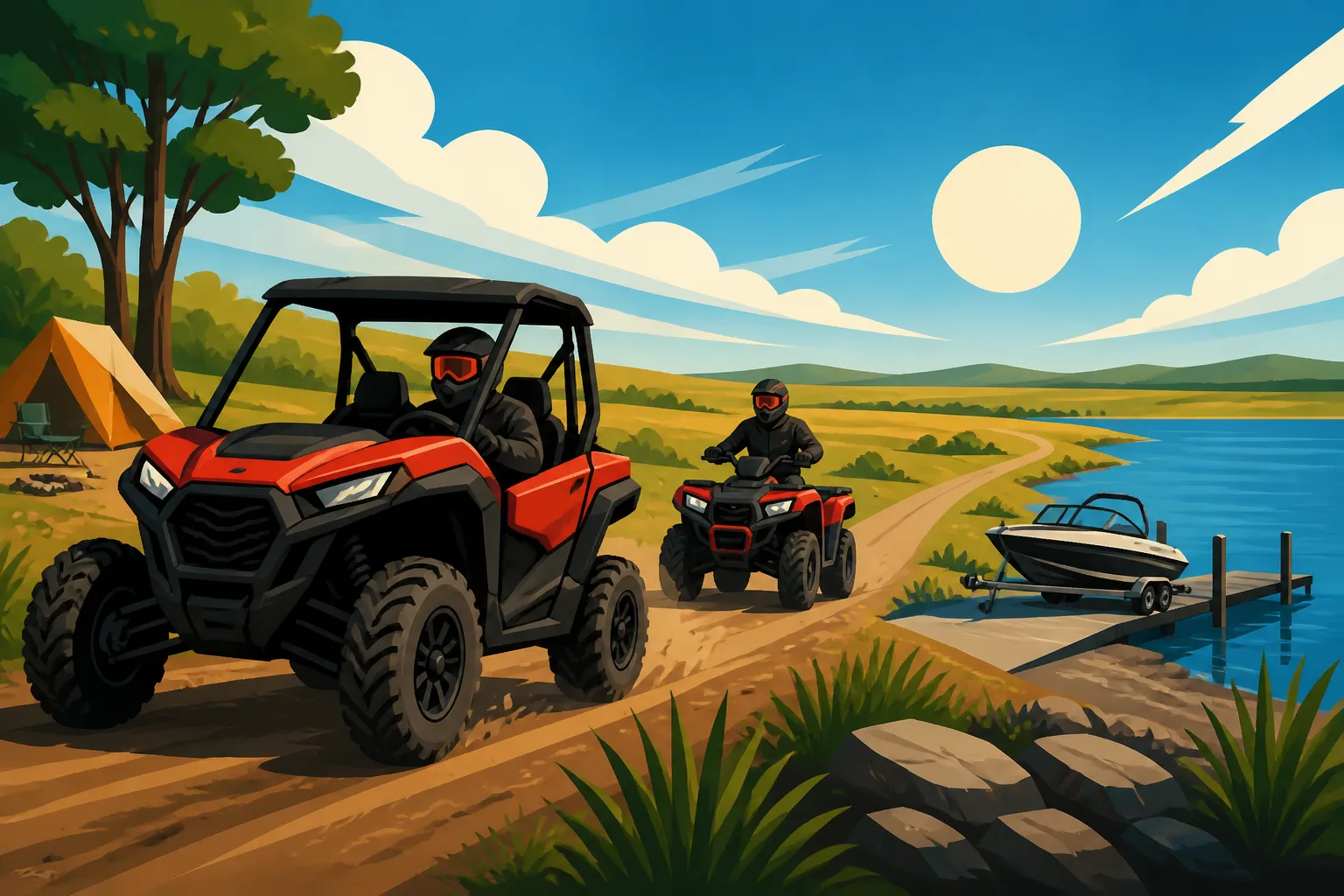
A short ride from a campsite to a boat ramp can seem like the easiest way to move an ATV or UTV around a Kansas state park. Whether it is allowed depends on the route, the machine, park rules and any required permit. The key distinction is that permission to use a park road does not automatically let you ride across trails, grass or shoreline.
When the Ride Is Allowed
In general, the trip needs to stay on a route the park allows your machine to use. A campsite and boat ramp being close together does not, by itself, make the ground between them a legal route. Look for a designated park road that connects the two and check signs or posted restrictions along the way.
Kansas park rules distinguish between riding on roads and parking areas and riding on off-road trails or open ground. A park permit may authorize use of certain roads without granting permission to ride anywhere in the park. Machines Kept to Roads and Parking Areas explains this boundary in more detail, and Kansas Park Permit vs Trail Permit covers why a road-use permit is not a general trail pass.
The route may be appropriate when:
- The park allows your type of machine on the connecting road.
- You have any required permit for operating that machine in the park.
- Signs do not close or restrict the road.
- You remain on the road or another specifically authorized area.
- You follow the park’s operating hours and any posted speed or equipment rules.
The route is not automatically allowed just because it is short, quiet or used by other visitors. Avoid cutting across a lawn, campsite, pedestrian path, beach, shoreline or closed area to save time. If the road ends before the ramp, do not assume the remaining stretch is open to machines.
| Part of the trip | What to check |
|---|---|
| Campsite exit | Whether the campground road is open to your machine |
| Connecting route | Whether it is a park road your machine may use |
| Boat-ramp entrance | Signs, barriers and any restricted access areas |
| Parking area | Whether machines may enter or park there |
| Final approach | Whether you can reach the ramp without crossing a trail, lawn or shoreline |
A practical test is to trace the entire route before unloading. If any part depends on an unmarked shortcut or a guess about what “road” means, ask park staff rather than finding out after you start riding.
Permits, Machine Type and Park Boundaries
A permit question is separate from a route question. You may need a permit for the machine and still be limited to certain roads or areas. Conversely, a road may appear open, but your machine may not be authorized to use it without the required permit.
Kansas state parks use an unconventional vehicle permit for certain machines operated within park boundaries. Requirements can depend on what the machine is and where you plan to use it. A permit is not the same thing as a camping permit, a boat-launch permission or a general state trail pass. For the vehicle-specific details, see Kansas Park Permit for a UTV and Kansas Park Entrance Permits and What They Cover.
Check the park’s current rules before you travel. Permit requirements, costs and the way a permit must be displayed can change, so confirm current details with the park office or the official Kansas parks information. Do not assume that an ATV, UTV, golf cart or other machine is treated identically. Kansas Park Permit for a Golf Cart addresses a different vehicle category, and the distinction can matter.
Also separate state park rules from the rules at a nearby Corps of Engineers recreation area or private campground. A campground might be close to a lake or boat ramp but fall under a different managing authority. The permit and route rules for one property do not automatically apply to the next.
Confirm what the machine is allowed to do
Before the trip, identify your machine accurately: ATV, side-by-side, golf cart or another type. Then ask whether that specific class may use the road from your campsite to the ramp. If you are unsure which category applies, Four Off-Road Classes Kansas Law Treats Differently explains why similar-looking machines can be treated differently.
Do not confuse a Kansas title with park permission. A title identifies ownership and classification; it does not make the machine street legal or grant access to park roads. A permit also does not override a closed-road sign or authorize riding on a trail that is off-limits.
Planning the Campsite-to-Ramp Route
A little route planning can prevent a frustrating trip back to the campsite. Before you unload, locate the campground, the boat ramp and the road that connects them. Use the park map as a starting point, then check on-site signs. Maps may not show every temporary closure, one-way restriction or machine-specific limit.
- Ask the park about the specific route. Give staff the campground area, boat ramp and machine type. Ask whether the connecting road is open to that machine and whether any permit is required.
- Check the whole route on arrival. Look for signs at campground exits, intersections, ramp approaches and parking areas. A road open to ordinary vehicles is not necessarily open to every off-road machine.
- Stay on the authorized surface. Follow the road rather than crossing grass or using a footpath to reach the water. Do not drive onto a launch lane, beach or shoreline unless the park explicitly allows it.
- Use the ramp area as intended. If the ramp is busy, keep the machine out of the vehicle queue and launch area unless staff direct you otherwise. Park only where signs permit.
- Plan for the return trip. Check whether the route remains open at the time you expect to return, especially after dark or during a temporary closure.
State park road access is generally limited by park rules and operating hours. Confirm the specific hours for the park and route; Kansas Park Road Use Sunrise to Sunset explains the general timing issue. Do not assume that camping overnight means you may ride a machine on park roads at any hour. If you expect to return after sunset, ask whether that route and machine are allowed then, and review Kansas Rules for Riding After Dark.
A boat ramp can also have rules that differ from the road. There may be a designated vehicle approach, a separate parking lot or a barrier that prevents machines from going closer to the water. Follow those signs even if the road itself is open. Keep the ramp clear for vehicles launching or retrieving boats, and do not leave a machine where it blocks access.
Common Situations and What to Do
The campground and ramp are connected by a signed park road. This is the clearest situation, but still verify that the road is open to your machine and that you have the required permit. Follow posted directions and do not leave the road to bypass a queue or reach a closer spot.
The map shows a trail as the shortest route. Do not treat a trail as a road. A road permit may not cover trail use, and a trail may have different access rules or exclude your machine. Take an authorized road route instead, or use a tow vehicle if no suitable route exists.
There is no visible road for the last part of the trip. Ask staff whether there is an approved access point. Do not cross a grassy strip, picnic area or shoreline based on the assumption that a short crossing will be overlooked.
The route is open to cars, but you are unsure about ATVs or UTVs. Ask directly. A road’s general vehicle access does not answer every question about unconventional vehicles. If the park office cannot confirm access, do not ride until you have a clear answer.
You are at a lake recreation area outside a Kansas state park. Find out who manages that property and which rules apply. State park permit information may not govern a Corps area, private park or municipal campground. The location of the boat ramp alone does not identify the responsible authority.
A sign conflicts with what you were told earlier. Follow the sign and check with park staff. Closures and restrictions can change, and a verbal answer about a route should not be treated as permission to ignore a posted closure.
If the park does not allow the ride, consider walking, using a tow vehicle or moving the machine by trailer where permitted. It may be less convenient, but it avoids damaging vegetation, entering a restricted area or creating a conflict at a busy ramp. Before loading up, Calling a State Park Office Before You Load Up can help you confirm what to ask.
Disclaimer
This article is for general informational purposes only and does not constitute professional advice. Laws, prices and regulations vary by location and change over time. Consult a qualified professional for guidance on your specific situation.