Why a Riding Park Pulls Your Wristband Over Alcohol
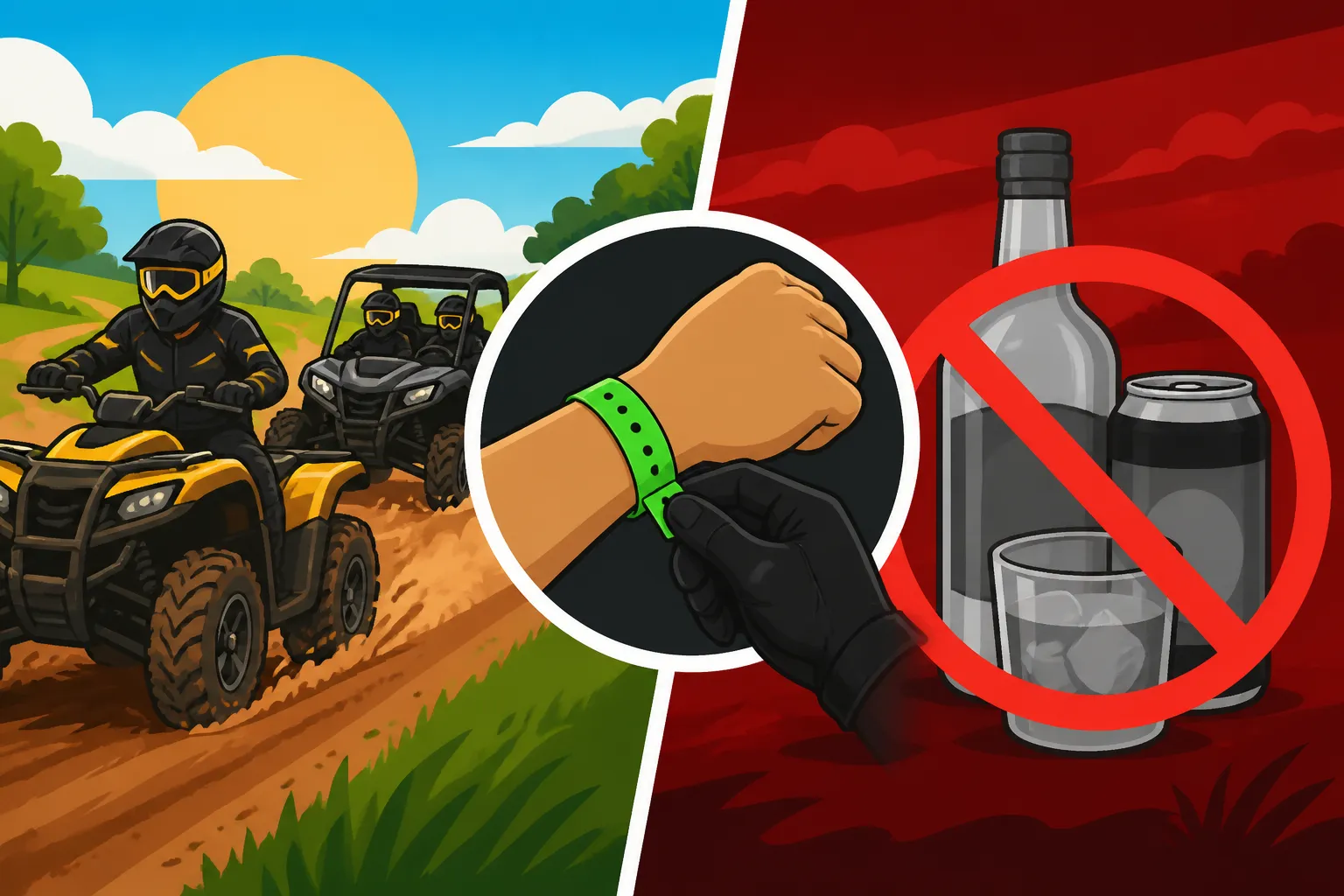
A wristband may look like a simple entry pass, but at an ATV or UTV park it can also show that you have permission to ride. If staff remove it after seeing alcohol, the reason may be a park rule, a safety concern, or both. Knowing what to check before you arrive—and how to respond if staff intervene—can help keep a disagreement from becoming a dangerous ride.
Why a riding park may pull your wristband
A private riding park sets conditions for using its property. Those conditions may cover alcohol possession, drinking, impairment, riding after drinking, or some combination of them. The exact rule depends on the park: a policy that applies at one facility should not be assumed to apply everywhere in Kansas.
A wristband is an easy way for staff to identify who has paid or checked in and who is currently allowed to use the riding area. If a rider breaks a park rule, removing or marking the band can stop that person from continuing to ride. Staff may also use wristbands to distinguish riders from visitors, campers, or people who have left the riding area.
Alcohol creates a particular concern around ATVs and UTVs because riders need to steer, judge terrain, react to other machines, and make decisions quickly. A trail can include steep or uneven ground, loose surfaces, blind turns, other riders, and unexpected obstacles. A person who has been drinking may not recognize how much their reaction time or judgment has changed. Staff may therefore act on a rule about alcohol even if no crash has happened.
It is also important to separate a park’s policy from state law. A park can set conditions for access to its private property; those conditions are not necessarily the same as a statewide rule that applies to every riding area. Do not assume that a particular park’s alcohol policy applies to public roads, another private park, or every place where off-road riding is allowed. For a closer look at how park policies vary, see [Kansas Private Park Alcohol Rules].
The park’s decision may be based on what staff observe, what a rider says, or what they find in an area where alcohol is prohibited. You may not know which part of the policy they believe was violated unless you ask calmly. But the immediate instruction to stop riding should be treated seriously, whether or not you agree with the reason.
What rules may cover alcohol
A rule that says “no alcohol” can mean different things in practice. One park may prohibit alcohol throughout the property, while another may restrict it only in riding areas or while operating a machine. Some parks may distinguish between possessing alcohol, drinking it, and riding while impaired. The posted rules, waiver, and staff instructions are the best place to start.
| Situation | Why staff may intervene | What to check |
|---|---|---|
| Drinking before or during a ride | The park may prohibit riding after alcohol use or prohibit alcohol on the property | The written alcohol and riding rules |
| Alcohol in a riding area | The park may ban alcohol in designated areas, even if it permits it elsewhere | Signs, maps, and staff directions |
| Open alcohol container near a machine | Staff may view it as evidence of a rule violation or a safety risk | Rules on possession and open containers |
| Alcohol at a campsite or other non-riding area | The park may have separate rules for camping and riding areas | Campground rules and any exceptions |
| A rider appears impaired | Staff may stop access to reduce the risk of a crash | The park’s safety and removal policies |
| A passenger or group member has alcohol | The park may apply rules to passengers, groups, or the whole riding party | Rules for passengers and group conduct |
This table is a checklist, not a statement of one rule for every Kansas park. Some facilities may prohibit alcohol throughout the property; others may set narrower limits or handle camping and riding separately. Check the specific park’s current rules before loading your machine. Park-specific information is available in Kansas Rocks Park Rules for Riders and Kansas Syracuse Dunes Park Rules.
Read the full waiver rather than relying on a quick summary from a friend or a social media post. Look for language about alcohol, impairment, operating machines, where guests may drink, staff authority, and removal from the property. A waiver may refer to a separate rule sheet, so check any documents or signs the park directs you to review. Kansas Private Park Waivers and Rules explains why those details matter before you unload.
Do not treat a rule’s silence as permission. If the written material does not explain whether alcohol is allowed at a campsite, in a parking area, or anywhere on the property, ask park staff before bringing it. An answer from staff before check-in is more useful than trying to resolve a disagreement after a wristband has been removed.
What to do if staff ask you to stop riding
If staff approach you about alcohol, pause the ride and listen to the instruction. Do not try to ride away, hide a container, or persuade another person to take the machine while the situation is still being addressed. A disagreement about a wristband is not worth adding a crash or a second rule violation.
A practical response is to ask which rule applies and what they want you to do next. Keep the conversation calm and focused. If staff say you cannot ride, do not operate an ATV or UTV until the park clearly allows it. If you have been drinking, do not drive a machine, road vehicle, or trailer home. Arrange a sober driver or another safe way to leave.
If you believe staff have misunderstood what happened, explain your understanding without raising the conflict. You can ask where the rule is posted or whether a manager can clarify it. Avoid filming or confronting staff in a way that escalates the encounter, and do not assume that being unhappy with the decision gives you permission to keep riding.
The immediate consequence might be limited to losing riding access for the day, but the park’s rules may allow staff to require a guest to leave or apply another consequence. Whether any refund is available depends on the park’s policy and the circumstances. Check the terms rather than assuming that a wristband removal automatically means a refund, or that no refund is possible. When a Park Can Send You Home Without a Refund covers the issue in more detail.
If the instruction is unclear, ask whether you may safely walk or ride only under staff direction to a designated place. Do not make your own route through the riding area once staff have stopped your access. If a friend is involved, do not take over their machine unless staff say it is allowed and you are sober, authorized, and capable of operating it safely.
For group outings, make sure everyone understands that a wristband is not just a souvenir. A group leader can help by sharing the rules before arrival, identifying a sober person to handle transportation, and discouraging anyone who has been drinking from operating a machine. Park expectations for group behavior are also worth checking in Kansas Group Size at a Park.
How to avoid a wristband dispute
The simplest way to avoid a problem is to settle the alcohol question before the ride begins. Check the park’s own rules shortly before your visit, because policies and operating details can change. If the park does not answer the question clearly, contact staff and ask about the specific situation: alcohol in a vehicle, alcohol at a campsite, drinking in a common area, or riding after drinking. A broad question such as “Is alcohol allowed?” may not get the detail you need.
Before unloading, take a few minutes to review the posted rules and any instructions given at check-in. If staff explain an exception, confirm where it applies and whether it has limits. Do not assume that a rule for campers also applies to riders, or that permission to possess alcohol means permission to ride after drinking.
For a safer plan:
- Choose a designated driver before anyone drinks.
- Keep alcohol away from the riding area unless park staff confirm it is allowed there.
- Do not ride after drinking, even if you feel capable.
- Tell passengers and friends that they should not pressure anyone to ride or drive after drinking.
- Ask staff what to do if someone in your group appears impaired.
- Make a transportation plan that does not depend on an impaired person operating a machine or vehicle.
Park access is only one part of a ride plan. Check the facility’s entry rules, equipment requirements, passenger limits, and any conditions that apply to your machine. The broader Kansas Trail Etiquette Locals Expect can help with responsible conduct, but a private park’s own instructions take priority on its property.
If staff remove a wristband, treat it as a loss of permission to ride until they tell you otherwise. Ask for clarification, follow instructions, and make a safe plan to leave or wait. You can raise a complaint through the park’s normal process later; continuing to ride while access is withdrawn puts you, other riders, and your group at unnecessary risk.
Disclaimer
This article is for general informational purposes only and does not constitute professional advice. Laws, prices and regulations vary by location and change over time. Consult a qualified professional for guidance on your specific situation.