Kansas Rules for Riding After Dark
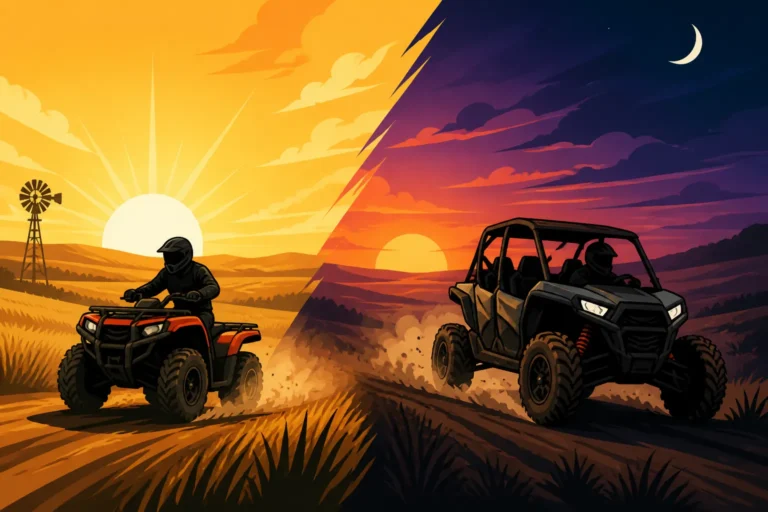
Riding your ATV or UTV in Kansas can be an absolute blast, whether you're working the back forty, hitting the trails, or just cruising around the property. But when the sun starts to dip below the horizon, and those long shadows stretch across the fields, a lot of riders find themselves scratching their heads about what the law says regarding lights and visibility. It’s easy to feel a bit lost in the dark, wondering if your machine is even legal to operate after sunset, or if you have the right equipment to keep yourself and others safe. This guide is here to shed some light on those questions, helping you understand Kansas’s rules for riding after dark so you can enjoy your machine responsibly and legally.
The Baseline: Kansas Law's Stance on Night Riding
Let’s be honest, the legal landscape for ATVs and UTVs in Kansas can feel a bit like a maze, especially when you start adding in factors like time of day. The core issue often comes down to where you're riding. Kansas law draws clear distinctions between private property, designated off-road areas, and public roads, and these distinctions become even more critical once daylight fades. It's not just about having lights; it's about whether your machine is allowed to be where it is, period, and if so, what kind of illumination it needs.
Statewide Road Rules and Lighting Requirements
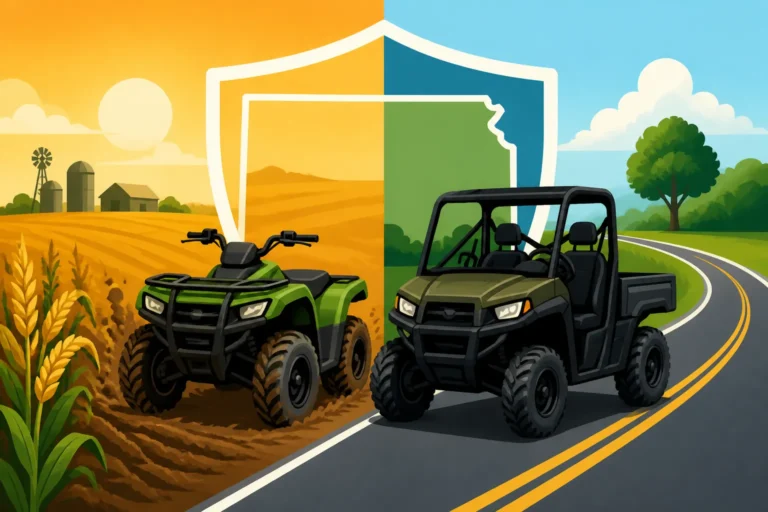
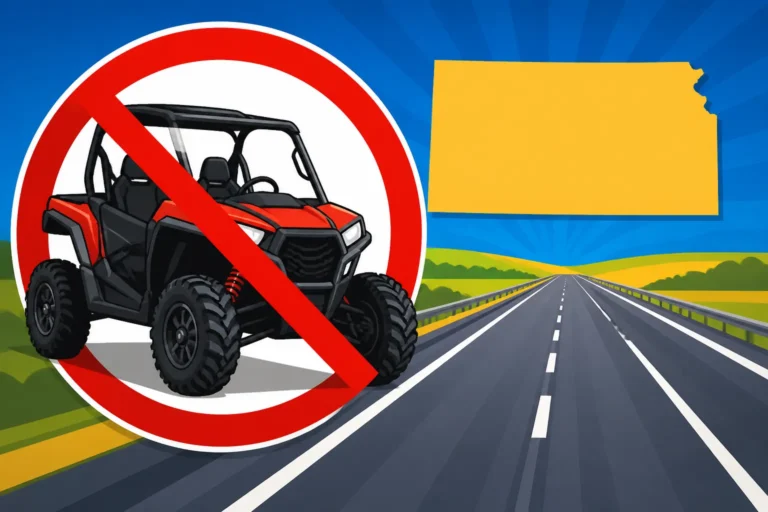
First and foremost, it’s crucial to remember that Kansas generally prohibits ATVs and UTVs from being driven on public roads and highways. This is a foundational rule, and simply having lights on your machine doesn’t magically make it street legal. There are, however, specific exceptions. For example, a "work-site utility vehicle" (WSUV) might be permitted on certain city streets if a local ordinance allows it, and agricultural operations have some allowances for crossing or briefly using public roads. In these specific, limited scenarios where road use is permitted, the lighting requirements become very strict.
If your machine does fall under an exception that allows for limited road use, then you’re essentially expected to meet lighting standards similar to those for motorcycles. This means a functional headlight that projects a certain distance, a taillight, and often brake lights. Reflectors are also typically a must. The intent is clear: if you’re sharing the road, even briefly, you need to be seen. You can find more specific details in articles like [Kansas ATV Road Rules Under 8-15,100] and [Kansas Lighting Rules After Sunset]. It's not enough for a light to simply be there; it has to meet certain performance criteria to ensure safety for everyone on the road. Remember, even if you’re just making a quick hop across a highway for an agricultural purpose, deputies will expect to see adequate lighting, especially after dark.
Off-Road Riding After Dark
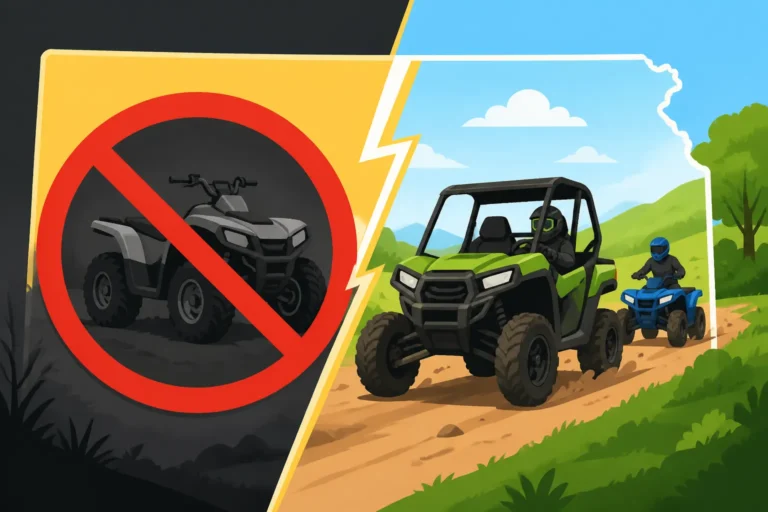
Now, when it comes to riding off-road on private property, designated trails, or official ORV parks like Tuttle Creek, the state-level regulations around lighting become much less prescriptive. Kansas doesn't have a specific state law dictating what kind of lights your ATV or UTV must have to operate on private land after dark. However, that doesn’t mean you can just throw caution to the wind. Safety and common sense are your best guides here.
Even without a specific law, navigating trails, fields, or even your own backyard in the dark without proper illumination is incredibly risky. You need to be able to see obstacles, dips, mud, and other riders. Many designated ORV parks will have their own rules regarding night riding, often requiring a working headlight and taillight for entry after dusk, even if state law doesn't. If you’re riding on private land, whether it’s your own or with permission, having excellent visibility isn't just about avoiding a ticket; it's about avoiding a serious accident. Always prioritize being able to see where you're going and being seen by anyone else who might be out there. Good lighting transforms a potentially dangerous night ride into an exhilarating adventure.
Equipment Essentials for Safe Night Riding
When the sun goes down, your eyes can only do so much. The right lighting and visibility equipment aren’t just accessories; they’re critical safety tools. Whether you’re on the farm checking fences or navigating a tricky trail in the woods, having robust and reliable lighting can make all the difference in preventing accidents and ensuring you get home safely. It's about being prepared for anything the Kansas night might throw at you.
Required vs. Recommended Lighting
Let’s break down the difference between what’s legally mandated (in rare cases of road use) and what’s just plain smart for any after-dark adventure. As we discussed, for limited road use, you'll need headlights, taillights, and brake lights that meet specific standards, often mirroring [Kansas Motorcycle Lighting Standards]. This typically means a headlight bright enough to illuminate objects at least 200 feet ahead and a red taillight visible from 500 feet behind. Many stock machines come with basic lighting, but for serious night riding, especially off-road, you'll want to think beyond the minimum.
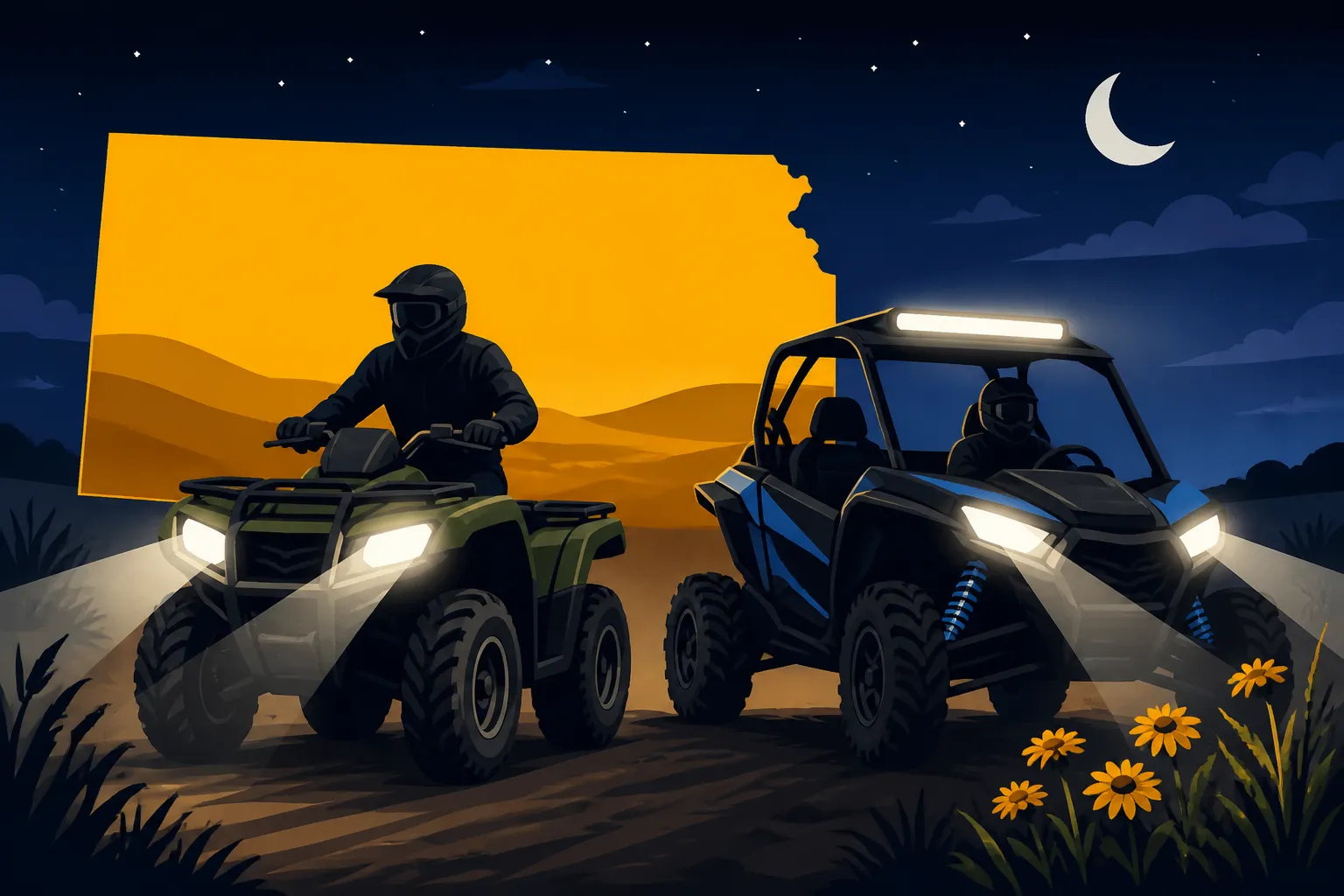
For most off-road scenarios, while not legally "required" by state law, a comprehensive lighting setup is highly recommended. This often includes powerful LED light bars for broad forward illumination, ditch lights for side visibility, and even rock lights to see directly under your machine when crawling over obstacles. Brands like SuperATV offer a wide range of aftermarket lighting solutions, from high-lumen LED light bars that turn night into day to specialized floodlights and spotlights. Don't forget your taillights should be bright and clearly visible to anyone behind you, especially if you're riding in a group. Consider upgrading stock bulbs to LEDs for brighter, more energy-efficient light. It's also wise to have a backup power source or extra battery capacity if you're adding a lot of auxiliary lights. The goal is not just to see, but to see everything clearly.
Beyond Lights: Enhancing Visibility and Awareness
While lights are paramount, they’re just one piece of the puzzle for safe night riding. Enhancing your overall visibility and awareness involves several other key elements. Reflective gear, for instance, can make a huge difference. Helmets, jackets, and even parts of your machine can be outfitted with reflective tape or materials, catching the light from other machines or even distant vehicle headlights, making you much easier to spot. If you’re riding in open, sandy areas like the Syracuse Sand Dunes, a brightly colored flag mounted high on your machine is often required during the day, and adding a lighted whip to that flag for night riding can further increase your visibility, especially over dunes.
Beyond being seen, your ability to see and react is crucial. Clear eye protection is non-negotiable for night riding. Tinted visors or goggles that are perfect for sunny days become dangerous liabilities after dark. Carry a spare set of clear lenses or goggles if yours are prone to fogging or scratching. Your depth perception is naturally reduced at night, making familiar terrain feel completely different. Riding slower, paying closer attention to trail markers, and even riding with a buddy who can offer an extra set of eyes and a bit of light are excellent strategies. Ensure your communication devices, whether it’s a radio or cell phone, are fully charged and accessible, should you run into an unexpected situation in the dark. A good, bright headlamp can also be invaluable for roadside repairs or consulting a map.
City Ordinances and Local Variations
Here's where things get tricky, but also where the most opportunities for legal road riding after dark can sometimes be found. Kansas law is clear that ATVs generally don't belong on public roads, but it also gives local municipalities the power to carve out exceptions for specific types of machines and specific areas within their jurisdiction. This means what's perfectly legal in one town might get you a ticket just a few miles down the road.
The Local Decision on Night Riding
Many Kansas cities, especially smaller, more rural communities, have passed ordinances that allow UTVs (and sometimes even ATVs) on their city streets. These are typically referred to as "city-tagged" UTVs. While these ordinances vary widely from town to town, they almost universally include strict requirements for lighting and visibility, especially for after-dark operation. If a city allows UTVs, they're likely going to require headlights, taillights, brake lights, turn signals, and often a slow-moving vehicle emblem. These are the same basic requirements you'd expect for any street-legal vehicle, simply because you're now sharing the road with cars and trucks.
For example, cities like Louisburg, Scott City, and De Soto have explored or implemented such ordinances. Each one will have its own specific rules about what kind of machine is allowed, what equipment it needs, and at what hours it can be operated. An ordinance might permit UTVs on city streets from sunrise to sunset, but then impose even stricter lighting rules for any operation after dark, or even prohibit it entirely. It’s a patchwork of regulations, and it means you can't assume that what you can do in one Kansas town applies to another. For a broader overview, check out [Kansas Cities That Opt In by Ordinance], but always drill down to your specific locality.
Checking Your Local City's Rules
So, how do you figure out if your local city allows after-dark ATV or UTV riding on its streets, and what the specific lighting requirements are? The best place to start is your city clerk's office or the local police department. Most cities have their ordinances published online, but sometimes it takes a bit of digging to find the specific section related to "unconventional vehicles," "work-site utility vehicles," or "golf cart/UTV permits." Don't be afraid to call and ask directly. The clerks and officers are usually quite helpful in clarifying these local nuances.
When you’re asking, be very specific: "Can I ride my UTV on city streets after dark?" "What specific lights and safety equipment are required for night riding?" "Are there any streets or areas where night riding is prohibited?" Jot down notes, including who you spoke with and when. This proactive approach can save you a lot of headache and potential penalties down the line. Remember, [Kansas Bans ATVs Inside City Limits by Default], so you’re always looking for an exception that has been specifically enacted by a local ordinance. Without that local ordinance, riding after dark on city streets is almost certainly illegal, regardless of how many bright lights you’ve installed from SuperATV.
Practical Tips for After-Dark Adventures
Riding an ATV or UTV in Kansas after dark can be an incredibly unique and rewarding experience. The landscape changes, sounds become amplified, and the challenge of navigating by limited light adds an extra layer of adventure. But to make sure those adventures are safe and enjoyable, a little preparation goes a long way.
Pre-Ride Checks for Night Use
Before you even think about hitting that starter button after sunset, conduct a thorough pre-ride inspection focused specifically on night operations. Start with your lights: headlights, taillights, brake lights, turn signals (if equipped), and any auxiliary lights you have. Are all the bulbs working? Are the lenses clean and free of mud or dust? Check your wiring for any loose connections or frayed areas, as jostling over rough terrain can loosen things up. Pay special attention to your battery and charging system; running multiple bright LED light bars can drain a battery quickly if your charging system isn't up to snuff. A weak battery can leave you stranded in the dark, which is a situation no one wants to be in.
Beyond lights, ensure your tires are properly inflated and your machine has enough fuel for the planned duration of your ride. Visibility is key, so make sure your mirrors (if you have them) are clean and properly adjusted. If you're riding with a helmet, ensure your visor or goggles are spotless and free of scratches that could create glare or impair vision in low light. Finally, pack essential tools, a small first-aid kit, and a fully charged cell phone (even if you don't expect service, emergencies happen). An extra flashlight or headlamp is also a smart addition for any trailside repairs or for simply moving around camp.
Navigating Terrain in Low Light
Riding at night fundamentally changes how you perceive and react to your surroundings. Depth perception is significantly reduced, making it harder to judge inclines, declines, and the size of obstacles. What looks like a small puddle in daylight can hide a deep rut at night. Always err on the side of caution: slow down, maintain a greater following distance if riding in a group, and lean into your experience. If you're on unfamiliar trails, stick to known paths or consider saving the exploration for daylight hours.
Using your lights strategically is also important. High beams are great for seeing far ahead, but they can wash out closer details or create intense glare off dust or fog. Learn to use your low beams or auxiliary floodlights to better illuminate the immediate foreground. If you're lucky enough to have ditch lights, they're invaluable for seeing off to the sides, where deer or other wildlife might be lurking. If you’re riding through dusty conditions, consider that your bright lights can create a blinding wall of light for riders behind you, so thoughtful positioning and awareness of your group are crucial. Remember, the goal is to enjoy the ride safely, not to set any speed records.
Being Prepared for the Unexpected
Even with the best preparation, things can still go wrong, especially when riding after dark. A flat tire, a dead battery, or a minor mechanical issue becomes a much bigger headache when you're miles from civilization and can barely see your hand in front of your face. Always ride with a buddy or in a group if you're venturing far from home after dark. There's safety in numbers, and an extra set of hands (and lights) can be invaluable for getting unstuck or making a repair.
Carry a small emergency kit that includes a flashlight, basic tools, a tire repair kit, and possibly a jump starter pack or extra battery. SuperATV, for example, offers recovery gear like winches and snatch blocks that are absolute lifesavers when you get stuck in the mud in the pitch black. Know your route and have a backup plan in case you encounter an impassable obstacle or get lost. If you're heading to a specific ORV park, check their hours and rules for night riding – some parks might have specific closing times or require you to be off the trails by a certain hour. Most importantly, know when to call it a night. If you’re tired, conditions are deteriorating, or you’re just not feeling confident, it’s always best to pack it in and ride another day.
Here's a quick overview of common lighting considerations for night riding:
| Riding Scenario | Minimum State Legal Requirements (if applicable) | Highly Recommended for Safety & Visibility | Key Considerations |
|---|---|---|---|
| Private Land / Off-Road Trails | None (state level) | Headlights (bright LED), Taillights, Brake Lights | See terrain, avoid obstacles, be seen by others. |
| Designated ORV Parks | None (state level), but park rules apply | Headlights, Taillights, Brake Lights, Lighted Whip (dunes) | Park-specific rules often require basic working lights. |
| Agricultural Road Crossing | Headlight, Taillight, Reflectors, Brake Light | High-power Headlights, LED Taillights, Slow-Moving Vehicle Emblem | Be visible to road traffic; brief, necessary use only. |
| City Street (if by ordinance) | Headlight, Taillight, Brake Light, Turn Signals, Reflectors, SMV Emblem | High-quality, street-legal Headlights, Bright Taillights, Clear Lenses | Meet local ordinance specs; act like a car. |
Disclaimer
This article is for general informational purposes only and does not constitute professional advice. Laws, prices and regulations vary by location and change over time. Consult a qualified professional for guidance on your specific situation.