What to Bring to the Treasurer’s Office to Title
Kansas ATV and UTV titling requirements include the Manufacturer Statement of Origin and dealer invoice for new purchases.
Start here, or nothing else is legal.
Resident registration, titling and renewal, and public-use versus private-land fees — plus the age and safety-course rules that decide who may ride.

Kansas ATV and UTV titling requirements include the Manufacturer Statement of Origin and dealer invoice for new purchases.

Questions about Kansas ATV and UTV dealer fees, freight charges, setup costs, and sales tax rules for trade-ins.
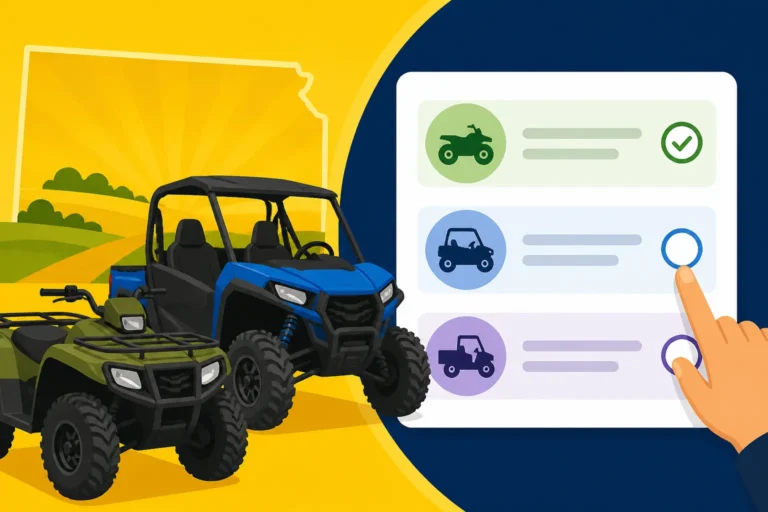
Kansas off-road vehicle classifications help owners correctly title ATVs and work-site utility vehicles on official forms.
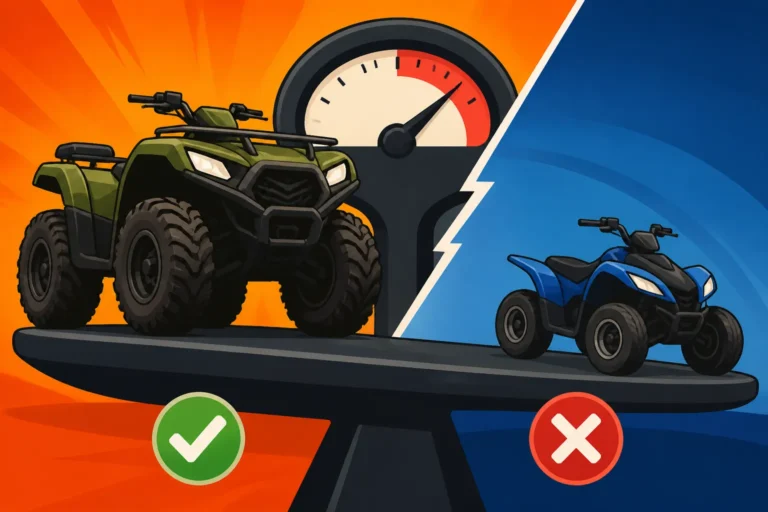
Kansas work-site utility vehicle laws use an 800-pound weight floor that excludes small ATVs and side-by-sides.

Kansas Work-Site Utility Vehicle classification rules require a maximum width of forty-eight inches for proper state titling and registration.
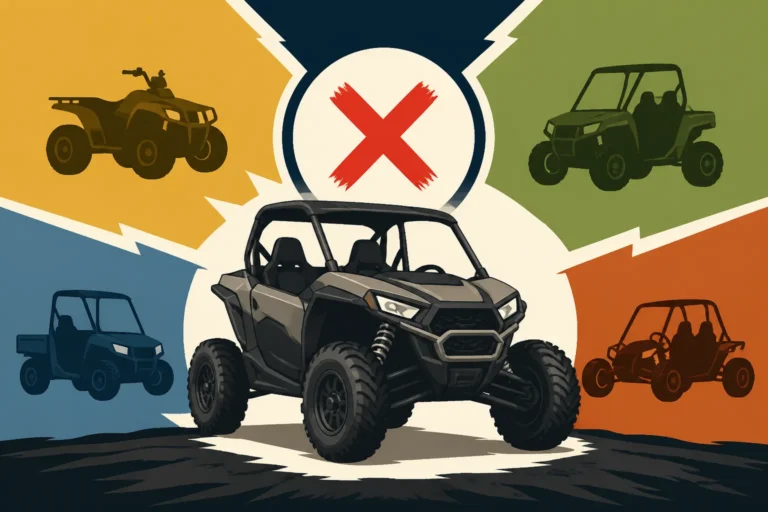
Kansas off-road vehicle classes and titling rules explain what happens when unique machines fit no standard legal category.

Kansas Statute 8-15,100 explains why vehicle definitions and legal classifications determine public road access and restrictions for ATVs.

Kansas Chapter 8 defines an all terrain vehicle using four or more low pressure tires, a straddle seat, and handlebars.

Kansas law defines a golf cart by unladen weight limits, speed ranges, and its original course design purpose.
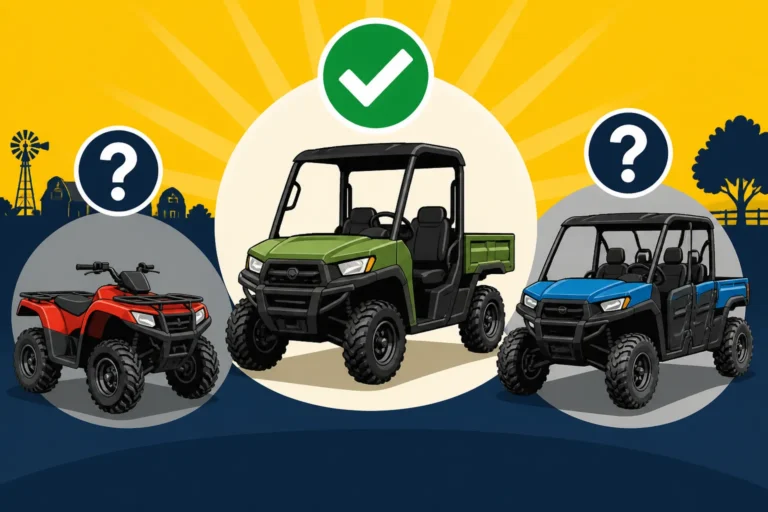
Kansas law defines micro utility trucks by enclosed cabs, cargo beds, and lower operating speeds for work tasks.