Four Off-Road Classes Kansas Law Treats Differently
It can be incredibly confusing to figure out where your off-road machine fits into the grand scheme of Kansas law, especially when you hear terms thrown around like "ATV," "UTV," "golf cart," and "micro truck." This guide is here to clear up that confusion, explaining the four distinct classes of off-road vehicles that Kansas law recognizes and why understanding these differences is crucial for titling, registration, and knowing where you can legally ride.
The Core Distinction: Why Kansas Categorizes Off-Road Machines
When you first bring home an off-road machine in Kansas, whether it's a zippy quad or a rugged side-by-side, one of the first things that hits you is the paperwork. It’s not just about getting a title; it’s about making sure that title correctly identifies your vehicle according to state statutes. This isn't just bureaucratic red tape; these classifications dictate everything from how you title your machine to whether you can ever drive it on a public road, even in a small town.
Beyond "ATV": Understanding the Legal Framework
Kansas law is very specific, and it doesn't just lump every off-road machine into one big "ATV" bucket. While many of us use "ATV" as a catch-all for anything with knobby tires and no license plate, the state's legal definitions are far more nuanced. These definitions impact critical aspects of ownership, such as the sales tax you pay (collected at the county treasurer's office during titling), whether your machine requires a "nonhighway" title, and, most importantly for many riders, where you can legally operate it. Ignoring these distinctions can lead to fines, confusion, and even impoundment if you're caught riding somewhere you shouldn't be. The overarching concept for most of these machines is that they are considered a [How Kansas Law Defines a Nonhighway Vehicle], which means they aren't designed or intended for highway use.
The Role of the County Treasurer and Specific Definitions
Your journey into understanding these classifications often begins and ends at your local [Kansas County Treasurers Handle Titles] office. They are the folks who process your title applications, collect sales tax, and are tasked with correctly identifying your machine based on the definitions provided in Kansas statutes. These definitions are meticulously crafted by the legislature, outlining specific physical characteristics – like width, weight, seating capacity, and steering mechanism – that determine which class your vehicle falls into. It's a system designed to ensure clarity and consistency across the state, even if it feels a bit like deciphering a riddle sometimes. When you walk in with your Manufacturer's Certificate of Origin (MCO) or a bill of sale, the clerks will use these specific criteria to assign your vehicle to the correct category.
A Closer Look at Kansas's Four Off-Road Classes
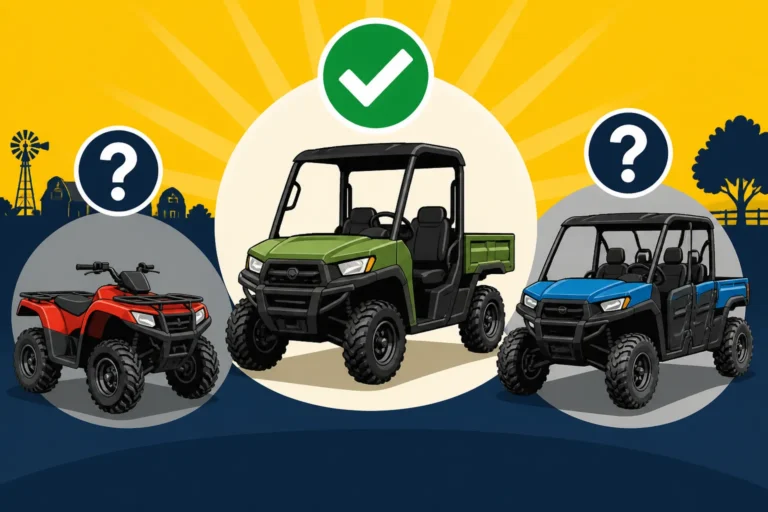
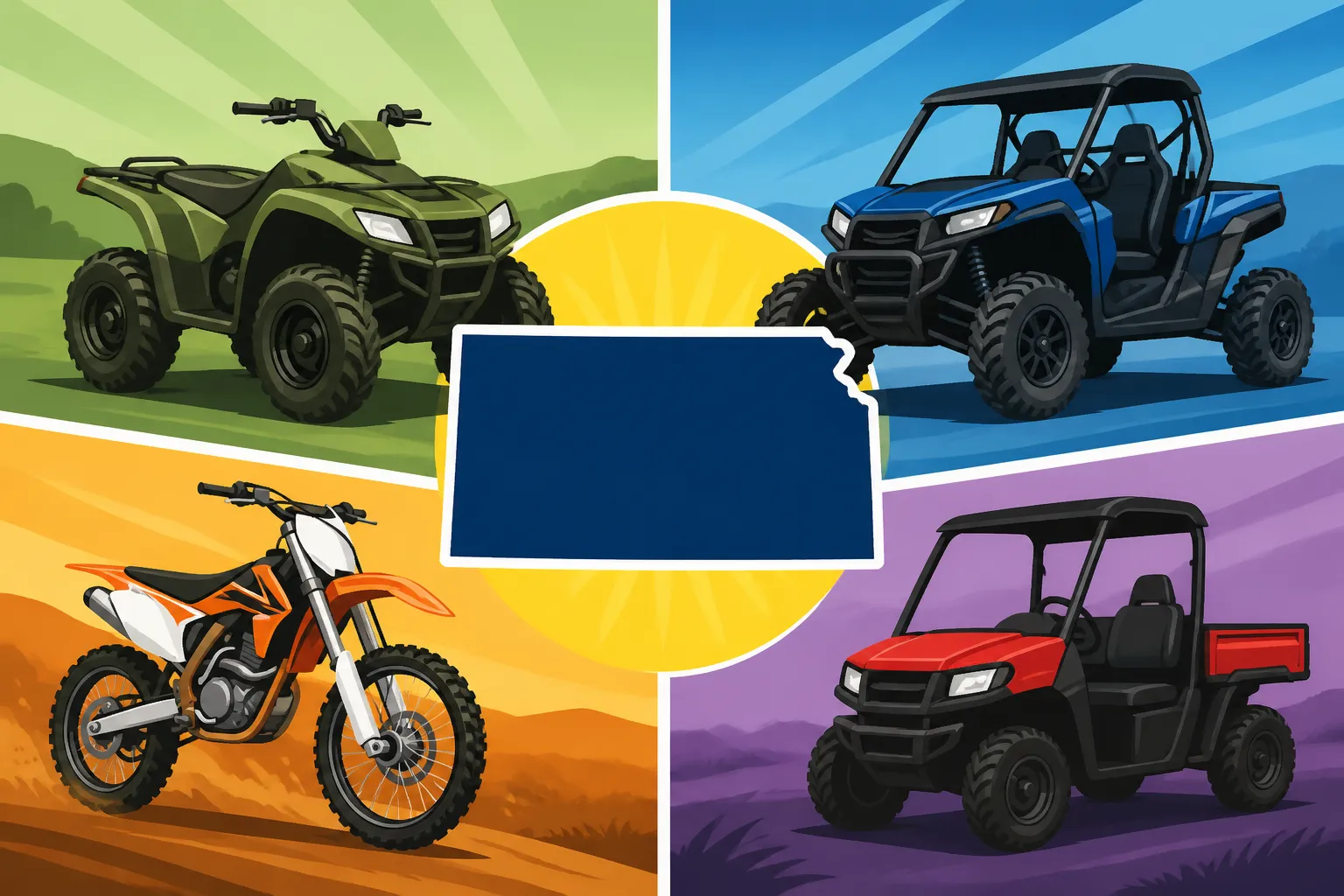
Kansas law precisely defines four different types of off-road vehicles. While they all share the characteristic of being primarily designed for unpaved terrain, their legal distinctions have significant implications. It’s important not to assume that just because two machines look similar, they fall into the same legal category.
The All-Terrain Vehicle (ATV)
Let's start with the classic ATV, often referred to as a quad. Kansas law provides a clear definition for these machines, typically characterized by having three or more wheels, a seat designed to be straddled by the operator, and handlebars for steering. You can find this definition clearly laid out in [An ATV Defined in Chapter 8] of the Kansas statutes. These are the machines many of us grew up riding on trails, in fields, or at dedicated off-road parks. They are built for agility and single-rider operation in rugged environments.
A key point to remember for ATVs in Kansas is that they are generally not registered. [Kansas Has No OHV Registration] is a common relief for owners, as it means one less annual fee and no license plate to worry about. However, they absolutely do require a [Why an ATV Is Titled as a Nonhighway Vehicle], which means you'll still need to go through the titling process at your county treasurer's office. This title is crucial for proving ownership and is necessary if you ever plan to sell your machine. While not intended for road use, ATVs are fantastic for recreation, hunting, or light chores around a large property.
The Work-Site Utility Vehicle (WSUV)
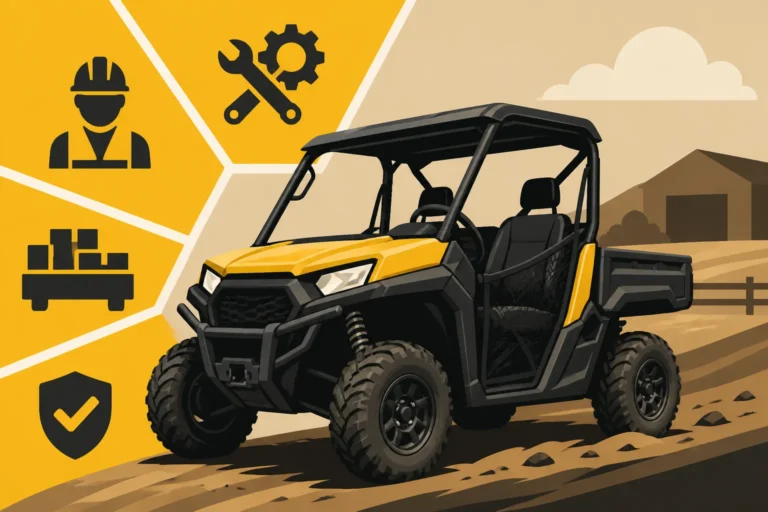
Now, here's where things get interesting, especially for side-by-sides. Many modern side-by-sides actually fall into the category of a Work-Site Utility Vehicle (WSUV) in Kansas. This classification is unique and comes with a very specific set of criteria. To qualify as a WSUV, a machine must meet several tests: it needs to be 48 inches or less in width, weigh more than 800 pounds unladen, and be designed to carry its operator and any passengers side-by-side, usually with a steering wheel and bench or bucket seats. The law explains [What Makes a Side-by-Side a Work-Site Utility Vehicle] in detail, emphasizing the [48 Inches and 800 Pounds] unladen weight and width restriction. The presence of a steering wheel, rather than handlebars, is often a tell-tale sign that your machine might be a WSUV, as the law specifically highlights [Why a Steering Wheel Changes Your Title Class].
WSUVs are indeed titled, and [Kansas WSUV Title Requirements] are distinct. What sets them apart from ATVs is the potential for limited road use. While not street-legal by default on state highways, many cities in Kansas have adopted ordinances that allow properly equipped and insured WSUVs to be operated on city streets, often requiring a city-issued tag. This makes them incredibly versatile for contractors, farmers, or even just running short errands within an authorized town, provided you meet all local requirements.
The Golf Cart
Golf carts are another common sight, both on and off the links. Kansas law recognizes them as a distinct class of low-speed vehicle designed for specific purposes. Generally, a golf cart is defined as a motor vehicle that has at least three wheels, weighs less than 1,300 pounds, is designed to be operated at speeds of no more than 20 miles per hour, and is generally intended for short-distance transport or recreational use. You can find a more complete breakdown in [What the Law Counts as a Golf Cart]. These machines are typically open-air, with two to four seats and often a small storage area for golf clubs or personal items.
Like ATVs, golf carts are not generally registered with the state, and they don't have an annual tag. However, their road use is highly restricted. While you can certainly drive them on private property or within designated golf cart communities, using them on public roads is almost always subject to local city or county ordinances. [Kansas Golf Cart Road Rules] are strict, often limiting their use to roads with low speed limits (e.g., 25 mph or less) and requiring lights, mirrors, and sometimes a slow-moving vehicle emblem. If you’re considering using a golf cart on public roads, you absolutely must check with your local city hall for their specific rules and requirements.
The Micro Utility Truck (MUT)
Finally, we have the Micro Utility Truck (MUT), which is perhaps the least common of the four classes but still important to understand. These are typically small, four-wheeled vehicles, often imported, that resemble miniature pickup trucks or vans. They have an enclosed cab, a bed for cargo, and are designed for utility tasks rather than high speeds or extreme off-road terrain. The legal definition of [What Counts as a Micro Utility Truck] focuses on their design as a compact, utilitarian vehicle, often seen on large campuses, industrial sites, or even small farms.
Like WSUVs and golf carts, [Kansas Micro Utility Truck Road Rules] are governed by local ordinances, meaning their use on public streets is typically restricted unless a city or county explicitly allows it. They often require a title, similar to other nonhighway vehicles, but their specific use and any potential for public road operation will depend entirely on the local jurisdiction. These vehicles fill a niche for compact, maneuverable cargo transport where a full-size pickup is overkill and an ATV might not be suitable.
Navigating Titling and Road Use Based on Your Machine's Class
Understanding the four classifications is the first step. The next is applying that knowledge to the real-world processes of titling your machine and figuring out where you can actually ride it. It's a journey that often starts at the county treasurer's office and continues with understanding your local ordinances.
The Titling Process: Ensuring Correct Classification
When you purchase an off-road machine, whether it's new from a dealer or used from a private seller, you'll need to title it. This process happens at your local county treasurer's office, not a state agency. It’s crucial to bring all the correct [Kansas Title Paperwork Explained], which typically includes the Manufacturer's Certificate of Origin (MCO) for new machines, or a properly executed bill of sale for used ones. If you're buying from a private party and there's no existing title, you'll need a robust bill of sale. Resources like LawDepot can be incredibly helpful for drafting comprehensive and legally sound documents like a bill of sale to ensure you have all the necessary information, especially if you find yourself needing to title a machine [Kansas Title Without a Bill of Sale].
During the titling process, the county treasurer's office will review your documentation and the vehicle's characteristics to ensure it's classified correctly. It's not uncommon for owners to mistakenly believe their side-by-side is just a generic "UTV" when, in fact, it meets the specific criteria for a Work-Site Utility Vehicle (WSUV). The classification on the title is important for future sales and, more critically, for determining if it can ever qualify for city-specific road permits. If there’s any doubt about your machine’s classification, don't hesitate to ask the treasurer's office for clarification before you finalize the paperwork.
Road Access and Local Ordinances: A Complex Landscape
Here’s where a lot of off-road owners get into trouble: assuming that because they have a title, they can ride on public roads. In Kansas, the default rule is that ATVs, WSUVs, golf carts, and micro utility trucks are not street legal on state highways or county roads. [Can You Drive an ATV on the Road in Kansas?] The answer is generally "no," with very limited exceptions for agricultural purposes on certain roads or crossing highways. However, this general ban has an important caveat, particularly for WSUVs and golf carts: local control.
Many cities and sometimes even counties in Kansas have the authority to pass ordinances that allow specific classes of off-road vehicles to operate on their public streets under certain conditions. These are the [Kansas Cities That Authorize ATV Street Use] that you sometimes hear about, though these ordinances are usually for WSUVs, golf carts, or micro utility trucks, not traditional ATVs. If you want to ride your WSUV down Main Street in your town, you must first check with your local city clerk's office. They will have information on whether such an ordinance exists, what equipment your machine needs (headlights, taillights, turn signals, mirrors), any insurance requirements, and whether you need to purchase a city-specific tag or permit.
Beyond the Definitions: Avoiding Common Mistakes
The biggest mistake an off-road owner in Kansas can make is assuming uniformity. Just because one neighbor drives their side-by-side down a city street doesn't mean your machine, or your town, allows it. Each of the four classes has its own set of rules, and each municipality has its own discretion regarding local road use. Always verify the rules with your local authorities, whether it's the county treasurer for titling or the city clerk for road access.
Remember that getting the initial paperwork correct is paramount. If you're involved in a private sale, a well-drafted bill of sale is your best friend. Services like LawDepot can provide templates that cover all the necessary legal ground, ensuring that when you present your documents to the county treasurer, there are no ambiguities about the machine or the transaction. Being proactive and informed will save you a lot of potential headaches, fines, and wasted trips to the courthouse.
Comparison of Kansas Off-Road Vehicle Classes
| Class | Key Characteristics | Titling Requirement | State Registration | General Road Use (State/County) | City Road Use Potential |
|---|---|---|---|---|---|
| All-Terrain Vehicle (ATV) | 3+ wheels, straddle seat, handlebars, often under 48" wide. | Yes (Nonhighway) | No | Generally No | Almost Never |
| Work-Site Utility Vehicle (WSUV) | 4 wheels, side-by-side seating, steering wheel, ≤48" wide, >800 lbs. | Yes (Nonhighway) | No | Generally No | Yes, by local ordinance |
| Golf Cart | 3+ wheels, designed for <20 mph, passenger-focused. | Generally Yes | No | Generally No | Yes, by local ordinance |
| Micro Utility Truck (MUT) | Small 4-wheel truck, enclosed cab, cargo bed. | Yes (Nonhighway) | No | Generally No | Yes, by local ordinance |
Disclaimer
This article is for general informational purposes only and does not constitute professional advice. Laws, prices and regulations vary by location and change over time. Consult a qualified professional for guidance on your specific situation.