Kansas Park Permit for a Golf Cart
A Kansas park permit for a golf cart can be confusing because “park permit” may mean more than one thing. A state-park permit for an unconventional vehicle is not a trail pass, a street tag, or permission to drive wherever you like. The key is confirming that the park allows your cart and which roads the permit covers before you unload.
What a Kansas park permit for a golf cart covers
Kansas has a permit process for certain unconventional vehicles used on designated roads in state parks. A golf cart may fall under that process, but do not assume that every park allows golf carts or that one permit gives you access to every road or recreation area. Check with the specific park office before you travel.
The permit is about operating an eligible vehicle in a limited park setting. It does not make a golf cart street legal throughout Kansas, and it does not turn a walking path, service road, trail, or closed area into an approved route. The practical distinction is important: a cart may be permitted on an eligible park road while still being prohibited from trails and other off-road areas.
| Permit or permission | What it generally addresses | What it does not automatically provide |
|---|---|---|
| Unconventional vehicle permit for park use | Whether an eligible vehicle may use approved roads in a state park | Permission to ride trails, closed roads, or off-road areas |
| Park entrance permit | Park entry requirements that may apply to vehicles entering a state park | Permission to operate a golf cart on park roads |
| City golf-cart tag or local authorization | Golf-cart use on streets where a city allows it | Permission to operate the cart in a state park |
| Private riding-area permission | Access under that private site’s rules | Access to Kansas state parks or public roads |
These are separate requirements, so having one does not replace the others. For example, a city tag that lets a cart use certain local streets is not a state-park permit. And a park permit does not grant general permission to drive on public roads. For the broader distinction, see Kansas Park Permit vs Trail Permit and Kansas Golf Cart Road Rules.
Before planning a trip, ask the park office these specific questions:
- Is this golf cart eligible for the park’s unconventional vehicle permit?
- Which roads, parking areas, or destinations may it use?
- Are any routes closed to golf carts or limited by posted signs?
- How must the permit be displayed?
- Does the cart need to meet equipment or safety requirements?
- Are separate park entrance or camping permits also required?
- Does the park have current restrictions, seasonal closures, or operating-hour limits?
That short call can prevent a wasted trip. A permit category may exist statewide, but a particular park can still have site-specific restrictions. The park office is the best place to confirm what applies at the destination you actually plan to visit.
How to get the permit and prepare your cart
The unconventional vehicle permit is handled through park offices, rather than functioning like a general trail pass that you buy and use anywhere. Contact the office at your destination before arriving. Ask whether you can complete the process there, what information staff need, and whether the permit can be issued on the day of your visit. Permit procedures, availability, and fees can change, so confirm current details directly with the park.
Prepare to describe the cart accurately. Have its make and model, identifying number if available, and basic vehicle details ready. If the cart has been modified, explain the changes, especially anything that affects its size, seating, lights, tires, or intended use. The office can tell you whether those details matter for eligibility or inspection.
A useful preparation sequence is:
- Identify the park and intended route. A cart’s eligibility at one site does not establish that it is allowed at another. Name the park and explain where you hope to drive.
- Call the park office. Confirm that golf carts are allowed and ask whether the unconventional vehicle permit applies to your cart.
- Ask what documents or details to bring. Do not assume that a title, proof of ownership, insurance document, or equipment record will be required, or that none will be. Follow the park’s current instructions.
- Ask how the permit must be displayed. If it must be attached or visible, find out where and how before you arrive.
- Check the rules for the day of your visit. Closures, weather, events, and park-specific restrictions can affect access even when a permit has been issued.
The permit process is not the same as registering a golf cart for ordinary road use. Kansas park authorization is limited to the setting and routes it covers. If you are unsure what the state permit does, Kansas Park Entrance Permits and What They Cover explains why entrance requirements and vehicle-operation permission should not be treated as interchangeable.
It is also sensible to review the cart before leaving home. Confirm that it is mechanically sound, that tires are in good condition, and that any required lights or safety equipment work. Bring the owner’s manual if you have it, particularly if the cart has been altered or is an unusual model. A park may have its own equipment expectations, so ask rather than relying on assumptions based on golf-course use or neighborhood driving.
The permit cost is another detail to confirm with the park office. Budget for the permit only after checking the current amount and whether any separate park entrance, camping, or other charges apply to your plans. Do not rely on an old receipt or another visitor’s total as a current quote. For background on the broader permit process, see Kansas Park Permit Cost and Kansas Park Permit Expiration.
Where you may drive and what the permit does not allow
The most important limit is location. A park permit for a golf cart should be understood as permission for approved use under park rules, not a pass for unrestricted riding. Stay on routes the park identifies as open to your vehicle. If a sign closes a road or prohibits motor vehicles, follow it even if the route appears convenient.
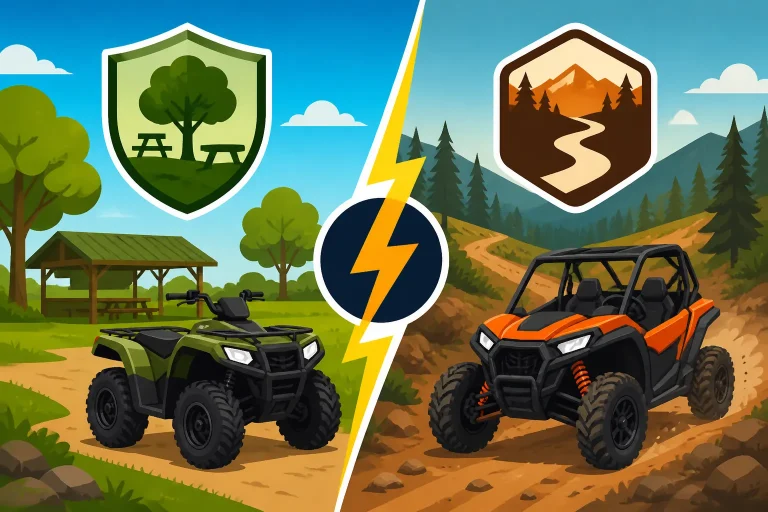
Do not take the cart onto trails just because they look wide enough, connect to a road, or are being used by other visitors. A park-road permit is not a trail permit. Kansas does not offer a general state OHV trail pass that makes trails available to every machine; access depends on the land, the vehicle category, and the applicable site rules. The distinction between road authorization and trail access is covered in Kansas Department Road Riding Rules.
At a state park, confirm the allowed route before you start driving. Ask whether the cart may travel between your campsite, the boat ramp, a parking area, or another facility. Those destinations may be connected by different types of roads or paths, and the permitted route may not be the shortest one. Follow posted signs and instructions from park staff if they narrow or change the route.
Time limits matter too. Park-road operation is subject to park hours and site rules. Do not assume that a permit means you can drive before opening, after closing, or after dark. Check the applicable operating hours and ask about any lighting requirements or restrictions for your cart. Kansas Park Road Use Sunrise to Sunset provides more context on park-road timing, while Driving a Golf Cart on a State Park Road focuses on golf-cart use in that setting.
A permit also does not guarantee that every facility or road will be open during your visit. Maintenance, construction, weather, emergencies, or temporary management decisions may change access. Keep a plan for walking or using another permitted way to reach your destination if the cart route is unavailable.
Be considerate around pedestrians, cyclists, and other park users. Drive slowly, give people room, and yield where appropriate. Keep the cart on the permitted surface rather than cutting across grass or around barriers. Avoid blocking a narrow road while loading or unloading passengers, and park only where allowed. These are practical habits, but they also help prevent damage and reduce the chance of being asked to stop operating the cart.
Avoiding common permit and access mistakes
The most common mistake is treating “golf cart,” “park permit,” and “street legal” as if they describe the same thing. They do not. A cart can be eligible for limited use in a state park and still lack authorization for a city street. Conversely, a city may allow golf carts under its own ordinance without giving the cart permission to use state-park roads.
A second mistake is assuming a permit from one place covers another. Kansas park access rules are not a blanket invitation to ride across public land. A permit is tied to the program and location where it applies; park rules, route designations, and closures still control. If your trip includes more than one park, check each destination separately.
A third mistake is confusing a vehicle entrance permit with authorization to operate the cart. A park entrance permit may address entry or vehicle access to the park, while an unconventional vehicle permit concerns operating a qualifying machine on approved roads. Ask whether both apply to your visit instead of assuming that one covers the other.
It is also easy to overlook the cart’s condition or configuration. A modified cart, an extra passenger seat, or equipment that differs from the original setup may affect whether the park allows it or how it can be used. Be direct when describing changes. If the cart is not clearly a conventional golf cart, provide the model information and let park staff determine which rules apply. For more on why vehicle categories matter, see What the Law Counts as a Golf Cart.
Use this checklist before you load up:
- Confirm the park allows golf carts and ask whether a permit is required.
- Verify the current fee, application steps, and display instructions with that park.
- Ask which roads and destinations are approved, and whether there are hours or equipment conditions.
- Check whether a separate park entrance permit applies to your vehicle or visit.
- Review temporary closures and posted restrictions on arrival.
- Keep the cart on authorized roads and out of trails and closed areas.
- Do not treat a state-park permit as a city street tag or general road authorization.
If the park office cannot confirm that your cart is allowed, do not assume that access is acceptable just because the vehicle is small or resembles carts seen elsewhere. Wait for a clear answer or choose a different way to get around. That is safer than arriving with a cart that cannot be used where you planned.
Disclaimer
This article is for general informational purposes only and does not constitute professional advice. Laws, prices and regulations vary by location and change over time. Consult a qualified professional for guidance on your specific situation.