Kansas Park Permit vs Trail Permit
Kansas’s park permit and a trail permit sound similar, but they solve different problems. If you’re hauling an ATV or UTV to ride, the key is knowing what a Kansas permit actually covers—and what it does not. This article explains where the state permit applies, how private riding parks differ, and what out-of-state visitors should check before unloading.
Kansas park permit vs. trail permit: what is the difference?
A park permit is permission for a defined kind of vehicle use in a particular setting. A trail permit would normally authorize access to a designated off-road trail system. In Kansas, the unconventional vehicle permit is for specified use on certain state park roads and parking areas. It is not a pass to ride trails.
That distinction matters because having a permit does not turn every road, path, shoreline, or open area into a legal riding route. You still have to follow the rules for the land you are on, including posted signs and any limits on where a machine may travel.
| Question | Kansas park permit | Trail permit |
|---|---|---|
| What does it generally authorize? | Eligible vehicle use on approved state park roads and parking areas, subject to local rules | Access to a designated trail system, if that system requires a pass |
| Does it create access to off-road trails? | No | Only if the permit is issued for that trail system |
| Who sets the rules? | The state park and the agency managing the land | The trail system’s manager |
| Does it automatically work at private parks? | No | No; private facilities set their own access rules |
| Should visitors check local requirements? | Yes, especially before riding on park roads | Yes, because access and pass rules vary by site |
Kansas does not have a statewide OHV trail permit that grants general trail access. That does not mean every type of riding is permit-free. A machine may need a state park permit for a specific use, and a private park may require its own pass or other paperwork. The practical question is not simply, “Do I have a permit?” It is, “Does this permit cover this machine, on this land, for this route?”
The state’s unconventional vehicle permit is sometimes confused with a trail pass because riders may encounter it while planning a trip to a park. But it is a limited road-use permit, not a general off-road authorization. The Park Permit That Covers Roads, Not Trails explains that distinction in more detail.
For a broader overview of the state’s system, see Kansas Has No State OHV Permit. The important takeaway is that Kansas does not issue a statewide trail sticker for riders to use across a network of public OHV trails. A permit or pass from one place also should not be assumed to transfer to another.
What the Kansas unconventional vehicle permit covers
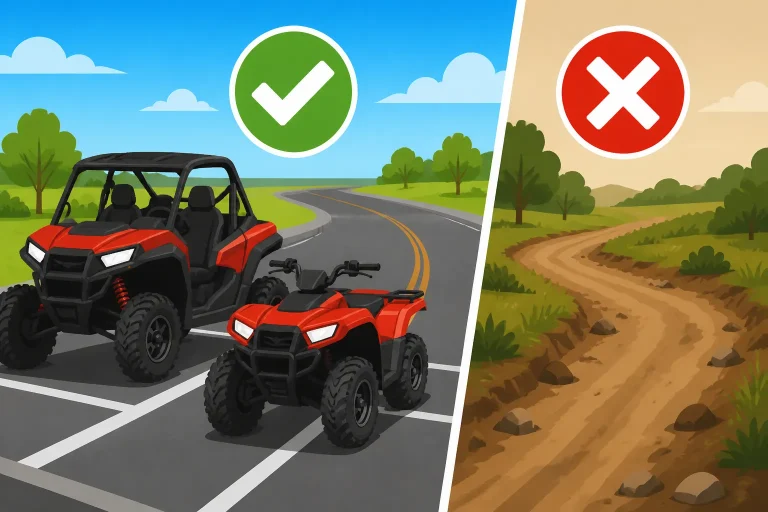
The Kansas unconventional vehicle permit is associated with using an eligible machine on certain state park roads and in parking areas. Its scope is narrower than many riders expect. It does not give permission to ride cross-country, make your own route, or use a trail that is closed to your type of machine.
Before relying on a permit, confirm the current requirements with the state park or official agency managing the location. Rules can depend on the kind of vehicle, the specific park, the route, and signs posted on the ground. A route that is open to one type of vehicle may not be open to another. Kansas Department Road Riding Rules provides more detail on the limits of riding on department roads.
Where it may apply
The permit is tied to use in a state park setting, not to all public land in Kansas. Park roads and parking areas are different from a dedicated riding trail, a public highway, or an informal track. Even within a park, a permit does not override signs or restrictions. If a road is closed to vehicle traffic or an area is marked off-limits, the permit does not make it open.
Treat the permit as one part of the permission process:
- Identify who manages the property you plan to visit.
- Confirm that your machine fits the permit’s vehicle category.
- Ask whether the planned route is open to that machine.
- Check whether the park requires a permit, where it must be displayed, and whether additional conditions apply.
- Follow signs and staff instructions when you arrive.
The permit is not a substitute for checking the route. Kansas Park Permit for a UTV can help clarify questions specific to side-by-sides, while [Kansas Park Permit for a Golf Cart] addresses a different vehicle category. Do not assume that a rule for one kind of machine automatically applies to another.
Where it does not apply
The state permit does not give you general access to off-road trails, private riding areas, or land managed by a different agency. It also does not make an ATV or UTV street legal. Riding on public roads is a separate question governed by road-use rules and, in some places, local ordinances.
A permit should not be treated as permission to ride on a trail simply because the trail is inside or near a park. Ask about the actual route, not just whether the park accepts the permit. For details on the permit’s use and limits, see Kansas Unconventional Vehicle Permit and Kansas Park Permit for a UTV.
Fees, application steps, and permit conditions can change. Check with the relevant state park office before you travel rather than relying on an old receipt, a prior season’s rules, or what another rider remembers. Calling a State Park Office Before You Load Up is a useful planning step when a route or vehicle category is unclear.
Private riding parks, Corps areas, and other places to ride
A Kansas state park permit does not act as a universal pass for every place where people ride. Private riding parks, Corps-managed areas, and other properties each have their own access rules. The land manager—not the state park permit—determines whether your machine can enter and what conditions apply.
Private riding parks
Private parks commonly set their own admission and riding requirements. Depending on the facility, riders may need to buy a day pass, arrange a longer-term pass, sign a waiver, follow age or helmet rules, or meet other conditions. A state permit is not a replacement for those requirements.
Check the facility’s rules before making the trip. Confirm whether the pass is purchased in advance or at the entrance, which machines are allowed, and whether passengers or children have additional requirements. Also ask about closures, hours, camping, and weather-related changes. Kansas Private Park Waivers and Rules covers the kinds of conditions a private riding park may set.
A private park’s pass only applies to that facility under its stated rules. It does not authorize riding on nearby public roads, other private land, or state park routes. Keep any receipt, wristband, or required proof available as the park directs.
Corps areas and other public properties
Some riding areas are managed outside the state park system. A permit intended for state park road use should not be assumed to apply there. Likewise, a rider should not assume that a state park permit is required at every public riding location.
Check the specific area’s rules, access points, permitted machine types, operating hours, and any seasonal restrictions. Why Corps Riding Areas Need No Park Permit discusses the distinction between Corps riding areas and state park permits. The broader lesson is to identify the managing agency before you head out: two places near the same lake can have different rules because they are managed differently.
If a site has a designated off-road riding area, use the access route and riding area identified by its manager. Do not infer that all nearby roads or land are open to machines. For a wider picture of where legal riding opportunities exist, see Kansas ATV Trails: Where You Can Actually Ride.
Reciprocity and out-of-state riders
A permit or sticker issued elsewhere does not automatically give you access to a Kansas state park road, private riding park, or local route. Rules in another state may be designed for that state’s trail system, while Kansas’s unconventional vehicle permit is limited to its own stated use.
At the same time, an out-of-state visitor should not assume that Kansas requires a statewide trail sticker just to ride anywhere. Kansas does not have a general OHV trail permit system. The requirement depends on where you plan to ride and who manages the property. For details specific to visitors, see Kansas Rules for an Out-of-State Machine.
Before traveling, check three things:
- The land manager: State park, private facility, Corps area, or another owner.
- The route: Road, parking area, designated riding area, or trail.
- The machine: ATV, side-by-side, golf cart, or another vehicle class.
Then ask whether you need a local permit or pass and what proof you should bring. A pass bought at a private park will not cover a state park route, and a state park permit will not satisfy a private facility’s admission rules.
If you are crossing state lines with a machine, also consider the paperwork needed to show ownership. Permit questions are separate from title questions, but both can come up during trip planning. Kansas Proof of Ownership on the Trail explains what riders may want to have available.
A practical checklist before you ride
The easiest way to avoid a wasted trip is to confirm the exact use you have in mind. “Riding at the park” is not specific enough if a park has roads, parking areas, restricted zones, and no general trail access. “I have a permit” is not enough if the permit is for a different property or use.
Use this checklist before loading the trailer:
- Name the exact riding location. Do not rely on a nearby town, reservoir, or park name alone. Find the specific access area.
- Identify the land manager. State parks, Corps areas, and private parks may operate under different rules.
- Describe your machine accurately. An ATV and a side-by-side may be treated differently. Give the manager the machine type and, if asked, its specifications.
- Ask whether your route is open. Confirm the road or area you intend to use, rather than asking only whether the property allows vehicles.
- Confirm the permit or pass. Ask if one is required, where to get it, how to display it, and whether it applies to your planned use.
- Check current site conditions. Closures, weather, maintenance, and seasonal restrictions can affect access.
- Bring the required proof. Keep the permit, private park pass, ownership paperwork, or other requested documents accessible.
- Follow posted restrictions on arrival. A permit does not supersede signs, closures, or staff directions.
If a park office cannot confirm that your planned route is open to your machine, do not treat silence as approval. Ask for clarification or choose a location with clearly stated access rules. Kansas Park Permit Expiration is also worth checking if you already have a permit and are unsure whether it is still valid.
The simplest summary is this: Kansas’s unconventional vehicle permit is not a trail permit. It may apply to limited use on approved state park roads and parking areas, but it does not create general trail access. Private riding parks and other land managers set their own conditions, so verify the site, route, machine, and current requirements before setting out.
Disclaimer
This article is for general informational purposes only and does not constitute professional advice. Laws, prices and regulations vary by location and change over time. Consult a qualified professional for guidance on your specific situation.