Kansas Rules for a Fourteen-Year-Old Rider
A fourteen-year-old in Kansas may be able to ride an ATV or UTV in some places, but age alone does not settle the question. The rules can change with the road, property owner, city ordinance or riding park. Here’s how to sort out where a teen can ride, what restrictions to check and how to choose a safer setup.
Is a fourteen-year-old allowed to ride an ATV or UTV in Kansas?
Kansas does not have one minimum age that automatically answers whether a fourteen-year-old can ride every off-road machine in every setting. Instead, the answer depends on where the machine will be used and the rules that apply there. Private land, a public riding area and a city street can all have different requirements.
For a private-property ride, start with the landowner’s permission and any conditions they set. Permission to be on the property does not mean every machine, route or activity is allowed. A landowner may restrict riders by age, require adult supervision, limit passengers or prohibit riding near livestock, buildings or busy farm roads.
Public places add another layer. A riding park may set minimum ages, require a parent or guardian to sign paperwork, or apply separate rules to different machines and trails. State-managed land may restrict machines to designated roads and parking areas, and a permit for that use does not necessarily allow trail riding. Kansas has no general state OHV trail permit, but that does not override a park’s own rules or authorize riding on closed land. See Kansas Has No State OHV Permit and [Kansas Private Park Minimum Ages] before planning a trip.
A safety course is another matter to check. Kansas does not impose a statewide ATV safety-course requirement for every off-road ride, but parks, organizations or a family’s own riding plan may call for training. A course can help a teen learn braking, turning, terrain awareness and what to do if the machine gets stuck. The state’s lack of a universal course requirement is not a sign that experience is optional. See Kansas Safety Course Options for ways to build skills.
| Where the fourteen-year-old will ride | What to check first |
|---|---|
| Private land | Landowner permission, boundaries, supervision and any age or passenger conditions |
| Private riding park | Minimum age, machine-specific rules, required gear, waiver and trail limits |
| State-managed property | Whether machines are allowed there, where they may travel and whether a permit applies |
| City street or county road | State road restrictions, local ordinances, license rules and permitted routes |
| Farm property or farm road | Whether the route is private or public and whether a road-use exception applies |
The machine’s legal class also matters. An ATV, side-by-side, golf cart and micro utility truck do not necessarily follow the same rules. A side-by-side may be designed for passengers, while a single-seat quad is not. If you are unsure what kind of machine you have, Four Off-Road Classes Kansas Law Treats Differently can help explain why the category matters.
A title or permit does not determine whether a teen may ride. A title is a record of ownership, not permission to use the machine on public roads or a park trail. Likewise, a permit may cover a limited kind of access without changing age restrictions or local rules. For background, see Kansas ATV Age Requirements and Do You Need a License for an ATV in Kansas?.
Roads and public access are different from off-road riding
A teen who can ride on private land may still be prohibited from using the machine on a public road. Kansas generally restricts ATVs from road use, with limited exceptions. Cities may adopt ordinances that allow certain machines on designated streets, but permission in one town does not carry over to another.
A fourteen-year-old should not assume that a city’s UTV ordinance allows a teen to drive. The ordinance may set its own age, license, insurance, equipment or route requirements. Check the exact rules with the city before heading onto a street. A city tag, where one is required, is not a substitute for meeting the ordinance’s age or driver requirements. For local access basics, see Kansas UTV Street Legal Rules by City and Kansas Cities That Opt In by Ordinance.
Agricultural road use has its own limits. Kansas has a narrow farm-related exception, but the rules are not a blanket permission for any young rider to take an ATV or UTV onto a highway. The exception requires a driver’s license, among other conditions. A fourteen-year-old without the required driving credentials should not rely on it. Read Kansas’s Agricultural Exception for Road Use and The Farm Exception Still Requires a Driver’s License before considering a public-road trip.
Crossing a road is not the same as riding along it. A route that briefly crosses a roadway may be treated differently from traveling down the road, and the crossing still needs to be made safely and legally. Do not use a roadside ditch, section line or shoulder as an assumed shortcut. Whether a specific route is allowed can depend on the road and the location. Kansas Rules for Crossing a Highway explains the distinction.
Public parks need a separate check, too. Some state property allows certain machines on designated roads or parking areas, rather than on trails. Where a permit applies, it may cover that limited road use; it does not turn the property into an OHV trail system. Private parks can set their own policies, including different age rules for riders and passengers. Call or check the park’s current rules before loading the machine, especially if the teen will ride without an adult.
If the family is visiting from another state, do not assume that an out-of-state sticker or permit settles the Kansas question. Kansas does not generally require visitors to buy a state OHV trail sticker, but a park or city can still have its own entry, access and age conditions. Kansas Requires No Sticker of Visitors explains the state-level point; the place you plan to ride remains the final check.
Choosing a machine and setting limits for a teen rider
A legal opportunity to ride is only the starting point. A fourteen-year-old needs a machine that fits their body, strength and judgment. A quad that is too heavy or powerful can be difficult to steer, brake or recover from after a stall. On a UTV, the teen needs to reach the controls comfortably and understand how a heavier machine handles on slopes, loose gravel and turns.
Follow the manufacturer’s age and size guidance for the specific model. A machine that looks manageable while parked can behave differently under acceleration or on uneven ground. Do not use engine size alone as the measure of fit: weight, throttle response, braking, seat height and the teen’s experience all matter. A parent or guardian should be comfortable with the teen’s ability to control the machine before allowing independent riding.
Passengers require particular care. A single-seat ATV is built for one rider; adding a passenger can change balance and control. A side-by-side may have more than one seat, but that does not mean every rider can carry any passenger in any way. Use only the seats and restraints the manufacturer provided, and check the park or property rules. See Kansas Rules for a Child Passenger and Kansas Rules for Passengers on a UTV.
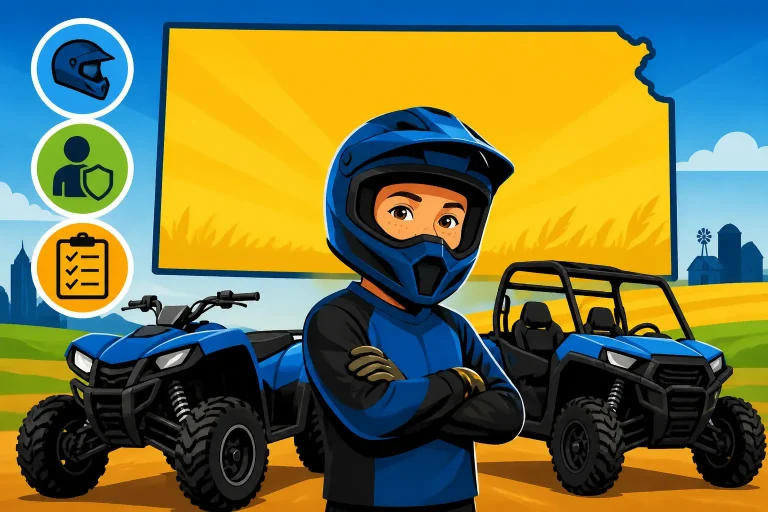
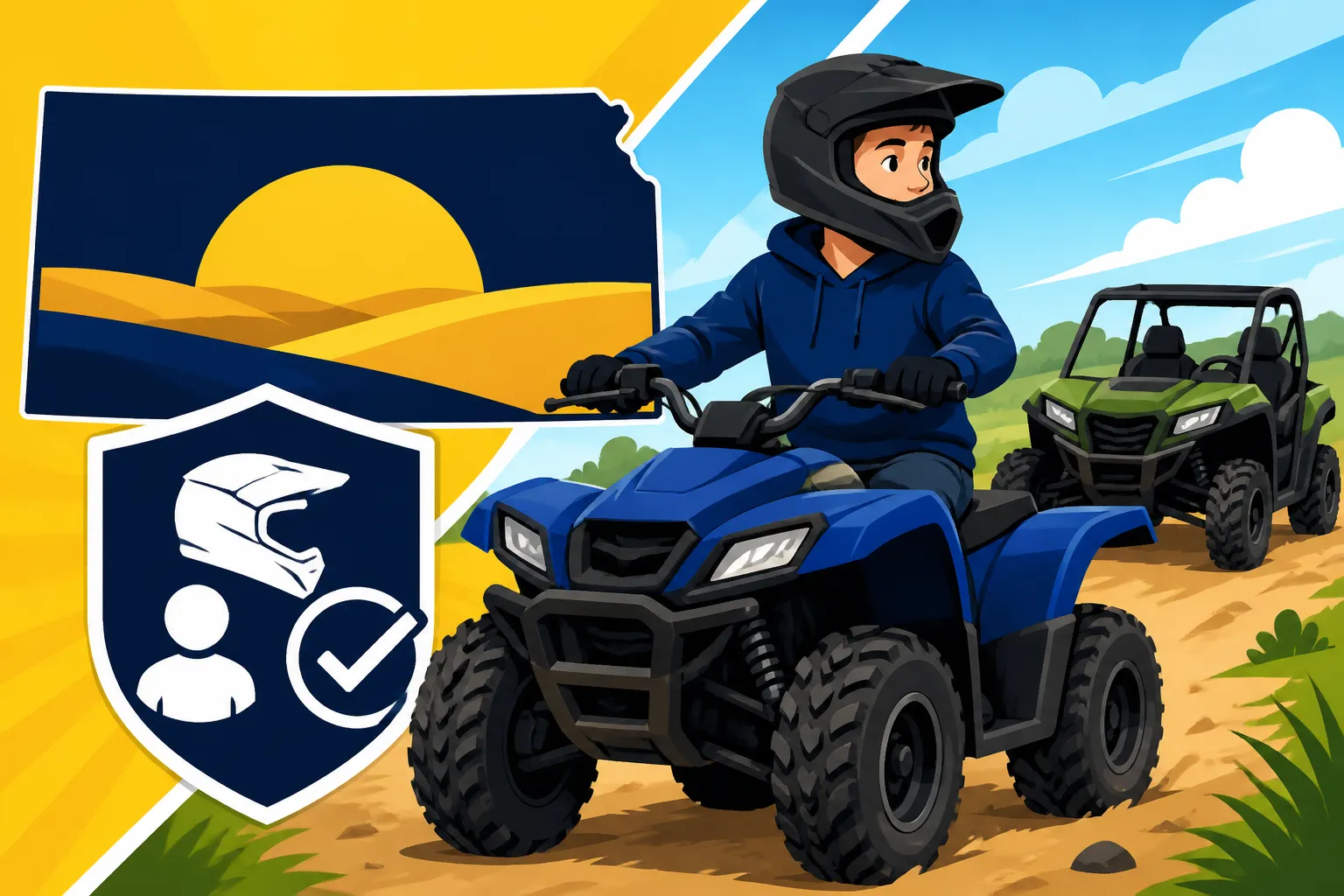
Protective gear is worth treating as a requirement even when a particular ride does not impose it. A properly fitted helmet, eye protection, gloves, long sleeves, long pants and sturdy footwear help reduce common risks from impacts, branches, dust and hot parts. Kansas’s motorcycle helmet law should not be mistaken for a universal ATV helmet rule; park policies may impose their own requirements. Does Kansas Have an ATV Helmet Law at All? explains the distinction. When choosing a helmet, look for a model that fits securely and is designed for off-road riding; a broad retailer such as Amazon may carry options, but fit and safety certification matter more than the storefront.
Set boundaries before starting the engine. A teen should know where riding is allowed, which areas are off-limits, how to stop the machine and when to return. Agree on rules about riding alone, riding near roads, carrying passengers, speed, alcohol or drugs around the ride, and stopping when visibility or weather becomes poor. On farm property, establish clear limits around livestock, equipment, ponds, steep ground and active work areas.
Adult supervision should be active, not just nearby. A responsible adult can check the route, confirm the machine is in good condition, make sure the teen has the right gear and stay close enough to respond if something goes wrong. For a new rider, begin on a flat, open area away from traffic and obstacles. Practice starting, stopping, turning and braking before using unfamiliar terrain.
A practical checklist before a fourteen-year-old rides
Use this checklist before each outing. The rules may be straightforward on private land and more complex at a park or near a road, so confirm the details for the exact location.
- Identify the machine. Confirm whether it is an ATV, side-by-side, golf cart or another class. Do not assume that rules for one type automatically apply to another.
- Confirm permission and access. Ask the landowner or park whether a fourteen-year-old may ride that machine there. Check for age limits, required supervision and closed areas.
- Separate off-road use from road use. Do not ride along a public road unless a specific legal exception or local ordinance permits it and the rider meets every condition. A crossing is not general road permission.
- Check permits and entry rules. Find out whether a particular public area requires a permit for road or parking-area use. Do not treat that permit as trail access or permission to ignore age rules.
- Match the machine to the rider. Check the manufacturer’s guidance and make sure the teen can reach the controls, steer and brake confidently.
- Set passenger limits. Use only manufacturer-provided seats and restraints, and follow the park’s rules. Do not add a passenger to a single-seat ATV.
- Inspect gear and the machine. Check the helmet fit, eye protection, footwear, brakes, tires, throttle and fuel or battery condition.
- Agree on a route and return time. Make sure the teen knows boundaries, hazards, emergency plans and when to stop riding.
- Recheck local rules when the location changes. Permission at home does not carry over to a neighbor’s property, a public area or a different city.
If a rule is unclear, ask the landowner, park office or city that controls the route before riding. A quick check can prevent a teen from being turned away at the gate or, more seriously, being put in a situation where the machine is not legally allowed.
Disclaimer
This article is for general informational purposes only and does not constitute professional advice. Laws, prices and regulations vary by location and change over time. Consult a qualified professional for guidance on your specific situation.