Kansas Parent Riding With a Child
Taking an ATV or UTV out with a child involves more than choosing a quiet trail. The machine must fit the rider, any passenger must have a proper seat, and the route must allow that kind of riding. Kansas parents also need to check local rules and park policies. A little planning helps you keep the outing manageable and avoid confusing a permit with permission to ride.
Choose the right role and machine for the child
Start by deciding whether your child will ride as a passenger or operate a machine. Those are different situations, and a machine that can safely carry an adult passenger may still be too large or powerful for a child to drive.
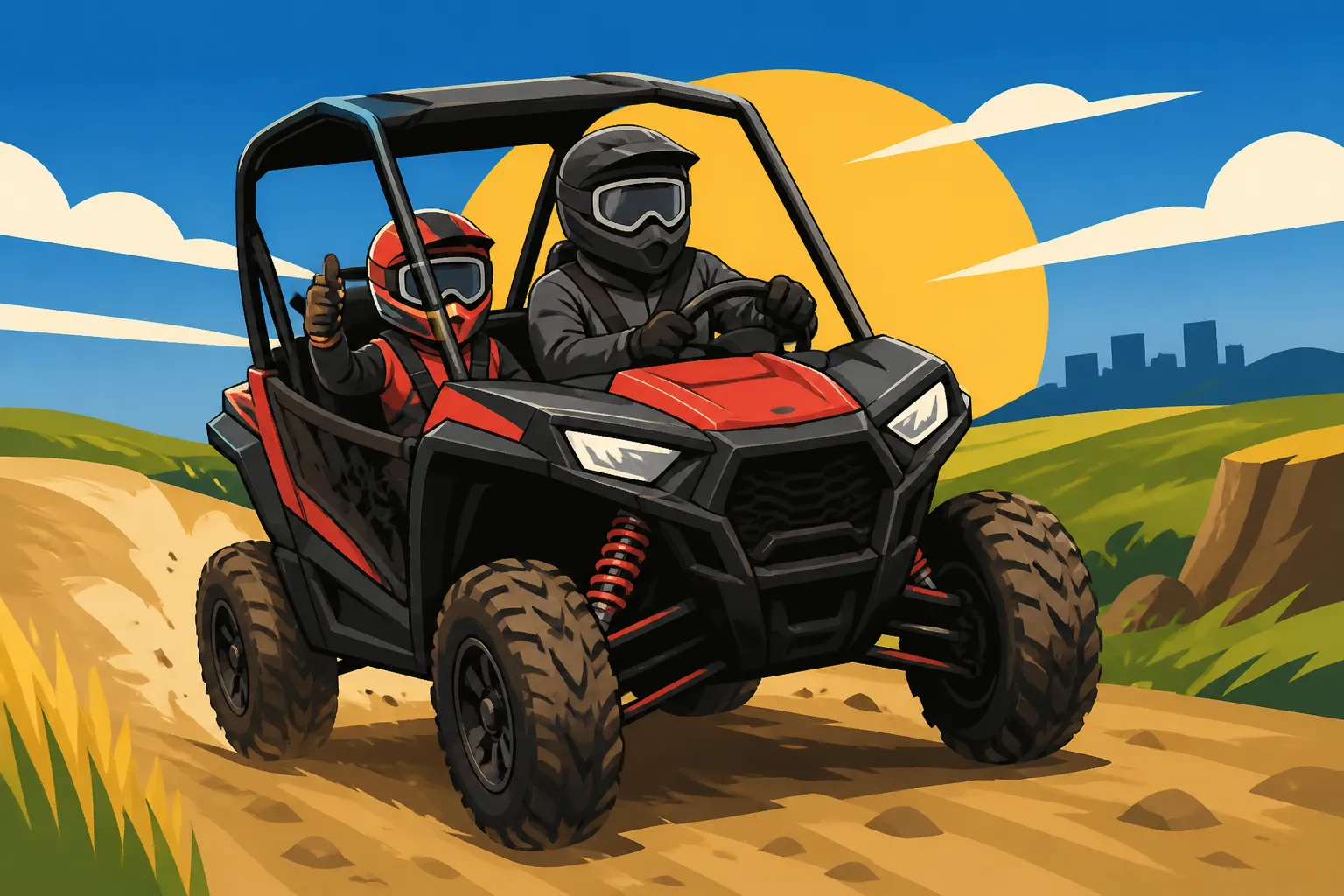
A child should never ride on an adult’s lap, stand on a footrest, or share a seat that was designed for one person. If the child is a passenger, use only a machine the manufacturer designed to carry a passenger, and use its passenger seat, footrests and restraints as intended. A child who cannot sit securely, reach the footrests, hold on, and follow instructions is not ready to ride as a passenger.
If your child will operate an ATV, choose a model sized for that child—not one they can “grow into.” The rider needs to reach the controls comfortably, keep a firm grip, and manage the machine without struggling to turn, stop or shift position. A powerful adult quad can be difficult for a child to control, even on a broad, flat field.
Kansas rules can depend on the type of machine and where it is being used. Before riding, review Kansas ATV Age Requirements and Kansas Rules for a Child Passenger. Don’t assume that a child who meets a private park’s minimum age is automatically ready for a particular machine.
| Situation | Safer approach | Check before riding |
|---|---|---|
| Child rides as a passenger | Use a machine with a manufacturer-designed passenger seat and passenger equipment | The child can sit securely, reach footrests and hold on |
| Child operates an ATV | Choose a youth-sized machine the child can control | The child understands the controls and can stop and turn reliably |
| Teen operates a UTV | Match the machine to the teen’s size and ability | Passenger capacity, local rules and any park age limits |
| Child is unsure or uncomfortable | Stop, reduce the challenge or end the ride | Never pressure a child to continue |
An older child or teen may have more strength and judgment than a younger rider, but age alone is not a reliable measure of readiness. Talk through basic commands before starting: how to stop, what to do if the group gets separated, and how to signal that they need a break. If the child cannot explain those steps back to you, practice them off the machine first. Kansas Rules for a Teen Rider can help you identify age-related questions to check.
Keep the first ride short and simple. A child may appear confident while stationary but become overwhelmed by noise, bumps, dust or the need to react quickly. Build ability gradually rather than testing it on a steep hill, through deep mud or in a crowded riding area.
Confirm the route, access rules and permits
A safe machine and capable rider do not make every road, trail or field legal to ride. In Kansas, check the rules for the exact place you plan to use. Requirements may differ between a private riding park, land you own, land you have permission to use, a public area and a town street.
On private property, get clear permission from the landowner and follow any limits they set. Permission to cross a property is not necessarily permission to ride wherever you want on it. Ask where riding is allowed, whether there are gates or livestock to avoid, and whether children may ride there. The practical details matter: a narrow pasture lane with cattle or a field beside a busy road may be a poor choice for a first outing. See Kansas Landowner Permission Rules for more on access.
At a riding park, read the rules before unloading. Private parks can set their own minimum ages, passenger requirements, helmet rules and trail restrictions. A park’s age policy is a minimum for entry or participation, not a promise that every child is ready to ride every machine or route. Check the park’s current rules directly, especially if you are bringing a child as a passenger. [Kansas Private Park Minimum Ages] and Kansas Private Park Helmet Rules cover common policy questions.
A state permit should not be treated as an all-purpose trail pass. Confirm what the permit covers, where it applies and whether the riding area itself is open to your machine. Kansas Park Permit vs Trail Permit explains why permission to use certain park roads does not automatically authorize riding on trails. If you are unsure, call the managing office or park before loading the machines.
Also check local rules if your plan includes streets or roads. A city ordinance may authorize some kinds of machine use under specific conditions, while a nearby town may not allow it. A child passenger does not change the road rule, and a city tag or permit does not necessarily make a machine legal everywhere. For a street ride, check Kansas UTV Street Legal Rules by City and confirm the rules with the city that controls the route.
Before leaving home, verify:
- That the riding area is open and allows your machine’s type and size.
- That children and passengers are allowed under the venue’s rules.
- Whether the venue requires proof of ownership, insurance, a permit or a waiver.
- Any posted limits on trail direction, speed, age, sound or protective equipment.
- Whether the route has hazards such as steep edges, deep water, loose sand or vehicle traffic.
Use protective gear and set clear riding limits
Make a properly fitted helmet a basic requirement for every child, whether or not a specific location requires one. A helmet should fit snugly, stay in place when the child moves their head, and be suitable for the type of riding. A bicycle helmet is not a substitute for an off-road helmet. Check the helmet’s markings, sizing guidance and care instructions, and replace it after a significant impact or when the manufacturer says it is no longer serviceable.
If shopping online, including on Amazon, use the helmet maker’s sizing chart and verify the product’s intended use and certification information rather than relying on a product title or a child’s age alone. Fit matters: a helmet that is too loose or shifts over the eyes may not protect the way it should.
A helmet is only part of the setup. Children should also wear eye protection, gloves, long sleeves, long pants and sturdy over-the-ankle footwear. Choose clothing that protects against branches, dust and hot components without loose drawstrings or fabric that could catch on controls. In changing weather, add layers that will not interfere with the helmet or the child’s ability to move.
Before each ride, take a few minutes to check the machine together. Look for obvious damage, confirm that controls and brakes work, and make sure the child can reach what they need to operate. For a passenger ride, check that the passenger seat and footrests are secure and that the child can remain seated while holding on. If you notice a problem, don’t treat it as something to fix after the ride.
Set limits before you start, not after a child becomes excited. For example:
- Ride at a speed that allows you to stop well within the visible path.
- Keep children within sight and close enough to communicate.
- Stay on the agreed route and avoid shortcuts, jumps and steep slopes.
- Stop if a child is tired, cold, overheated, frightened or distracted.
- Don’t ride with a child if you or the child have been drinking or using impairing substances.
A child may say they are fine because they want to keep up with older riders. Watch their posture and attention as well as their words. A child who is slumping, missing instructions, gripping unusually tightly or making repeated mistakes may need a break. Keep the group’s pace slow enough that the least experienced rider can stay in control.
A safety course is useful even when a course is not required for the ride you have planned. It can teach basic control, hazard awareness and riding habits that are hard to learn from a quick explanation in the driveway. Look into Kansas Safety Course Options and consider taking a course together, especially before a child begins operating a machine.
Plan the outing around a child’s limits
A family ride works best when the route is chosen for the least experienced rider, not the most capable adult. Start with a short, familiar route and easy terrain. Avoid mixing inexperienced children with fast riders, crowded areas or machines that kick up heavy dust. If the group has different skill levels, agree on a regrouping point and have an experienced adult stay with the child.
Pack for a stop or an early return. Bring water, basic first-aid supplies, charged phones where service is available, and any medication the child may need. Tell another adult where you are going and when you expect to return. In areas with weak cell coverage, do not rely on a phone as your only way to get help; keep the route simple and make a plan for what the group will do if a machine breaks down.
Before moving, explain a few simple rules in language the child can repeat:
- Stay on the route and keep a safe distance from other machines.
- Stop when the adult gives the agreed signal.
- Don’t approach another machine or cross a road without permission.
- Tell an adult immediately if something feels wrong.
For a passenger, explain how to hold on, keep feet on the footrests and stay seated. For a child operating a machine, practice stopping and turning in an open, low-risk area before attempting a longer ride. A parent should supervise closely, but supervision does not replace choosing a machine and route the child can manage.
Proof of ownership and other paperwork may matter at some riding areas, so check what to carry before you go. Kansas Proof of Ownership on the Trail covers that issue. Keep documents secure and accessible rather than relying on a phone signal to retrieve them.
If the child is not ready to ride, there is no need to turn the outing into a test. They can watch from a safe designated area, ride as a passenger on a properly equipped machine if appropriate, or try again another day. A calm end to a short ride is better than pushing through fear or fatigue.
Disclaimer
This article is for general informational purposes only and does not constitute professional advice. Laws, prices and regulations vary by location and change over time. Consult a qualified professional for guidance on your specific situation.