The Farm Exception Still Requires a Driver’s License
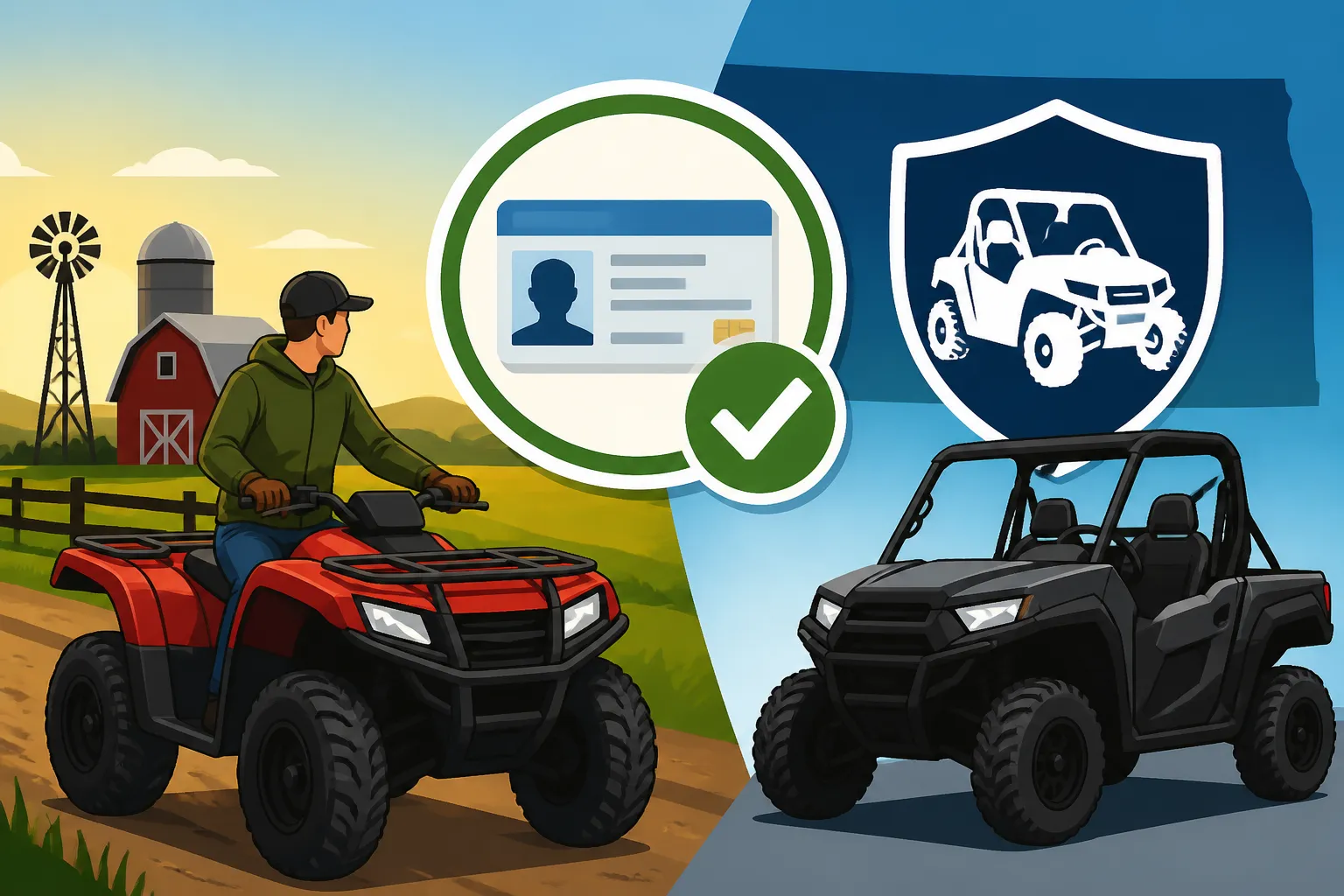
It’s a common scenario across the Sunflower State: you’ve got fields to check, cattle to move, or feed to haul, and your trusty ATV or side-by-side is the perfect tool for the job. You might even know about Kansas’s "farm exception" that allows you to take your machine on certain public roads for agricultural purposes. But here’s where many folks get tripped up, often with a hefty dose of frustration when they encounter law enforcement: that exception doesn't mean you can ditch your driver's license. This guide is here to clarify exactly why, even for legitimate farm use, you absolutely need to be a licensed driver when your wheels touch public roads in Kansas.
Navigating the Baseline: Kansas's General Ban on ATVs on Roads
Kansas law, for the most part, treats ATVs and UTVs as off-highway vehicles, primarily designed for terrain far rougher than your typical paved or gravel road. This fundamental classification sets the stage for why their use on public roads is so restricted, and why any exceptions come with their own set of rules. It’s not just about the vehicle itself; it’s about public safety and how the state defines what belongs on its highways and byways.
The Default Position: Why ATVs Are Generally Banned
When you first buy an ATV or side-by-side, it’s usually clear from the manufacturer that these machines aren’t built for street legal operation. They lack many of the safety features found on cars and trucks, like crumple zones, advanced braking systems for high speeds, and fully enclosed cabins. The state of Kansas recognizes this by generally prohibiting these vehicles from being operated on public roads. This isn't meant to be a nuisance; it's rooted in a concern for the safety of both the rider and other motorists. Imagine a small, fast ATV trying to keep up with highway traffic – it’s simply not designed for that environment. Drivers often express frustration because they see their machines as perfectly capable, but the law looks at the inherent design and safety standards. For a deep dive into these fundamental rules, you might find [Kansas ATV Road Rules Under 8-15,100] helpful.
The Role of Vehicle Definitions in Road Restrictions
The legal definitions are really what drive these restrictions. Kansas law has specific classifications for different types of vehicles, and ATVs typically fall under "nonhighway vehicles." This means they're not intended for registration as regular motor vehicles, and therefore, not for general road use. These definitions aren't just bureaucratic red tape; they dictate everything from titling requirements to where you can legally operate your machine. Understanding [How Kansas Law Defines a Nonhighway Vehicle] can shed more light on why your quad isn't a car in the eyes of the law, even if it has four wheels.
Exceptions to the Rule: The Farm-to-Market Concept
Now, this is where things get interesting for farmers and ranchers. Kansas agriculture is a huge part of the state's identity, and the law acknowledges the practical necessity for farmers to move their equipment short distances on public roads. This is where the "agricultural purpose" exception comes in. It allows for limited use of ATVs and UTVs on public roads, but strictly for activities directly related to farming or ranching. It's not a free pass to ride anywhere, but a pragmatic allowance for specific, work-related needs. This is sometimes called the "farm-to-market" concept, although it's more accurately about "field-to-field" or "barn-to-pasture."
Unpacking the "Agricultural Purpose" Exception
So, you know there's an exception, but what exactly does it entail? The "agricultural purpose" isn't a blanket term that covers anything you do on or around your land. It's quite specific, and misinterpreting it can lead to unfortunate interactions with law enforcement. This distinction is crucial for any Kansas farmer or rancher relying on their ATV or side-by-side for daily operations.
What Truly Qualifies as an Agricultural Trip
To be clear, an "agricultural purpose" means you are using the machine to perform tasks directly related to the production of crops, livestock, or other agricultural products. This could be:
- Moving from one field to another to spray crops or check fences.
- Hauling tools or supplies to a remote pasture for livestock management.
- Transporting feed to animals on distant grazing land.
- Checking irrigation pivots or other farm infrastructure spread across multiple parcels.
However, the definition doesn't extend to things like:
- Riding your ATV to the local convenience store for a soda.
- Taking it to a friend's house down the road, even if your friend is also a farmer.
- Using it for recreational riding on a county road, even if you just finished checking cows.
- Commuting to a job that isn't directly farm-related.
These seemingly small differences can be huge in the eyes of the law. A deputy seeing you ride your machine down a public road will be looking for clear evidence of an agricultural purpose. Having your tools, fencing supplies, or a dog in the back specifically for herding could be helpful context. You can learn more about these specific uses in [Kansas Machines Used Only on a Farm].
The Permitted Roadways and Critical Restrictions
Even when your trip is unequivocally for an agricultural purpose, the Kansas farm exception doesn't open up all public roads to your ATV or UTV. Generally, this exception applies to county roads and section lines – those familiar gravel roads that grid the Kansas landscape. It allows you to cross certain highways or travel short distances along them, but often with conditions.
What's typically off-limits, no matter the purpose, are interstates, federal highways (like US-54 or US-83), and generally, city streets unless a specific local ordinance allows it. The idea is to allow you to traverse necessary agricultural routes without introducing slow-moving, less visible machines onto high-speed, high-traffic thoroughfares. When you're driving a machine that's not typically road legal, you're expected to operate it as far to the right as practicable, maximize your visibility, and obey all traffic laws. It's a privilege, not an inherent right. For more details on where you can and cannot ride, check out [Kansas Rules for Riding a County Road] and [Kansas Rules for Riding a Section Line].
The Non-Negotiable Driver's License Requirement
This is the big one, the point where most confusion and frustration arises. Many people assume that if their machine is exempt from normal road rules for agricultural purposes, it also means they don't need a driver's license. This assumption is incorrect and can lead to significant legal trouble.
Why a License is Still Essential for Farm Use on Public Roads
Here's the core of it: when you operate any motor vehicle on a public roadway in Kansas, regardless of whether it's a car, truck, or an ATV under a farm exception, you are subject to the laws governing licensed drivers. Your ATV or UTV might be a "nonhighway vehicle," but the moment its tires touch public asphalt or gravel, you are operating on a public thoroughfare.
The state views this as a matter of basic competence and accountability. A driver's license signifies that you have passed tests demonstrating your knowledge of traffic laws, your ability to safely operate a vehicle, and that you are generally a responsible operator. Even for short distances between fields, you are sharing the road with other vehicles – cars, trucks, farm equipment, and even semi-trailers. The potential for accidents, especially with a machine that isn't typically street-legal, means that the state still requires you to possess the fundamental credential of a licensed driver. It's not about the machine's classification; it's about the operator's qualification.
Consider the liability aspect, too. If you're involved in an accident while operating an ATV on a public road without a valid driver's license, even for a legitimate agricultural purpose, your legal exposure could be substantially higher. Insurance companies may also view such a situation differently. It's a simple rule that can save you a lot of headache and heartache down the line. You're still expected to follow [Kansas Riders Must Keep to the Right] and other fundamental rules of the road.
Consequences of Riding Without a License on Public Roads
Ignoring the driver's license requirement can have immediate and unpleasant consequences. If a county sheriff or state trooper pulls you over and you don't have a valid license, you could face:
- Fines and Court Costs: Operating a motor vehicle without a license is a traffic infraction that comes with a monetary penalty. These costs can add up quickly, far exceeding any perceived convenience of not getting licensed.
- Impoundment of Your Machine: In some cases, especially if there are other violations or if it's a repeat offense, law enforcement might have the authority to impound your ATV or UTV. This means additional impound fees, storage costs, and the hassle of retrieving your valuable equipment.
- Delayed Farm Work: Being pulled over, dealing with a citation, or having your machine impounded will inevitably disrupt your farm operations, costing you precious time and potentially impacting your livelihood.
- Increased Scrutiny: Once you've been cited for one violation, law enforcement might keep a closer eye on your activities. It's simply better to operate within the bounds of the law from the start.
It’s easy to think, "Oh, it's just a quick hop down the road, no one will notice," or "I'm on my own land, mostly." But the law makes a clear distinction between private property and public roads. Don't let a momentary lapse in judgment turn into a costly legal situation. For a broader understanding of the repercussions, check out [Kansas Penalties for Illegal Road Riding].
Other Important Considerations for Farm-Use ATVs
Beyond the crucial driver's license requirement, there are several other factors Kansas farmers and ranchers should keep in mind when using their ATVs or UTVs for agricultural purposes on public roads. These considerations enhance safety, ensure compliance, and can make your life a lot easier when you're out and about.
Age Requirements and Supervision
While the focus here is on the driver's license, it's worth noting that Kansas has age restrictions for operating ATVs in general, even off-road. For public road use under the farm exception, a valid driver's license inherently addresses the age component for the operator, as you must be at least 16 (or 15 with a restricted license, though rules can vary). However, if you have younger family members helping out on the farm, remember that they cannot simply hop on an ATV and drive it down a county road, even for farm work, without a license. Supervision requirements for younger riders typically apply to off-road settings, but the moment a public road is involved, the driver's license rule takes precedence for the operator. Make sure any family members operating farm equipment on roads are properly licensed and understand the rules.
Essential Equipment Beyond the License
Having a driver's license is just one piece of the puzzle. When your farm machine is on a public road, even briefly, it needs to be equipped for visibility and safety. This includes:
- Lights: If you're operating between sunset and sunrise, or during periods of low visibility (like heavy fog or rain), your ATV or UTV must have functional headlights and taillights. These don't have to meet full street-legal car standards, but they must be visible. Many machines come with basic lighting, but if yours is older or your lights are dim, it's a good idea to upgrade them. Products from companies like SuperATV offer robust lighting solutions that can handle the rigors of farm work while ensuring you're seen.
- Slow-Moving Vehicle (SMV) Emblem: While not always explicitly required for all farm vehicles under every interpretation, it's a best practice for any slow-moving equipment on public roads. The bright orange triangle makes it clear to approaching drivers that you're moving slower than typical traffic.
- Brakes and Steering: Naturally, your machine must be in good working order, with fully functional brakes and steering. Regular maintenance is key, not just for the longevity of your equipment, but for safety on the road.
Remember, the goal is to prevent accidents. Making yourself as visible and predictable as possible is paramount. For detailed information on lighting, refer to [Kansas Lighting Rules After Sunset].
Understanding Local Ordinances and Their Impact
While the state law provides the agricultural exception, some cities and counties might have their own specific ordinances that could affect your ability to use an ATV on public roads, especially if your farm property is near or within city limits. It's less common for these local rules to override the state's agricultural exception on rural county roads, but it's always wise to be aware.
For example, a city might have a blanket ban on ATVs on all city streets, regardless of purpose, unless they've passed a specific ordinance allowing UTVs to be registered for limited street use. If your farm involves crossing into a small town's jurisdiction, it's worth a quick call to the city clerk's office to understand any local nuances. It's always better to be proactive than to find out the hard way that you've violated a local rule.
Practical Tips for Kansas Farmers and Ranchers
Knowing the law is one thing, but applying it practically in your daily farm operations is another. These tips can help you stay compliant, avoid unnecessary scrutiny, and ensure your agricultural work continues smoothly and safely.
Documenting Your Agricultural Purpose
While it's not a legal requirement to carry a binder of documents detailing your exact trip, having some readily available information can smooth over an encounter with law enforcement. If you're pulled over while operating your ATV on a public road under the farm exception, a deputy might ask about your purpose. Being able to articulate clearly where you're coming from, where you're going, and what agricultural task you're performing can be very helpful.
Consider having:
- Proof of Ownership: A title or registration document for your ATV/UTV.
- Simple Explanation: A brief, clear statement of your farm operation and the specific task you're performing. "I'm moving feed to the north pasture," or "I'm checking the fence line between my two fields."
- Farm Business Card (if applicable): Something that quickly identifies you as a legitimate agricultural operator.
- Visual Cues: Having farm tools, a spray tank, or other agricultural equipment visible on your machine can serve as immediate evidence of your purpose.
Remember, a deputy's job is to enforce the law, and they might not be intimately familiar with every farmer's daily routine. Being polite, cooperative, and able to clearly explain your situation can go a long way. This ties into [What a County Sheriff Can Ask a Rider to Show].
Staying Visible and Safe on Kansas Roads
Even with a license and a legitimate agricultural purpose, safety is paramount. ATVs and UTVs are smaller and often less visible than traditional farm equipment or passenger vehicles. When you're on a public road, assume other drivers might not see you, especially on dusty gravel roads or at dawn and dusk.
- Enhance Visibility: Use your headlights and taillights even during the day, especially if visibility is anything less than perfect. Wear bright clothing. Consider adding reflective tape to your machine or trailer. Aftermarket accessories from companies like SuperATV can provide additional safety features like LED light bars for better illumination or brighter turn signals if your machine is equipped for them.
- Drive Predictably: Avoid sudden swerves or unexpected turns. Use hand signals if your machine doesn't have turn signals, or even if it does, to be extra clear.
- Keep to the Right: Always stay as far to the right side of the road as is safely possible, allowing faster traffic ample room to pass. [Kansas Riders Must Keep to the Right] is a good reference here.
- Road Conditions: Be mindful of road conditions. Gravel roads can be unpredictable, with loose aggregate, potholes, or washboards. Adjust your speed accordingly.
- Avoid Distractions: Just like in a car, avoid distractions while operating your ATV on a public road. Your full attention needs to be on the road, traffic, and your surroundings.
By combining legal compliance with common-sense safety practices, you can ensure your ATV or UTV remains a valuable asset for your Kansas farm, rather than a source of legal headaches.
Comparison of ATV Road Rules: General vs. Farm Exception
Here's a quick look at how the general rules for ATVs on Kansas roads compare to those under the agricultural exception:
| Feature | General ATV Road Use (No Exception) | Agricultural Purpose (Farm Exception) |
|---|---|---|
| Driver's License | Not Applicable (ATV generally banned) | REQUIRED (Valid Kansas or equivalent) |
| Primary Road Use | Generally Prohibited | Short distances on county roads/section lines |
| Road Types Allowed | Private property only | County roads, section lines; crossing state highways |
| Road Types Prohibited | All public roads | Interstates, federal highways (generally), city streets (unless local ordinance) |
| Purpose of Travel | Recreational (off-road only), private property work | Directly related to farming/ranching activities |
| Vehicle Equipment | Basic safety equipment (off-road) | Lights (especially sunset/sunrise), SMV emblem recommended, working brakes/steering |
| Registration/Tag | Not Required (Nonhighway vehicle) | Not Required (Still a nonhighway vehicle) |
| Insurance | Not legally required by state (often recommended) | Not legally required by state (often recommended, especially for liability) |
| Penalties for Violation | Fines, impoundment, court costs | Fines, impoundment, court costs; operating without a license charge |
Disclaimer
This article is for general informational purposes only and does not constitute professional advice. Laws, prices and regulations vary by location and change over time. Consult a qualified professional for guidance on your specific situation.