Kansas Cities That Opt In by Ordinance
It's incredibly frustrating when you invest in a great ATV or UTV, dreaming of using it for more than just trails, only to find that Kansas law generally bans these machines from public roads. Many owners feel like they're navigating a confusing maze of statutes and exceptions, leaving them wondering if their machine will ever see a paved street legally. This guide aims to clear up that confusion by diving deep into how some Kansas cities have taken matters into their own hands, allowing ATVs and UTVs on their streets through specific local ordinances, and what you need to know to ride legally in those areas.
The Statewide Road Ban: A Universal Starting Point
Let's be real, the first thing most ATV and UTV owners in Kansas learn, often the hard way, is that the state generally does not permit these machines on public roads. You might see a farmer cross a highway or ride a ditch, but those are very specific, limited exceptions, not a general allowance for cruising through town. This blanket prohibition can be a real buzzkill, especially if you bought your side-by-side with dreams of running errands or getting to a nearby hunting spot without trailering. It feels like a big wall, and it's where much of the confusion begins.
Kansas state statute 8-15,100 explicitly outlines the conditions under which these vehicles are restricted. It’s designed to keep non-highway vehicles off of, well, highways and other public roadways. This is where the term "nonhighway vehicle" truly takes root, dictating how your machine is titled and what it can and cannot do. For many, this is a bitter pill to swallow, as modern UTVs often come equipped with features that make them seem road-ready, like turn signals, headlights, and seatbelts. But alas, state law is state law.
Why Kansas Law Generally Prohibits Off-Road Machines on Streets
The reasons behind the statewide ban are multifaceted, but primarily revolve around safety and vehicle classification. Off-road machines like ATVs and UTVs are designed for rough terrain, not for interacting with standard road traffic. They often lack the specific safety features, crash ratings, and speed capabilities deemed necessary for highway travel. While you might feel perfectly safe on your machine, state legislators have a broader view of public safety, and that often means drawing clear lines between what belongs on a trail and what belongs on a street.
Furthermore, the legal definitions matter immensely. Kansas law defines ATVs, for example, as "all-terrain vehicles," which are distinctly separate from motorcycles or automobiles. These definitions are fundamental to how they are titled and regulated. You'll find that [Kansas Titles ATVs as Nonhighway Vehicles], which immediately sets them apart from typical road-going vehicles that get standard motor vehicle titles and license plates. This foundational legal distinction underpins why you can't just slap a license plate on your quad and hit the asphalt outside of very specific circumstances.
Limited State-Level Exceptions
Even with the general prohibition, there are very narrow exceptions carved out in state law. These typically apply to specific use cases, such as agricultural purposes or emergency services. For instance, a farmer might be able to operate an ATV or UTV on a public road for a short distance between fields, or a utility worker might use one to access equipment along a right-of-way. These are not about making your machine "street legal" for general recreational use, but rather about accommodating essential functions.
These exceptions often come with their own set of rules, such as speed limits, daylight-only operation, or requirements for slow-moving vehicle emblems. You can't just assume your farm machine is exempt from all rules; there are still boundaries. Understanding these nuances is crucial, but for the average rider hoping to drive their UTV to the grocery store, these state-level exceptions offer little comfort or practical application.
The Power of Local Ordinances: How Cities Opt In
Despite the statewide ban, there's a glimmer of hope for ATV and UTV enthusiasts in Kansas: local city ordinances. Many cities, recognizing the growing popularity and utility of these machines, have exercised their local authority to create specific rules that allow ATVs and UTVs on their municipal streets. This is a game-changer for residents in these communities, effectively creating localized "street legal" zones where none existed before. It's a testament to local control and the willingness of city councils to respond to the needs and desires of their constituents.
It’s important to understand that these ordinances only apply within the specific city limits that enacted them. You can’t assume that because one city allows UTVs, the neighboring town does too. Each city acts independently, setting its own rules, fees, and requirements. This creates a patchwork of regulations across the state, which can be confusing but also empowering if you live in or visit an "opt-in" community.
What an Ordinance Entails
When a city council decides to allow ATVs and UTVs on its roads, they do so by passing a specific ordinance. This ordinance is a local law, and it outlines all the conditions under which these machines can be operated within the city's jurisdiction. It's not a suggestion; it's a binding legal document. These ordinances typically address a range of critical factors, including:
- Vehicle Types: Which specific types of machines are permitted (e.g., UTVs only, ATVs only, or both).
- Equipment Requirements: What safety equipment the machine must have, often going beyond factory standards.
- Driver Requirements: Age, license, and sometimes even a safety course.
- Operating Restrictions: Speed limits, hours of operation, and which streets are off-limits (e.g., state highways that pass through the city).
- Permitting/Tagging: Whether a special city permit or tag is required, and the associated fees.
- Insurance: Proof of liability insurance is almost always a requirement.
Essentially, [How a City Council Opens Its Streets to UTVs] involves a detailed legislative process where local officials weigh public safety against recreational and utility benefits. This careful consideration results in a document that you, as a rider, must thoroughly understand and follow to avoid penalties.
Why Cities Choose to Opt In
Cities choose to opt in for a variety of reasons. In rural communities, ATVs and UTVs are often integral to farm work and property maintenance, and allowing them on streets can simply make residents' lives easier. For recreational hubs, particularly those near trails or large properties, allowing these machines can boost local tourism and commerce. Sometimes, it's just about community demand; residents want the convenience of driving their side-by-side to the corner store or to a friend's house.
Furthermore, many modern UTVs, especially those from reputable brands like SuperATV, come equipped with or can be easily upgraded with accessories that meet many road-safety standards, such as turn signals, mirrors, and horns. This makes the argument for allowing them on city streets more compelling than it might have been years ago with older, more rudimentary machines. The increased safety features and robust designs of today's UTVs help bridge the gap between their off-road origins and their potential for limited on-road use.
Notable Kansas Cities That Have Opted In
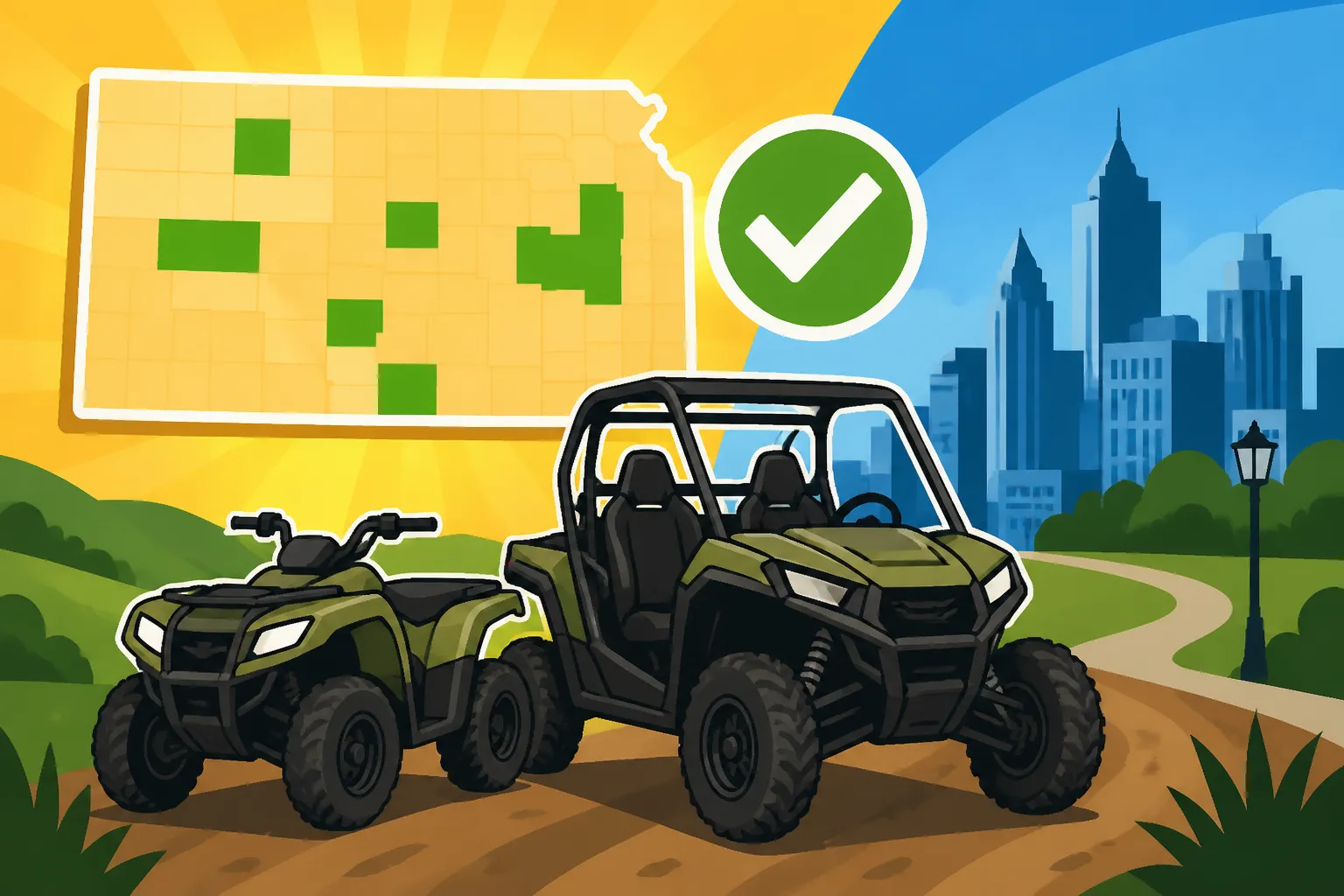
While Kansas doesn't have a universal list of all cities with ATV/UTV ordinances, several communities have publicly embraced them, becoming known as friendly spots for off-road enthusiasts. These cities typically have active local governments that have listened to their residents and crafted specific rules to allow for safe, legal operation. It's crucial, however, to always verify the most current ordinance directly with the city clerk's office, as regulations can change.
Let's look at a few examples of places that have taken the initiative.
Louisburg: A Pioneer in UTV Accessibility
Louisburg, located in Miami County, is often cited as one of the earlier adopters of UTV-friendly ordinances in Kansas. They've established a clear process for residents to get their side-by-sides legally tagged and on city streets. The city recognized the value these machines offer to their community, from aiding in property maintenance to providing a convenient mode of local transportation. However, this convenience comes with specific requirements.
In Louisburg, you can expect to pay a fee for a city tag, and you'll need to ensure your machine meets specific equipment standards. [Louisburg's UTV Tag Fees in Kansas] are a good example of the localized costs you might incur. Beyond fees, expect police inspection of your machine to confirm it has working headlights, tail lights, brake lights, turn signals, a horn, and mirrors. Speed limits for UTVs are typically lower than posted car speeds, and they are generally restricted from higher-speed state highways that pass through the city. Louisburg's detailed approach provides a good template for what many other cities might implement.
Scott City: Embracing Off-Road Machines in Western Kansas
Out in western Kansas, Scott City also stands out as a community that has embraced the use of ATVs and UTVs on its streets. [Scott City's Ordinance in Kansas] reflects a common trend in more rural areas where these machines are a part of daily life for many residents, whether for farm work, accessing hunting land, or simply getting around town. The spirit of self-reliance and practicality often found in western Kansas translates well into allowing residents more flexibility with their choice of transportation.
Like Louisburg, Scott City's ordinance will lay out specific rules regarding required equipment, hours of operation, and possibly designated routes. It's not a free-for-all; rather, it's a regulated framework designed to integrate these vehicles safely into the existing traffic flow. For residents here, it means being able to run quick errands or visit neighbors without having to load a UTV onto a trailer, which is a huge convenience.
De Soto and Andover: Expanding Accessibility in Different Regions
De Soto, in Johnson County, and Andover, near Wichita in Butler County, are other examples of cities that have explored and implemented local ordinances. [De Soto's Ordinance in Kansas] and [Andover's Ordinance in Kansas] illustrate that the movement to allow ATVs and UTVs on city streets isn't confined to any single region or population size within Kansas. Whether it's a growing suburban community or a smaller town, city councils are recognizing the demand.
These ordinances often cater to the specific needs of their populations. For example, a city with large residential lots might see UTVs as ideal for yard work and local transport, while another might view them as a way to enhance community events or access recreational areas. The key takeaway here is that you absolutely cannot generalize. Each city's approach is unique, reflecting its local context and priorities. Therefore, checking the specific rules for [Kansas UTV Street Legal Rules by City] is always the first step.
Navigating the Requirements: What Your Machine Needs
So, your city has an ordinance – fantastic! But don't just jump on your machine and hit the road. There's almost always a list of requirements your ATV or UTV must meet to be considered "street legal" within that specific city. These requirements are put in place for safety, ensuring your machine can interact predictably and visibly with other road users. Think of it as a mini-motor vehicle inspection, but tailored for off-road machines.
These requirements often go beyond what your machine had when it rolled off the factory floor, especially if it was primarily designed for trail use. Many riders find themselves needing to add aftermarket accessories to bring their machines into compliance. Companies like SuperATV offer a wide range of parts and kits specifically designed to help UTV and ATV owners meet these kinds of street-legal conversion requirements, from turn signal kits to DOT-approved windshields.
Essential Equipment for City Road Use
Here's a breakdown of common equipment you'll likely need to add or ensure is working properly:
- Lighting: This is paramount. You'll need functioning headlights (high and low beam), tail lights, brake lights, and turn signals (front and rear). Many factory ATVs lack proper turn signals, making this a common upgrade. [Kansas Lighting Rules After Sunset] will apply, meaning your lights must be effective and visible.
- Mirrors: A rearview mirror is almost always required, and some ordinances might specify side mirrors as well. This allows you to see traffic approaching from behind, just like a car.
- Horn: A working horn is essential for warning other drivers or pedestrians.
- Windshield: While not always required for ATVs, many UTV ordinances mandate a windshield to protect the driver from debris.
- Seatbelts/Restraints: If your machine came with seatbelts, they must be in good working order. Many ordinances will require all passengers to use them.
- Tires: Your tires must be in good condition, and some ordinances might specify DOT-approved tires, though this is less common for ATVs/UTVs than for full-size vehicles.
- Fenders/Mud Flaps: To prevent throwing debris onto other vehicles, some cities require adequate fender coverage or mud flaps.
- Slow-Moving Vehicle Emblem: While often associated with farm equipment, some ordinances might require a slow-moving vehicle emblem if the top speed is restricted below a certain threshold.
[Kansas Equipment Checks by Deputies] are a real possibility if you're pulled over, so it's not just about getting the city tag – it's about maintaining your machine's compliance at all times.
Permitting, Fees, and Insurance
Beyond the physical equipment, most opt-in cities will require you to go through a permitting process. This typically involves:
- Application: Filling out a form at the city clerk's office.
- Proof of Ownership: Providing your machine's title.
- Proof of Insurance: Showing evidence of current liability insurance. This is non-negotiable for road use. [Kansas Insurance Comes From City Ordinances], meaning the city will set the minimum coverage limits.
- Inspection: Your machine may need to pass a visual inspection by city staff or local law enforcement to ensure all required equipment is present and functional.
- Fees: Expect to pay an annual or one-time fee for the city permit or tag. These fees vary widely, so always check with the specific city.
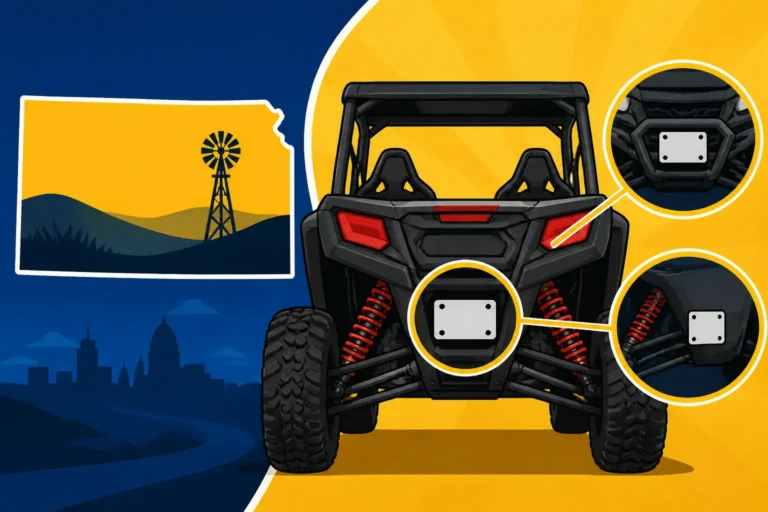
- Display: Once approved, you'll usually receive a sticker or small plate that must be displayed on your machine, indicating its city-legal status. [Where to Mount a City UTV Plate] is often specified in the ordinance.
It’s easy to overlook these administrative steps, but they are just as important as the physical upgrades. Without the proper city permit and insurance, even a fully equipped machine can lead to a citation.
Challenges and Considerations for City Riding
While the ability to ride your ATV or UTV on city streets in specific Kansas communities is a fantastic opportunity, it's not without its challenges and important considerations. Riders need to be fully aware of the limitations, responsibilities, and potential pitfalls to ensure a safe and legal experience. It’s not just about having the right gear; it’s about having the right mindset and understanding the rules of the road.
One of the biggest hurdles is the lack of uniformity. Because each city drafts its own ordinance, the rules can differ significantly from one town to the next, even if they're close geographically. This means what's legal in Louisburg might not be legal in the next town over. This "patchwork" of laws requires diligence on your part.
The Patchwork of Rules and Enforcement
Imagine driving from a city that allows UTVs to one that doesn't. The moment you cross that city limit sign, your legally operating machine could instantly become an illegal vehicle. This can be a real headache, especially if you live near a municipal boundary or plan to travel through multiple towns. There’s no statewide "city-approved" license plate or system that tells law enforcement in a different jurisdiction that your machine is compliant elsewhere.
Enforcement also varies. While police in an opt-in city are familiar with their local ordinance and what to look for, officers in a non-opt-in city will revert to the statewide ban, making no exceptions. It's up to you to know the boundaries. Furthermore, even within an opt-in city, officers will still be looking for compliance. Driving erratically, speeding, or operating without required equipment will still get you pulled over, even if you have a city tag. [Kansas Penalties for Illegal Road Riding] can range from fines to impoundment, so it’s serious business.
Speed Limits and Designated Roads
Most city ordinances impose specific speed limits for ATVs and UTVs that are often lower than the posted speed limits for cars. You might be restricted to 25 mph or 35 mph, even on streets where cars can go 45 mph. This is primarily for safety, acknowledging the different handling characteristics of these machines. It also means that some higher-speed arterial roads or state highways that pass through city limits are almost universally off-limits, even if they are technically within the city boundary.
It’s not uncommon for ordinances to list specific roads or areas where ATVs and UTVs are prohibited. These might include main thoroughfares, school zones during certain hours, or routes deemed too dangerous for these vehicles. Always read the ordinance carefully to understand [Kansas Rules for Riding a City Street] in detail, including any restricted zones. This isn't about hindering your fun; it's about safely integrating these machines into the existing road infrastructure.
Finding Out About Your City's Ordinance
If you're wondering if your local Kansas city allows ATVs or UTVs on its streets, the best course of action is always to go directly to the source. Don't rely on hearsay, social media posts, or outdated information. Local ordinances are legal documents, and they need to be treated with respect. A simple phone call or visit can save you a lot of grief (and potential fines) down the road.
The process is generally straightforward, but it requires a bit of detective work on your part. Remember, cities are not obligated to proactively advertise these rules, so you need to seek them out. This proactive approach will help you understand [Kansas Ordinance Lookups Before You Ride].
Contacting Your City Clerk or Administrator
The most reliable way to find out if your city has an ordinance is to contact your City Clerk or City Administrator's office. These individuals are the keepers of local laws and records. You can usually find their contact information on your city's official website.
When you call or visit, simply state that you are an ATV or UTV owner and you're inquiring about any local ordinances that permit their operation on city streets. Ask if they have a specific ordinance number or document that you can review. Be polite and patient; they deal with many inquiries, and specific ATV/UTV ordinances might not be their most frequent question. If they confirm an ordinance exists, ask how you can obtain a copy – often, they can email it to you or direct you to an online portal where city codes are published.
Reviewing the City's Municipal Code
Many cities now publish their entire municipal code online. This is a comprehensive collection of all local laws and ordinances. If your city has an ordinance allowing ATVs or UTVs, it will be codified here. Look for sections related to "Motor Vehicles," "Traffic," "Off-Road Vehicles," or "All-Terrain Vehicles" and "Utility Vehicles."
Reading the full ordinance is essential. Don't just skim it. Pay close attention to:
- Definitions: How does the city define an ATV or UTV? Does your machine fit that definition?
- Permit Process: Step-by-step instructions on how to get a city permit or tag.
- Equipment Requirements: A detailed list of what your machine needs.
- Operational Rules: Speed limits, hours of operation, and any prohibited streets or areas.
- Penalties: What happens if you violate the ordinance.
This thorough review will arm you with all the information you need, preventing any surprises when you try to get your machine approved or when you're out riding.
Here's a quick summary of common requirements and considerations:
| Requirement Category | Common City Ordinance Provisions | Why It Matters |
|---|---|---|
| Equipment | Headlights, Tail Lights, Brake Lights, Turn Signals (front/rear), Horn, Rearview Mirror (sometimes side mirrors), Windshield (for UTVs), Seatbelts | Essential for visibility and safe interaction with other vehicles on public roads. |
| Permitting | Annual City Tag/Sticker, Application Form, Proof of Ownership (title), Vehicle Inspection | Ensures official city approval and identifies compliant machines. |
| Insurance | Proof of Liability Coverage | Protects you and others in case of an accident, a non-negotiable for road use. |
| Driver Regs | Valid Driver's License, Minimum Age (e.g., 16 or 18) | Ensures drivers have basic road knowledge and are of legal age to operate a motor vehicle. |
| Operational Rules | Specific Speed Limits (e.g., 25-35 mph), Daylight Operation (some), Prohibited Streets (e.g., state highways, high-traffic areas), Passengers only in designated seats | Manages risk, limits interaction with fast-moving traffic, and prevents misuse. |
| Fees | Annual or One-Time Permit Fee | Covers administrative costs and local enforcement efforts. |
It's a lot to keep track of, but understanding these points will make your experience with [Kansas Rules for a Machine With a City Tag] much smoother.
Disclaimer
This article is for general informational purposes only and does not constitute professional advice. Laws, prices and regulations vary by location and change over time. Consult a qualified professional for guidance on your specific situation.