Kansas Rules for Crossing a Highway
It’s a common frustration for Kansas ATV and UTV owners: you’re trying to get from one section of your land to another, or access a different trail system, and a state highway or county road stands between you and your destination. Many riders wonder if they can even touch these main arteries, fearing a ticket or worse. This guide will thoroughly break down the specific rules for crossing highways in Kansas, empowering you to navigate these situations legally and safely.
What Does Kansas Law Say About Crossing a Highway?
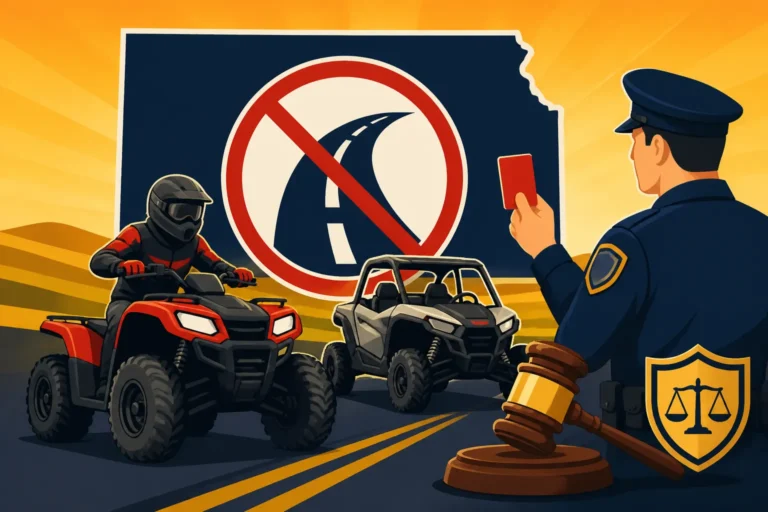
Let's cut right to the chase because this is where a lot of confusion lies for riders in the Sunflower State. Kansas law, specifically Kansas Statute 8-15,100, generally prohibits the operation of ATVs and off-highway vehicles on public highways. This broad prohibition is what makes so many riders anxious about even getting near a paved road. However, there's a critical exception, one that often gets overlooked or misunderstood: crossing.
You see, the law makes a distinction between operating (meaning driving along a highway for a distance) and crossing (meaning traversing the highway from one side to the other to continue your journey off-road). The good news is that Kansas law does allow you to cross a highway, even a state highway, provided you do so safely and directly. This is a huge relief for farmers, ranchers, and recreational riders who often need to connect parcels of land or reach distant trails. The statute understands that you can't just materialize on the other side of a road. It's about getting from Point A (off-road) to Point B (off-road) when Point C (a highway) is in the middle. Many states have this nuance, and it's essential for off-road enthusiasts to understand it fully. It's not a free pass to cruise down the highway, but it is permission to make a necessary connection. For more on the general rules, check out [Kansas ATV Road Rules Under 8-15,100].
The Direct and Immediate Crossing Rule
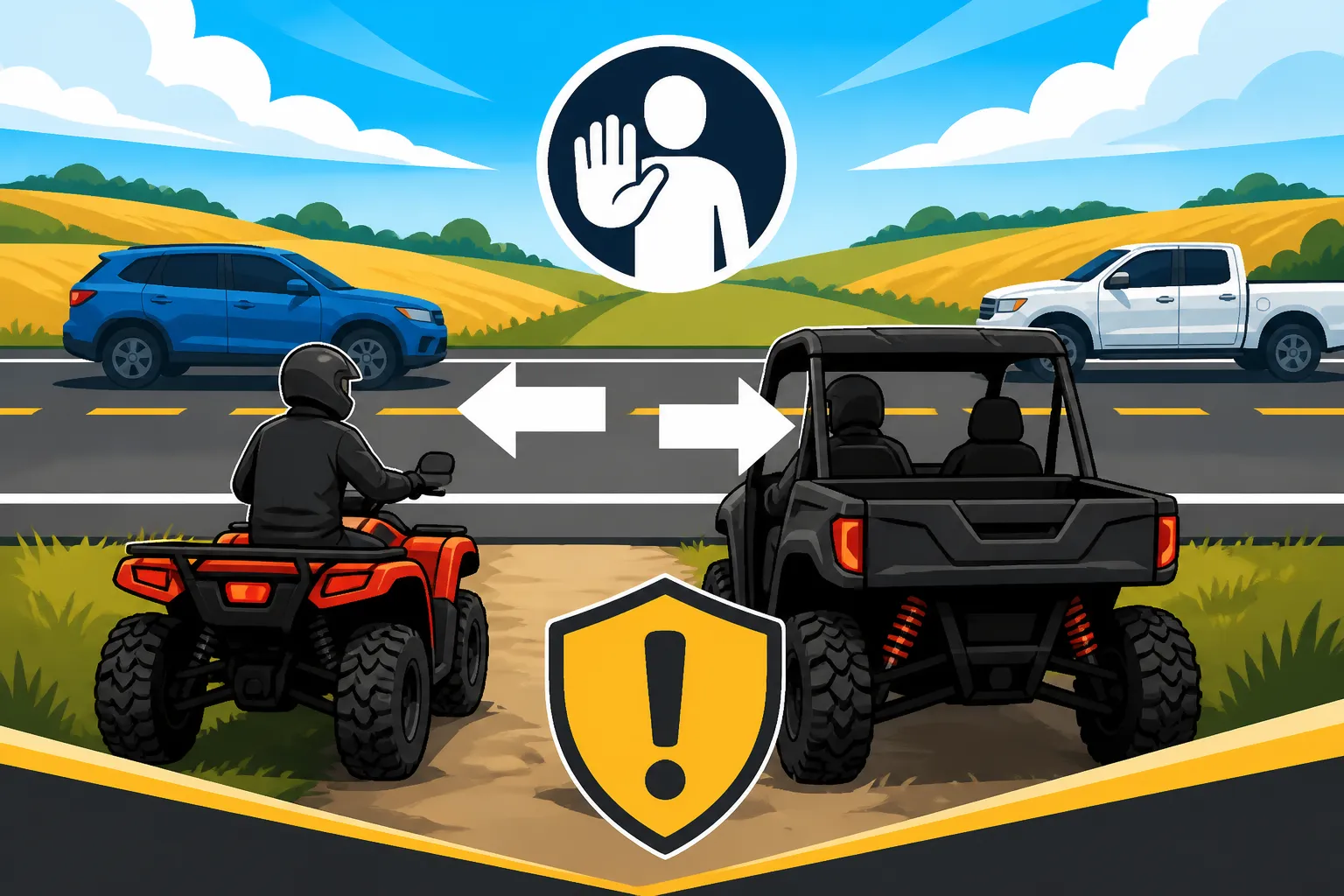
When we talk about "crossing," the law is very specific about the method you must employ. It has to be a direct and immediate crossing. This isn't an invitation to drive a half-mile down the shoulder to get to a better turn-off point. No, it means you approach the highway, look for a safe opportunity, cross straight over to the other side, and immediately resume off-road travel. Think of it like crossing a busy street on foot – you wouldn't walk blocks down the sidewalk when your destination is directly across from you.
This rule emphasizes minimizing your time on the highway itself. You're not meant to merge into traffic and drive for any appreciable distance. The intent is solely to bridge the gap created by the paved road. This directness helps ensure your safety and the safety of other motorists, as off-road machines are not designed for highway speeds or typical road traffic. Any deviation from a direct path or any lingering on the roadway could be seen as an illegal operation of the vehicle on the highway, potentially leading to a citation. It’s crucial to treat every crossing as a quick, necessary maneuver.
When the Crossing Exception Doesn't Apply
While the "crossing" exception is a lifesaver for many, it's vital to understand its limitations. This exception never applies to interstates or federal highways that are specifically designated as such. [Kansas Bans ATVs on Interstates] and [Kansas Bans ATVs on Federal Highways] are clear on this. These are high-speed, limited-access roads where off-road vehicles simply do not belong, even for a quick crossing. The risks associated with these types of roads are too great, and the law provides no leeway.
Furthermore, if your intent is to drive on the highway for more than a quick, direct crossing, the exception evaporates. For example, if you plan to drive a few miles down a state highway to get to a store, or to visit a neighbor, that falls under the general prohibition against operating an ATV or UTV on a public highway. There are specific agricultural exceptions for certain machines, which you can read about in [Kansas Agricultural Trips on a 65 mph Road], but for recreational purposes, think of highways as barriers that can only be briefly traversed, never traveled upon. If your city has specific ordinances, those might also create exceptions, but these are rare for state highways themselves.
Practical Tips for Safe Highway Crossings
Knowing the legal framework is one thing; actually executing a safe crossing is another. There are many variables to consider every time you approach a highway on your machine. Your machine's visibility, your awareness of traffic, and your ability to execute the crossing swiftly are all paramount. This isn't a task to be taken lightly, as the consequences of an unsafe crossing can be severe.
Visibility Is Your Best Friend
Off-road machines are often smaller and less visible than cars and trucks, especially to drivers who aren't expecting them on a highway. Before you even think about crossing, you need to maximize your visibility. This starts with your machine's lighting. Ensure all your lights are functional, especially your headlights and taillights. If you're crossing at dusk or dawn, or during any low-light conditions, having adequate lighting is not just a good idea, it's a legal requirement. [Kansas Lighting Rules After Sunset] outlines these expectations. Many riders opt for aftermarket lighting kits, like those from SuperATV, which can dramatically increase your machine's presence, especially in conditions with reduced visibility. Consider adding bright LED light bars or whip lights to make sure you stick out.
Beyond lights, think about reflective materials on your machine or even on your riding gear. Brightly colored helmets and jackets can make a significant difference. If you're hauling a trailer, ensure it too has proper reflectors and lights. The more noticeable you are, the less likely you are to be involved in an unfortunate incident. Imagine yourself as a driver; what would make a small machine stand out? That’s your goal.
Choosing the Safest Crossing Point
Not all highway crossings are created equal. Some spots are inherently safer than others. Look for areas with good visibility in both directions, free from blind curves, hills, or heavy tree cover that could obscure your view or an approaching driver's view of you. Avoid crossing near intersections, bridges, or complex road features where drivers are already distracted or maneuvering. A straight section of road with clear sightlines offers the best opportunity.
If possible, choose a crossing point that aligns with an existing field entrance, a low-volume county road, or a well-maintained access point on the other side. This provides a clear path for you to enter and exit the highway quickly without getting stuck in soft shoulders or uneven terrain. Before you commit to crossing, pull completely off the roadway where you have a clear, unobstructed view of traffic. Never rush this assessment; patience is key.
A Step-by-Step Crossing Strategy
Once you've identified a safe crossing point and assessed visibility, here's a general strategy to follow:
- Stop, Look, and Listen: Just like when you were a kid crossing the street, this fundamental rule applies. Pull off to the side, completely clear of the roadway, and stop your machine. Look both ways multiple times. Listen for approaching vehicles, especially those that might be obscured by a bend or rise. Don't assume an approaching vehicle will see you or slow down.
- Wait for a Clear Gap: Do not attempt to cross if there's any doubt about having enough time or space. Wait for a significant break in traffic where you can cross the entire highway without causing other vehicles to brake or swerve. Remember, you’re not merging; you’re traversing.
- Execute Swiftly and Directly: Once the path is clear, accelerate smoothly and cross the highway as directly and quickly as possible. Maintain a straight line across the lanes. Do not weave or hesitate. Your goal is to get from one shoulder to the other in the shortest amount of time.
- Immediately Exit the Roadway: The moment your machine is safely on the opposite shoulder, pull off the paved surface and resume your off-road travel. Do not linger on the shoulder, adjust your gear, or check your phone. The highway is for crossing, not for pausing. For UTVs, remember [Kansas Riders Must Keep to the Right] if you have any momentary overlap with a road.
| Crossing Checklist | Importance | Notes |
|---|---|---|
| Machine Ready | High | Lights (head/tail) operational, engine running smoothly, tires properly inflated for the terrain you're about to cross. |
| Rider Ready | High | Clear focus, no distractions, appropriate gear (helmet, eye protection), ready to execute. |
| Visibility Assessment | Crucial | Check for blind spots, hills, curves. Ensure you can see oncoming traffic, and they can see you. Consider reflective accessories from SuperATV. |
| Traffic Assessment | Critical | Identify vehicle speeds, volume, and predictable gaps. Be patient and wait for an ample window. |
| Clear Path (Both Sides) | High | Ensure your exit point on the other side is clear of obstacles and safe to re-enter off-road terrain. |
| Direct & Swift Action | Essential for legality and safety | Cross in a straight line, accelerate decisively, and exit the roadway immediately. |
| Legal Compliance | Prevents fines and ensures safe operation | Confirm you are not on an interstate or federal highway where crossings are entirely prohibited. Understand [Crossing a State Highway Is Always Legal]. |
Understanding the "Why" Behind the Rules
It's easy to feel frustrated by rules that seem to restrict your freedom to ride, but understanding the underlying reasons can help you comply and appreciate their importance. The laws governing ATVs and UTVs on public roads, especially highways, are primarily focused on safety—your safety and the safety of the general public.
Safety Concerns for Off-Road Vehicles on Paved Roads
Off-road machines, by their very design, are not built for highway environments. Their tires are typically knobby for traction in dirt, not smooth for stability on asphalt at high speeds. Their suspension systems are designed for absorbing bumps and uneven terrain, not for tight handling and stability during rapid maneuvers on pavement. They often lack the robust braking systems, turn signals, and crash protection found in road-legal vehicles. Even a [Work-Site Utility Vehicle] with a few more features is not a car.
When you bring an ATV or UTV onto a highway, even for a short crossing, you're introducing a vehicle that handles differently, accelerates differently, and stops differently than what other drivers expect. This unpredictability increases the risk of accidents. The rules, therefore, aim to minimize the exposure of these machines to the high-speed, high-volume environment of a highway, allowing only brief and essential crossings under strict conditions.
The Role of Law Enforcement in Highway Crossings
County sheriffs and state troopers are acutely aware of the dangers associated with off-road vehicles on public roads. They are responsible for enforcing traffic laws and ensuring public safety. When an officer observes an ATV or UTV on a highway, their immediate concern is often safety and compliance. They'll be looking to see if you're actually just crossing, or if you're attempting to operate on the highway illegally.
If you're stopped during a crossing, be prepared to explain your actions calmly and clearly. Have your documentation ready—proof of ownership, any applicable permits, and potentially even proof of insurance, especially if you have a city-tagged UTV, which you can read about in [Kansas City Tag Fees for a UTV]. The officer will want to confirm you understand the rules and are not intentionally violating them. Remember, discretion is often a factor, and a polite, cooperative rider who genuinely understands the law is far more likely to have a positive outcome than someone who is argumentative or seems unaware of the rules. For more on what officers might ask, see [What a County Sheriff Can Ask a Rider to Show].
Specific Machine Types and Crossing Nuances
While the general rule for crossing highways applies broadly to nonhighway vehicles, there can be subtle differences depending on the specific type of machine you're operating. Kansas law defines various categories of off-road vehicles, and these definitions sometimes come with their own set of allowances and restrictions, even for something as specific as a highway crossing.
ATVs and Dirt Bikes
Traditional ATVs and dirt bikes are almost universally considered off-highway vehicles, meaning their primary purpose and design are for off-road use. For these machines, the "direct and immediate crossing" rule is paramount. There are very few, if any, exceptions that would allow an ATV or dirt bike to travel on a highway in Kansas, even for short distances, outside of very specific agricultural exemptions. Your time on the pavement should be measured in seconds, not minutes. This is especially true for sport quads and dirt bikes, which are engineered for performance on unpaved surfaces and are particularly ill-suited for high-speed highway traffic. For a deeper dive into ATV rules, consult [Kansas ATV Road Rules Under 8-15,100].
Side-by-Sides and UTVs (including WSUVs and Golf Carts)
Side-by-sides and UTVs present a more complex picture because some models, particularly those classified as Work-Site Utility Vehicles (WSUVs) or those operating under city ordinances for street-legal use, have different parameters.
- Standard UTVs: For a standard UTV that is not a WSUV and not street-legal under a local ordinance, the rules for crossing a highway are essentially the same as for an ATV: direct, immediate, and only for the purpose of getting to the other side to resume off-road travel. No cruising.
- Work-Site Utility Vehicles (WSUVs): These machines, defined by specific width and weight requirements, have a bit more leeway for road use, but this is typically limited to county and township roads for specific work-related tasks. While they still must generally adhere to the direct crossing rule for state highways, their design (often with more car-like features) can sometimes make these crossings feel less precarious than on an ATV. Still, the intent of the law for highway crossing remains the same. You can find more specific rules in [Kansas Work-Site Utility Vehicle Road Rules].
- Golf Carts and Micro Utility Trucks: These categories have their own set of specific rules, which are generally more permissive for low-speed road use, often within city limits or on specific county roads. However, for highway crossings, the "direct and immediate" principle still applies. A golf cart, for instance, typically isn't allowed to travel on a highway, but it can cross one if it's operating legally on roads leading up to it, and the crossing is done safely. Always check [Kansas Golf Cart Road Rules] for specific guidance related to these machines.
It's critical not to confuse the ability of some UTVs or golf carts to operate on certain public roads (like city streets or low-speed county roads under ordinance) with the ability to travel on a state highway. The state highway rules are much stricter, focusing purely on crossing, not travel.
Disclaimer
This article is for general informational purposes only and does not constitute professional advice. Laws, prices and regulations vary by location and change over time. Consult a qualified professional for guidance on your specific situation.