Kansas Rules for Passengers on a UTV
It’s a common scenario: you’ve got your UTV ready for a weekend adventure, the family or friends are piling in, and suddenly you pause. How many people can you actually safely and legally carry in this thing? It feels like one of those grey areas where state law meets common sense, and the confusion is real. This guide is here to untangle the specific rules and best practices for carrying passengers in a UTV across Kansas, helping you ride confidently and legally.
The Basics of UTV Passenger Rules in Kansas
When it comes to UTVs, the state of Kansas primarily views them as off-highway vehicles (OHVs) that are meant for specific, limited use, and not generally as passenger vehicles in the same way cars or trucks are. This distinction is crucial because it often means there aren't explicit, statewide statutes dictating passenger counts for off-road use. Instead, common sense, manufacturer guidelines, and local ordinances often fill the void.
What Kansas Law Says About UTV Passengers (General)
For the most part, Kansas state law focuses more on where you can ride a UTV and less on how many people are packed into it when you're off the pavement. There isn't a sweeping state statute that says "thou shalt only carry X number of passengers in a UTV off-road." This can be a bit frustrating because it leaves a lot up to interpretation, or more importantly, up to the local level if you're venturing beyond private land. When you're on your own property, or on private land with permission, the general expectation is that you'll use good judgment. However, the moment you hit public land, even designated riding areas, or especially city streets (if permitted), the rules start to tighten up.
Imagine you're heading out to your favorite hunting spot on a rural gravel road or a designated riding park. While the state might not have a specific "three-person limit" written down for that exact scenario, any law enforcement officer could still cite you for reckless operation if it's clear you're carrying more people than the vehicle was designed for and it's compromising safety. It boils down to making sure everyone is secure and the vehicle isn't overloaded or top-heavy, which could lead to an accident. For specific locations, it's always worth checking the rules of the particular park or property. For example, if you're riding at Tuttle Creek ORV Area in Kansas, while they don't explicitly list passenger rules beyond general safety, overloaded machines are an obvious hazard.
The Importance of Manufacturer Seating Capacity
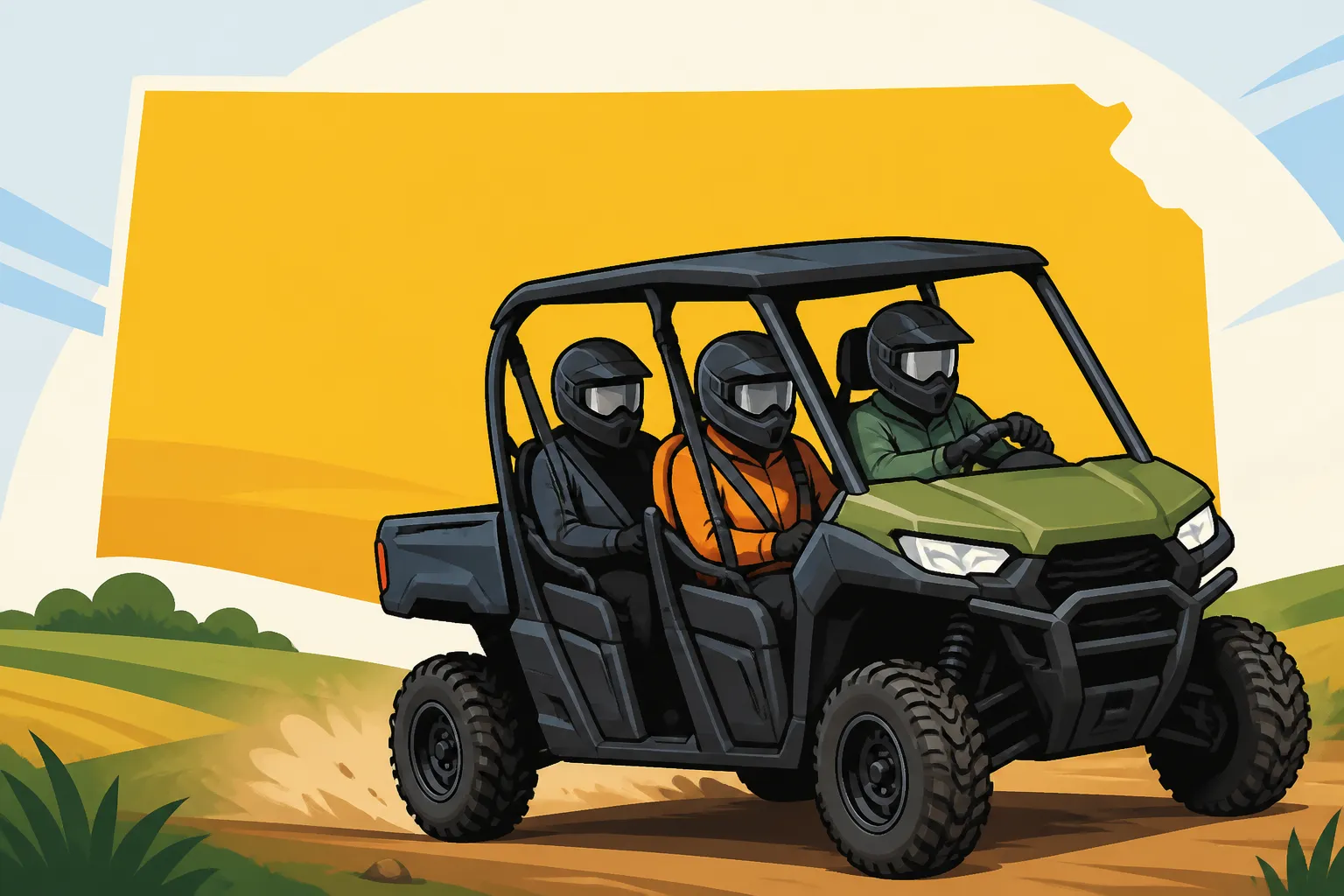
This is perhaps the most critical rule of thumb: always defer to the manufacturer's design and recommendations for seating capacity. UTVs are designed with a specific number of seating positions, each typically equipped with a seatbelt or restraint system. If your side-by-side has two bucket seats and two seatbelts, it's a two-passenger vehicle. If it has a bench seat for three or four bucket seats, and corresponding seatbelts, then that's its designed capacity. Trying to squeeze an extra person onto a seat meant for two, or having someone stand in the bed, is not only dangerous but can also be seen as negligent.
Think of it this way: the engineers at the factory built that machine, accounting for weight distribution, braking capacity, and stability with a certain number of occupants in mind. When you exceed that, you're pushing the vehicle beyond its safe operating limits. This isn't just about comfort; it's about the vehicle's ability to handle bumps, sudden turns, and emergency stops without rolling over or losing control. Aftermarket accessories from companies like SuperATV can enhance your UTV's capabilities, but they don't magically increase its passenger capacity beyond what the factory intended for safe operation. Always check the labels and owner's manual that came with your UTV. It will clearly state the maximum number of occupants and the gross vehicle weight rating, which includes passengers and cargo.
How Road Use Changes Passenger Rules
The moment your UTV transitions from off-road trails or private property to public roads, even temporarily, the regulatory landscape shifts dramatically. Kansas state law generally prohibits UTVs on public roads, but it also provides crucial exceptions, primarily for agricultural use, crossing highways, and specific areas where cities or counties have passed ordinances to allow them. When these exceptions come into play, your passenger rules often become much stricter and more clearly defined.
City Ordinances and Passenger Limits
This is where things can get a bit complicated, but it's vital to know. Many Kansas cities that have opted to allow UTVs on their streets through local ordinances will also specify passenger rules. These rules are usually designed to mirror conventional vehicle laws and ensure public safety within city limits. For instance, cities like Louisburg or Scott City, which have specific UTV ordinances, will likely stipulate that all passengers must have a designated seating position and be properly restrained with a seatbelt. They won't want to see people standing, riding in the bed, or exceeding the manufacturer's stated capacity.
If you're planning to ride your UTV on city streets, even for short trips to the gas station or local diner, you absolutely must check that specific city's ordinance. What's legal in one town might lead to a ticket in another. These ordinances can detail everything from required safety equipment (headlights, taillights, turn signals) to speed limits and, yes, passenger regulations. A common rule you'll find is that the number of passengers cannot exceed the number of factory-installed seatbelts. This means if your UTV came with two seatbelts, you can only have two people total, including the driver, regardless of how wide the bench seat might appear. To understand this better, you might want to read up on [Kansas UTV Street Legal Rules by City] and [Kansas Cities That Authorize ATV Street Use].
The Driver's License and Age Requirements
While not directly about how many passengers, the rules around who can drive a UTV on a public road directly impact the overall safety and legal standing of your passengers. In Kansas, if you're operating a UTV on any public road where it's legally permitted (like under a city ordinance or for an agricultural exception), the driver must possess a valid driver's license. This isn't just a suggestion; it's a requirement. This means a teenager with only a learner's permit for a car cannot legally operate a UTV on a city street, even if they're just giving a friend a ride.
Furthermore, some local ordinances might have age restrictions for passengers, especially for those in the front seats or those not adequately secured by the factory restraints. While Kansas has no specific state law for helmet use on ATVs, many city ordinances that allow UTVs on roads may have helmet requirements for certain ages, or even for all riders, mimicking motorcycle laws. Always be aware that a county sheriff or city police officer has the right to pull you over and perform [Kansas Equipment Checks by Deputies] to ensure all passengers are safely and legally accounted for. The presence of a licensed, responsible driver helps ensure that passenger rules are followed and everyone is safe.
Safety Considerations Beyond the Law
Even when there isn't a specific law for every single aspect of UTV passenger safety, common sense and best practices should always be your guiding principles. A UTV can be a lot of fun, but it's also a powerful machine that, if misused, can lead to serious injuries. Thinking beyond just "what's legal" to "what's safe" is crucial for every ride.
Securing All Passengers Properly
This cannot be stressed enough: every single passenger in your UTV needs to be properly secured. This means using the factory-installed seatbelts or harness systems correctly. They aren't there for show; they are your primary line of defense in a rollover or collision. Ensure shoulder belts are snug across the chest and lap belts are low across the hips. Never allow passengers to ride without these restraints, no matter how short the trip or how "safe" the terrain seems.
It's tempting on a wide-open pasture to let someone stand up for a better view or sit on the edge of the bed, but this is incredibly risky. UTVs are designed for rapid changes in terrain, sudden stops, and turns that can throw an unsecured person from the vehicle with surprising force. Even on what seems like flat ground, hitting a hidden rut or rock can cause a jolt. If you're carrying a passenger, they should be in a designated seat, with a seatbelt on, and keeping their arms and legs inside the vehicle at all times. Consider adding grab handles for passengers if your UTV doesn't have adequate ones, giving them something secure to hold onto during bumpy rides.
Carrying Children Safely in a UTV
When children are involved, the stakes are even higher. While a UTV might seem like a fun family activity, children require special attention to safety. Generally, children should be able to sit upright with their back against the seat and their feet flat on the floorboard of the UTV, with the seatbelt fitting snugly across their shoulder and lap without riding up on their neck or stomach. If they can't meet these criteria, they are too small for that particular UTV's seating position.
Some manufacturers specify minimum age or height requirements for passengers. Always check your owner's manual for these guidelines. For younger children, a car seat or booster seat designed for a road vehicle is typically not appropriate for a UTV due to different crash dynamics and the lack of proper anchor points. Instead, focus on ensuring the child can be properly secured by the UTV's inherent restraint system. If a child is too small for the UTV's seatbelts to fit correctly, they should not be riding in that UTV. Teaching children about the importance of keeping their hands and feet inside the vehicle and holding onto grab handles is also essential. For more specific advice, you can check out [Kansas Rules for a Child Passenger].
Common Misconceptions and Best Practices
It’s easy to assume that because a UTV isn't a car, certain rules don't apply. However, for the safety of everyone onboard and around you, it's vital to dispel these myths and adopt a robust approach to safety.
Why "Open Container" Rules Apply on Roads
One common misconception is that because a UTV isn't a typical road vehicle, the rules about alcohol don't fully apply. This is absolutely false, especially when you're operating your UTV on any public road, whether it's a gravel county road or a city street where UTVs are permitted. Kansas's open container laws, and certainly its DUI/DWI laws, apply to any motor vehicle operated on public ways. This means the driver of a UTV can be charged with DUI, and passengers can be cited for open container violations if they are consuming alcohol.
Even off-road on private property, while open container laws may not apply, operating a UTV while impaired is extremely dangerous and can lead to severe accidents. The same judgment you'd use for a car should be applied here. Remember, a UTV is a powerful machine, and alcohol significantly impairs your ability to react, judge terrain, and make safe decisions. For a deeper dive into this, consult [Kansas DUI Law and Off-Road Machines]. Staying sober is a non-negotiable best practice for both drivers and passengers.
Gear and Preparedness for All Aboard
While Kansas doesn't have a universal helmet law for ATVs or UTVs, it is strongly recommended that all occupants, drivers and passengers alike, wear a DOT-compliant helmet and eye protection. Even low-speed rollovers or unexpected branches can cause head injuries. Eye protection is also critical to shield against dust, debris, and insects that can impair vision and cause discomfort.
Beyond helmets, encourage passengers to wear appropriate riding gear:
- Long sleeves and pants: To protect against scrapes, brush, and sun.
- Over-the-ankle boots: To protect feet and provide good grip on the floorboards.
- Gloves: For better grip and hand protection.
Having a well-stocked first-aid kit is also a best practice, as is carrying water, snacks, and a way to communicate in case of an emergency (like a fully charged phone or satellite messenger, especially in areas with spotty cell service). Companies like SuperATV offer a range of accessories, from storage solutions to windshields, that can enhance comfort and safety for all your passengers, allowing you to carry more preparedness items securely. Being prepared for varying weather conditions – from sudden rain showers to intense sun – also contributes to a more enjoyable and safer experience for everyone riding along.
Here’s a quick summary of key considerations for UTV passengers in Kansas:
| Aspect | Legal Consideration (Kansas) | Safety Best Practice |
|---|---|---|
| Seating Capacity | Generally dictated by manufacturer's design; strict adherence when on public roads via city ordinances. | Never exceed manufacturer's stated capacity; one person per designated seatbelt. |
| Restraints | Required in designated seating positions if on public roads (per city ordinance); always use manufacturer belts. | All passengers, regardless of age or terrain, must be properly secured with seatbelts or harnesses. |
| Children | No statewide specific laws for off-road; city ordinances may have age/size rules for road use. | Children must be able to sit upright with feet on floorboard and seatbelt fitting correctly; no car seats unless UTV-specific. |
| Road Use | City ordinances or agricultural exceptions will apply standard road rules (e.g., open container, DUI). | Driver must be licensed; be aware of all traffic laws; assume road rules apply to all occupants when on public roads. |
| Helmets/Gear | No statewide helmet law for UTVs; some city ordinances might require. | Strongly recommend DOT-compliant helmets, eye protection, long sleeves/pants, and over-the-ankle boots for all riders. |
| Intoxication | DUI/open container laws apply on public roads; illegal and highly dangerous off-road. | Never operate or ride in a UTV while impaired by alcohol or drugs; designate a sober driver. |
Remember, the goal is to have fun safely. By understanding these rules and adopting sound safety practices, you can ensure that every UTV adventure in Kansas is a memorable one for everyone involved. For information on where you can legally ride your UTV, check out [Kansas Rules for Riding a County Road] or [Kansas Rules for Riding a City Street].
Disclaimer
This article is for general informational purposes only and does not constitute professional advice. Laws, prices and regulations vary by location and change over time. Consult a qualified professional for guidance on your specific situation.