Kansas Deer Season and Machine Use
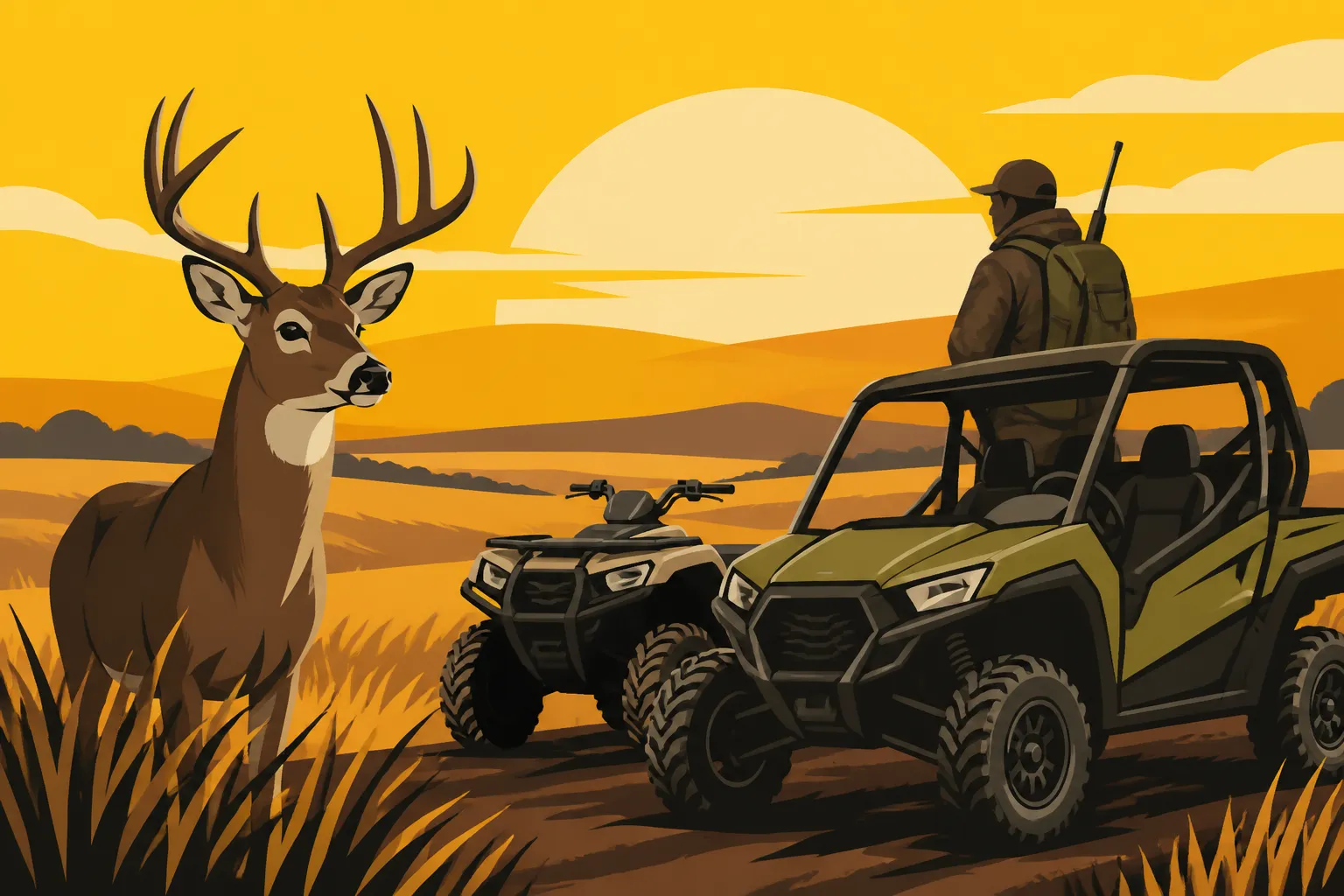
Deer season can make an ATV or UTV useful for reaching a stand, hauling gear or moving equipment, but a hunting license does not automatically open every road or trail to motorized travel. In Kansas, the rules depend on who owns the land, how it is managed and what the specific access rules allow. Here’s how to plan machine use without confusing hunting access with permission to ride.
Does deer season give you permission to ride?
No. Deer season does not create a general right to ride an ATV or UTV wherever you are allowed to hunt. Hunting permission and motorized access are separate questions. A license or permission to hunt a property does not necessarily include permission to bring a machine onto it.
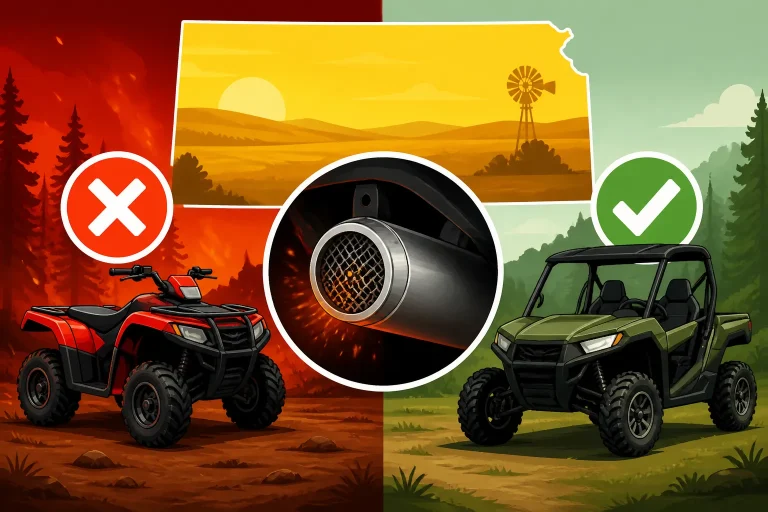
The same distinction applies to public land. A hunting season may allow access for a particular activity, while the property’s rules limit where vehicles can travel. Some public areas allow motorized travel only on designated roads or in marked parking areas. Trails, field edges, levees, and closed roads may have different restrictions—or may be off-limits to machines altogether.
Kansas does not issue a general state OHV trail permit that grants access across public and private land. A permit or license connected with hunting does not replace a landowner’s permission or a property manager’s access rules. For more on the difference between park permits and trail access, see Kansas Park Permit vs Trail Permit.
Before unloading a machine, establish three things:
- You have permission to hunt the land. This may mean permission from a private landowner or access under the rules for a public area.
- You are allowed to bring and operate a machine there. Hunting access alone does not settle this.
- Your planned route is open to motorized travel. Confirm the road, trail, parking area, and any seasonal restrictions.
These checks matter even if the machine will travel only a short distance. A route that looks like a farm road or field entrance may not be an authorized motorized route. Signs, gates, maps, and posted property rules should take precedence over assumptions based on past visits.
Where can you use an ATV or UTV while hunting?
The answer depends on the land and the specific route. Private property, wildlife areas, refuges, state parks, and other public lands may each have different access rules. Do not treat “public land” as one category with one machine-use policy.
Private land
On private property, get the landowner’s explicit permission to operate the machine, not just permission to hunt. Clarify where you may drive, where you may park, and whether access changes during particular hunting activities or conditions. A landowner may allow hunting but ask you to leave the ATV at the entrance, stay on a farm lane, or avoid fields and pasture roads.
Ask before crossing a gate or using a route that connects two parts of the property. Do not assume a gate is open for vehicle access simply because it is unlocked. If the property is leased for hunting, confirm the terms with the person who controls the access; a hunting lease may not give you authority to authorize motorized use on the owner’s behalf. Kansas Landowner Permission Rules explains why access permission needs to be clear.
If you hunt on ground enrolled in a public access program, check that program’s current rules and the property’s posted signs. Public hunting access does not necessarily mean vehicles can travel beyond the designated parking or road areas. Kansas Walk-In Hunting Access Rules covers the difference between permission to hunt and other kinds of access.
Wildlife areas and other public land
On Kansas wildlife areas and similar managed properties, follow the rules for that specific location. Motorized access may be limited to designated roads and parking areas, even when foot access is allowed elsewhere. A road open to ordinary vehicles does not automatically mean an ATV may leave it to reach a hunting spot.
Check the current area map, entrance signs, and rules before heading in. If the instructions are unclear, contact the managing office before the hunt. Do not rely on a route shown on a general mapping app as proof that motorized use is allowed. A map may show a road or track without identifying whether it is open to public vehicle travel.
Rules for wildlife areas, refuges, and state parks are not interchangeable. Some locations may have special restrictions, closures, or exceptions. Review Kansas Wildlife Area Machine Rules for the broader issue of machine access on wildlife areas, and check property-specific instructions before you travel. If your trip includes state park roads, remember that a park permit and road-use rules do not amount to permission to ride off-road trails. Kansas Machines on Department Roads Only explains the limits of that kind of access.
| Where you plan to hunt | What to confirm before taking a machine |
|---|---|
| Private property | Permission to hunt, permission to operate the machine, and approved routes |
| Leased hunting property | Whether the lease allows machine use and who can authorize it |
| Wildlife area | Designated roads, parking, closures, and any area-specific restrictions |
| State park or other managed property | The property’s vehicle rules, permit requirements, and permitted routes |
| Public road near a hunting area | Whether that road is open to your machine and whether local rules apply |
Roads near the hunting property
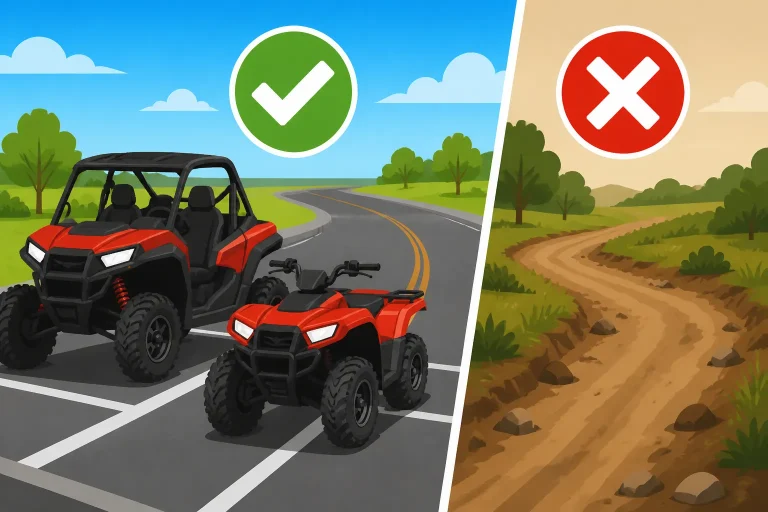
A machine’s access to a hunting area is also separate from whether it can legally use the road to get there. Kansas road rules vary by road type and location. A county road, city street, highway crossing, and private farm road may not have the same rules. A machine being titled or allowed on a particular managed road does not make it street legal everywhere. See Kansas Rules for Riding a County Road and Kansas Rules for Crossing a Highway if your route includes public roads.
Plan a route that stays within both sets of rules: the land manager’s access requirements and the road-use rules along the way. If a public-road segment is not legal for your machine, arrange to transport it or use a permitted route instead. A hunting destination does not create an exception to road restrictions.
Can you use a machine to retrieve a deer?
Do not assume that permission to hunt also permits you to drive to a downed deer. Retrieval is a separate activity that can involve different land-access, vehicle, and hunting rules. Before the season, ask the landowner or property manager what to do if an animal is down beyond an authorized road.
On private property, get clear permission before driving off an approved route to retrieve game. The landowner may allow retrieval by foot, permit a machine on a specified lane, or require a different method. On managed public land, follow the property’s motorized-access rules and any instructions for retrieving game. If a machine cannot legally travel to the animal, do not assume that the urgency of retrieval makes the route permissible.
A practical retrieval plan can prevent a difficult decision in the field:
- Identify the property manager or landowner contact before the hunt.
- Ask whether machine-assisted retrieval is allowed and, if so, where.
- Find the designated parking and vehicle routes on the property map.
- Carry a phone number for the managing office, while recognizing that service may be unavailable.
- Have a foot-retrieval or other lawful backup plan.
The details may also depend on the type of machine and how it is being used. An ATV, UTV, golf cart, and other off-road machines are not always treated alike under Kansas law. Four Off-Road Classes Kansas Law Treats Differently gives an overview of why classification matters. A machine’s title class, however, does not settle whether a particular hunting property allows it.
Avoid using a machine to pursue deer or to drive through an area where doing so would disturb other hunters or wildlife. Keep travel confined to permitted routes, follow property instructions, and do not treat a machine as a way to get closer to game than foot access allows. When in doubt, stop and ask the land manager rather than risking a violation or damaging the property.
How to plan a legal, useful hunting trip
A machine can help with equipment and access, but it is most useful when its role is planned in advance. Decide whether you need it to reach a designated parking area, travel on an authorized road, or carry supplies over private property. If the plan depends on leaving a road or entering a restricted area, confirm that specific use before the trip.
Use this checklist:
- Confirm the hunting access. Make sure you are authorized to hunt the property for the planned season and activity.
- Ask about machine access separately. Confirm the machine type, allowed routes, parking locations, and any conditions on use.
- Check current property rules. Review maps, notices, gates, and posted signs for closures or route restrictions.
- Verify the road portion of your trip. Check the rules for any public roads or crossings between your starting point and the property.
- Plan for deer retrieval. Know what the landowner or manager permits before an animal is down.
- Bring useful documentation. Keep hunting and access information available, and carry any property permission the landowner has provided.
- Have a backup plan. If weather, a closure, or a changed access rule blocks the route, be prepared to leave the machine and proceed only in a way the property allows.
Weather can change conditions quickly. Mud, snow, standing water, or damage to a field road can make a route unsafe or cause harm even if it is normally open. Ask whether the landowner wants you to avoid a route after rain, and do not drive around a closure or gate because the ground appears passable.
Also consider the impact on other hunters and land users. Park where you will not block a gate, access road, or farm operation. Keep noise and travel to what is necessary, and follow any quiet, speed, or equipment instructions posted by the property manager. A machine that is permitted on a road may still be unwelcome at a particular time or location.
If you are hunting on public land, call the managing office when the map or posted instructions do not answer your question. Ask plainly: “May I bring this type of machine, and which roads or parking areas may I use?” For retrieval, ask a separate question rather than assuming the answer is included. The answer may change by property or route, so use the current instructions for the location you plan to visit.
The safest rule is straightforward: hunting access does not automatically include machine access. Confirm both, keep to routes that are expressly open, and make a retrieval plan before deer season begins. For a related look at the connection between hunting access and riding areas, see Why a Hunting License Opens No Trails in Kansas.
Disclaimer
This article is for general informational purposes only and does not constitute professional advice. Laws, prices and regulations vary by location and change over time. Consult a qualified professional for guidance on your specific situation.