Kansas Walk-In Hunting Access Rules
Kansas Walk-In Hunting Access gives hunters permission to use certain private parcels for hunting, but it does not generally open those properties to ATV or UTV travel. The practical challenge is knowing where access starts and ends, where to park, and when separate permission is needed. Check the parcel’s current rules before unloading or riding.
What Walk-In Hunting Access Allows
Kansas Walk-In Hunting Access, often called WIHA, is a program that makes enrolled private land available to the public for specified hunting opportunities. It is not a general public recreation area, and permission to hunt does not automatically include permission to drive or ride across the property.
The access terms apply to a particular parcel and can depend on the current map, posted signs, eligible hunting seasons, and species. Use the current Kansas Department of Wildlife and Parks information to identify the exact boundary and read any parcel-specific restrictions. A property that was enrolled in a prior season may not have the same access terms now.
In general, expect to reach a WIHA parcel on foot from an allowed parking location. Do not assume you can ride an ATV, UTV, dirt bike, or other off-road machine on the property, even if a trail, field road, or old two-track is visible. A route that looks convenient is not permission to use it.
| Activity | What to assume before you go |
|---|---|
| Hunting during an allowed season | Permitted only under the current parcel rules and applicable hunting regulations |
| Walking from an approved parking area | Generally consistent with walk-in access; stay within the parcel |
| Riding an ATV or UTV on the parcel | Do not do so unless current parcel instructions or explicit permission allow it |
| Driving on a field road | Do not assume a visible road is open to public vehicle use |
| Parking at a gate or field entrance | Use only a designated or clearly permitted location; do not block access |
| Camping, target shooting, or general recreation | Not included just because the property is enrolled for hunting |
A hunting license does not convert a WIHA parcel into a trail system. Nor does owning a titled machine, having insurance, or obtaining a permit for another type of public land provide permission to ride on enrolled private property. The distinction between hunting access and motorized recreation is the central point of Why a Hunting License Opens No Trails in Kansas.
WIHA access is also limited by the rules that apply to hunting itself. Confirm that the season is open, that the parcel is available for the species you intend to hunt, and that any special restrictions are understood before entering. General information about the relationship between hunting permissions and land access is covered in Kansas Hunting License and Land Access.
ATV and UTV Use Near a WIHA Parcel
A machine can help you carry gear, reach a public road, or travel between locations, but those uses do not grant permission to operate it on a WIHA parcel. Plan the ride and the hunt as separate parts of the trip: ride only where riding is lawful, then access the enrolled hunting property by the method its rules allow.
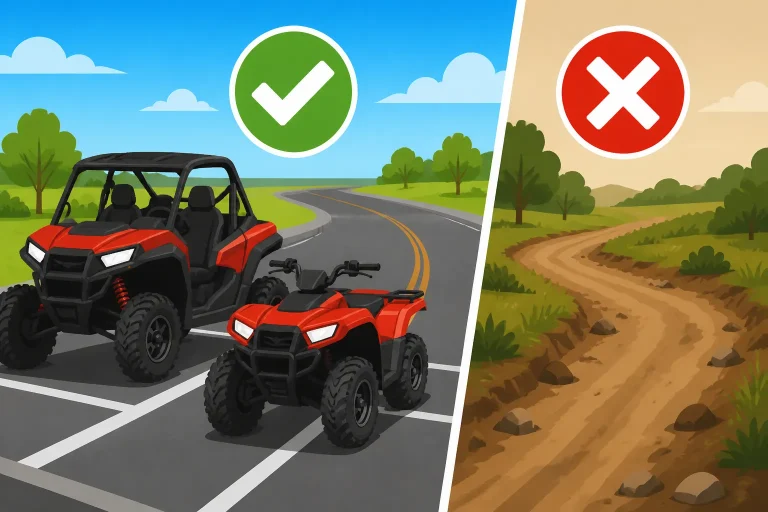
The safest default is to park legally outside the parcel and walk in. Use a designated parking area if one is shown or posted. If no parking location is clear, do not block a gate, driveway, farm entrance, road, or equipment route. A spot that appears unused may still be needed by the landowner or emergency vehicles.
Avoid riding along field edges, through crop ground, across pasture, or down a farm lane to get closer to a hunting location. Even when a route seems harmless, a machine can damage crops, disturb livestock, create ruts, or interfere with farm work. The property’s enrollment for public hunting does not make those routes public roads.
| Situation | Practical approach |
|---|---|
| You want to ride from a public road to the hunting area | Leave the machine at a lawful parking location and walk, unless the parcel rules or landowner specifically authorize riding |
| A gate is open | Treat the gate as a boundary or access-control point, not an invitation to drive through |
| A two-track crosses the parcel | Do not ride it unless motorized use is expressly allowed |
| You need to retrieve a harvested animal | Do not assume the WIHA agreement allows a vehicle; check the parcel terms and obtain specific permission if needed |
| You need access because of a mobility limitation | Contact the program or landowner before the trip and confirm what accommodation is authorized |
| You want to cross the property to reach other land | Get permission for that route; WIHA access is not a general travel easement |
If you need to use a machine on private ground, ask the landowner for permission directly and explain the route, purpose, and timing. Make sure the permission covers the specific activity: crossing a field, using a farm lane, parking, or retrieving game may be treated differently. Kansas Landowner Permission Rules explains why general permission to hunt should not be stretched into permission for unrelated machine use.
Permission from a landowner also does not make every nearby road or ditch open to riding. Public-road access rules, local ordinances, and restrictions on right-of-way use are separate issues. Review Kansas Department Road Riding Rules and Kansas Trespass Law for Riders before planning a route that involves roads, ditches, or land outside the enrolled parcel.
How to Check the Parcel and Plan Access
Use the current WIHA map or access information shortly before your trip. An old screenshot, a friend’s directions, or a parcel boundary remembered from a previous season can lead to a mistake. Check the parcel’s current status, the dates and species covered, boundary details, parking notes, and any posted limitations.
A careful pre-trip check can be simple:
- Find the exact parcel in current Kansas Department of Wildlife and Parks WIHA information.
- Confirm that it is open for the season and species you plan to hunt.
- Read all parcel-specific directions and restrictions, including any access or parking notes.
- Identify a legal place to leave your vehicle or trailer without blocking traffic or farm access.
- Plan to walk from that point unless motorized access is clearly authorized.
- If any detail is unclear, contact the appropriate agency or landowner before entering.
At the site, compare the map with signs, gates, fences, and visible landmarks. Signs may clarify where public access begins or identify an area that is closed. Do not cross a fence or gate because the map appears to show public access on the other side. When the boundary is uncertain, stop and verify rather than guessing.
Keep the parcel’s limits in mind throughout the hunt. A WIHA property may border other private land, public land, or a road corridor, and the permission for one area does not extend to the next. Do not use an enrolled parcel as a shortcut to a neighboring field, water access point, or trail. If you need permission for adjacent property, arrange it separately; [Kansas Landowner Permission Forms] can help you understand the value of documenting permission.
If your trip includes a machine, check its paperwork and plan where it will be left. A title can establish ownership, but it does not establish permission to ride on the parcel. Kansas Proof of Ownership on the Trail covers documents that may matter when using a machine, while Kansas Rules for Riding Farm Ground addresses the separate question of whether you may ride on agricultural property.
Common Mistakes and What to Do Instead
The most common error is treating “walk-in access” as a general invitation to use all available routes. The program’s purpose is hunting access under specific terms. A road or path on the property may be for the landowner, farm equipment, or another authorized user, not public ATV traffic.
Another mistake is assuming that a hunting license, a state park permit, or a machine’s title answers the access question. These documents serve different purposes. A hunting license does not grant permission to ride; a machine title does not confer a right of way; and a permit tied to a state park or another designated place does not apply to private WIHA land. For broader distinctions between hunting access and machine use, see Kansas Hunting Land Access by Machine.
Avoid these shortcuts:
- Do not follow tire tracks as proof that public riding is allowed.
- Do not drive through an open gate or around a closed one.
- Do not park where farm vehicles, emergency responders, or other visitors may be blocked.
- Do not cross into neighboring property to reach a better hunting spot.
- Do not assume game retrieval permits a machine on the parcel.
- Do not rely on last season’s map or someone else’s description when current instructions are available.
When a machine is needed for an accessibility reason, a farm task, or another special circumstance, seek clear authorization before the trip. Ask who is granting permission, where the machine may travel, where it may be parked, and whether the authorization applies on the date you plan to visit. If permission cannot be confirmed, use the walk-in route or choose another location with rules that fit your needs.
When in doubt, leave the machine outside the parcel and walk in. That approach respects the landowner’s agreement, protects crops and roads, and avoids confusing hunting access with permission for motorized recreation. For other public-land machine questions, Kansas Wildlife Area Machine Rules explains why access rules can differ from one type of property to another.
Disclaimer
This article is for general informational purposes only and does not constitute professional advice. Laws, prices and regulations vary by location and change over time. Consult a qualified professional for guidance on your specific situation.