Kansas Title Compared to Nebraska
Moving from one state to another, or even just buying a machine across state lines, can throw a real wrench into what you thought you knew about ATV and UTV paperwork. If you're looking at an off-road machine in Kansas or Nebraska, or trying to understand how your current title translates, the differences in how these two states handle ATVs and UTVs can be downright confusing. This guide will walk you through the key distinctions between Kansas and Nebraska's titling and registration processes for your powersports machines, helping you navigate the red tape with a lot less headache.
The Core Difference: Titling vs. Registration
One of the biggest sources of confusion for off-road enthusiasts crossing the Kansas-Nebraska border is the fundamental approach each state takes to these machines. It's not just about different forms; it's about entirely different philosophies on what kind of paperwork an ATV or UTV needs.
How Kansas Approaches Off-Road Machines
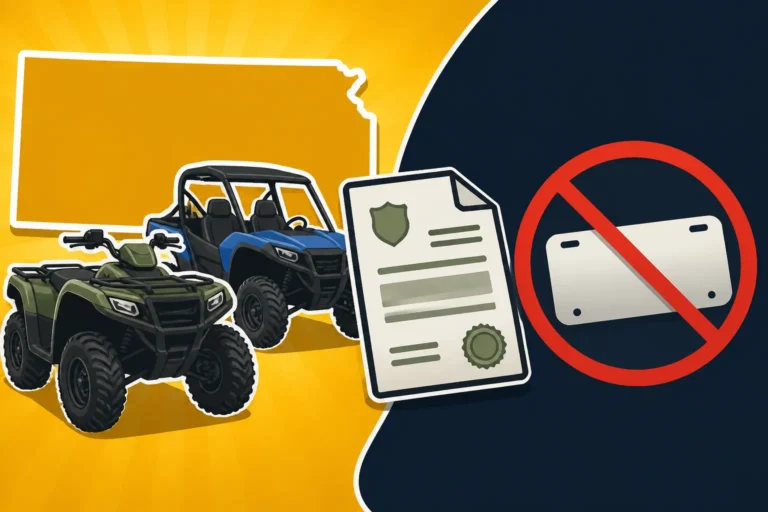
In Kansas, the state takes a very specific stance on ATVs, UTVs, and other similar off-road machines: they are generally considered "nonhighway vehicles." What this means for you, the owner, is that while your machine absolutely needs a title, it does not need to be registered for off-road use with an annual tag or sticker. Think of it like this: your family car has a title and it has annual registration tags you renew every year to make it street legal. Your ATV in Kansas usually only gets the title.
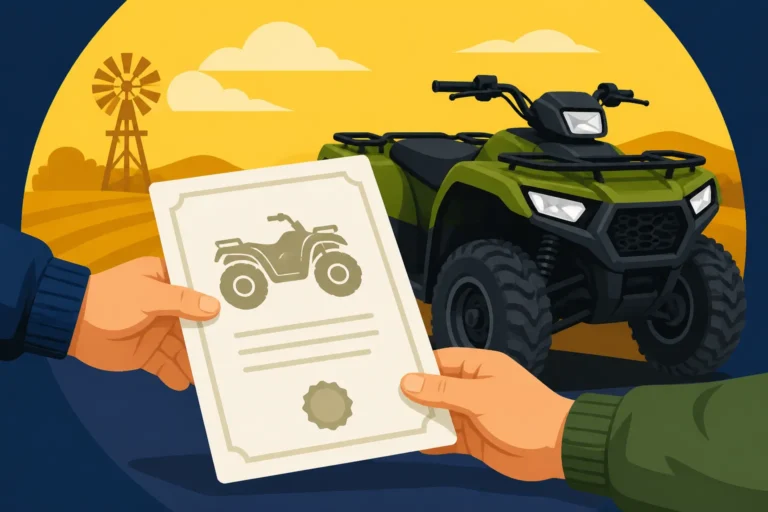
This "nonhighway" designation is crucial. The title proves you own the machine, much like a car title proves ownership of your sedan. However, unlike a car title, a Kansas nonhighway title doesn't come with the implied right to drive on public roads. It's a certificate of ownership, pure and simple, and it's mandatory for all new and used ATVs and UTVs unless they fall under very specific, narrow exemptions, like those used exclusively on private farm ground that never touch a public road. We've talked extensively about [Kansas Has No OHV Registration], so that's a key point to remember. The title makes it yours in the eyes of the law, but it doesn't give you permission to ride it just anywhere.
Many riders, especially those new to the state or coming from places with full OHV registration, get tripped up by this. They expect an annual sticker or a plate, but in Kansas, for most off-road machines, that simply doesn't exist for general riding. The primary purpose of the title is for proving ownership during a sale, for insurance purposes, or in case of theft. Understanding [Why an ATV Is Titled as a Nonhighway Vehicle] is essential for any Kansas owner.
How Nebraska Handles ATVs and UTVs
Nebraska's approach, by contrast, is a bit more layered. While Nebraska also requires titles for ATVs and UTVs, it also incorporates a registration system for many off-road vehicles, especially if they're going to be used on designated trails or have any limited access to public roads. This means that in addition to proving ownership with a title, you'll likely need to obtain an annual registration to legally operate your machine in certain areas, particularly on state-managed trails or parks that allow OHV use.
For Nebraska residents, getting an ATV or UTV ready to ride often involves two distinct steps: first, getting the vehicle titled in your name, and then, separately, registering it for off-road operation. This registration often comes with a decal or sticker that needs to be displayed on the machine. This is a significant difference from Kansas, where the title is often the only piece of state-issued paperwork for off-road use itself.
Nebraska's regulations can also be more specific about what constitutes an "ATV" or "UTV" and how those classifications impact potential road use. While neither state generally allows unrestricted public road use for these machines, Nebraska's framework often ties the ability to ride on certain public lands or limited road sections more directly to having an up-to-date registration. This dual system of titling and registration is a major point of departure from Kansas law.
Titling Requirements: What Each State Asks For
The journey to getting your off-road machine legally recognized starts with paperwork, and both Kansas and Nebraska have their own specific lists of what you'll need to provide. Getting this wrong can lead to frustrating delays, so it's worth taking the time to understand each state's expectations.
Kansas's Documentation Checklist
When you purchase an ATV or UTV in Kansas, or bring one into the state, the process for getting your nonhighway title generally goes through your local [Kansas County Treasurers Handle Titles] office. You're typically given a 60-day window from the date of purchase or assignment to apply for your title; failure to do so can result in late penalties. We cover this in depth in [Kansas Gives You 60 Days to Apply].
Here’s what you’ll typically need to bring to the county treasurer's office:
- Manufacturer's Certificate of Origin (MCO): If you're buying a brand-new machine, this is the original document proving it came from the factory. It's the "birth certificate" of your ATV or UTV.
- Bill of Sale: For both new and used machines, a detailed bill of sale is crucial. This document should clearly state the buyer, seller, date of sale, purchase price, and the machine's VIN. Even for private sales, a handwritten bill of sale is perfectly acceptable. For complex situations, you can find reliable templates from services like LawDepot to ensure all necessary details are included.
- Application for Certificate of Title: This is the form you'll fill out at the treasurer's office or download beforehand. It collects all your personal information and details about the machine.
- Proof of Sales Tax Payment: If you bought your machine from a dealer, they would have collected the sales tax. If it was a private sale, you'll pay sales tax directly to the county treasurer at the time of titling.
- Identification: A valid driver's license or state ID.
- Payment for Title Fee: Kansas charges a modest fee for the nonhighway title, usually around $10. See [Kansas Charges $10 for a Title] for more details on this.
It's a straightforward process, but missing even one document can mean a wasted trip. Always double-check with your specific county treasurer's office before you go, as sometimes local variations exist.
Nebraska's Paperwork Process
Nebraska’s requirements for titling an ATV or UTV, and then separately registering it, are similar in principle but often involve additional steps. For the title itself, you'll likely need:
- Manufacturer's Certificate of Origin (MCO): Just like in Kansas, this is essential for new machines.
- Bill of Sale: A clear bill of sale documenting the transaction details is required, especially for private sales.
- Application for Certificate of Title: You'll complete the necessary form through the Nebraska Department of Motor Vehicles (DMV) or your county clerk’s office.
- Proof of Sales Tax Payment: Nebraska also collects sales tax on vehicle purchases.
- Identification: Your valid driver's license or state ID.
- VIN Inspection: Depending on the situation (e.g., bringing an out-of-state vehicle in), you might need a Vehicle Identification Number (VIN) inspection to verify the machine's identity and ensure it's not stolen. This is a protective measure that Kansas doesn't always require for its nonhighway titles, unless there are questions about the VIN itself.
- Payment for Title Fee: Nebraska will also have a title fee, which will be specified by the state.
Once titled, if you plan to use your ATV or UTV on designated trails or in areas requiring registration, you'll then proceed to the registration step. This involves another application, proof of title, and payment of the annual registration fee. This registration process is the key difference, providing the annual tag or sticker that Kansas does not issue for its nonhighway vehicles. It’s important to understand this distinction, especially if you’re trying to compare [Kansas Title Compared to Missouri] or other surrounding states.
Road Use and Street Legality
This is often the most confusing and potentially costly area for ATV and UTV owners. The rules for riding on public roads are rarely simple, and they vary dramatically between Kansas and Nebraska. Assuming what's legal in one state is legal in the other can lead to tickets, fines, and impoundment.
Kansas: No Road Use by Default
Let's be absolutely clear: in Kansas, an ATV or UTV with a nonhighway title is not street legal by default. The very term "nonhighway vehicle" implies it's not meant for public roads. State law has a foundational ban on these machines on public highways and streets. This often frustrates riders who just want to cross a road or drive a short distance to a trail, but the law is quite firm in its general prohibition. You can find the core ban in [Kansas ATV Road Rules Under 8-15,100].
However, Kansas law does carve out some important, albeit narrow, exceptions:
- Agricultural Exemption: Farmers and those engaged in bona fide agricultural pursuits can use ATVs and UTVs on public roads for short distances when directly related to farm work. This means moving from one field to another, or going to check on livestock, but it's not a free pass for joyriding. There are rules about how this machine must be equipped for road use, such as proper lighting.
- Crossing Highways: It is generally permissible to cross a state highway, but this must be done at approximately a 90-degree angle to the road, and you must yield to all traffic. You can't just drive down the highway, only across it.
- Local Ordinances: This is where it gets tricky. Some individual Kansas cities and counties have passed local ordinances that do allow UTVs (and sometimes ATVs) on their specific streets. These ordinances come with their own set of rules, including often requiring specific safety equipment, insurance, and sometimes even a local permit or tag. If you're considering road use, you absolutely must check with the city or county where you plan to ride. [Kansas Bans ATVs Inside City Limits by Default] and [Kansas Cities That Authorize ATV Street Use] highlight this patchwork of rules. Never assume your machine is legal on a city street without verifying the local ordinance.
Riding your ATV or UTV on public roads in Kansas without meeting a specific exemption or a valid local ordinance is a surefire way to get a ticket. The nonhighway title simply proves ownership; it does not confer road legality.
Nebraska: Different Roads, Different Rules
Nebraska's stance on ATV and UTV road use, while also generally restrictive, can have more specific allowances tied to its registration system. Like Kansas, Nebraska typically prohibits unrestricted ATV/UTV use on public highways. However, the exact rules for limited road access, such as county roads or specific municipal streets, are often detailed within the state's statutes and can be influenced by local jurisdictions.
Nebraska's OHV registration often plays a role here. While not a license for full street legality, having an active registration might be a prerequisite for using designated public roads where permitted, or for accessing specific trails that require road crossings. Machines might need to meet certain equipment standards – things like headlights, taillights, brake lights, mirrors, and sometimes even turn signals – before they are allowed on any public thoroughfare, even for limited access.
It’s common for Nebraska counties or municipalities to have their own ordinances regarding UTVs and sometimes ATVs on their local roads. These can vary widely, just like in Kansas, but they are often more explicitly linked to the state's titling and registration framework. For example, a town might allow registered UTVs on streets with speed limits under a certain threshold, provided the UTV has specific safety equipment. Because of these differences, understanding [Kansas Title Compared to Oklahoma] or other neighboring states requires careful examination of each state's particular statutes. Always check local laws and the Nebraska DMV's guidelines for the most accurate and up-to-date information on where and how you can ride your machine on public property.
Buying and Selling Across the Border
Dealing with out-of-state titles and registrations can be a headache for buyers and sellers alike. The differences between Kansas's nonhighway title and Nebraska's more comprehensive system can make cross-border transactions feel like navigating a legal minefield. Understanding what to expect can save you a lot of grief.
Bringing a Nebraska Machine to Kansas
If you're bringing an ATV or UTV from Nebraska into Kansas, perhaps because you just moved or bought a machine from a Nebraska seller, your primary goal will be to obtain a Kansas nonhighway title. The good news is that Kansas is generally prepared for this.
Here’s the typical process:
- Possess the Nebraska Title: You'll need the original, properly assigned Nebraska title. This is your proof of ownership. If Nebraska also issued a separate registration certificate, that's good to have for reference, but the title is paramount for Kansas.
- Head to the County Treasurer: Just like any other titling process in Kansas, you'll go to your local [Kansas County Treasurer Offices] within 60 days of the machine entering the state or your purchase date.
- Complete Kansas Paperwork: You'll fill out the Kansas application for a nonhighway title.
- Pay Sales Tax and Fees: Kansas will collect sales tax (if not already paid in Nebraska and properly documented, or if the machine wasn't exempt) and the Kansas title fee.
- VIN Verification (if needed): While not always mandatory for an out-of-state title, if there are any discrepancies or questions about the VIN, the county treasurer may require a VIN inspection.
Once complete, you'll receive a Kansas nonhighway title. Remember, this title does not make your machine street legal, even if it had some limited road-use privileges in Nebraska. You are now under Kansas law regarding road use. [Titling an ATV in Kansas From Out of State] provides a more detailed explanation of this specific scenario.
Taking a Kansas Machine to Nebraska
The reverse scenario can sometimes be a bit more complex. If you're selling a Kansas-titled ATV or UTV to a Nebraska resident, or moving to Nebraska with your machine, the Nebraska buyer or you will need to get it titled and likely registered in Nebraska.
Challenges might arise because Kansas's title is explicitly "nonhighway." While it's a valid proof of ownership, Nebraska's DMV or county clerk might need to interpret how this "nonhighway" designation fits into their system, which typically includes provisions for off-road vehicle registration.
The Nebraska buyer or new resident will generally need:
- The Kansas Nonhighway Title: This must be properly signed over by the seller. This proves transfer of ownership.
- Bill of Sale: A detailed bill of sale is always a good idea for any private transaction, clearly outlining the sale details. LawDepot can be a useful resource for creating these.
- Nebraska Application: They will complete the necessary Nebraska title application.
- Sales Tax and Fees: Nebraska will collect its own sales tax and title fees.
- VIN Inspection: It is highly probable that a VIN inspection will be required for an out-of-state machine being titled in Nebraska. This step ensures the machine's identity and helps prevent the titling of stolen vehicles.
- Registration: After successfully titling the machine, the new owner will likely need to apply for an annual off-road vehicle registration if they plan to use it on trails or where registration is required.
It's crucial for sellers to understand that while their Kansas title is legitimate, the Nebraska buyer will face additional steps and potentially costs to bring the machine into compliance with Nebraska's dual titling and registration system.
Important Considerations for Cross-Border Sales
When engaging in any cross-border transaction, whether buying or selling, transparency and thorough documentation are your best friends.
- Clear Bill of Sale: Always use a comprehensive bill of sale. It should include the full names and addresses of buyer and seller, the date of sale, the purchase price, and all identifying information for the machine (make, model, year, VIN). Both parties should keep a signed copy. This is critical for tax purposes and for proving ownership.
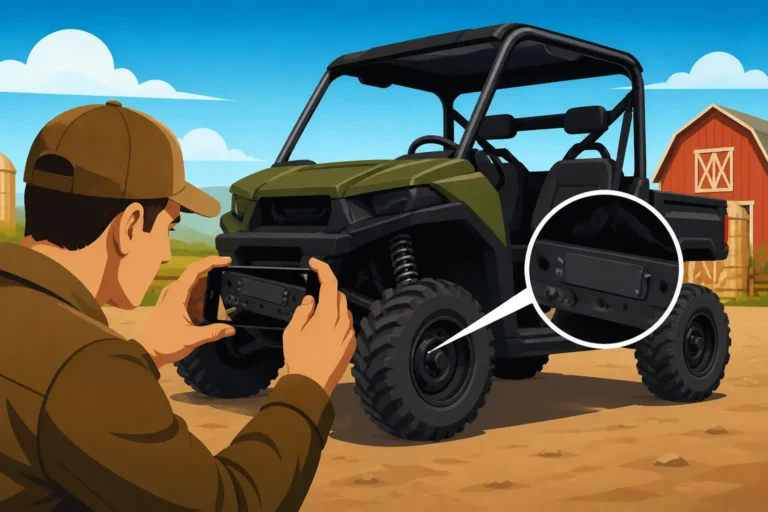
- VIN Verification: Whether you're the buyer or seller, always verify the VIN on the machine matches the VIN on the title. A mismatched VIN can cause immense problems at the titling office. You can also run the VIN through online databases to check for stolen vehicle reports or liens, which protects both parties.
- Lien Check: Before buying, especially from a private seller, ask the seller to provide proof that there are no outstanding liens on the machine. You don't want to buy something only to find a bank still has a claim to it.
- Communicate Expectations: If you're selling, clearly communicate to the out-of-state buyer what they will need to do to title and register the machine in their state. If you're buying, ask the seller for all documentation they have, including maintenance records, which can add value and peace of mind.
These steps can help ensure a smooth transaction and prevent unexpected legal or financial issues down the road.
Kansas vs. Nebraska ATV/UTV Titling & Registration Comparison
Here's a quick look at the major differences between Kansas and Nebraska when it comes to getting your ATV or UTV ready for the trails.
| Feature | Kansas (ATV/UTV) | Nebraska (ATV/UTV) |
|---|---|---|
| Primary Document | Nonhighway Title | Title and Off-Road Vehicle Registration |
| Road Use Permit | No annual state-issued permit/tag | Annual OHV registration/decal often required for trails |
| Titling Mandate | Yes, for ownership proof (unless farm-exempt) | Yes, for ownership proof |
| Annual Registration | No, for off-road recreational use | Yes, for legal use on trails/OHV areas |
| Primary Titling Agency | County Treasurer's Office | DMV or County Clerk's Office |
| Typical Title Fee | Low (e.g., $10) | State-defined title fee |
| Road Legality (Default) | Not street legal; state ban on public roads | Not street legal; state ban on public roads |
| Road Use Exceptions | Agricultural, crossing state highways, specific city ordinances | Limited county roads, specific city ordinances (often tied to registration) |
| VIN Inspection (Out-of-State) | Usually not required, but can be if questions arise | Often required for out-of-state machines |
| Required Equipment for Road Use | Varies by ordinance/exception (e.g., lights) | Varies by ordinance/exception (e.g., lights, mirrors, sometimes turn signals) |
Navigating the world of ATV and UTV paperwork between Kansas and Nebraska requires a clear understanding of each state's unique approach. While Kansas focuses primarily on the "nonhighway" title as proof of ownership without an annual registration, Nebraska employs a dual system of both titling and an annual registration for off-road use. For road use, both states are generally restrictive, but their specific exemptions and local allowances differ significantly. Always do your homework, whether you're moving, buying, or selling, to ensure your machine is legally compliant wherever you plan to ride.
Disclaimer
This article is for general informational purposes only and does not constitute professional advice. Laws, prices and regulations vary by location and change over time. Consult a qualified professional for guidance on your specific situation.