Photographing a VIN in a Farmyard
Trying to title an ATV or UTV you’ve purchased, especially if it's been living its life on a Kansas farm or ranch, can hit a frustrating snag: getting a clear, usable photo of its Vehicle Identification Number (VIN). These machines often endure tough conditions, and finding that tiny, stamped number on a dusty, muddy, or rusted frame can feel like a treasure hunt with a blurry map. This guide will walk you through the nitty-gritty of successfully photographing a VIN in a real-world farmyard setting, ensuring your trip to the county treasurer is smooth sailing.
Why Photographing a VIN in a Farmyard is Tricky
You'd think taking a picture of a number would be simple, right? But when that number is on a piece of machinery that spends its days working hard in the elements, it’s rarely as straightforward as pointing and clicking. Farm equipment, including ATVs and UTVs, are built for utility, not for pristine display, and their VINs often bear the brunt of their working life.
The Challenge of Rural Settings
Imagine trying to get a perfect shot in a typical farmyard. You might be dealing with uneven ground, making it tough to get a stable angle. The lighting can be terrible – harsh midday sun creating glare, deep shadows under a machine, or even overcast skies that make everything look flat and dull. Then there's the inevitable dirt, mud, hay, grease, and rust that cling to every nook and cranny. These aren't just aesthetic issues; they can completely obscure the vital numbers and letters you need to capture. A good photo isn't just about the number; it's about providing enough context to show it's actually on the machine, not just a scrap of paper someone held up.
The environment itself can also be an issue. You might be working around livestock, active machinery, or just a generally cluttered space. It's not always easy to maneuver for the perfect shot, especially if you're trying to do it by yourself. Sometimes the machine is tucked away in a shed, making natural light scarce, and relying solely on a phone's flash can create bright spots and deep shadows that actually worsen visibility of the VIN. This is why a little planning goes a long way before you even pull out your phone.
Common VIN Locations on ATVs and UTVs
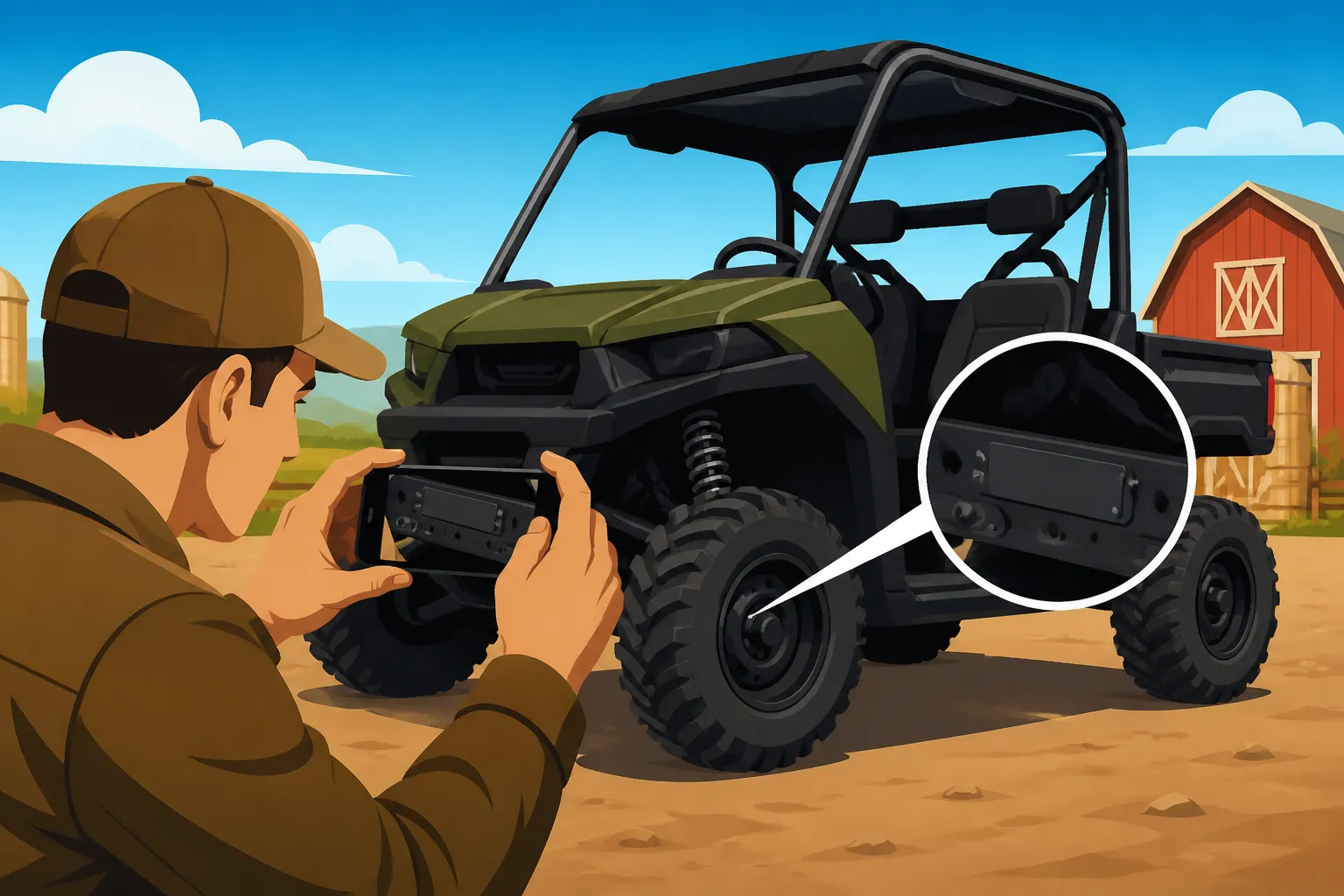
One of the biggest hurdles is simply finding the VIN. Unlike cars, where it's typically visible through the windshield or on the driver's side door jamb, ATVs and UTVs have a few common, but often well-hidden, spots. Most manufacturers stamp the VIN directly onto the frame.
- Front Frame: Often near the steering column, where it connects to the main frame, or sometimes on the front bumper support.
- Rear Frame: Frequently found on a crossmember near the rear axle or beneath the cargo bed on a UTV.
- Engine Mounts: Sometimes stamped on a sturdy part of the engine block or frame near where the engine mounts.
- A-Arms/Suspension Components: Less common, but sometimes seen on a main A-arm or suspension component.
- Manufacturer's Tag: In addition to the stamped VIN, many machines have a metal tag or sticker with the VIN, typically located on the frame, under the seat, or near the engine. However, these stickers are prone to fading, peeling, or being completely removed over time and wear, so the stamped VIN is usually the most reliable proof.
The problem, of course, is that these areas are exactly where mud, dirt, and corrosion accumulate. They're often out of direct line of sight, requiring you to crouch, contort, or even lift parts of the machine to gain access. It's a testament to the hard life these machines lead, but it makes your job of getting a clear photo that much harder. Understanding [How Kansas Law Defines a Nonhighway Vehicle] can also give you context on why the VIN is so important for proper classification and titling.
The Importance of a Clear VIN Photo
Why all this fuss over a picture? For the Kansas County Treasurer's office, a clear VIN photo is critical for several reasons. Primarily, it's proof positive of the machine's identity and, by extension, your ownership. When you go to [Title an ATV at the County Treasurer, Not the State], they need to ensure the VIN on your paperwork (like a bill of sale or Manufacturer's Certificate of Origin) matches the actual machine.
A legible VIN photo helps prevent fraud, ensuring that stolen machines aren't being retitled. It also helps the treasurer verify the machine's make, model, and year, which is essential for accurate record-keeping and calculating sales tax. If the photo is blurry, obscured, or incomplete, you'll likely be sent home to try again, delaying your ability to legally operate or sell your machine. A crisp, unambiguous VIN photo is a key piece of the puzzle described in [Kansas Title Paperwork Explained].
Essential Steps for a Successful VIN Photo
Don't just grab your phone and hope for the best. A little preparation and the right technique can save you multiple trips to the treasurer's office and a lot of frustration. Think of it like getting ready for a big project on the farm – you wouldn't start without the right tools and a plan.
Prepare the Machine and Area
Before you even think about snapping a picture, take a few minutes to prepare. This often makes the biggest difference.
- Clean the Area Thoroughly: This is paramount. Get a stiff brush, a wire brush (carefully!), a rag, and some degreaser or penetrating oil (like WD-40). Scrub away as much dirt, mud, grease, and rust as possible from around the VIN. Sometimes, a gentle scraping with a flathead screwdriver or even a sturdy pick can help dislodge packed-in grime within the stamped numbers. Once you've cleaned, wipe it down to remove residue. If there's heavy rust, a wire brush might reveal enough of the original stamping.
- Move Obstacles: Is there a fender, a piece of equipment, or even overgrown weeds blocking your access or casting a shadow? Move it, tie it back, or even temporarily remove a non-structural part if necessary to get a clear line of sight.
- Optimize Lighting: This is crucial.
- Natural Light: Mid-morning or late afternoon sun, when the light is softer and more angled, can be ideal. Avoid harsh midday sun, which can cause severe glare or deep shadows.
- Flashlight/Work Light: Even in daylight, a strong flashlight held at an angle can highlight the stamped characters by creating small shadows within the numbers. Experiment with holding the light from above, below, or the side to find the angle that makes the VIN pop. For enclosed areas, a dedicated work light is invaluable.
- Consider the Background: While not as critical as the VIN itself, a cluttered background can be distracting. If possible, position the machine against a plain wall or open space to help the VIN stand out.
The Right Tools for the Job
You don't need fancy photography equipment, but having a few basic items on hand can make all the difference.
- Smartphone Camera: Most modern smartphones have excellent cameras perfectly capable of this task. Ensure your lens is clean – fingerprints are notorious for blurring photos.
- Flashlight/Headlamp: As mentioned, an external light source is invaluable. A powerful LED flashlight or a headlamp frees up your hands.
- Cleaning Supplies: Stiff brush, wire brush, rags, degreaser, penetrating oil. Don't underestimate how much grime can hide a VIN.
- Gloves: You'll be getting dirty.
- Knee Pads/Cushion: You'll likely be on the ground or in an awkward position for a while. Your knees will thank you.
- Measuring Tape (Optional but Helpful): Sometimes, for context, showing the VIN's proximity to a specific part of the machine (e.g., "6 inches from the right engine mount") can add clarity, especially if the VIN is in an unusual spot.
- Note-Taking App/Pad: To jot down the VIN number as you read it, and note any challenges you faced.
| Tool | Purpose | Tips for Success |
|---|---|---|
| Smartphone Camera | Capturing the image | Clean the lens; use maximum resolution; tap to focus on the VIN. |
| Flashlight/Work Light | Illuminating the VIN, creating contrast | Experiment with angles (side, top, bottom) to make stamped numbers stand out. |
| Stiff Brush | Removing loose dirt, mud, and debris | Get into all the nooks and crannies around the VIN plate or stamping. |
| Wire Brush | Tackling rust and stubborn grime on stamped VINs | Use gently to avoid damaging the frame; wear eye protection. |
| Degreaser/Penetrating Oil | Dissolving grease and loosening rust | Apply, let sit for a few minutes, then scrub. |
| Rags | Wiping away dirt and cleaning residue | Keep several clean rags handy. |
Getting the Shot
Now for the actual photography. This isn't about artistic merit; it's about clarity and proof.
- Multiple Angles: Take several photos from different angles. One straight-on shot is good, but also take pictures from slightly above, below, and each side. The goal is to catch the light just right to make the stamped numbers legible.
- Focus, Focus, Focus: Your phone camera might automatically focus on the background. Tap on the screen directly over the VIN to ensure it's in sharp focus. If your phone has a "macro" or "close-up" mode, use it.
- Good Lighting is Key (Again): Experiment with your flashlight here. The angle of the light can make a huge difference in how the numbers appear. Try holding it almost parallel to the frame, just above the VIN, to create small shadows within the stamped characters, making them pop.
- Include Context: While you need a tight shot of the VIN, also take a slightly wider shot that shows the VIN's location on the machine. This helps the treasurer understand where you found it and that it's physically part of the ATV or UTV. For instance, a wider shot showing the VIN on the frame under the seat.
- Steady Hands: Brace your arms or use a small tripod if you have one to prevent blurry images. Even a slight wobble can make numbers unreadable in a close-up.
- Video Option: If you're really struggling, sometimes a short video where you slowly pan across the VIN, pausing at each character, can be more effective than a still photo. The movement of the camera and changing light can sometimes reveal characters that are hard to see in a single frame.
- Review Immediately: Don't leave the farmyard without reviewing your photos. Zoom in. Can you clearly read every single character? Is there any glare making a number illegible? If not, keep trying. It's much easier to reshoot on the spot than to realize it's unusable later. You want to make sure your [Kansas Title Questions Treasurers Hear] are about your documents, not your photo quality.
What to Do If the VIN is Unreadable or Missing
Sometimes, despite your best efforts, the VIN might be too rusted, damaged, or simply gone. This isn't an insurmountable problem, but it does require a few extra steps and perhaps a bit more patience.
Dealing with Rust, Damage, or Obscurity
If the VIN is heavily rusted, damaged, or obscured beyond legible photography, you've got a couple of options to explore before giving up.
- More Aggressive Cleaning: For heavy rust, after trying a wire brush, you might consider a rust converter or even a very fine grit sandpaper or steel wool very carefully to expose the numbers. The goal is to remove the rust layer without grinding away the stamped characters themselves. This is a delicate process and should be done with caution.
- Professional Inspection: In some cases, if the VIN is truly unreadable, the county treasurer might require a law enforcement officer or an authorized VIN inspector to physically inspect the machine and verify its identity. This provides an official third-party verification that the machine is indeed what you claim it to be and that its VIN is genuinely obscured, not tampered with.
- Legibility vs. Perfection: The treasurer doesn't need a museum-quality photo. They need to be able to read the characters. Sometimes, even if a part of a number is obscured, the context of the surrounding numbers allows for identification. For example, a partial "8" might be identifiable as an "8" if the rest of the VIN looks correct. Submit the best you have, but be prepared for questions.
Remember, the goal is to provide enough information for the treasurer to process your application. You'll also want to make sure you have all other necessary documents ready, as outlined in [What to Bring to the Treasurer's Office to Title].
The Missing VIN Scenario
A truly missing VIN is a far more serious issue. If the frame where the VIN should be is entirely blank, cut out, or has clearly been altered, this raises red flags about the machine's history.
- Law Enforcement Involvement: In such cases, the county treasurer will almost certainly require you to contact local law enforcement (sheriff's office or city police) to have them inspect the machine. They will run checks to see if it's reported stolen and investigate why the VIN is missing. This is a critical step to ensure the machine isn't stolen property.
- Nonhighway Affidavit: If the VIN is legitimately missing due to age, manufacturing defect, or accidental damage (and not theft or tampering), you might need to complete a "Nonhighway Affidavit" (often a TR-13). This is a legal document where you attest to the machine's identity and the circumstances surrounding the missing VIN. You'll likely need to describe in detail where the VIN should be and why it's not present. [Kansas Nonhighway Affidavits] provides more detail on this process. Sometimes you may also need [Kansas Title Without a Bill of Sale], which adds another layer of affidavit.
- Assignment of New VIN: In very rare cases, after thorough investigation by law enforcement and the county, a new VIN might be assigned to the machine. This is typically a last resort and involves a multi-step process with state and local authorities.
When dealing with a missing or unreadable VIN, maintaining meticulous records of all your attempts to clean or find the VIN, along with any correspondence with law enforcement or the treasurer's office, is absolutely essential.
Documenting Your Efforts
Even if your VIN photo isn't perfect, documenting your efforts can go a long way in showing good faith to the county treasurer.
- Keep a Log: Note down dates and times you attempted to clean or photograph the VIN.
- Before and After Photos: Take pictures of the VIN area before you cleaned it (showing the grime) and after (showing your best effort). This demonstrates you tried.
- Record Communications: If you spoke with anyone at the treasurer's office or law enforcement about the issue, note down their name, date, and what was discussed.
- Use Tools like LawDepot: If you need to write an affidavit, LawDepot or similar online legal document services can provide templates to help you articulate the situation clearly and formally. Having these documents prepared professionally can lend credibility to your claim.
The more evidence you have that you've done your due diligence, the smoother the process will be, even if it's a challenging situation.
Beyond the Photo: What Happens Next
Once you've got that perfect, crisp VIN photo, your journey isn't quite over. You still need to present it, ensure it's accepted, and understand how this critical piece of documentation fits into the bigger picture of ATV and UTV ownership in Kansas.
Presenting Your Photo to the County Treasurer
With your clear VIN photos in hand, you're ready for the county treasurer's office. Here's what they'll typically be looking for and what to expect:
- Legibility: Above all, can they read every single character of the VIN? If there's any ambiguity, they might ask you to try again.
- Context: The wider shot you took, showing the VIN's location on the machine, is important. It helps verify that the VIN is indeed on your ATV or UTV.
- Supporting Documents: The VIN photo is just one piece of the puzzle. You'll also need your bill of sale (or other proof of ownership), the Manufacturer's Certificate of Origin (MCO) if it's a new machine, and proof of identity. Remember, [Kansas Titles After a Private Sale] will require specific documentation to transfer ownership smoothly.
- What if it's Rejected? Don't get discouraged if they ask for a better photo. Ask exactly what they need improved – is it blurry? Is a specific character unreadable? This feedback is crucial for your next attempt. Sometimes, it might be an issue that requires the machine to be brought in for a physical inspection, which they'll advise you on.
It’s always a good idea to confirm with your specific county treasurer's office if they have any unique requirements for VIN photos before you go. A quick call can save you a lot of hassle.
Using the Photo for Other Documentation
A good VIN photo isn't just for titling. It can serve several other important purposes:
- Insurance Claims: If your ATV or UTV is stolen or damaged, your insurance company will need the VIN to process your claim. Having a clear photo readily available can speed up this process significantly.
- Private Sale Listings: When you eventually sell your machine, a clear photo of the VIN can be a great way to instill confidence in potential buyers, proving the machine's identity from the get-go. Many buyers will appreciate this transparency. You might even use it as part of a detailed bill of sale created through a service like LawDepot to ensure all parties are protected.
- Repair Shops: Some repair shops may ask for a photo of the VIN to ensure they're ordering the correct parts for your specific model and year.
- Security: Keeping a clear record of your VIN, perhaps alongside your ownership documents, is a simple security measure in case of theft.
Proactive VIN Management
Finally, a little bit of proactive effort can save you a lot of headache down the road. Treat your VIN like the important identifier it is.
- Regular Cleaning: Make it a habit to clean the VIN area periodically, especially after particularly muddy or dusty rides. This prevents heavy buildup and corrosion, making it easier to read later.
- Initial Photos: As soon as you purchase an ATV or UTV, take clear photos of the VIN. Do this when the machine is new or newly cleaned, before the farmyard grime sets in. Store these photos digitally (on your phone, cloud storage, or computer) and keep a printout with your other important documents. This creates a baseline record that can be invaluable years down the line.
- Documentation of Modifications: If you make significant modifications to your machine that might obscure the VIN (e.g., adding a custom bumper), take photos before and after the modification, and make sure the VIN remains accessible or you have records of its location.
By treating your VIN with the care it deserves, you ensure a smoother process for titling, selling, insuring, and simply owning your Kansas ATV or UTV. Understanding the process, from finding the number to [Kansas Charges $10 for a Title], makes you a more informed and confident owner.
Disclaimer
This article is for general informational purposes only and does not constitute professional advice. Laws, prices and regulations vary by location and change over time. Consult a qualified professional for guidance on your specific situation.