Retitling a Quad Inherited From a Family Member
When you inherit an ATV or UTV in Kansas, it often comes with a mix of emotions – perhaps fond memories of the previous owner, but also a looming question: "How do I legally make this machine mine?" The process of retitling an inherited quad can seem confusing, especially when you're already dealing with loss and estate matters. This guide will meticulously break down every step, document, and potential hurdle you might face when seeking to put an inherited nonhighway vehicle title in your name in Kansas.
Understanding the Kansas Nonhighway Title for Inherited Machines
Inheriting a recreational machine like an ATV or UTV can be a wonderful way to keep a loved one's memory alive, whether you plan to use it for trail riding, farm work, or just around your property. However, one of the first bureaucratic hurdles you'll face is transferring the title into your name. In Kansas, ATVs and UTVs are classified as nonhighway vehicles, which means their titling process, while similar to cars in some ways, has its own unique nuances. It's not as straightforward as just signing a name on a piece of paper, especially when an estate is involved.
What "Nonhighway Vehicle" Means for Your Inheritance
First things first, it's crucial to understand what the state of Kansas considers a "nonhighway vehicle." This classification is important because it dictates the type of title you'll be dealing with and the specific regulations that apply. Unlike cars or trucks, which receive standard vehicle titles and require annual registration tags for road use, ATVs and UTVs in Kansas get a [Kansas Nonhighway Title Explained]. This title confirms ownership but does not make the machine street legal for general road use. You won't be getting a license plate for it, nor will you pay an annual tag fee, because [Kansas Has No OHV Registration]. This distinction can sometimes cause confusion, especially if the inherited machine was always kept on private property or a farm. While it might seem simpler because there's no registration to worry about, the ownership transfer itself still needs to be done correctly to avoid future headaches. For example, if you ever decide to sell the machine down the line, having a clean title in your name is absolutely essential.
Why the Original Owner's Title Status Matters
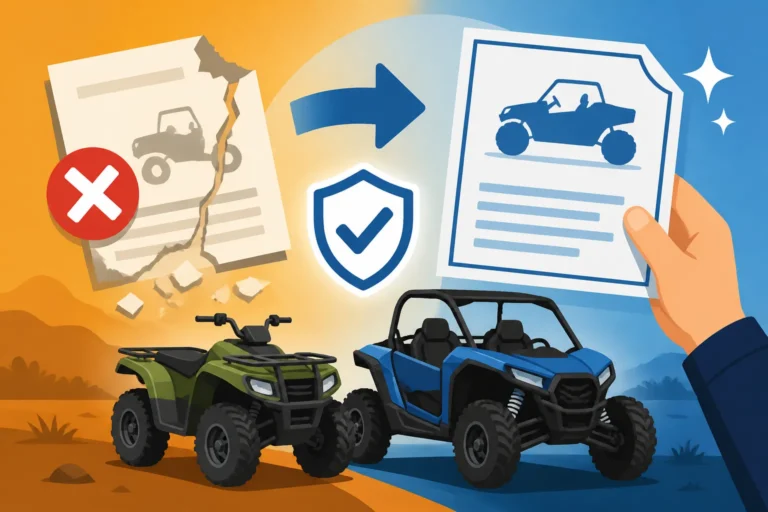
The ease of retitling an inherited ATV largely depends on how the original owner had it titled, or if they even had a title at all. Ideally, the previous owner would have possessed a valid Kansas nonhighway title, making the transfer relatively straightforward through the estate. However, sometimes you might inherit a machine that was purchased decades ago, before titling requirements for ATVs were as stringent, or perhaps it was a farm machine that was never officially titled. In cases where the original title is lost, damaged, or never existed, the process becomes more complex. You'll need to gather additional documentation, potentially involving affidavits, to prove ownership and the chain of custody. This situation, while frustrating, is not uncommon, especially with older quads that have been passed down through generations. Don't let it discourage you; there are procedures in place to help you navigate these scenarios, though it will require more legwork at the county treasurer's office.
Key Documents Needed for Retitling an Inherited ATV
Navigating the paperwork for an inherited ATV can feel like a scavenger hunt, but having all your ducks in a row before you visit the county treasurer's office will save you a lot of time and frustration. The core goal is to prove two things: who the legal heir is, and that the machine genuinely belongs to the deceased's estate. Without these proofs, the treasurer's office simply cannot process the transfer.
Proof of Inheritance: Wills, Trusts, and Affidavits
The most crucial piece of paperwork you'll need is proof that you are the rightful inheritor of the ATV. This usually comes in one of a few forms. If the deceased had a formal will, a certified copy of the will itself, along with a court order or a "Letters Testamentary" document from the probate court, will typically suffice. This document officially names the executor of the estate, who then has the authority to transfer assets, including the ATV, to the designated heir. If the ATV was held in a trust, then the trust document and the trustee's identification would be necessary to facilitate the transfer. These are the clearest paths, as they involve formal legal processes that explicitly lay out ownership transfer.
However, many family situations aren't so neatly organized with formal wills and trusts. If there was no will, or if the estate is small enough to avoid full probate, you might need to use a [Kansas Nonhighway Affidavits] document, often called an affidavit of heirship or a small estate affidavit. This is a sworn statement, usually signed by family members or disinterested parties who know the family history, attesting to who the legal heirs are according to Kansas intestacy laws. You'll likely need to get this notarized, and sometimes the county treasurer's office might have a specific form they prefer, or you might need to draft one. Online legal document services like LawDepot can offer helpful templates for drafting such affidavits, ensuring they contain all the necessary legal language. Be prepared to present identification for yourself as the heir, and possibly for anyone else named in the affidavit.
The Existing Title and Missing Paperwork Headaches
Along with proof of inheritance, you absolutely need the machine's existing title. This is the document that shows the previous owner's name and confirms the ATV's unique Vehicle Identification Number (VIN). Even though it's an inherited machine, the transfer section on the back of the title will need to be properly filled out, usually by the executor of the estate or the person designated by court order or affidavit. They will sign as the "seller" (representing the estate), and you will sign as the "buyer." The odometer reading might also be required, even if it's not strictly a road-legal vehicle, so make sure to record it accurately.
What happens if the original title is nowhere to be found? This is a common and frustrating scenario, especially with older machines. If the title is lost, you'll need to apply for a replacement title. The executor or legal representative of the estate would typically be the one to do this. They would fill out a form to request a duplicate title, which usually incurs a small fee. Once the duplicate title is issued to the estate, the transfer process can proceed as if the original title were present. If the machine was never titled in Kansas to begin with, which can happen with very old machines or those brought in from out of state without proper documentation, the process becomes even more involved. You might need to use a [Using a TR-13 Affidavit When There Is No Title] form, along with other supporting documents like bills of sale from previous owners (if available), to establish a clear chain of ownership before a new title can be issued in the heir's name.
Filling Out the Application for Title (Form TR-212)
Regardless of how smooth or complicated the inheritance path, every new owner in Kansas must complete the official Application for Title, which is Form TR-212. This form is available at your local county treasurer's office or often downloadable from the Kansas Department of Revenue website. On this form, you will provide your personal information as the new owner, the ATV's VIN, and specific details about how you acquired the machine. For an inherited vehicle, you would indicate that the transfer is due to inheritance. This form is critical for the county treasurer's office to create your new title document and update the state's records. Double-check every field for accuracy, especially the VIN, as even a single incorrect digit can cause significant delays. This form, along with your proof of inheritance and the old title (or equivalent documentation), forms the core package for your title application.
The Retitling Process at the County Treasurer's Office
Once you've gathered all your documents, the next step is to head to your local county treasurer's office. This is where the magic (or sometimes, the bureaucratic grind) happens. Knowing what to expect can ease the process considerably and help you avoid multiple trips. Remember, the staff at these offices handle hundreds of title transfers a day, so coming prepared makes their job, and your experience, much better.
Where to Go and What to Expect
In Kansas, all vehicle titling, including for nonhighway vehicles like ATVs and UTVs, is handled at the local county treasurer's office, not a state agency. So, you'll need to visit the treasurer's office in the county where you reside or where the machine will primarily be kept. You can find a list of [Kansas County Treasurer Offices] online if you're unsure which one serves your area. When you arrive, be prepared for potentially long lines, especially during peak hours or at the end of the month. It's always a good idea to call ahead to inquire about their busiest times or if they offer appointments for complex title transfers.
When you get to the counter, you'll present all your meticulously gathered documents: your proof of inheritance (will, court order, affidavit), the original (or duplicate) title signed over by the estate's representative, your completed Form TR-212, and your personal identification. The clerk will review everything thoroughly. They are looking for consistency across all documents, correct signatures, and proper notarization where required. Expect them to ask questions if anything is unclear or if there are discrepancies. Be patient and polite; their job is to ensure legal compliance.
Calculating and Paying Sales Tax (Even on an Inheritance)
One aspect that often catches people off guard when retitling an inherited machine is sales tax. While you might assume an inherited item is exempt, that's not always the case in Kansas. If the ATV was truly a gift from the estate with no monetary exchange, you generally wouldn't owe sales tax. However, if you "bought out" other heirs, or if there was any exchange of money for the machine as part of the estate settlement, then sales tax might apply to that value. The county treasurer's office is responsible for collecting [Kansas Sales Tax Collected at Titling]. They will calculate the sales tax based on the purchase price (if any) or the fair market value of the ATV if it's not explicitly stated.
The state sales tax rate in Kansas is 6.5 percent, but you'll also have local sales tax rates added on top, which vary by county and sometimes by city. These combined rates can significantly increase the total amount you pay. For example, if you inherited a UTV valued at $8,000 and there was a payout to other heirs, the sales tax could add several hundred dollars to your cost. Always ask the treasurer's office for clarification on sales tax rules for inherited property to understand your exact obligations. They are the final authority on what you owe at the counter.
Receiving Your New Kansas Nonhighway Title
Once all your paperwork is approved and any applicable fees and sales tax are paid, the county treasurer's office will process your application. The fee for a new Kansas nonhighway title is a modest $10. This [Kansas ATV Title Cost] covers the administrative work of issuing your official ownership document. You won't walk out with the physical title in hand immediately; instead, it will be mailed to you directly from the state within a few weeks. The state processing time can vary, but generally, you can expect to receive your new title within two to four weeks.
While you wait for your new title to arrive, the treasurer's office will usually give you a receipt or a temporary ownership document. Keep this document safe, as it serves as proof that you have applied for the title and are the rightful owner. This temporary proof is important if you need to demonstrate ownership for insurance purposes or if you're hauling the machine and want to avoid any questions from law enforcement. Remember, Kansas gives you [Kansas Gives You 60 Days to Apply] for a new title from the date of transfer (which, in this case, would be the date the estate officially transferred ownership to you), so it's best to handle this promptly after the estate matters are settled.
Navigating Special Scenarios for Inherited ATVs
While the general process covers most situations, inherited ATVs can sometimes present unique challenges. Estate laws and family dynamics can be complex, and Kansas has provisions for common scenarios that might deviate from a simple will-based transfer.
When There's No Will or the Estate is Small
One of the most common complications is when the deceased did not leave a formal will, or if the will exists but the estate is relatively small, often falling below the threshold for full probate court proceedings. In Kansas, specific rules dictate who inherits property when there's no will. These are called intestacy laws, and they generally prioritize spouses, children, and then other close relatives. If you find yourself in this situation, an affidavit of heirship becomes incredibly important. This document, as mentioned earlier, is a notarized statement identifying all legal heirs and their relationship to the deceased. Services like LawDepot can be invaluable for drafting a legally sound affidavit of heirship that meets Kansas requirements, especially if you're navigating this without a lawyer.
For small estates, Kansas often allows for a simplified probate process or even an affidavit procedure to transfer assets without extensive court involvement. Your county treasurer's office or a local attorney specializing in estate law can advise you on the specific thresholds and forms required for a small estate affidavit in your county. The key is to definitively establish your right to the ATV as the heir according to Kansas law, even without a formal will dictating the transfer. Be prepared to provide death certificates and proof of your relationship to the deceased.
Dealing with Liens on the Inherited Machine
Sometimes, an inherited ATV might still have an outstanding loan or lien against it. This is a crucial detail that you must discover before attempting to retitle the machine. A lien means that a bank or financial institution still has a claim on the ATV until the loan is fully paid off. The lienholder's name would typically be listed on the front of the existing title. If there's a lien, you cannot simply transfer the title into your name without addressing it. The estate is generally responsible for settling any debts, including outstanding loans on vehicles.
If the lien has been satisfied, but the title still shows the lienholder, you'll need a lien release document from the financial institution. This document, often an official letter or a signed form, confirms that the debt has been paid and the lien is cleared. You would submit this lien release along with your other titling documents. If the lien is still active, you or the estate's executor will need to contact the lienholder to understand the options for paying off the loan or transferring responsibility. Attempting to retitle a machine with an active lien without proper resolution can lead to significant legal complications down the road, potentially involving repossession or legal action against the estate. Always check [Kansas Title and Lien Records] carefully.
What if Multiple Heirs Are Involved?
Inheritance can get complicated when there are multiple heirs, especially if they all have a claim to the same piece of property, like an ATV. If the will or intestacy laws dictate that the ATV is to be shared, or if multiple heirs wish to co-own it, Kansas allows for [Kansas Title With Two Owners] (or more, though two is most common). In this scenario, all co-owners would be listed on the new nonhighway title. Each owner would need to provide their identification and sign the application for title.
Alternatively, if one heir wishes to take sole ownership of the ATV, and other heirs are willing to relinquish their claim, then a written agreement among the heirs might be necessary. This agreement, often notarized, would state that the other heirs are waiving their rights to the ATV in favor of the designated individual. If money changes hands to buy out the other heirs, that amount would typically be subject to sales tax when you process the title transfer. Clear communication and a formal agreement among all parties involved are paramount to ensure a smooth transfer and prevent future disputes over the machine. It's often wise to have an attorney review such agreements to ensure they are legally binding and clearly define ownership.
Here's a quick checklist of common documents you might need, depending on your unique inheritance situation:
| Document Type | Purpose | Required For | Notes |
|---|---|---|---|
| Existing Kansas Title | Proof of prior ownership and machine VIN | All transfers | Must be signed over by estate representative/executor |
| Certified Death Certificate | Proof of owner's passing | All transfers | Original or certified copy |
| Application for Title (TR-212) | Your request for a new title in your name | All transfers | Available at County Treasurer or online |
| Will / Letters Testamentary | Proof of heirship via formal probate | With a will | Certified copy from court, names executor |
| Affidavit of Heirship | Proof of heirship when no will or small estate | No formal will | Often notarized, may need witnesses. LawDepot can help. |
| Small Estate Affidavit | Simplified transfer for estates under a certain value | Small estates | Check county-specific requirements |
| Lien Release | Proof that any outstanding loans are paid off | With a lien | Must be from the financial institution |
| Proof of Identity | Your personal identification | All transfers | Driver's license or state-issued ID |
| Bill of Sale (if applicable) | If you bought out other heirs | Buy-out heirs | Documents monetary exchange for sales tax calculation |
Disclaimer
This article is for general informational purposes only and does not constitute professional advice. Laws, prices and regulations vary by location and change over time. Consult a qualified professional for guidance on your specific situation.