Measuring 48 Inches to Meet the WSUV Test
It can be incredibly frustrating to navigate the intricate world of Kansas off-road vehicle classifications, especially when a single measurement can change everything about how you title and use your machine. This guide is here to demystify the 48-inch measurement requirement for Work-Site Utility Vehicles (WSUVs) in Kansas, helping you understand its importance and how to get it right.
Understanding the Kansas Work-Site Utility Vehicle (WSUV) Classification
Kansas law has specific definitions for various off-road machines, and the Work-Site Utility Vehicle (WSUV) is a unique category that comes with its own set of rules. Unlike an all-terrain vehicle (ATV) or even a standard utility vehicle (UTV), WSUVs are recognized for their practical, often agricultural or commercial, applications. But what makes a machine a WSUV, and why does a seemingly arbitrary dimension like 48 inches matter so much?
What Defines a WSUV in Kansas Law?
The state of Kansas goes to great lengths to define exactly what constitutes a Work-Site Utility Vehicle, and it's more than just a label; it's a classification that dictates titling, registration, and permitted uses. A WSUV is generally described as a motor vehicle that is designed to be used off-highway, is 48 inches or less in width, weighs more than 800 pounds unladen, and is equipped with a steering wheel and seating for two or more passengers side-by-side. It's often factory-designed for utility tasks, not primarily for recreation or competitive riding. You can find a deeper dive into these specifics by looking into [What Makes a Side-by-Side a Work-Site Utility Vehicle]. This definition is critical because it separates WSUVs from other categories, meaning your machine might be an ATV, a golf cart, or a micro utility truck if it doesn't meet all these criteria. Each class has its own distinct set of regulations.
Imagine you've just bought a new side-by-side, hoping to use it around your farm or even for certain approved trips on county roads. If your machine is advertised as a utility vehicle, but it happens to be 50 inches wide, it immediately falls out of the WSUV classification. This small difference has big implications. It means you won't be able to title it as a WSUV, and thus, its road-use privileges – which WSUVs sometimes have under specific circumstances – would be nullified. Understanding these nuances from the start can save you a lot of headaches, time, and potential legal trouble. The county treasurer's office will be looking at these exact specifications when you try to get your title.
Why the 48-Inch Rule Exists for WSUVs
The 48-inch width limit isn't just a random number; it's a legislative decision designed to categorize vehicles based on their intended use and safety profile, particularly concerning public road access. The state's intent is to create a class of utility vehicles that are narrow enough to operate in specific work environments or on certain roads without posing the same challenges as wider, often recreational, UTVs. This limit helps delineate machines that are truly "work-site" oriented from those that are designed for broader off-road adventures.
Think about it this way: a narrower vehicle might be safer for accessing tight spaces on construction sites, navigating between rows of crops, or operating on narrow utility easements. It helps ensure that vehicles gaining certain road-use exceptions are constrained in a way that minimizes impact on regular traffic flow and infrastructure. Without such specific dimensional requirements, the lines between different vehicle types would blur, making enforcement and classification a nightmare for everyone involved. This is just one of several critical dimensions discussed in [Kansas WSUV Width of 48 Inches], which further clarifies the rule. It’s about creating a clear distinction for a very specific type of machine in the eyes of Kansas law.
The Nitty-Gritty of Measuring 48 Inches
So, you're convinced your machine is a WSUV, and you're ready to get it titled. Before you head to the county treasurer, you need to be absolutely certain it meets that 48-inch width requirement. This isn't a "guesstimate" situation; it requires precise measurement. Many owners have been turned away from the titling office because they overlooked a small detail in their measurements.
Where to Measure: The Widest Point
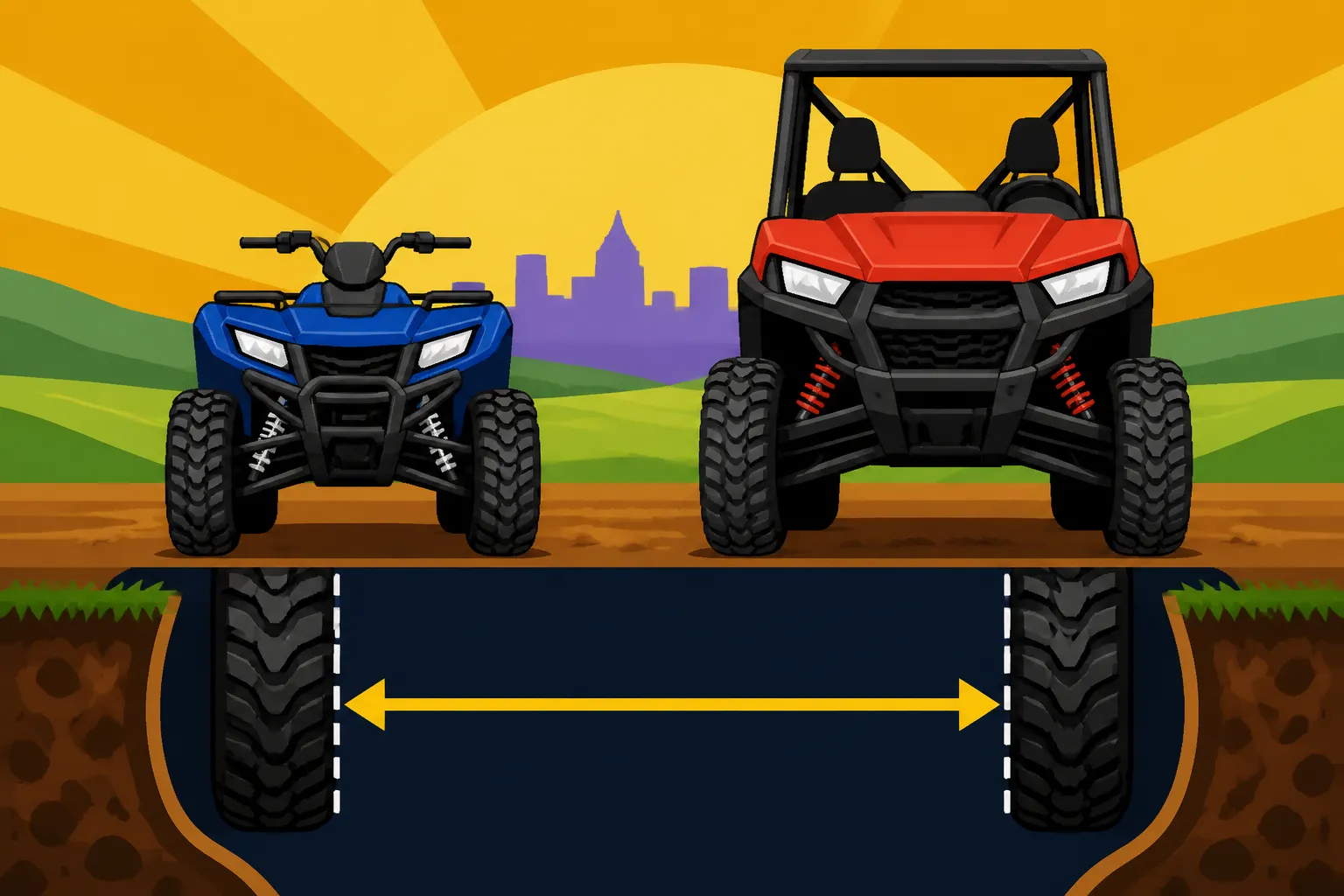
When Kansas law specifies "48 inches or less in width," it means the absolute widest point of the machine, from one outer edge to the other. This isn't just tire-to-tire. It includes any factory-installed or aftermarket accessory that protrudes beyond the main body of the vehicle. This can be the outside of the tires, fender flares, side mirrors that are permanently mounted, step bars, or even cargo racks. Essentially, if it’s part of the vehicle and sticks out, it must be included in the measurement.
For example, imagine your side-by-side has chunky off-road tires that slightly bulge past the fender wells, or you've added some robust aftermarket rock sliders. These items must be included in your measurement. Even a seemingly small detail, like a fixed mirror arm extending an inch or two, can push your machine over the 48-inch limit. It’s important to inspect your vehicle from all angles to identify its true widest point. Don't just measure across the frame or the body; consider everything that could impact the overall width.
Tools and Techniques for Accurate Measurement
To ensure you get an accurate measurement, you'll need the right tools and a systematic approach. A standard tape measure can work, but a rigid yardstick or a long, straight edge combined with a tape measure can be even better for ensuring a straight line across the widest points. Here's a step-by-step approach:
- Park on Level Ground: Ensure your WSUV is on a flat, level surface. Uneven ground can cause the suspension to sag or rise on one side, leading to an inaccurate measurement.
- Clear the Area: Remove any loose items from the machine that aren't permanent fixtures, but remember to include things like attached mirrors or brush guards.
- Identify Widest Points: Visually scan your machine from the front and back. Kneel down to eye level to spot the outermost edges. Often, this will be the outside edge of the tires, but remember to check fender flares, steps, or mirrors.
- Measure Straight Across: Use your tape measure, or better yet, two straight edges (like yardsticks or pieces of lumber) held vertically against the widest points on each side. Then, measure the distance between the two straight edges. This helps ensure a perfectly horizontal measurement, even if the widest points are at different heights.
- Double-Check: Always measure at least twice, and even consider having a second person confirm the measurement. It’s better to be overly cautious here than to face disappointment at the treasurer's office.
- Consider Aftermarket Additions: If you add anything to your WSUV after purchase—new tires, fender extensions, a different brush guard—you must re-measure. What was compliant yesterday might not be today.
The table below summarizes key WSUV criteria, including the measurement focus:
| WSUV Criteria | Specific Requirement in Kansas Law | Measurement Focus |
|---|---|---|
| Width | 48 inches or less | Widest point of the machine, including tires, fenders, and permanently affixed accessories. |
| Weight (Unladen) | More than 800 pounds | Empty vehicle weight, without passengers, fuel, or cargo. |
| Steering Control | Equipped with a steering wheel | Must have a circular steering device, not handlebars. |
| Seating Capacity | Two or more passengers, side-by-side | Designed for occupants to sit next to each other, not straddling a seat. |
| Intended Use | Designed to be used off-highway | Primary design is for utility tasks off pavement, though specific road exceptions exist. |
| Tires | Four or more nonhighway tires | Uses tires designed for off-road surfaces. |
This careful approach is crucial. If your measurements are off, even by a hair, your machine might not qualify as a WSUV. This can then impact the entire titling process, as outlined in [Kansas WSUV Title Requirements].
The Impact of the 48-Inch Measurement on Your Machine
Understanding and accurately confirming your machine's width isn't just a technical exercise; it has real, tangible consequences for how you can legally own and operate your vehicle in Kansas. From the moment you try to get a title to every time you consider taking it onto a county road, that 48-inch measurement is a foundational element.
Titling Implications: Getting Your WSUV Registered Correctly
When you head to your [Kansas County Treasurer Offices] to title your new-to-you (or brand new) side-by-side, the staff will be checking for all the criteria that define a WSUV. This includes the 48-inch width, the unladen weight of over 800 pounds, the steering wheel, and the side-by-side seating. If your machine is wider than 48 inches, it simply won't be titled as a WSUV. Instead, it might fall into the broader "utility vehicle" category or another classification, which has different implications for road use and even for the titling fee. You'll want to review [Kansas Title Paperwork Explained] to make sure you have everything ready.
Getting the correct title is essential because it serves as the official record of ownership and classification. Without a proper WSUV title, you might face complications with insurance, resale, or proving ownership. Imagine trying to sell your machine down the road, and the buyer discovers it was never correctly titled according to Kansas law because of a measurement discrepancy. This could significantly devalue your machine or make it difficult to complete the sale. It’s also worth noting that if you buy from a private seller, you’ll still need to bring all the necessary paperwork, and any issues with the WSUV classification will fall to you.
Road Use and Compliance: Staying Legal on Kansas Roads
This is perhaps where the 48-inch rule has its most significant impact. WSUVs, under specific circumstances and in certain jurisdictions, are granted limited road-use privileges that other off-road vehicles (like ATVs) typically aren't. For example, some cities might have ordinances allowing WSUVs on certain city streets, or farmers might use them on county roads for agricultural purposes. However, these privileges are strictly contingent on the vehicle meeting the WSUV definition, including that crucial 48-inch width limit. You can learn more about these rules in [Kansas Work-Site Utility Vehicle Road Rules].
If your machine exceeds 48 inches in width, even by a fraction of an inch, it immediately loses its WSUV classification and, with it, any potential WSUV-specific road-use allowances. This means if you were pulled over while operating it on a road where a WSUV would be allowed, you could be cited for illegal operation because your machine simply doesn't meet the legal definition. This isn't just a minor technicality; it’s a fundamental aspect of operating your machine legally. Always remember that even with a WSUV title, the ability to ride on roads varies greatly by local ordinances and specific use cases, so always check local laws for [Kansas Cities That Authorize ATV Street Use].
Common Mistakes and How to Avoid Them
It’s easy to make mistakes when dealing with specific measurements and legal classifications. Here are some common pitfalls WSUV owners in Kansas encounter and how to steer clear of them:
- Assuming Manufacturer Specs are Sufficient: Manufacturers often list specs, but sometimes these are generalized or don't account for every possible accessory or variation. Always perform your own measurement.
- Forgetting Aftermarket Parts: As mentioned, any additions like wider tires, fender flares, or cargo boxes must be included. A machine that was 48 inches wide from the factory might easily exceed that with modifications.
- Measuring Inaccurately: A floppy tape measure, an uneven surface, or measuring at an angle can all lead to incorrect readings. Take your time, use straight edges, and double-check your work.
- Ignoring the "Unladen Weight" Rule: The width is just one part of the WSUV test. Don't forget the machine also needs to weigh more than 800 pounds unladen. A small, lightweight side-by-side might fail this test, even if it passes the width test. Learn more in [Kansas WSUV Weight Over 800 Pounds].
- Not Understanding the "Steering Wheel" and "Seating" Rules: Your machine must have a steering wheel (not handlebars) and side-by-side seating for two or more. If your machine has handlebars, it's likely an ATV, not a WSUV, regardless of width or weight. [Why a Steering Wheel Changes Your Title Class] explains this distinction further.
- Relying on Out-of-State Information: Laws vary wildly between states. What might be considered a WSUV or similar utility vehicle in Missouri or Oklahoma might not meet Kansas's specific criteria. If you're moving to Kansas, be sure to understand its unique laws.
When in doubt, it's always best to contact your local county treasurer's office directly. They are the experts in titling and can provide guidance based on your specific machine. Sometimes, if there's any ambiguity, they may even ask for an affidavit to confirm certain specifications. In such cases, if you need to draft official documentation, resources like LawDepot can be helpful for finding templates for affidavits or bills of sale to ensure your paperwork is legally sound. Taking these precautions ensures that your pride and joy is correctly classified and legal for all your intended uses across the Sunflower State.
Disclaimer
This article is for general informational purposes only and does not constitute professional advice. Laws, prices and regulations vary by location and change over time. Consult a qualified professional for guidance on your specific situation.