Kansas Sales Tax at the Treasurer’s Counter
So, you've found your perfect off-road machine, maybe a rugged ATV for hunting season or a versatile UTV for ranch work, and you're ready to make it official in Kansas. You've got the handshake done, or the dealer paperwork signed, and now comes the moment of truth: heading to the county treasurer's office. Many folks assume sales tax is always handled by the seller, especially with larger purchases. But when it comes to ATVs and UTVs in the Sunflower State, that's not always the case, and it often leads to a bit of confusion right there at the counter. This guide is here to clear up exactly how sales tax on your off-road vehicle is collected and what you need to know before you go to get your [Kansas Titles ATVs as Nonhighway Vehicles] document.
Why the County Treasurer Handles Sales Tax for Off-Road Machines
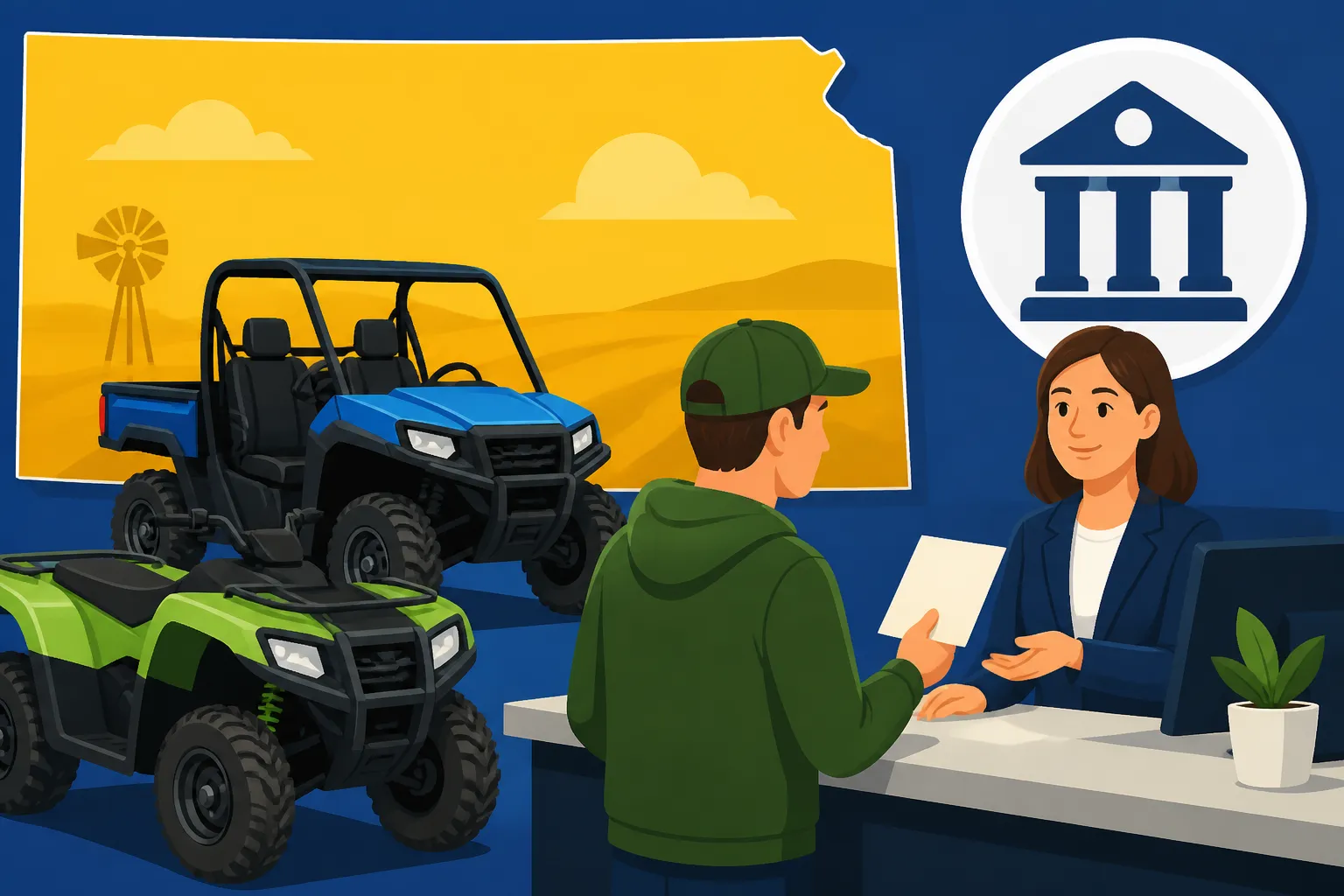
It can feel a little bit like the Wild West when you're dealing with ATV and UTV purchases compared to, say, buying a new car. With a car, you typically pay the sales tax right there at the dealership, and they handle all the remittance to the state. It's a clean, straightforward process. But off-road machines are often a different beast, particularly in a state like Kansas where they're not generally intended for public road use and thus fall into a different titling category. This distinction means the collection of sales tax often shifts from the seller to the buyer, paid directly at the county treasurer's office.
The Difference from Car Purchases
The primary reason for this difference lies in how these vehicles are regulated and sold. Cars are almost always sold through licensed dealerships, which are set up to collect and remit sales tax as part of their business operations. They have specific systems and reporting mechanisms in place to handle these transactions seamlessly.
ATVs and UTVs, on the other hand, especially older models or those bought in [Kansas Titles After a Private Sale], frequently change hands between private individuals. The state can't realistically expect every private seller to register as a tax collector and remit sales tax. So, to ensure that the sales tax is consistently collected on these machines, the responsibility falls to the buyer to pay it at the point of titling. This method helps the state capture the sales tax revenue on every eligible off-road vehicle transaction, whether it's a brand-new side-by-side from a dealer or a used quad picked up from a neighbor down the road. It might feel like an extra step, but it's the state's way of simplifying the process while still ensuring compliance.
When the Tax Payment Is Due
The sales tax for your ATV or UTV in Kansas is due at the same time you apply for your title. This means when you walk into the [Kansas County Treasurers Handle Titles] office with your bill of sale and other required documents, you'll be paying both the title fee and the sales tax. Kansas law is pretty clear on the timeline: you have 60 days from the date of purchase (or the assignment date on the title) to apply for your title and pay all associated fees and taxes. This is a critical deadline to remember, as missing it can lead to penalties.
If you bought your machine from a Kansas dealer, they might have collected the sales tax on your behalf, but it's always smart to double-check their paperwork and understand exactly what you've paid for. If you bought it from a private seller, you can almost certainly expect to pay the tax at the treasurer's office. Planning for this cost upfront is essential so you're not caught off guard by an unexpected payment when you're just trying to get your new machine legal. The [Sixty Days From the Assignment Date] clock starts ticking the moment that sale is finalized, so don't delay your trip to the county office.
Understanding Kansas Sales Tax Rates for ATVs and UTVs
One of the most confusing aspects of paying sales tax at the treasurer's counter is understanding exactly what rate you'll be charged. It's not just a flat statewide percentage. Kansas has a layered sales tax system, which means the total amount you pay can vary significantly depending on where you live or, more accurately, where your machine will be domiciled. This can be a real head-scratcher if you're not familiar with how state, county, and city taxes combine.
State, County, and City Rates Explained
In Kansas, the state sales tax rate is 6.5%. This is the foundational percentage that applies to nearly all taxable purchases, including your ATV or UTV. However, on top of this state rate, most counties and many cities in Kansas levy their own local sales taxes. These local rates can add anywhere from 1% to 5% (or even a little more in some specific districts) to the base state rate.
What this means for you is that the final sales tax percentage you pay will be a combination of the state rate, your county's rate, and potentially your city's rate. For example, if you live in a county with a 2% sales tax and a city with a 1% sales tax, your total combined rate would be 6.5% (state) + 2% (county) + 1% (city) = 9.5%. The exact rate applied is based on the address where the machine will be garaged or principally used, not necessarily where you bought it. This is a common point of confusion, so make sure you know the combined sales tax rate for your specific location. The folks at your [Kansas County Treasurer Offices] will be able to tell you the precise rate for your address.
How Trade-Ins Reduce Your Taxable Amount
Here's a piece of good news that can save you a pretty penny: if you traded in an existing ATV, UTV, or even another type of vehicle when you purchased your new machine, Kansas law allows you to pay sales tax only on the difference between the price of the new machine and the value of your trade-in. This is a significant benefit, as it directly reduces your taxable amount and, therefore, the total sales tax you owe.
For example, if you buy a UTV for $10,000 and trade in your old quad for $4,000, you would only pay sales tax on $6,000 ($10,000 – $4,000). This can amount to substantial savings, especially on higher-priced machines. It's crucial that your bill of sale or dealer invoice clearly shows the trade-in value. If you're doing a private sale and trading machines, ensure that both the purchase price and the trade-in allowance are explicitly stated on a properly documented bill of sale. Don't leave this to a verbal agreement, as the treasurer's office will need written proof to apply the reduction.
What to Bring to the Treasurer's Counter for Tax Collection
Walking into the county treasurer's office prepared can save you a lot of time and frustration. There’s nothing worse than getting to the front of the line only to realize you’re missing a crucial document. The process for paying sales tax and getting your title for an ATV or UTV is pretty specific, and having all your ducks in a row beforehand is key. This section will break down exactly what you’ll need to have in hand to make the transaction as smooth as possible.
Required Documents for Proof of Sale
The most important document you’ll need is definitive proof of your purchase, which is typically a bill of sale or a manufacturer's certificate of origin (MCO).
-
For a New Machine: If you bought a brand-new ATV or UTV from a dealer, you'll need the original Manufacturer's Certificate of Origin (MCO). This document acts as the initial title and proves the machine's origin and ownership. The dealer should also provide a detailed invoice that clearly states the purchase price, any trade-in allowances, and possibly any sales tax they may have collected (though for off-road machines, you usually pay Kansas sales tax at the treasurer's counter, even if you bought from a Kansas dealer, unless specified otherwise). Make sure this invoice is itemized and transparent. [Taking an MCO to the County Treasurer's Window] is a crucial step.
-
For a Used Machine: If you purchased a used ATV or UTV, you will need the previous owner's properly assigned title. The back of the title usually has a section for the seller to sign over ownership to you, along with the date of sale and purchase price. Additionally, a bill of sale is highly recommended, even if the title has an assignment section. A good bill of sale, like one you might generate using a template from a service like LawDepot, will detail the buyer and seller information, the machine's VIN, the purchase price, and the date of sale. This becomes your official record and the document the treasurer's office will primarily use to calculate your sales tax. [Using a Handwritten Bill of Sale to Title a Quad] is perfectly acceptable, as long as it contains all the necessary information.
-
Proof of Residency: You'll also need proof that you are a Kansas resident and that the machine will be kept in the county where you are titling it. This could be your Kansas driver's license or another form of identification with your current address. This is important because, as we discussed, the local sales tax rates depend on your address.
Acceptable Payment Methods
Once the clerk at the county treasurer's office has reviewed your documents and calculated the total sales tax and title fees, you'll need to be ready to pay. Most county treasurer offices in Kansas accept several forms of payment, but it’s always a good idea to confirm with your specific county office beforehand, especially for larger sums.
Commonly accepted payment methods include:
- Cash: Always a reliable option, but for significant purchases, you might not want to carry large amounts.
- Personal Check or Money Order: These are usually accepted, provided they are drawn on a local bank or are certified. Make sure you have sufficient funds if writing a personal check.
- Credit or Debit Card: Many offices now accept credit or debit cards, but be aware that there is often a convenience fee charged by the third-party processor. This fee can add a small percentage to your total, so factor it into your budget if you plan to use a card.
Having a couple of payment options available is wise, just in case one doesn't work out. Remember, you'll be paying the sales tax (which can be a substantial amount) in addition to the standard [Kansas Charges $10 for a Title] fee, so prepare your funds accordingly.
Common Pitfalls and Questions About Sales Tax at Titling
Even with all the information in the world, the process of titling and paying sales tax can sometimes throw a curveball. There are specific scenarios that often lead to confusion or unexpected costs for ATV and UTV owners in Kansas. Knowing about these common pitfalls upfront can help you navigate the system more smoothly and avoid any last-minute surprises or delays when you're at the treasurer's counter.
Out-of-State Dealer Purchases
This is one of the biggest areas of confusion for Kansas residents buying off-road machines. Let's say you found an incredible deal on a UTV at a dealership just across the border in Missouri or Oklahoma. You complete the purchase, and the dealer, being out-of-state, likely charges you their state's sales tax, or perhaps no sales tax if they know you're titling it elsewhere.
Here’s the rub: when you bring that machine back to Kansas to title it, you are still obligated to pay Kansas sales tax, even if you paid sales tax in another state. Kansas has what's called a "use tax" provision. If the sales tax you paid in the other state was less than what you would have paid in Kansas, you'll owe the difference to Kansas. If you paid more sales tax in the other state than you would have in Kansas, you typically won't owe Kansas any additional tax, but you also won't get a refund from Kansas for the difference. It's a "pay the higher of the two states" situation, effectively. Always keep your purchase invoice from the out-of-state dealer, as it will show any sales tax collected there. The county treasurer's office will review this when calculating your final Kansas sales tax liability. This can add a significant amount to your initial budget if you're not expecting it, so always factor in the Kansas sales tax rate when considering an out-of-state purchase. For more details, you might want to look into [Kansas Tax on an Out-of-State Dealer Purchase].
Sales Between Private Parties
When you buy an ATV or UTV from a private seller in Kansas, the responsibility for sales tax falls squarely on your shoulders at the time of titling. Unlike a dealership, a private individual is not equipped or required to collect sales tax. This means that when you go to the county treasurer's office, you'll need a clear and accurate bill of sale showing the purchase price of the machine.
The treasurer's office will use this price to calculate the sales tax you owe. It's important to be honest and realistic about the sale price on your bill of sale. If the stated price seems unusually low compared to the machine's market value, the treasurer's office may sometimes question it or use their own valuation guides to determine a fair market value for tax purposes. While a simple, handwritten bill of sale is often sufficient, having a more comprehensive document can protect both parties and clarify the transaction for the titling office. Services like LawDepot offer templates for bills of sale that can help ensure all necessary information, like the VIN, make, model, year, purchase price, and contact information for both buyer and seller, is included, making your visit to the treasurer's office much smoother. Remember, even with a private sale, the [Kansas Sales Tax Collected at Titling] is non-negotiable.
Here's a quick reference for sales tax collection scenarios:
| Purchase Scenario | Sales Tax Collected By | When Due | Key Document Needed |
|---|---|---|---|
| New (Kansas Dealer) | Often by dealer, or at Treasurer's (verify with dealer) | At point of sale or titling | MCO, Dealer Invoice |
| Used (Kansas Private Seller) | County Treasurer's Office | At time of titling (within 60 days) | Signed Title, Bill of Sale |
| New/Used (Out-of-State) | County Treasurer's Office (Kansas Use Tax) | At time of titling (within 60 days) | MCO/Title, Dealer Invoice |
| Gift/Inherited | Potentially exempt or based on fair market value | At time of titling (within 60 days) | Affidavit, Appraisal |
Getting your ATV or UTV titled and legally yours in Kansas involves a few steps, and understanding how sales tax fits into that equation is key. It might seem a little different than buying a regular car, but once you know the rules – that the county treasurer's office is your destination for [Kansas Sales Tax on a Private ATV Sale] and other transactions – the process becomes much clearer. Just make sure you have all your documents, including a solid bill of sale (perhaps even a LawDepot one!), and are prepared for the combined state and local tax rates, and you'll be hitting the trails in no time.
Disclaimer
This article is for general informational purposes only and does not constitute professional advice. Laws, prices and regulations vary by location and change over time. Consult a qualified professional for guidance on your specific situation.