Kansas Title Compared to Oklahoma
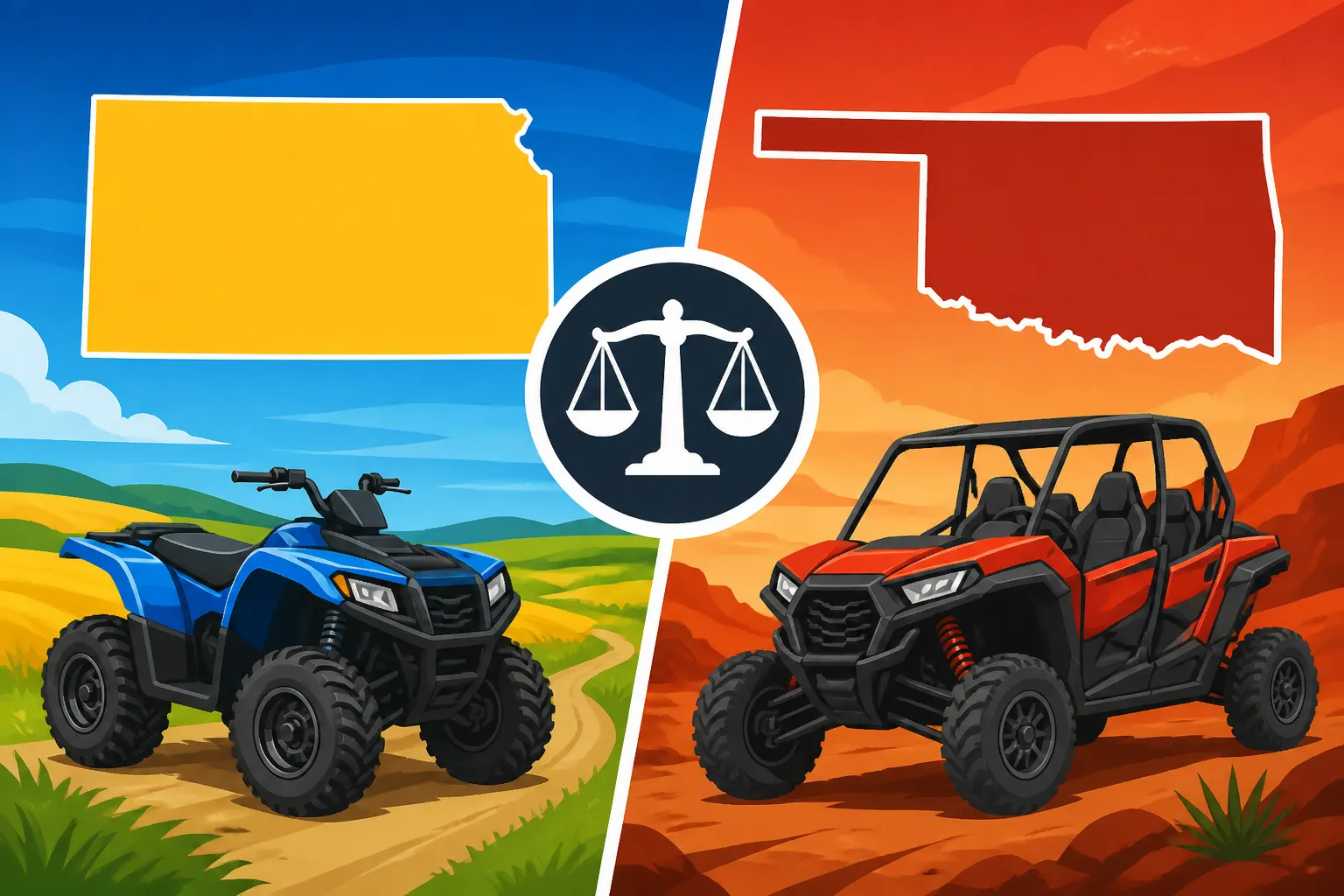
Owning an ATV or UTV often means navigating a maze of rules, especially when comparing states. If you're pondering how titling your off-road machine in Kansas differs from Oklahoma, you've hit a common roadblock. The nuances can be significant and perplexing. This guide will meticulously compare the titling processes in Kansas and Oklahoma, helping you understand the requirements whether you're buying, moving, or simply aiming for compliance.
The Fundamental Split: Titling Nonhighway Vehicles in Kansas vs. Oklahoma
It might seem like a small detail, but the fundamental way Kansas and Oklahoma view ATVs and UTVs sets the stage for entirely different titling processes. In Kansas, the state specifically classifies these machines as "nonhighway vehicles." This designation immediately tells you a lot about what to expect: they are generally not intended for public road use, and the titling system reflects that. The focus is on ownership verification rather than road-readiness.
Because Kansas views these as nonhighway vehicles, the process is streamlined for that purpose. You're getting a title to prove you own the machine, much like a car title, but it comes with a clear understanding that it doesn't open up public roadways for your off-road adventures. This distinction is crucial for understanding why Kansas doesn't require annual registration for these machines – because they aren't considered road-going vehicles in the same way cars are. [Kansas Titles ATVs as Nonhighway Vehicles] is a core concept that shapes the entire system.
Oklahoma, on the other hand, approaches these machines with a different philosophy, often lumping them into categories that might have more akin to road vehicles, or at least requiring a more robust system for tracking them. While not always street-legal by default, the state's system often includes registration alongside titling, signifying a greater degree of state oversight and a different set of expectations for owners. This can include more detailed forms, inspection requirements, and fees that reflect this broader scope of regulation.
This difference in foundational philosophy means that an ATV owner in Kansas will go through a process that feels relatively straightforward and primarily focused on establishing legal ownership, whereas an owner in Oklahoma might encounter additional steps, particularly concerning registration and potential road-use considerations, even if those considerations ultimately restrict actual road use. It's not just about what documents you need, but the underlying reason why those documents are required.
Breaking Down the Paperwork: Documents and Deadlines in Both States
When it comes to the nitty-gritty of getting your off-road machine titled, both states require paperwork, but the specifics – and the deadlines – can trip you up. Understanding these details is key to avoiding penalties and unnecessary stress.
What Kansas Requires for Titling
In Kansas, the titling process for an ATV or UTV is handled at your local county treasurer's office. You'll need proof of ownership, which usually means the manufacturer's statement of origin (MSO) if it's a brand-new machine, or a properly assigned title if you bought it used. A bill of sale is also incredibly important, especially for used machines or if the MSO isn't readily available for some reason. The state is pretty clear that you need to get this done within a specific timeframe. [Kansas County Treasurers Handle Titles] are your go-to resource.
You generally have 60 days from the date of purchase (or the date of assignment on the MSO or previous title) to apply for your new title. Missing this deadline can result in late filing penalties, which no one wants to deal with. Along with the MSO or previous title and bill of sale, you'll need to fill out a title application. You'll also need proof of identity and residency, and be prepared to pay the title fee and any applicable sales tax at the time of titling. [Kansas Gives You 60 Days to Apply] and [Kansas Sales Tax Collected at Titling] are two critical pieces of information for any new owner. If you're buying from a private seller, ensure you get a robust bill of sale. Sometimes, if a title is missing, you might need to explore options like a nonhighway affidavit, though this is a more complex path. [Kansas Nonhighway Affidavits] can be a lifesaver in those situations.
Oklahoma's Titling and Registration Process
Oklahoma’s system typically involves both titling and registration for off-road vehicles like ATVs and UTVs. This means you're not just proving ownership, but also entering your machine into a state database for tracking and, sometimes, for issuing a registration decal or plate. Like Kansas, you'll generally need a manufacturer's certificate of origin (MCO) for new machines or a properly assigned title for used ones. A bill of sale is also crucial, providing a clear chain of ownership.
The key difference often lies in the additional registration step. This usually involves an annual fee and the issuance of a decal or sticker that needs to be displayed on the machine. Oklahoma often has specific deadlines for completing both titling and registration after purchase, and these can vary slightly. It's essential to check with the Oklahoma Tax Commission or your local tag agent for the precise deadlines and required documentation, as ignoring these can lead to fines. They might also have different requirements for various types of off-road machines, such as dirt bikes or side-by-sides, potentially requiring proof of insurance for some categories. For crafting legal documents like a comprehensive bill of sale, a service like LawDepot can be useful to ensure all necessary details are included, regardless of which state you're in.
Comparing Fees and Deadlines
While I can't give specific dollar amounts, the cost structure differs. In Kansas, the title fee is typically a set, relatively modest amount. [Kansas Charges $10 for a Title] explains the shape of this cost. Sales tax is also collected at the time of titling. In Oklahoma, you'll likely encounter a title fee plus a separate annual registration fee, which can add up over time. Both states impose late penalties for missing their respective deadlines, so marking your calendar is non-negotiable.
| Feature | Kansas | Oklahoma (General) |
|---|---|---|
| Primary Goal | Prove ownership for nonhighway use | Prove ownership & track for state oversight/potential limited road use |
| Registration | No annual registration for OHVs (no tag) [Kansas Has No OHV Registration] | Typically required, often annual |
| Titling Entity | County Treasurer's Office | Tag Agent or Oklahoma Tax Commission |
| Proof of Ownership | MSO or assigned title, Bill of Sale | MCO or assigned title, Bill of Sale |
| Deadline | 60 days from purchase/assignment [Kansas's 60-Day Titling Deadline] | Varies, usually within 30-60 days; annual renewal for registration |
| Fees | One-time title fee + sales tax | Title fee + annual registration fee + sales tax |
| Penalties | Late filing penalties for missed title deadline | Late filing penalties for missed title and/or registration deadlines |
This table highlights the immediate differences in bureaucratic hurdles you might face. It’s not just about the numbers, but the overall system behind them.
Handling Your Machine When Crossing the Kansas-Oklahoma Border
Moving from one state to another with your ATV or UTV can be a logistical headache if you're not prepared. The differences in titling and registration between Kansas and Oklahoma mean you'll need to understand how each state views a machine that was previously titled or registered elsewhere.
Moving Your Machine to Kansas
If you're moving to Kansas with an ATV or UTV that was previously titled or registered in Oklahoma, you'll need to apply for a Kansas nonhighway vehicle title. The good news is that Kansas will honor a valid out-of-state title. You'll bring your existing Oklahoma title, a bill of sale (if you recently purchased it), proof of identity, and proof of your new Kansas residency to your county treasurer's office. [Titling an ATV in Kansas From Out of State] covers this in detail.
The process is generally straightforward: the Kansas County Treasurer will review your Oklahoma title to ensure it's properly assigned and valid. They will then issue you a new Kansas nonhighway vehicle title. You will still pay the Kansas title fee and any applicable sales tax if it hasn't been paid previously or if you've recently purchased the machine. Since Kansas does not require annual registration for ATVs and UTVs, you won't need to worry about a new tag or decal once you have your Kansas title. This simplified approach can be a pleasant surprise for those coming from states with more complex registration systems.
Bringing Your Machine into Oklahoma
Bringing an ATV or UTV from Kansas into Oklahoma is where things get a bit more involved due to Oklahoma's registration requirements. Your Kansas nonhighway title is proof of ownership, but it doesn't satisfy Oklahoma's need for registration. When you establish residency in Oklahoma, you'll generally need to present your Kansas nonhighway title to an Oklahoma tag agent.
The tag agent will use your Kansas title as the basis for issuing a new Oklahoma title and, crucially, registering your machine. This means you'll typically pay a title fee, an annual registration fee, and any applicable sales tax. You might also need to complete an inspection or provide proof of insurance, depending on Oklahoma's specific classifications and rules for your machine type. It’s always best to contact an Oklahoma tag agency or the Oklahoma Tax Commission directly to confirm the exact steps and fees, as requirements can sometimes vary by machine class or even county.
The Importance of a Valid Bill of Sale
In both scenarios – buying a machine from another state or moving with your existing one – a clear, comprehensive bill of sale is paramount. This document proves the transaction, purchase price, and often the date, which is critical for calculating deadlines and sales tax. When dealing with out-of-state transactions, especially with private sellers, having a professional-grade bill of sale can prevent many headaches down the road. Using a service like LawDepot to generate a legally sound bill of sale for either a Kansas or Oklahoma transaction can provide peace of mind, ensuring all necessary fields and clauses are included. It provides a formal record that state agencies will recognize, whether you're dealing with Kansas county treasurers or Oklahoma tag agents.
Exemptions and Special Cases: Where the Laws Diverge Further
Beyond the general titling and registration, both Kansas and Oklahoma have unique exemptions and special classifications that can further complicate the comparison. These often relate to specific uses of the machines or their design, and understanding them is vital.
Kansas's Unique Classifications and Exemptions
Kansas has a few interesting classifications that affect ATVs and UTVs. For instance, the state has a "Work-Site Utility Vehicle" (WSUV) category. These are UTVs that meet specific criteria (like width, weight, and seating) and have limited road-use permissions, primarily for work-related travel. While they still receive a nonhighway title, their operational rules are distinct. This classification doesn't really have an equivalent in most neighboring states.
Furthermore, Kansas maintains clear exemptions for machines used exclusively for agricultural purposes on private land or for specific governmental functions. If your ATV or UTV never touches a public road, even a county one, and is solely used for farm work, the titling focus remains solely on ownership, with no registration concerns. However, if that farm machine occasionally crosses a public road, even for agricultural purposes, there are specific rules about lighting and driver licensing that come into play, even without a "road-legal" title or registration. The intent is clear: to ensure safety during these limited interactions with public infrastructure.
Oklahoma's Specific Rules and Variances
Oklahoma also has its own set of exemptions and special rules, though they might lean more towards defining which machines require registration versus those that are exempt. For example, some very low-speed utility vehicles or golf carts might have different titling and registration requirements compared to a high-performance sport ATV. Often, these exemptions are tied to the machine's top speed, intended purpose, or even its physical characteristics.
In Oklahoma, you might also find that local municipalities have the authority to create their own ordinances regarding ATV and UTV use within city limits, which can add another layer of complexity. While this isn't directly a titling issue, it influences how you use your titled and registered machine. Some areas might allow limited street use for certain types of UTVs with proper registration and equipment, whereas others strictly prohibit it. Always check local ordinances in Oklahoma, even if your machine is fully state-registered, to avoid unexpected penalties.
The Impact of Private Sales and Missing Paperwork
Both states struggle with machines bought through private sales where original paperwork might be scarce. In Kansas, if you're buying from a private seller and there's no title, you might be able to use a "nonhighway affidavit" (TR-13) process to establish ownership and get a title, although this path is more involved and requires careful documentation. [Using a TR-13 Affidavit When There Is No Title] outlines this process.
Oklahoma also has provisions for titling machines when the original paperwork is lost or never existed, often requiring additional affidavits, inspections, and sometimes even a bond. This is where having a reliable, detailed bill of sale created through a platform like LawDepot becomes even more critical, as it strengthens your claim of ownership and helps prevent fraud. Whether in Kansas or Oklahoma, if you're buying a used machine privately, always try to obtain the current title, even if you have a solid bill of sale, to ensure the smoothest titling process.
Disclaimer
This article is for general informational purposes only and does not constitute professional advice. Laws, prices and regulations vary by location and change over time. Consult a qualified professional for guidance on your specific situation.