Who Decides If a Kansas County Road Is Open
It's a common source of head-scratching and frustration for many off-road enthusiasts in Kansas: "Can I take my ATV or UTV on that gravel county road?" You bought your machine for utility or fun, and the idea of a short hop on a county road to get to a new trail or a neighbor's pasture seems perfectly reasonable. Yet, the rules aren't always clear, and it feels like every county has its own interpretation, leaving riders confused about where they stand legally. This guide aims to clear up that confusion by explaining exactly who holds the power to open Kansas county roads to ATVs and UTVs and what that means for you, the rider.
The Statewide Reality: Why County Roads Aren't Default Open
Many new ATV and UTV owners, and even some seasoned ones, mistakenly believe that rural county roads are automatically open to their machines, especially if they're not paved. It's an understandable assumption given the nature of these vehicles and the wide-open spaces of Kansas. However, the foundational truth in Kansas is that off-road vehicles like ATVs and UTVs are generally banned from public roads, including county roads, unless a specific local action has been taken to allow them. This can be a rude awakening for riders who find themselves pulled over by a sheriff's deputy, facing fines simply for trying to get from point A to point B on what they thought was a safe, legal route.
The Core Statute: Kansas's Fundamental Ban
The bedrock of Kansas law regarding ATVs and UTVs on public roads is Kansas Statute Annotated (K.S.A.) 8-15,100. This statute pretty explicitly lays out the general prohibition. It classifies all-terrain vehicles and work-site utility vehicles (the legal term for many UTVs) as "nonhighway vehicles," meaning they are not designed or legal for general public road use. The language is clear: these machines are generally restricted to off-road environments, private property, or designated riding areas. Without this fundamental understanding, it’s easy to get caught off guard. This isn't just a suggestion; it's a statewide rule that every county starts from.
This default ban exists for a combination of safety and regulatory reasons. Off-road machines typically lack many of the safety features, like turn signals, rearview mirrors, and protective enclosures, that are standard on street-legal vehicles. Their tires are designed for traction on dirt and mud, not for sustained speeds and handling on paved or even compacted gravel roads. Furthermore, the state has a vested interest in regulating vehicles on its public infrastructure to ensure traffic flow, minimize accidents, and maintain road surfaces. When you consider this legal foundation, it becomes clear that any allowance for ATVs and UTVs on county roads must come from an explicit exception, not from a default permission. Knowing this statutory starting point is crucial for understanding why local jurisdictions must actively open their roads rather than just letting them be.
Dispelling Common Misconceptions About Road Use
One of the biggest misconceptions is that if a machine has a title, it's automatically street legal. While [Kansas Titles ATVs as Nonhighway Vehicles] and you might have gone through the process of getting a [Kansas Nonhighway Title Explained], that title doesn't suddenly grant you permission to ride on public roads. It merely establishes ownership and is required for certain transactions, like sales. Another prevalent myth is that since many ATVs and UTVs are used for farm work, they're automatically allowed on county roads. While there are specific agricultural exemptions, these are generally narrow and apply only to direct farm-related activities, not recreational riding or commuting. A farmer might be able to cross a road or drive a short distance for field access, but taking the same machine out for an evening cruise down a gravel road is an entirely different legal matter.
Another misunderstanding centers on the idea that if a machine looks like a car or truck, especially some of the larger side-by-sides, it must be okay for the road. The appearance can be deceiving. The legal classification of your vehicle, not its aesthetics, dictates its road legality. Unless it meets the specific definitions for a "work-site utility vehicle" and the local ordinance permits it, or it's a fully street-legal micro utility truck, it falls under the same nonhighway vehicle rules. This leads to a patchwork of regulations across the state, making it critical for riders to do their homework. Just because a friend in an adjacent county can ride on their gravel roads doesn't mean you can in yours, even if the roads look identical.
The Power to Open: County Commissions as the Key
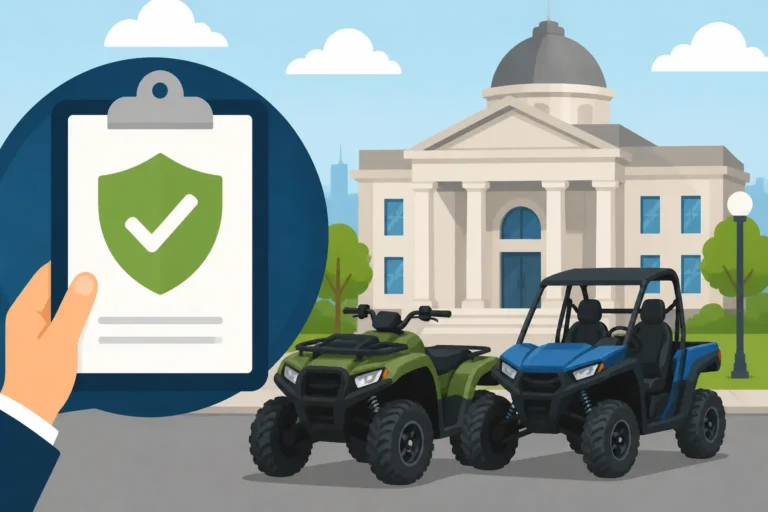
So, if the state law generally prohibits ATVs and UTVs on public roads, who has the authority to change that? In Kansas, when it comes to county roads, that power rests squarely with the county commission. These elected officials represent the local citizenry and are tasked with making decisions that impact their communities, including regulating the use of roads within the county's jurisdiction. This delegation of authority from the state level allows for localized control, recognizing that what works in a densely populated eastern Kansas county might not make sense in a vast, agricultural western Kansas county.
Who Holds the Reins: County Commissioners' Role
The county commission, which typically consists of three to five elected commissioners, is the governing body for the entire county. They have the power to adopt resolutions or ordinances that can modify statewide statutes within their specific jurisdiction, provided the state law allows for such local action. In the case of ATV and UTV use on county roads, K.S.A. 8-15,100 specifically grants counties (and cities, for their municipal streets) the option to allow these vehicles. This means that if you want to see your county roads opened for ATV or UTV use, your county commission is the body you need to approach. They are the ultimate decision-makers on this front, balancing public safety, recreational opportunities, and local preferences.
This authority means that each of Kansas's 105 counties can, in theory, have different rules. Some counties might choose to open all their county roads, while others might restrict them to certain areas or not open them at all. This is why a rider might encounter different regulations just by crossing a county line. It’s not arbitrary; it’s a reflection of local governance and the priorities of each individual county commission. Understanding this local control is the first step toward advocating for, or simply complying with, the rules in your area. For instance, if you live near [Louisburg's UTV Tag Fees in Kansas] it's because the city council, and similarly, the county commission, has taken action.
The Ordinance Process: How Roads Become "Open"
For a county commission to open its roads to ATVs and UTVs, they must go through a formal process to pass an ordinance or resolution. This isn't something that happens overnight or with a simple nod. Typically, it involves several steps, starting with public discussion and input. Residents, often spearheaded by local ATV clubs or concerned citizens, might petition the commission, attend public meetings, and present arguments for opening the roads. The commission will then usually hold public hearings, allowing anyone to voice their opinions, concerns, or support. This gives the community a chance to weigh in on the proposal, which is crucial for democratic decision-making.
During this process, the commission will consider various factors. They'll look at public safety implications, potential impacts on road maintenance, law enforcement's ability to regulate the new traffic, and the economic benefits or drawbacks. They might consult with the county sheriff, public works department, and even insurance providers. If the commission decides to move forward, they will draft a formal ordinance. This document will specify which roads are open (often all county roads, excluding state highways), what equipment is required on the machines (e.g., headlights, taillights, brake lights, mirrors), and what rider qualifications are necessary (e.g., a valid driver's license, age restrictions). Once the ordinance is formally adopted and published, those county roads are officially open under the specified conditions. It's a complex, but necessary, journey to move from a default ban to legal road use. You can often find details on [Kansas UTV Street Legal Rules by City] which operate under a similar local ordinance framework.
Navigating the Nuances: What "Open" Really Means for Riders
Even when a Kansas county commission has taken the proactive step to open its county roads to ATVs and UTVs, it's not a free-for-all. These ordinances come with specific conditions and requirements that riders must adhere to. Ignoring these details can quickly turn a legal ride into an illegal one, leading to citations or even accidents. It's crucial for riders to understand that "open" doesn't mean unregulated; it means regulated in a specific way that enables their use on public thoroughfares.
Equipment and Rider Requirements on Opened Roads
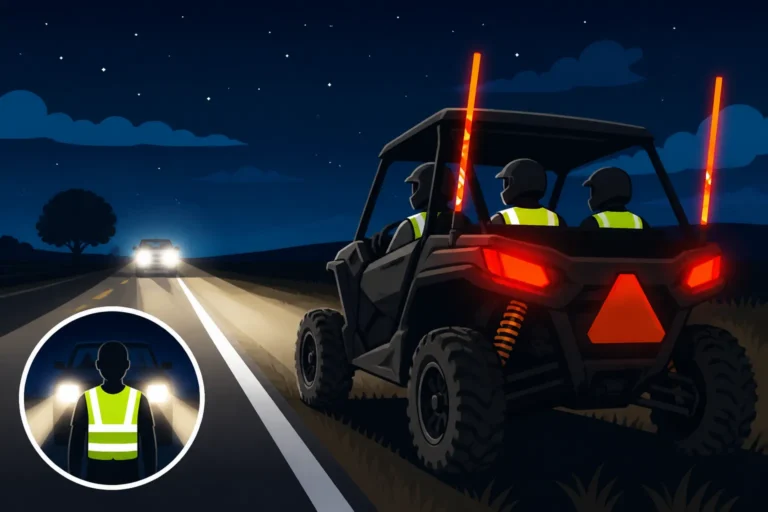
Once a county road is opened, the ordinance will almost certainly lay out strict equipment requirements for your ATV or UTV to be legal on those roads. These typically mirror what you'd expect for any street-legal vehicle, focusing on visibility and safety. Common requirements include working headlights, taillights, brake lights, and turn signals. Many ordinances also mandate a rearview mirror, a horn, and a slow-moving vehicle emblem, especially for machines that won't reach typical road speeds. Some counties might even require a windshield or specific tire types. Think of these as the bare minimum for making your machine visible and predictable to other drivers. High-quality aftermarket parts from brands like SuperATV can help ensure your machine meets these lighting and visibility standards, providing reliable performance and enhancing safety.
Beyond the machine itself, there are usually rider requirements as well. Most ordinances will stipulate that the operator must possess a valid driver's license, meaning no unlicensed drivers or young teens on these roads, even if they're permitted to ride off-road on private land. Some ordinances might also include age restrictions for passengers or specific rules about helmets, though [Does Kansas Have an ATV Helmet Law at All?] typically applies only to motorcycles statewide. It’s always best practice to wear a helmet, regardless of the law, especially when sharing roads with other vehicles. It's not just about avoiding a ticket; it's about personal safety. Always check your county's specific ordinance to know exactly what’s expected of both your machine and you as the rider.
Understanding Local Variations and Restrictions
The beauty—and challenge—of local control is the variation. What's allowed in one county might be strictly prohibited in the next. Some county ordinances might open all non-state highways within their borders, while others might designate specific routes or areas where ATVs and UTVs are permitted. For example, a county heavily reliant on agritourism might open more roads than one with denser residential areas. The permissible hours of operation can also vary; some counties might restrict riding to daylight hours, while others allow it after dark provided the machine has adequate lighting. This is why simply observing what others are doing isn't enough; you need to consult the specific ordinance for the county you're riding in.
You might also find variations in speed limits for ATVs and UTVs on county roads, which could be lower than the posted speed limit for cars. Some ordinances might even specify how to handle crossings of state highways, which are generally under state jurisdiction and not subject to county ordinances for extended riding. A county might permit [Kansas Rules for Riding a County Road], but [Kansas Rules for Crossing a Highway] are typically separate and more consistent statewide. This patchwork means that planning a multi-county ride requires diligent research to avoid unknowingly breaking a local law. Many counties will post their ordinances on their official websites, or you can inquire directly with the county clerk or sheriff's office.
Beyond the Pavement: Special Cases and Agricultural Exemptions
While the general rule is a ban unless specifically opened, Kansas law does carve out certain exceptions for ATVs and UTVs, particularly when it comes to agricultural, governmental, or limited utility uses. These aren't blanket permissions for recreational riding on county roads, but rather specific allowances for legitimate purposes. Understanding these nuances is critical, as they can sometimes be confused with open-road access.
Agricultural and Work-Related Exemptions
Farmers and ranchers often rely heavily on ATVs and UTVs for daily operations, and Kansas law acknowledges this necessity. There's a specific agricultural exemption that allows these machines to be operated on public roads for agricultural purposes. This can include traveling between fields, checking livestock, or hauling equipment for short distances. However, this exemption is generally narrow in scope. It's typically understood to apply to legitimate farm work, not personal errands or recreational rides. The machine must be directly engaged in agricultural activities, and the operator must usually possess a valid driver's license. The moment the use shifts from "agricultural purpose" to "personal transportation" or "recreation," the exemption might no longer apply, and you could be subject to the general ban.
Similarly, governmental agencies, like county noxious weed departments or utility companies, may operate ATVs and UTVs on public roads as part of their official duties. These are considered work-site utility vehicles, and their operation is covered by their governmental or utility function, not by a general allowance for public riding. For example, a noxious weed department might need to drive a UTV along a county road to spray ditches or access hard-to-reach areas. In these cases, the operation is usually confined to the scope of their work. These exemptions highlight that the law differentiates between necessary work-related travel and general recreational use, even on the same stretch of county road.
Crossing State Highways vs. Riding On Them
A common point of confusion is the distinction between crossing a state highway and riding on it. Even in counties where local roads are open, state highways (those designated with a K-, US-, or Interstate shield) fall under the jurisdiction of the Kansas Department of Transportation (KDOT) and the Kansas Highway Patrol, not the county. Generally, ATVs and UTVs are prohibited from riding on state highways, including interstates. However, Kansas law does typically allow for a quick, perpendicular crossing of a state highway from one authorized road or private property to another, provided it's done safely and at an intersection.
This means you can’t jump on a US-50 highway and cruise for miles, even if the county roads leading to it are open. You can, however, cross it directly if you need to access land or another county road on the opposite side. This is an important distinction, as violating state highway rules carries significant penalties and is strictly enforced. It's critical to know the difference and plan your routes accordingly. When in doubt, always err on the side of caution and avoid state highways unless you are absolutely certain of the legality of your specific maneuver. Riders planning routes should be especially mindful of [Kansas Bans ATVs on Interstates] and [Kansas Bans ATVs on Federal Highways].
Rider Beware: The Consequences of Unauthorized Road Use
Understanding who decides if a Kansas county road is open is only half the battle; the other half is understanding the consequences if you choose to ride where you shouldn't, or without meeting the specific requirements. The ramifications can range from minor inconveniences to serious legal and financial burdens, truly highlighting the importance of knowing and following local ordinances.
Penalties for Illegal Road Riding
Getting caught riding an ATV or UTV on a closed county road or on an open road without the proper equipment or licensing can lead to a variety of penalties. The most immediate consequence is often a traffic citation, similar to a speeding ticket or other moving violation. These can come with fines that can quickly add up, especially if you're cited for multiple infractions (e.g., no headlights, no valid license, illegal road use). These fines are typically handled through the municipal or district court system. Moreover, depending on the severity of the offense or if it's a repeat violation, your machine could even be impounded. The cost of retrieving an impounded vehicle, including towing and storage fees, can be substantial, making a simple ride a very expensive mistake.
Beyond the immediate financial hit, there can be longer-term consequences. Accumulating traffic violations can affect your driving record, potentially leading to increased insurance premiums for your car or truck, or even suspension of your driver's license. While [Kansas Has No OHV Registration] in the traditional sense, and thus no points on a nonhighway vehicle record, any citation tied to your driver's license can impact your broader driving privileges. It’s always far better to spend a bit of time researching local ordinances and outfitting your machine properly than to face these avoidable penalties. Remember, local law enforcement agencies, like the county sheriff's department, are well within their rights to enforce these rules.
Safety Considerations and Liability
Beyond the legal penalties, riding an ATV or UTV on public roads, especially if it's not set up for it, carries significant safety risks. These machines are designed for off-road terrain, where speeds are generally lower and obstacles are different. On a county road, you're sharing the space with cars, trucks, and even large farm equipment, often traveling at much higher speeds. The handling characteristics of an ATV or UTV on a hard-packed road or pavement are very different from a standard vehicle, making them more prone to rollovers or loss of control, especially when trying to avoid an unexpected obstacle or making sudden maneuvers. Without proper [Kansas Lighting Requirements on a Machine], you're also significantly less visible to other drivers, particularly at dusk or night.
In the unfortunate event of an accident, liability can become a huge issue. If you're operating your machine illegally on a county road and are involved in a collision, your personal liability could be enormous. Standard ATV/UTV insurance policies might not cover incidents that occur during illegal road use, leaving you personally responsible for damages, injuries, and legal fees. This is a terrifying prospect that far outweighs the convenience of a quick, unauthorized ride. Even if a county road is open, carrying appropriate liability insurance and ensuring your machine is equipped with all required safety features, like those offered by SuperATV for enhanced visibility, is a non-negotiable step to protect yourself and others. Always confirm your county's specific requirements, like [Kansas Insurance Comes From City Ordinances], and then make sure your coverage applies to any approved road use. The goal is to enjoy your machine responsibly, and that includes prioritizing safety and understanding the legal landscape.
Disclaimer
This article is for general informational purposes only and does not constitute professional advice. Laws, prices and regulations vary by location and change over time. Consult a qualified professional for guidance on your specific situation.