Streets Posted Over Forty-Five
It's incredibly frustrating when you want to take your ATV or UTV a short distance down a paved road, only to be met with confusion about what's actually allowed. Many riders in Kansas assume that if a city allows UTVs on its streets, then all streets are fair game. But that's a huge misconception, especially when it comes to those faster, main thoroughfares. This guide will clarify why roads posted over 45 miles per hour are almost universally off-limits for your off-road machine in Kansas, even in towns with specific UTV ordinances, and what you need to know to stay safe and legal.
The Blanket Ban: Kansas's Default Rule for ATVs and UTVs
Before we even get to specific city rules, it’s crucial to understand the foundational state law in Kansas that governs ATVs and UTVs. The state's default stance is quite clear: these machines are generally not intended for public road use. This isn't about personal opinion; it's about how the law defines and classifies these vehicles.
Why Most Roads are Off-Limits
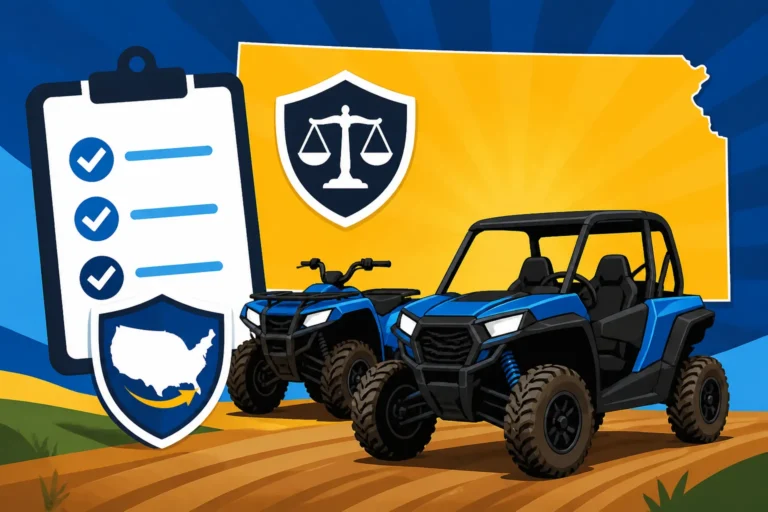
Kansas state law categorizes ATVs and UTVs as "nonhighway vehicles." This designation immediately sets them apart from cars, trucks, and motorcycles that are designed and regulated for on-road travel. The primary statutes are often written to prohibit their operation on public roads unless a specific exception or local ordinance is in place. Think of it as a blanket ban with very few, highly specific carve-outs. This is why you'll find clear directives like [Kansas Bans ATVs on Interstates] and [Kansas Bans ATVs on Federal Highways], but the underlying principle extends to most other state and county roads as well.
The rationale behind this isn't to make life difficult for riders. It stems from safety and design considerations. Off-road machines typically lack many of the safety features required for highway use, such as full lighting packages, proper signalization, and crash protection standards that are mandatory for on-road vehicles. They're designed for different terrains, different speeds, and different types of impacts, making them inherently less suitable for sharing the road with faster, heavier traffic.
The Agricultural Exception and Its Limits
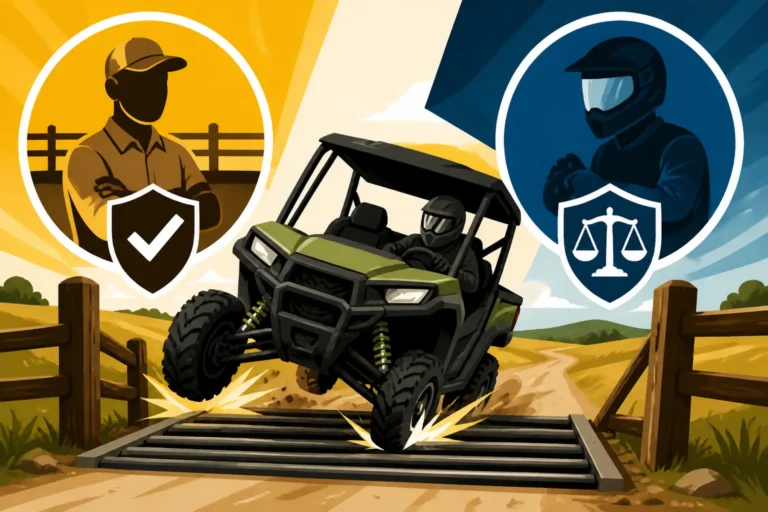
One of the most common exceptions riders point to is the agricultural exception. This provision in Kansas law allows certain nonhighway vehicles to operate on public roads when used for agricultural purposes. For example, a farmer might need to drive their UTV down a county road to move between fields or transport equipment. This exemption is vital for the agricultural community that relies on these machines for their livelihoods. [Kansas Agricultural Trips on a 65 mph Road] explains this further.
However, it's absolutely critical to understand that this is a limited exception. It doesn't grant carte blanche to joyride on public roads simply because you own a piece of property. The trip must be directly related to an agricultural purpose, and even then, riders are often expected to operate as far to the right as practicable and take all necessary safety precautions, especially on higher-speed roads. An agricultural trip is not the same as driving to the gas station or visiting a friend in town.
Local Ordinances: The Key to Opening City Streets (and Their Speed Limits)
While state law generally restricts ATVs and UTVs from public roads, cities and counties in Kansas have the power to create their own ordinances to allow limited use of these machines on local streets. This is where the landscape of "street legal" gets complicated, as rules can vary dramatically from one town to the next.
How Cities Opt-In for UTV Use
Many towns in Kansas, especially smaller, more rural communities, have recognized the utility of UTVs for local residents and have chosen to pass ordinances to permit their use on specific city streets. This legislative process typically involves city council meetings, public hearings, and careful consideration of local needs and safety concerns. It's a localized decision, reflecting the unique character and demands of each community. You can read more about this in [Kansas Cities That Authorize ATV Street Use] and [How a City Council Opens Its Streets to UTVs].
When a city opts to allow UTVs, they don't simply throw open all their roads without restriction. These ordinances are usually quite detailed, outlining requirements for machine equipment (like mirrors, turn signals, and seatbelts), driver licensing, insurance, and perhaps even a local registration or permit fee. Crucially, they almost always define which roads are accessible and, more importantly, which roads are not.
Speed Limits and Road Types Within Cities
This brings us to the core issue: streets posted over 45 mph. Even in cities that have embraced UTVs, it is incredibly rare—almost unheard of—for an ordinance to permit UTVs on roads with speed limits exceeding 45 mph. More often, you'll find ordinances capping UTV access at 30 or 35 mph, specifically excluding main arterial roads or state highways that pass through town. For instance, you might see that [Louisburg's 45 mph Street Limit in Kansas] is a relatively generous upper boundary compared to other towns that set their limit even lower.
The reason for these speed restrictions is, once again, safety. UTVs are not designed to travel at highway speeds. Their suspension, tires, braking systems, and overall stability are optimized for off-road conditions, not for sustained high-speed pavement travel. Imagine trying to maneuver a UTV on a busy road where cars are traveling at 55 mph or faster; the speed differential alone creates an enormous safety hazard, not to mention the increased risk of loss of control, especially if an unexpected obstacle or sharp turn arises.
Here's a quick look at how typical city ordinances might categorize road access for UTVs:
| Road Type | Typical UTV Access | Speed Limit Implication |
|---|---|---|
| Residential Streets | Often Permitted | Typically 25-35 mph |
| Collector Roads (Minor Arterials) | Sometimes Permitted | Often capped at 30-45 mph |
| Major Arterials / State Highways | Rarely Permitted | Usually 45 mph and above |
| Streets Posted Over 45 mph | Almost Never | Excluded by Ordinance |
It's vital for riders to check the specific wording of their local city ordinance. Just because a city allows UTVs doesn't mean you can take your machine on the main highway through town, even if it's within city limits. These higher-speed roads are generally reserved for vehicles designed for those conditions, and UTVs simply don't fit that bill.
Practical Realities and Safety Considerations
Beyond the legalities, there are very real, practical, and safety-focused reasons why high-speed roads are typically off-limits for ATVs and UTVs. Ignoring these can lead to severe consequences, not just legally, but personally.
Why High-Speed Roads Are Risky for UTVs
Let's be blunt: a UTV is not a car. It lacks the crumple zones, the extensive airbag systems, and the robust frame construction designed to protect occupants in high-speed collisions. On a UTV, you're often held in by a lap belt (or sometimes a shoulder harness), and while roll cages offer protection in rollovers, they aren't designed to withstand impacts from vehicles traveling at 50 mph or more. The risk of serious injury or fatality in a collision on a high-speed road is dramatically higher in a UTV compared to a traditional passenger vehicle.
Furthermore, consider the handling characteristics. UTVs have a higher center of gravity and are built with suspensions that are excellent for absorbing bumps and navigating uneven terrain, but not for sharp, precise handling on smooth pavement at speed. Their tires are typically low-pressure, knobby designs meant for traction in dirt, mud, or sand, not for optimal grip and longevity on asphalt at higher velocities. Emergency braking or evasive maneuvers at 45 mph or more can quickly lead to instability, loss of control, or a rollover, especially if you're not on perfectly flat, straight pavement. The potential for disaster is just too great.
Equipping Your Machine (Even if Not for High Speed)
Even if you're only planning to ride on city streets where UTVs are permitted and the speed limits are low, equipping your machine for maximum visibility and safety is a non-negotiable. While these upgrades won't magically make your UTV legal on streets posted over 45 mph, they are crucial for any legal road use. Products from companies like SuperATV offer a range of accessories that can significantly enhance safety and compliance for lower-speed road use.
For instance, proper lighting is paramount. Many city ordinances require headlights, taillights, brake lights, and turn signals, even if your machine didn't come with them from the factory. Aftermarket light kits, LED whips, and additional reflectors can make your UTV far more visible to other motorists, especially during twilight hours or in adverse weather. Reviewing requirements like [Kansas Lighting Rules After Sunset] and understanding [Lights Your Quad Needs to Ride After Sunset] is a great starting point for enhancing your machine’s visibility. Similarly, a good rearview mirror setup is essential, and some ordinances might require side mirrors as well. You might even find inspiration in considering the robust equipment standards applied to [Kansas Micro Utility Truck Equipment Rules] or even what's expected for [Kansas Golf Cart Equipment Rules], though UTVs have their own distinct class.
Finding the Local Rules: Your Due Diligence
The burden of knowing and following the law falls squarely on you, the rider. Ignorance of an ordinance is never a valid excuse, and claiming you didn't know can still result in a hefty fine or worse.
Researching City Ordinances
If you plan to ride your ATV or UTV on any public street, even for a short distance, you absolutely must check the local city ordinances. This isn't optional. A great starting point is your city's official website; many municipalities now publish their entire code of ordinances online. Look for sections pertaining to "off-highway vehicles," "utility vehicles," or "golf carts," as these machines are sometimes lumped together in local laws. If you can't find it online, don't hesitate to call the city clerk's office. They are the authoritative source for local regulations and can often direct you to the specific statutes. Remember, your research should cover [Kansas Ordinance Lookups Before You Ride].
When you find the ordinance, pay very close attention to all the details: what equipment is required, what times of day you can ride, if a permit or registration is necessary, and most importantly, the specific roads or speed limits that are allowed. Some ordinances will even have maps outlining the permissible routes. Assume nothing and verify everything.
Consequences of Ignoring Speed Limits
The consequences of operating your ATV or UTV illegally on roads posted over 45 mph can be severe. First, there are the immediate legal penalties. Police officers or deputies can issue citations for illegal operation of an off-road vehicle on a public roadway. These tickets often carry significant fines and court costs, which can quickly add up. Beyond the financial hit, repeat offenses or serious infractions could even lead to your machine being impounded, leaving you with the hassle and expense of retrieving it. Familiarize yourself with potential repercussions by reading about [Kansas Penalties for Illegal Road Riding].
Beyond the legal trouble, there's the much more critical risk of injury or death. As discussed, UTVs are simply not built for high-speed road conditions. A collision with a passenger vehicle at elevated speeds can be catastrophic, not only for you and your passengers but also for the occupants of the other vehicle. The long-term costs of medical bills, lost wages, and emotional trauma far outweigh any convenience gained by taking your UTV on a forbidden stretch of road. It's simply not worth the risk.
Disclaimer
This article is for general informational purposes only and does not constitute professional advice. Laws, prices and regulations vary by location and change over time. Consult a qualified professional for guidance on your specific situation.