Fighting a UTV Ticket in Municipal Court
So, you’ve been out enjoying your UTV, maybe on what you thought was a perfectly acceptable county road or city street, and suddenly, those flashing lights appear in your rearview mirror. Next thing you know, you're holding a UTV ticket, and that sinking feeling hits. It’s a frustrating experience, especially when you’re not entirely sure if you were in the wrong or if the rules even make sense. This guide is all about helping you understand what that ticket means, whether you should fight it, and how to navigate the municipal court system in Kansas if you decide to challenge it.
Understanding Your UTV Ticket in Kansas
Getting a ticket for your UTV can be confusing, especially with all the nuances of Kansas law regarding off-road vehicles. It’s not always a clear-cut case, and often, the exact circumstances leading to your citation play a huge role.
Why You Got That Ticket in the First Place
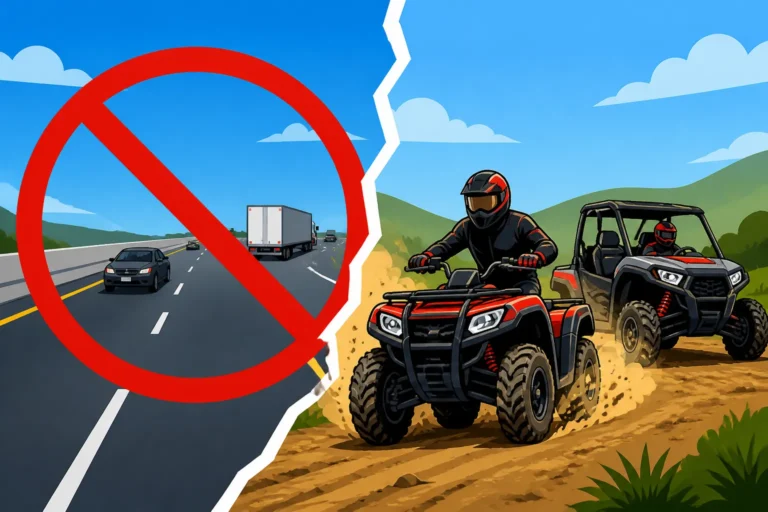
Let's be real, the default stance in Kansas is that ATVs and UTVs are not street legal. This often surprises new owners or those visiting from states with different rules. Most tickets stem from illegal road use, which can range from simply driving on a prohibited street to not having the correct equipment if you’re in a city that does allow UTVs. A common scenario might be driving your side-by-side to a friend's house a few blocks away in a town that hasn't specifically passed an ordinance allowing it. Or maybe you were crossing a state highway, which is generally allowed, but then turned and proceeded down the highway, which is usually a no-go.
Equipment violations are another big one. Even in cities that do permit UTVs on their streets, there are often very specific requirements for lighting, turn signals, mirrors, and even windshields. If your UTV isn't up to snuff according to that city's ordinance, you could still get ticketed, even if you thought you were following the general "street legal" guidelines. Sometimes, it’s even simpler: you might have been riding in a ditch or on a section line where it wasn't allowed, or perhaps you had a child passenger who wasn't old enough or properly secured. [Kansas Bans ATVs Inside City Limits by Default] covers the overarching prohibition that often leads to these tickets.
The Difference Between Municipal and District Court
When you receive a UTV ticket, it almost always lands you in municipal court, not district court. Why does this matter? Municipal courts handle violations of city ordinances, which is precisely what most UTV road use restrictions fall under. If you get a ticket in, say, Louisburg for an ATV violation, you'll go to the Louisburg Municipal Court. This is distinct from district court, which handles state law violations (felonies, serious misdemeanors, larger civil cases). The good news is that municipal courts are generally less formal than district courts. The penalties are usually fines, not jail time, and the process can be quicker.
However, the flip side is that municipal court judges often deal only with ordinance violations, and they are usually very familiar with their city's specific rules. They might not be as inclined to bend the rules as a district court judge might be for a state statute. Understanding which court you’re in helps you prepare and know what kind of legal arguments might be most effective. It's a localized fight, focusing on the specific rules of that town or city.
Reading Your Citation Carefully
Your citation isn't just a piece of paper telling you to pay money; it's a legal document. You need to read it very carefully. It will list the specific city ordinance you are accused of violating, the date, time, and location of the alleged offense, and the officer’s name. Most importantly, it will have your court date and instructions on how to proceed. Sometimes, people mistakenly assume a UTV ticket is just like a parking ticket and forget to appear in court, which can lead to even bigger problems like a warrant for your arrest or a default judgment against you.
Pay close attention to the details. Did the officer accurately describe your UTV? Is the location correct? Does the cited ordinance number actually exist, and does it apply to your specific situation? Sometimes, a simple clerical error on the ticket can be a point of contention in your favor. If you're confused by the legalese or the specific ordinance number, don't hesitate to look it up online on the city's website or call the municipal court clerk for clarification. They can't give legal advice, but they can often help you understand the basics of the charge.
Deciding Whether to Fight Your UTV Ticket
Once you've got that ticket in hand and understand what it says, the big question looms: do you fight it or just pay it? This isn’t just about the money; it’s about your time, your principles, and sometimes, avoiding future headaches.
Weighing the Costs and Benefits
Fighting a UTV ticket isn't free. You'll definitely be investing your time, which for many folks, is more valuable than the fine itself. You'll need to research, gather evidence, and potentially take time off work for court appearances. Then there are the actual costs: the fine itself, which can vary wildly depending on the city and the offense, plus court costs. If you decide to hire an attorney, you’ll have legal fees on top of all that. For a typical municipal ordinance violation, the fine might be a couple of hundred dollars, plus fifty to a hundred dollars in court costs. Is it worth paying an attorney hundreds of dollars more to maybe get that dismissed?
On the other hand, the benefit of fighting could be a dismissal, which means no fine and no court costs. Sometimes, even if you can't get it dismissed entirely, you might be able to negotiate a reduced fine or a deferral program (more on that later). Beyond the monetary aspect, there's the satisfaction of standing up for yourself if you truly believe you were in the right or if the law was misapplied. For some, the principle of the matter outweighs the direct financial cost. Consider [Kansas Ticket Costs for Road Riding] for a general idea of potential fines.
When It Might Be Worth Fighting
You have a stronger case to fight your ticket if:
- There’s a Factual Error: The officer got something wrong. Maybe they cited you for driving on a street that actually is allowed for UTVs by local ordinance, or perhaps they wrote down the wrong time and you have an alibi. I've heard stories of people being ticketed for not having a license plate in a city where the ordinance specifically says a city tag should be displayed on the left rear panel, but the officer wasn't familiar with the specific placement.
- Misinterpretation of the Ordinance: This is common, especially if you're in a city that recently passed a UTV ordinance. The police might not be fully up to speed on all the nuances yet. For example, some ordinances allow UTVs on roads posted 45 mph or less, but the officer might have ticketed you on a 35 mph road, thinking all city roads are banned.
- Mitigating Circumstances: While not a direct defense, these can sometimes sway a judge or prosecutor. Perhaps you were using your UTV to assist in an emergency, or you were strictly on private property and only briefly crossed a public road out of necessity, not for joyriding. A good example might be a farmer moving machinery across a short stretch of public road between fields.
- Lack of Specificity in the Law: Occasionally, an ordinance might be vague, or there might be conflicting rules. If you can argue that a reasonable person couldn't possibly know they were in violation, you might have a chance. [Kansas Rules for Riding a City Street] can be quite complex, varying from one town to the next.
When It's Probably Better to Just Pay It
Sometimes, discretion is the better part of valor. If the evidence against you is clear-cut, the ordinance is unambiguous, and you genuinely were in violation, fighting the ticket might just be a waste of your time and money. For example, if you were ripping through the middle of downtown Wichita on your sport UTV, and Wichita definitely has no ordinance allowing UTVs on its streets, your chances of a dismissal are slim to none. In such cases, pleading guilty or no contest and paying the fine might be the most efficient way to deal with it.
Another scenario is if the fine is very low, and the time commitment to fight it (taking time off work, going to court) far outweighs the cost of the ticket. You also need to consider your own comfort level in a courtroom. If the thought of speaking in front of a judge gives you severe anxiety, and you don't want to hire an attorney, paying the ticket might be a less stressful option.
| Feature | Pros of Fighting Ticket | Cons of Fighting Ticket |
|---|---|---|
| Cost | Potential for no fine, no court costs | Legal fees (if applicable), court costs, time off work |
| Outcome | Dismissal, reduced fine, deferred adjudication | Found guilty, pay full fine and court costs |
| Time/Effort | Satisfaction of standing up for yourself, learning laws | Significant time investment for research, court appearances |
| Precedent | Avoids creating a driving record (if applicable) | No real impact on driving record for most UTV tickets |
| Stress Level | Empowering if successful | Potentially stressful, especially if unfamiliar with court |
Steps to Take Before Your Municipal Court Date
If you’ve decided to fight your UTV ticket, don’t just show up to court hoping for the best. Preparation is key, just like preparing your machine for a long trail ride. The more information and evidence you have, the stronger your position will be.
Gathering Evidence to Support Your Case
This is where you become your own investigator. Think about anything that could back up your claim.
- Photos and Videos: Did you take pictures of the location? Did you video yourself riding (if legally permissible and relevant)? If the ticket was for an equipment violation, take photos of your UTV showing the equipment in question (e.g., proper lighting, mirrors, turn signals, if required). If you were cited for riding on a street that actually had a sign indicating UTVs were allowed, get a picture of that sign!
- Witness Statements: Were there any passengers or bystanders who saw what happened? Get their contact information and a written statement if possible. Their impartial account could be invaluable.
- Maintenance Records: If the ticket involved something mechanical (like a broken light), but you can prove it was working perfectly just before the incident and failed unexpectedly, those records might help.
- Maps and GPS Data: If the officer was mistaken about the location, or if you need to prove you were only briefly crossing a road, GPS logs from your phone or a UTV-mounted device can be powerful evidence. You might use Google Maps or a similar tool to show the exact location and surrounding area.
Remember, the goal is to create a clear, undeniable picture of your side of the story. Don't just rely on your word; bring tangible proof.
Researching Kansas UTV Road Laws and Local Ordinances
This step is absolutely critical. You can't argue effectively if you don't know the law. Start with the specific ordinance number listed on your ticket. Go to the city’s official website and look for their municipal code or ordinances. Most cities have them published online. Read the entire section related to UTVs or off-road vehicles. Sometimes, the ordinance will even refer to state statutes. You'll want to understand [Kansas UTV Street Legal Rules by City] and how your specific municipality either opts in or maintains the default ban.
Don't stop there. Look for any related state statutes that might apply. For example, [Kansas ATV Road Rules Under 8-15,100] outlines general state prohibitions, but remember that cities can often create their own more permissive ordinances. Pay close attention to definitions. What does the law exactly mean by "work-site utility vehicle" versus a regular UTV? Are there specific width or weight requirements? Sometimes, a UTV that appears to be breaking the rules might actually fit into an exception, like [Kansas's Agricultural Exception for Road Use], if you are using it for farm-related work. Having this knowledge empowers you to counter arguments and point out specific legal passages.
Considering Legal Counsel
For many, the idea of hiring a lawyer for a UTV ticket seems excessive, and often, it is. But there are times when it’s a smart move.
- Complex Legal Issues: If the ordinance is particularly confusing, or if there's a precedent you need to argue, a lawyer can navigate those complexities.
- Severe Penalties: While rare for most UTV tickets, if there are additional charges that could lead to points on your driver's license (if that's somehow involved) or other significant repercussions, a lawyer's expertise could be worth the investment.
- Unfamiliarity with Court: If you've never been to court and the thought makes you extremely nervous, an attorney can be a huge comfort and advocate. They know the procedures, how to speak to a judge and prosecutor, and what arguments hold weight.
- Time Constraints: If you simply don't have the time to do all the research and preparation yourself, a lawyer can handle it for you.
You can often find attorneys who specialize in traffic law or municipal court cases. Many offer free initial consultations, which can help you gauge whether hiring them is a good financial decision for your specific situation.
What to Expect in Kansas Municipal Court
Walking into a courtroom can feel intimidating, but municipal court is generally less formal than what you see on TV. Knowing the basic flow of events can help ease your nerves and ensure you're prepared for each stage.
The Arraignment and Initial Appearance
Your first court date is typically an arraignment or initial appearance. This is where you’ll formally enter your plea. You'll usually be in a room with several other people who are also there for various ordinance violations. When your name is called, you'll approach the bench. The judge will read the charge against you, and you'll have three options:
- Plead Guilty: You admit to the violation and will then likely be sentenced (usually a fine and court costs).
- Plead No Contest (Nolo Contendere): You're not admitting guilt, but you're not disputing the charges either. The effect is usually the same as a guilty plea in terms of fine and court costs, but it can sometimes prevent the plea from being used against you in a civil case (though this is rarely relevant for a UTV ticket).
- Plead Not Guilty: You deny the charge and want to fight it. If you plead not guilty, the court will then schedule a pre-trial conference or a trial date.
Most judges will ask if you understand the charge. If you don't, this is your chance to respectfully say so and ask for clarification, though they cannot give you legal advice. This is not the time to argue your case, just to enter your plea.
Pre-Trial Conferences and Negotiations
If you plead not guilty, your next step will often be a pre-trial conference. This is a crucial stage where you might get to speak with the city prosecutor. The prosecutor is the attorney who represents the city and will be trying to prove you violated the ordinance. This is a less formal setting, often in a separate room or at a table in the courtroom, away from the judge.
This is your opportunity to present your evidence and explain your side of the story. The prosecutor might be willing to negotiate a lesser charge, a reduced fine, or even a dismissal if your evidence is strong. They might offer a "diversion" or "deferred adjudication" program, where you pay an administrative fee, agree to certain conditions (like not getting another ticket for a period), and if you complete the program, the ticket is dismissed. This can be a good option if you want to avoid a "guilty" finding but don't want the full hassle of a trial. Be polite, professional, and have all your evidence organized and ready to present.
Presenting Your Case to the Judge
If negotiations don't work out, or if there's no prosecutor and you go straight to trial, you'll present your case directly to the judge. This is typically a "bench trial," meaning there's no jury, just the judge making the decision.
- Dress Appropriately: Even in municipal court, treat it with respect. Business casual attire is usually appropriate.
- Be Punctual: Arrive early.
- Speak Clearly and Respectfully: Address the judge as "Your Honor." Stick to the facts and avoid emotional outbursts.
- Present Your Evidence: Have your photos, documents, and witness statements organized. Explain what each piece of evidence shows and how it supports your defense.
- Cross-Examine: The officer who issued the ticket will likely be there. You'll have an opportunity to ask them questions. Focus on factual discrepancies or points that support your interpretation of the law. For instance, if you were ticketed for riding in a town that allows UTVs with specific equipment, you might ask the officer if they inspected your [Kansas Lighting Requirements on a Machine] or if they measured your [Kansas WSUV Width of 48 Inches] if that was relevant to the charge.
Remember, the burden of proof is on the city to show you violated the ordinance. Your job is to create reasonable doubt or prove that the ordinance doesn't apply to your situation.
Potential Outcomes and What Happens Next
The conclusion of your municipal court journey can take a few different paths, depending on your plea, negotiations, and the judge’s decision. It's important to understand what each outcome means for you.
Dismissal, Reduction, or Deferred Adjudication
These are generally the most favorable outcomes:
- Dismissal: This is the best-case scenario. The judge or prosecutor agrees there's not enough evidence, the law was misapplied, or your defense is strong enough to warrant dropping the charges entirely. You walk away with no fine, no court costs, and no violation on your record. This often happens if you've done your homework, found a loophole, or the officer simply made a factual error.
- Reduction: The charge might be reduced to a less severe violation, often with a lower fine. For instance, a ticket for illegal road use might be reduced to a minor equipment violation. This is a common outcome of negotiations with a prosecutor.
- Deferred Adjudication/Diversion: As mentioned, this involves an agreement where you pay an administrative fee and comply with certain conditions for a set period (e.g., no other tickets). If you successfully complete the program, the original ticket is dismissed. This is often offered to first-time offenders or if your case has some mitigating factors. It's a way to avoid a conviction while still acknowledging some responsibility.
Any of these outcomes can save you money and keep your record clean, which is especially good if you have concerns about things like [Kansas Insurance Costs] that might be affected by traffic violations.
Paying the Fine and Court Costs
If you plead guilty, no contest, or are found guilty after a trial, you will be ordered to pay a fine and court costs. The amount will be determined by the judge, often based on a standard schedule for that specific ordinance violation.
- Payment Options: Most municipal courts offer various payment options, including paying in person, by mail, or online. They might also offer payment plans if the amount is substantial. Make sure you understand the deadline for payment.
- Consequences of Non-Payment: Failing to pay your fine and court costs can lead to serious consequences, including additional fees, suspension of your driver's license (if the violation is somehow tied to it, though most UTV tickets are not), or even a warrant for your arrest. Don't ignore the order to pay.
Even if you end up paying, going through the process can be a learning experience about local laws and how to best enjoy your UTV responsibly. You can find more information about how these costs are calculated in [Kansas Court Costs for a Citation].
Appealing a Municipal Court Decision
Let's say you fought your UTV ticket, and the municipal judge found you guilty. Does that mean it's over? Not necessarily. In Kansas, you typically have the right to appeal a municipal court decision to the district court. This is a more formal process, and it often involves a "trial de novo," meaning the case is heard again from scratch in district court, as if the municipal court trial never happened.
Appealing is a more significant undertaking. You'll likely need to file specific paperwork within a strict deadline (often 10-14 days after the municipal court judgment). The process can be more complex, and it's highly recommended to consult with an attorney if you're considering an appeal. They can advise you on the likelihood of success and guide you through the more formal district court procedures. This is definitely not a step to take lightly, but it's an important right to be aware of if you truly believe the municipal court made an error.
Disclaimer
This article is for general informational purposes only and does not constitute professional advice. Laws, prices and regulations vary by location and change over time. Consult a qualified professional for guidance on your specific situation.