Proof of Insurance at a City Hall
It can be incredibly frustrating to navigate the ever-changing landscape of off-road vehicle laws, especially when you're trying to figure out what it takes to drive your UTV or golf cart on city streets in Kansas. Many riders assume state rules are the only ones that matter, only to discover a whole new set of hoops to jump through at their local city hall. This guide will clarify exactly why certain Kansas cities require proof of insurance, what type of coverage you'll need, and the process of providing that proof to get your machine street-legal in your town.
Why Certain Kansas Cities Require Insurance for Off-Road Machines on Streets
You might be scratching your head, thinking, "Doesn't Kansas not require insurance for ATVs?" And you'd largely be right when it comes to riding strictly off-road or on private property. However, the moment your all-terrain vehicle, utility terrain vehicle, or even your golf cart touches a public city street, the rules can change dramatically. This isn't about the state trying to regulate every aspect of your machine; it's about local municipalities exercising their right to create their own ordinances for public safety.
The state of Kansas itself doesn't impose a blanket insurance requirement for ATVs or UTVs used exclusively off-road. That's a common point of confusion for many riders. When you're out on the trails or working on your farm, liability insurance isn't typically mandated by state law for the machine itself. However, once you cross into the realm of operating a vehicle on roads that are shared with cars, trucks, and pedestrians, the risks increase, and so does the need for financial protection in case of an accident.
The Local Ordinance Difference
Kansas law generally bans ATVs and UTVs from public roads. However, the state also includes provisions that allow cities and counties to pass their own ordinances to permit these machines on certain streets, often with specific restrictions. When a city council decides to "opt-in" and allow UTVs, golf carts, or even micro utility trucks on its streets, it's not a free-for-all. They do so under specific conditions, and almost universally, these conditions include a requirement for liability insurance. [Kansas Cities That Authorize ATV Street Use] is a good resource to see if your town is one of them.
These local ordinances are designed to protect everyone. Imagine if a UTV, even one equipped with quality aftermarket parts like turn signals or mirrors from a brand like SuperATV, were involved in a fender bender with a family car on a city street. Without insurance, who would pay for the damages to the car, or more critically, for any injuries sustained by the occupants? The city, in permitting these vehicles on its roads, takes on a certain level of responsibility and wants to ensure that if an accident occurs, there's a mechanism in place to cover the costs. This is why cities like Louisburg, Andover, and Scott City, which have enacted ordinances, invariably require proof of insurance as part of their UTV street-legal permitting process.
Protecting the City and Its Residents
From a municipality's perspective, requiring proof of insurance for street-legal off-road machines is a crucial step in risk management. When a city passes an ordinance allowing UTVs on its streets, it’s essentially expanding the types of vehicles that can legally operate in its public spaces. This expansion comes with an increased potential for accidents, even if operators are careful and their machines are well-maintained.
The insurance requirement serves as a financial safety net. If a UTV operator causes an accident resulting in property damage or bodily injury, their liability insurance policy is there to cover those costs. Without this, the burden could fall on the individuals involved, or even indirectly on the city itself, if uninsured motorists become a common problem. It also provides peace of mind for other drivers and pedestrians who share the road. They know that if an incident occurs with a street-legal UTV, there's a clear path to financial recovery for damages or medical expenses. This protection extends not just to other vehicles, but also to public property, such as traffic signs, streetlights, or landscaping, that could be damaged in an accident. [Kansas City Insurance Requirements] often detail these specific needs.
What Type of Insurance You'll Need to Show at City Hall
When a Kansas city requires insurance for your UTV or golf cart to be street legal, they're not asking for comprehensive coverage or anything too exotic. The primary concern is always liability. This is the insurance that protects other people and their property if you are at fault in an accident. However, understanding the nuances of what your policy covers and what local officials expect can prevent delays.
Just because you have some insurance on your machine doesn't automatically mean it meets the city's requirements for street use. Many policies for off-road vehicles are designed purely for off-road scenarios and may explicitly exclude coverage when the vehicle is operated on public roads. It's vital to clarify with your insurance provider that your policy extends to street-legal operation within city limits or wherever the ordinance permits. Don't assume; always ask directly to avoid complications when you try to get your city tag.
Liability Coverage Is Key
At the heart of any city's street-legal UTV program is the requirement for liability insurance. This is the minimum coverage you'll need to demonstrate at City Hall. Liability insurance typically has two main components: bodily injury liability and property damage liability. Bodily injury liability covers medical expenses and lost wages for others if you injure them in an accident. Property damage liability covers the cost of repairing or replacing another person's property, such as their car or fence, that you damage in an accident.
Most cities will specify a minimum amount of liability coverage, which often mirrors the state's minimum requirements for cars. This could be, for example, a certain amount per person for bodily injury, a maximum per accident for bodily injury, and a separate amount for property damage. It’s crucial to check your specific city’s ordinance or call their clerk’s office to find out the exact figures. Don't just show up with a general off-road policy; confirm that it meets the city's specific liability thresholds. This is a common requirement whether you're dealing with Louisburg's UTV tag fees in Kansas or Scott City's ordinance.
Beyond Basic Coverage
While liability insurance is the non-negotiable requirement, some UTV and golf cart owners choose to carry additional coverage for their own protection. While not required for a city tag, these add-ons can offer significant peace of mind.
- Collision Coverage: This pays for damages to your own UTV if it collides with another vehicle or object, regardless of who is at fault. Given the investment in many modern UTVs, especially those equipped with robust accessories from manufacturers like SuperATV, this can be a smart choice.
- Comprehensive Coverage: This covers damages to your UTV from non-collision events, such as theft, vandalism, fire, or natural disasters. If you're parking your street-legal UTV regularly in public spaces, this can be incredibly valuable. [Insuring a Machine With No Tag] gives more general insurance advice, but for street-legal machines, comprehensive coverage is an option to consider.
- Uninsured/Underinsured Motorist Coverage: This protects you if you are hit by a driver who doesn't have insurance or doesn't have enough insurance to cover your damages. While you'll have liability for others, this covers you from others who might not be as responsible.
These optional coverages are not typically required by City Hall for street legality, but they can be a wise investment depending on your machine's value, how often you use it on city streets, and your personal risk tolerance.
The Process: Presenting Your Proof of Insurance
So, you've checked your city's ordinance, confirmed the insurance requirements with your provider, and you're ready to get that city tag. The next step is usually a trip to City Hall or the city clerk's office. While the exact steps might vary slightly from one municipality to another, the general process for presenting proof of insurance is fairly consistent.
Remember, this isn't like titling your machine at the County Treasurer's office where the state handles much of the paperwork. This is a local process. It’s always a good idea to call ahead to your city clerk’s office to confirm their specific hours, what forms you might need, and any particular nuances of their process. They can often provide a checklist of requirements, including the necessary insurance minimums, speeding up your visit. [Kansas Title Questions Clerks Hear] are different from the questions city clerks hear about UTV permits.
Documents to Prepare
Before you even leave your driveway, make sure you have all your ducks in a row. A missing document can lead to a wasted trip and frustration. Here's a typical list of what you'll need to bring to City Hall:
| Document Type | Purpose | Important Details |
|---|---|---|
| Proof of Insurance | Verifies required liability coverage for street use. | Must show policy number, coverage dates, liability limits, and the insured vehicle. |
| Vehicle Title/MSO | Proves ownership of the UTV, ATV, or golf cart. | Original title or Manufacturer's Statement of Origin (MSO) for new machines. |
| Driver's License | Confirms you are a licensed driver, a common requirement for street use. | Must be a valid, unexpired driver's license (restricted licenses might have limitations). |
| Completed Application | Official request for the city permit/tag. | Usually available at City Hall or downloadable from the city's website. |
| Proof of Residency | Shows you live within city limits (e.g., utility bill). | Often required to ensure you're eligible for a local permit. |
| Inspection Certificate | Confirms machine meets city's safety equipment standards. | Some cities require a police inspection of lights, horn, brakes, etc. (e.g., Louisburg). |
| Payment for Fees | Covers the cost of the city tag/permit. | Check accepted payment methods (cash, check, card) and exact amount beforehand. |
Your insurance card is usually sufficient, but some cities might ask for a declarations page from your policy, which provides more detail on your coverage limits. It's always better to bring both if you have them. Make sure the vehicle identification number (VIN) on your insurance documents matches the VIN on your title and the machine itself.
What to Expect at the City Clerk's Office
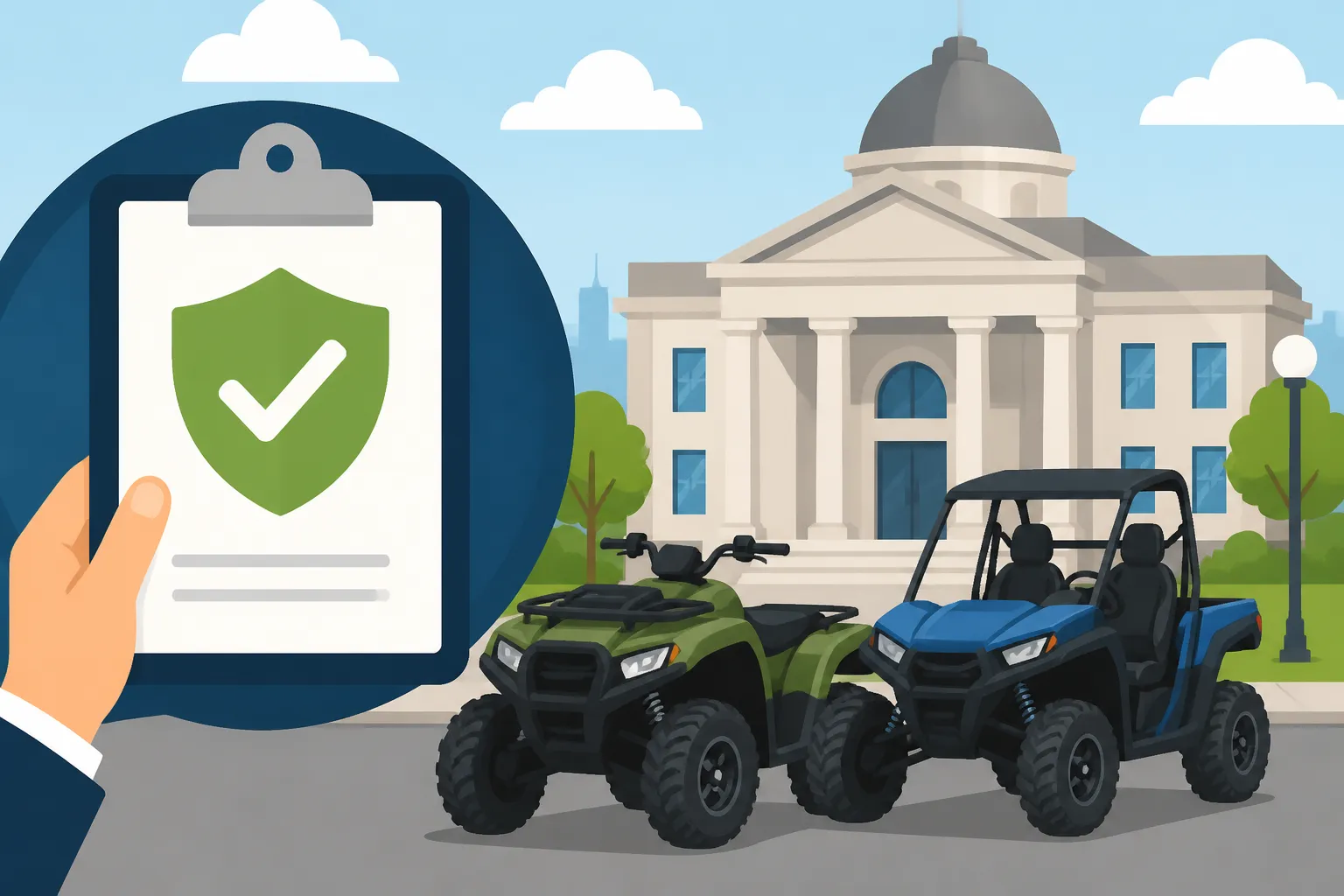
Once you arrive at City Hall, you'll likely head to the city clerk's window or a designated office that handles vehicle permits. The clerk will review your application and supporting documents, including your proof of insurance. They'll verify that your liability coverage meets the minimums outlined in the city's ordinance and that the policy covers the correct machine and timeframe. This is also where any inspection certificates might be submitted if your city requires one, confirming your UTV has the necessary lights, horn, and other safety equipment, perhaps even those aftermarket mirrors and turn signals you picked up from SuperATV.
Be prepared for a few questions about your machine and its intended use on city streets. The clerk might also inform you of specific local rules, like speed limits for UTVs on certain roads or operating hours. For example, [Louisburg's 45 mph Street Limit in Kansas] is a common regulation in cities that permit UTVs. Once all documents are approved and any inspection requirements are met, you'll pay the applicable fees, and the city will issue your UTV or golf cart street-legal tag or permit. This is usually a sticker or a small plate that you'll need to affix to your machine as directed by the city. [Louisburg Puts the UTV Plate on the Left Rear Panel] is an example of specific mounting instructions.
Keeping Your Proof Handy
Getting your city tag is just the first step. Once your UTV is street-legal, you'll need to keep proof of insurance and your city permit readily accessible whenever you're operating the machine on public roads. Just as you would with a car, law enforcement can ask to see these documents during a traffic stop. Failure to produce valid proof of insurance or your city permit could result in a citation or fine, even if you are insured and permitted.
Consider storing a copy of your insurance card and city permit in a waterproof bag or a secure compartment on your UTV. A digital copy on your phone is also often accepted, but having a physical backup is always a good idea, especially in areas with spotty cell service. This ensures that whether you're cruising down a main street or just crossing a small section of road for an agricultural trip, you're always in compliance and ready to provide the necessary documentation. [Carrying Papers on a Ranch Road] might be about private land, but the principle of having documents ready applies to public roads too.
Common Pitfalls and Important Considerations
Navigating city ordinances for UTVs and golf carts can feel like a maze, and there are definitely some common mistakes riders make. Understanding these potential pitfalls can save you time, money, and headaches down the road. It's not just about getting the initial tag; it's about staying compliant throughout your machine's street-legal life.
One of the biggest misconceptions is that once you have a city tag, your machine is automatically street-legal everywhere in Kansas. This is absolutely not true. A city tag only grants you permission to ride on the streets of that specific city that issued the permit. If you drive to a neighboring town that hasn't passed its own ordinance, your machine is still considered illegal on their streets, and you could face penalties. Each city's ordinance is distinct, and they don't carry over. [Kansas Cities That Opt In by Ordinance] clarifies this crucial point.
Understanding Your Policy's Scope
Don't assume your existing off-road insurance policy automatically covers street use, even if you've added safety accessories like a horn or street-legal kit from a company like SuperATV. Many standard ATV/UTV policies are designed for recreational or agricultural use and often have specific exclusions for operation on public roads. If your policy doesn't explicitly state that it covers your UTV for liability on public roadways within city limits, you likely aren't covered.
Before heading to City Hall, speak directly with your insurance agent. Explain that you intend to operate your UTV on public streets in a city that has an ordinance permitting such use. Ask them to confirm, in writing, that your policy provides the required liability coverage for this specific type of operation. You might need to add an endorsement to your existing policy or even purchase a separate policy designed for street-legal UTVs. This step is critical; showing proof of a policy that doesn't actually cover street use won't protect you in an accident and could lead to fines for driving uninsured.
When the Rules Change
City ordinances are not set in stone; they can be amended, updated, or even repealed by the local city council. This means that the rules for your street-legal UTV could change over time. For example, a city might decide to increase the minimum liability insurance requirements, adjust the types of roads that are open to UTVs, or even completely repeal the ordinance that allowed them in the first place. [When a Town Repeals the Ordinance That Let You Ride] is a real possibility.
It's your responsibility as a UTV owner to stay informed about your city's current ordinances. Periodically check your city's website, sign up for local government updates if available, or call the city clerk's office if you have any doubts. If your city updates its insurance requirements, you'll need to adjust your policy accordingly and provide updated proof of insurance to City Hall to keep your permit valid. Neglecting to do so could mean your once-legal UTV is no longer compliant, leaving you vulnerable to fines and unprotected in the event of an accident.
Disclaimer
This article is for general informational purposes only and does not constitute professional advice. Laws, prices and regulations vary by location and change over time. Consult a qualified professional for guidance on your specific situation.