Picking a Winch for a Machine Stuck in Mud
A Kansas ATV or UTV can feel secure one minute and be buried in slick clay the next, especially after rain or while crossing a muddy low spot. Choosing the right winch means matching its pulling capacity to your machine, mounting it properly, and carrying the gear to use it safely. This guide walks through those decisions before you need a recovery.
Match the winch to your ATV or UTV
Start with the machine’s loaded weight
A winch’s capacity is usually listed as a maximum pulling rating, not a promise that it can pull any machine from any situation. A common starting point is to choose a winch rated for at least 1.5 times your machine’s loaded weight. “Loaded” matters: include the rider, passengers, fuel, cargo, accessories, and anything you regularly carry on the machine.
For example, a UTV used for hunting or farm chores may weigh considerably more in practice than its dry weight suggests. Add a passenger, tools, a cooler, and a full tank, and the recovery load grows. If you size a winch using only the bare machine’s advertised weight, you may leave yourself short when the vehicle is stuck in deep mud or facing uphill.
The 1.5-times figure is a useful baseline, not a guarantee. Mud can hold onto tires and the underside of a machine like suction, while a slope or an awkward angle can make a pull harder. If your rides often involve deep mud, steep ground, or a heavily loaded side-by-side, consider more capacity than the minimum.
Think about where and how you ride
A lighter ATV used on relatively firm trails has different recovery demands from a four-seat UTV that carries passengers and gear. Even two machines with similar weight can need different setups if one is likely to get stuck in deep, sticky ground.
Kansas riding conditions can vary by area and season. Clay and rutted ground may be difficult after rain, while sandy terrain calls for a different kind of traction and recovery planning. Before you haul out, check the area’s current access information and conditions. Guides to Kansas Trail Conditions Before You Tow and Kansas Trail Closures After Rain can help you make that part of your plan.
A winch isn’t a reason to ride into terrain beyond your skill or machine’s capability. Treat it as backup equipment, not permission to take an avoidable risk. If conditions are deteriorating, turning around while you still have traction is often the safer call.
Use a safety margin rather than shopping by the smallest number
A properly rated winch gives you room to handle ordinary recovery challenges without routinely pushing equipment to its limit. Consider how often you ride alone, whether you carry passengers, and whether you expect to recover another machine as well as your own.
If you ride with a group, remember that helping a heavier vehicle can be a very different job from pulling your own ATV out of a shallow rut. Don’t assume your winch can recover any machine simply because its rating exceeds your own vehicle’s weight. The pulling setup, terrain, line angle, and resistance all matter.
| Riding situation | What to consider when choosing a winch |
|---|---|
| Light ATV on relatively firm trails | Start with the loaded machine weight and a reasonable capacity margin |
| Heavily equipped ATV | Include accessories, cargo, rider, and fuel in the weight estimate |
| Two-seat or four-seat UTV | Account for passengers and gear, not just the empty machine |
| Frequent muddy or sloped routes | Allow extra capacity for difficult pulls and consider carrying a snatch block |
| Riding with a group | Don’t assume your winch is rated to recover a heavier machine |
Choose the right winch setup for mud recovery
Electric winch or another recovery method
An electric winch is a popular choice for ATVs and UTVs because it can be operated from the vehicle and used for a controlled pull. Before buying one, check that the winch is compatible with your machine and that a suitable mounting plate is available. The mounting system needs to fit the vehicle and support the forces involved in a recovery.
A winch is only one part of a recovery kit. A properly rated recovery strap may help when there is a safe, suitable anchor and the situation calls for a different approach, but a strap and a winch are not interchangeable in every scenario. Avoid improvised connections, and never attach a recovery line to a ball hitch. Use designated recovery points or equipment approved for the load.
Keep the winch’s intended use in mind, too. It is designed for pulling, not for lifting people or suspending a vehicle. Follow the manufacturer’s instructions for the winch, mounting hardware, and accessories, and stop if you’re unsure whether a connection point is suitable.
Steel cable or synthetic rope
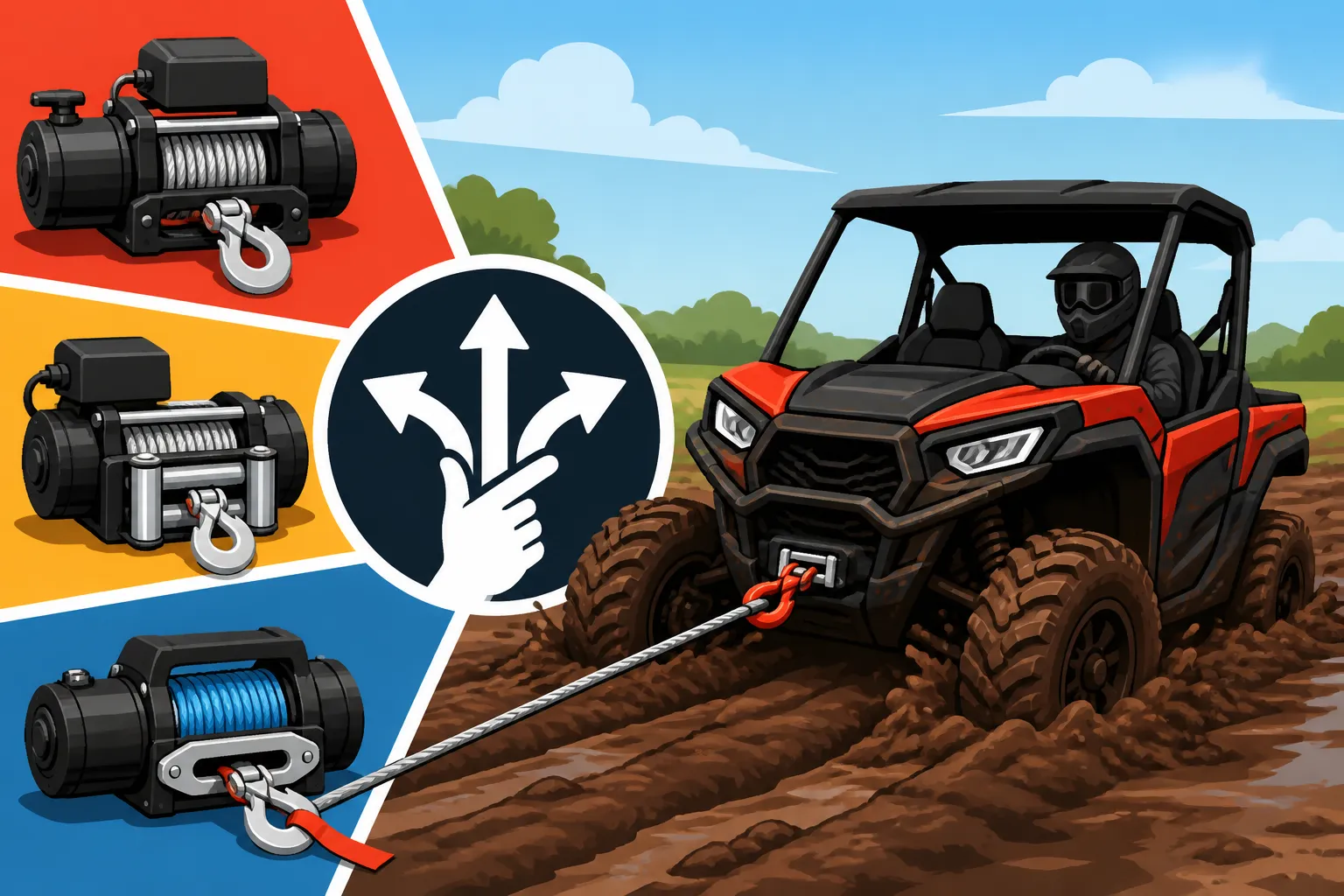
Steel cable is durable, but it can develop sharp broken strands that may injure hands. It can also be heavy to handle. Synthetic rope is lighter and often easier to work with, but it needs protection from abrasion, heat, and damage. Mud, grit, and sharp edges can wear either type, so inspect the line rather than assuming it is sound because it looks clean from a distance.
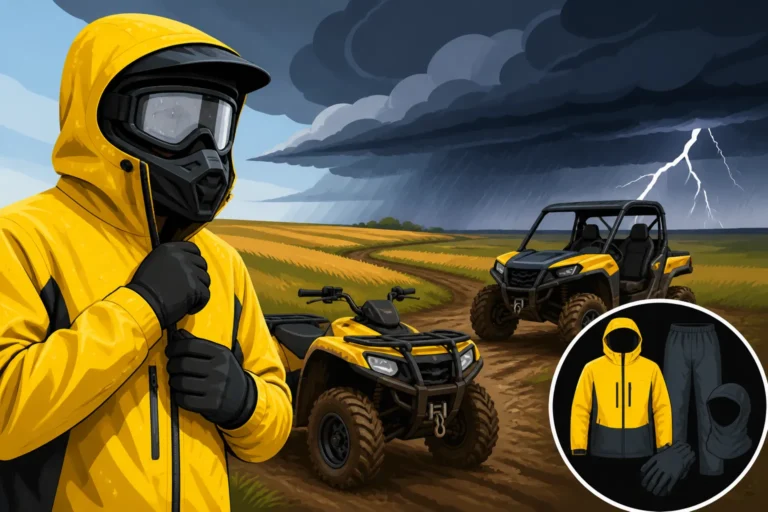
Whichever you choose, use gloves while handling the line and keep hands clear of the fairlead and drum. Don’t guide a moving line with bare hands. A damaged line, kinked cable, or poorly wound spool is a reason to stop and address the problem before the next recovery.
A line damper can reduce the chance of a line snapping upward with force if it breaks. It does not make a bad setup safe, and it cannot replace keeping people out of the danger zone. Everyone nearby should stand clear of the line and its path while the winch is under tension.
Carry the accessories that make a recovery manageable
A snatch block can change the direction of a pull or help create a mechanical advantage when used correctly with a properly rated setup. It does not make every recovery safe, and the block, anchor, and connections all need ratings appropriate for the load. A tree-saver strap can protect a suitable tree when it is used as an anchor; wrapping a bare winch line around a tree can damage the tree and the line.
A useful basic kit may include gloves, a line damper, a tree-saver strap, a rated shackle, and a snatch block that is compatible with the winch line. Carrying extra gear only helps if you know how to use it. Practice handling the equipment in a calm, controlled setting before relying on it in mud, cold, or fading light.
For trail planning, onX Offroad can help you review mapped routes and keep track of where you intend to ride. It’s a planning aid, not a live guarantee that a road or trail is open or passable. Check local conditions separately, especially after rain or when you’re headed somewhere unfamiliar.
Use the winch safely when a machine is stuck
Pause before pulling
When the tires spin and the machine stops moving, it’s tempting to keep applying throttle. That can dig the tires deeper, pack mud around the chassis, and make the eventual pull harder. Stop, take a breath, and assess the vehicle before setting up the winch.
Look for the reason it is stuck. Is the frame or belly pan resting on mud? Are the wheels buried, or is the vehicle caught on an obstacle? Is there a firm route out, and is the ground around the anchor stable? If the machine is leaning, near water, or positioned where a pull could make it roll, don’t rush into a recovery. A second rider can help assess the situation, but should stay clear of the winch line and potential vehicle path.
Remove loose cargo if doing so will make the machine easier to recover, and make sure passengers are out of the vehicle if the owner’s instructions or the situation call for it. Check the machine’s manual for recovery guidance. If the recovery looks unstable, the ground is giving way, or you cannot identify a safe anchor, stop and seek experienced help.
Set up a straight, controlled pull
Use a suitable anchor and a connection point intended for recovery. Keep the winch line as straight as practical and avoid pulling sideways across an obstacle unless the equipment and setup are designed for that use. Side-loading can stress the winch, fairlead, mount, and anchor in ways that are easy to overlook when you’re focused on getting out.
Clear the area around the line. No one should stand over it, step across it while it’s loaded, or stand between the machine and the anchor. Keep bystanders well away, and position the winch operator where they can control the pull without being in the line’s path. If using a remote, keep enough distance to stay clear while still being able to see what is happening.
Take up slack gently, then winch in steadily. Avoid sudden throttle bursts that jerk the line. If the line stops moving, the machine shifts unexpectedly, or the anchor begins to move, stop and reassess instead of forcing the pull. A slow, controlled recovery is generally easier to monitor than a rushed one.
Know when not to winch
A winch may not be the right tool for every situation. If the machine is submerged, leaking fluids, trapped near a drop-off, or at risk of rolling, a routine pull can create additional danger or damage. Likewise, don’t use an unverified tree, fence post, light pole, or another vehicle’s tow ball as an anchor.
If you’re riding a designated area, follow its posted rules and stay on routes that are open. A recovery can become a bigger problem if you leave an approved trail or damage the ground around it. Before heading to a place such as Tuttle Creek ORV Area in Kansas or Kansas Rocks Recreation Park, review the area’s access and riding information so your recovery plan fits the site.
Prepare before riding Kansas mud and trails
Plan around weather and terrain
A winch can get you out of trouble, but route choice and timing may prevent trouble in the first place. Rain can turn a familiar trail into a slick, rutted route, and a low spot that looked harmless on a dry day may hold standing water later. If conditions have changed, reconsider the ride rather than assuming your equipment will make every route passable.
Different riding areas also call for different preparation. Rock, sand, and mud put different demands on tires, vehicle clearance, and recovery gear. If your group is deciding between a rocky route and a sandy one, read about Kansas Trails With Rock Sections or Kansas Trails With Sand and plan for the conditions you expect to encounter. Riders considering the dunes can also check Syracuse Sand Dunes Park in Kansas for area-specific information.
onX Offroad can be useful for reviewing route options and organizing a planned ride, particularly when several riders need to agree on where they’re going. Make a backup plan for poor cell reception, and don’t treat a mapped route as proof that access is permitted or that conditions are safe. Check the riding area’s own information before setting out.
Inspect and maintain the winch
Before each trip, inspect the line from end to end. Look for fraying, cuts, kinks, corrosion, crushed sections, or a loose connection at the drum. Check that the hook’s latch works, the winch mount is secure, and the electrical connections show no obvious damage. A quick check at home is much easier than discovering a problem with a stuck machine and a group waiting.
After a muddy recovery, clean the line and winch area according to the manufacturer’s instructions. Grit can work into the drum and wear the rope or cable, while mud left around electrical components can contribute to problems later. Let wet equipment dry as recommended, and rewind the line neatly under appropriate tension so it is ready for the next use.
It also helps to test the winch before the ride. Confirm that it operates in and out, the remote works, and the battery and connections are in good condition. A winch that has sat unused through the winter may need attention before spring riding begins.
Build recovery into the ride plan
Tell someone where you’re going, ride with a partner when possible, and carry basic supplies such as water, a first-aid kit, a charged phone or communication device, and the recovery gear suited to your machine. A route that looks manageable for one person in good weather may be a poor choice for a solo ride after rain.
Agree on simple group habits before leaving: who will operate the winch, where everyone should stand, and when the group will stop rather than attempt a risky recovery. New riders may benefit from reading Kansas Trail Etiquette Locals Expect and Kansas Trail Difficulty Ratings as part of their preparation. Clear expectations can prevent the stressful scramble where several people crowd around a loaded line trying to help.
The best winch is one that fits the loaded weight of your machine, mounts securely, and comes with the right recovery accessories. But safe decisions matter just as much as capacity. Check conditions, avoid risky anchors, keep people clear of the line, and stop when a pull does not look controlled.
Disclaimer
This article is for general informational purposes only and does not constitute professional advice. Laws, prices and regulations vary by location and change over time. Consult a qualified professional for guidance on your specific situation.