Syracuse Sand Dunes Park in Kansas
Syracuse Sand Dunes gives Kansas riders a chance to trade familiar gravel and prairie ground for broad stretches of loose sand in Hamilton County. But a fun trip takes more than pointing a trailer west: you’ll want to confirm park access and rules, prepare your machine for sand, and plan for fuel, water, camping, and changing conditions. This guide walks through those details before you leave home.
What to expect at Syracuse Sand Dunes
A sand-riding destination in Hamilton County
Syracuse Sand Dunes is a private off-road riding area near Syracuse in southwest Kansas. The setting is a real change from the region’s usual open farmland and gravel roads: sand affects traction, visibility, engine temperature, and how much effort it takes to ride. Riders who are used to firm dirt may find that even a short loop feels more demanding here.
The riding area is described as covering about 1,300 acres. That scale can make it feel open and adventurous, but acreage alone doesn’t tell you which routes are open, what terrain is suitable for your machine, or how the park is managing a particular day. Confirm the current riding area, access arrangements, and any temporary restrictions before loading up. [Syracuse Sand Dunes' 1,300 Acres in Kansas]
Expect a day that depends on the sand itself. Some stretches may be easier to manage than others, and conditions can vary with recent weather, traffic, and maintenance. A route that feels comfortable to an experienced rider on a suitable machine may be tiring or intimidating for a beginner. Build in time to look around, take breaks, and adjust your pace rather than treating the whole park as one long speed run.
Who may enjoy the park most
Syracuse Sand Dunes can suit several kinds of riders: people looking for a different surface, families planning a longer outdoor outing, and groups who want a destination that offers more than a quick ride around a local field. It can also appeal to riders who want to practice reading terrain and managing throttle on loose ground.
The park may be less comfortable for someone who expects a smooth, marked trail system with the same conditions from one visit to the next. Sand changes how a machine behaves, and busy areas can bring dust, reduced visibility, and more interactions with other riders. If you’re new to off-road riding, start with a modest plan and ask park staff which areas are appropriate for your experience and vehicle.
It’s also worth thinking about who is coming along. A child riding a smaller quad, a passenger in a side-by-side, and an experienced adult on a sport machine have different needs. Make sure each person has the right vehicle, properly fitted protective gear, and a plan for staying in contact if the group separates. A little extra planning can prevent the familiar frustration of one rider feeling pressured to keep up with a group that’s moving too fast.
Sand riding is different from ordinary trail riding
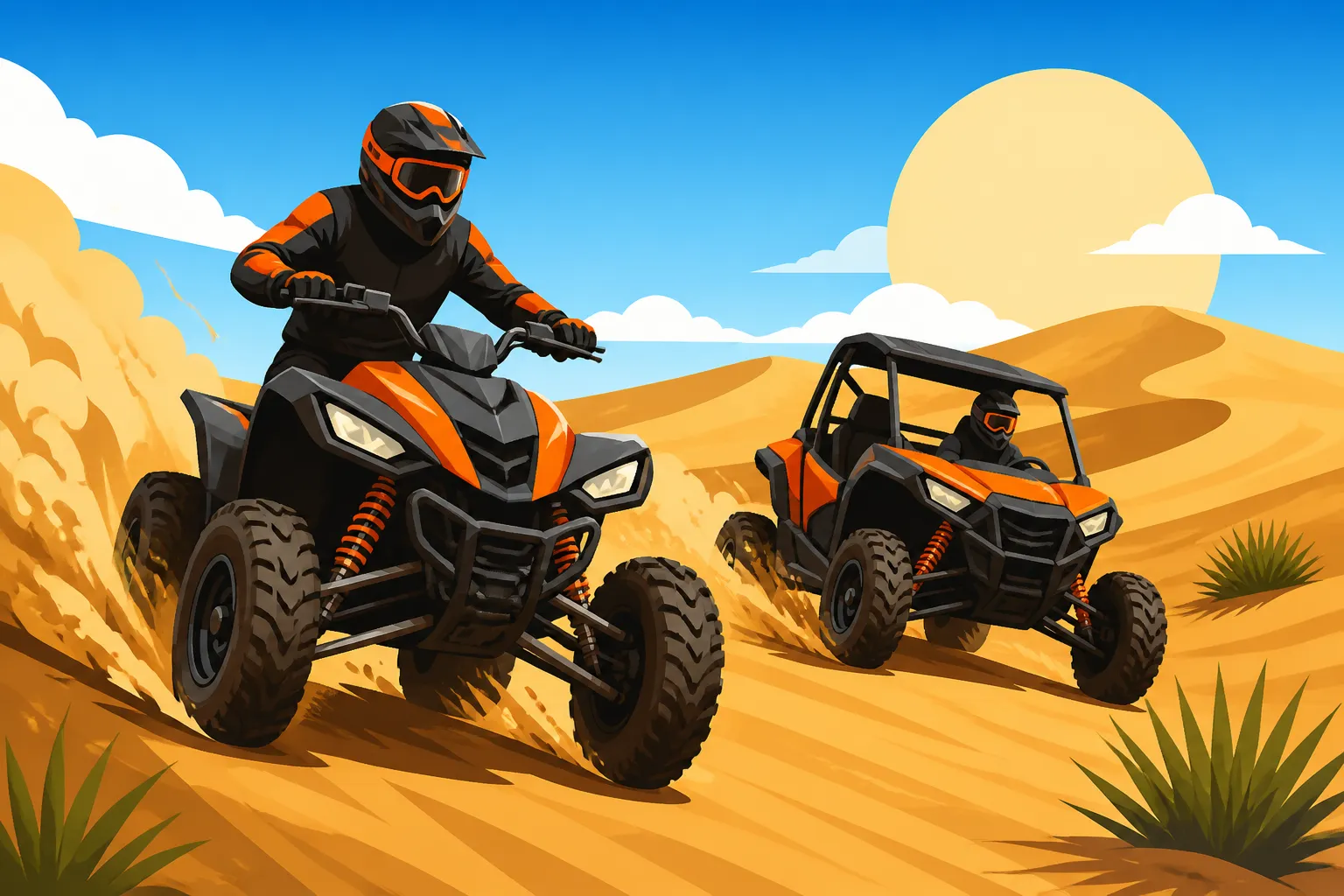
Loose sand tends to take more from a rider and a machine than firm ground. A quad may need steady momentum to move through soft sections, while sudden braking or sharp steering can make it dig in or lose its line. A side-by-side can feel different again because of its weight, width, tires, and steering response. Give yourself room to learn how your own machine behaves.
The surface can also hide changes in depth and firmness. A stretch that looks flat from a distance may have ruts, soft pockets, or uneven transitions. Keep a safe following distance so you can see what the rider ahead is doing and react without making a sudden move. If the person in front slows down, don’t assume they are simply sightseeing; they may have found a difficult patch or be dealing with an issue.
If you’re choosing a destination based on surface, it can help to compare the park with other options in the state. [Kansas Trails With Sand] offers another useful starting point when you’re weighing a sand-focused trip against rock, clay, or mixed-terrain riding.
Plan the trip before you load the trailer
Check park access and rules directly
A private riding park sets its own entry requirements and operating rules. Before driving to Syracuse, confirm that the park is open to visitors on your intended dates and that the type of machine you plan to bring is allowed. Ask about access procedures, check-in, any required waivers, age rules, permitted riding hours, and whether advance arrangements are needed.
Don’t rely on an old social media post, a friend’s memory, or a map pin alone. Park details can change, and an open-looking entrance does not mean the riding area is available. If you are planning a group outing, have one person confirm the details and share them with everyone. That avoids the awkward situation where half the group arrives with different assumptions about hours, fees, or rules.
A practical checklist before departure includes:
- Confirm that the park will be open and accepting riders.
- Ask what identification, paperwork, or waiver is needed.
- Confirm rules for your machine type and any passengers.
- Check whether riding areas or amenities have restrictions.
- Ask about camping, reservations, and check-in arrangements.
- Save the park’s contact information in case your arrival is delayed.
For a broader sense of what to ask, see [Kansas Syracuse Dunes Park Rules]. The goal isn’t to turn a fun trip into paperwork; it’s to catch the small details that can otherwise derail a long drive.
Choose the right day and allow for a change of plan
Weather matters at a sand park, but not always in the way people expect. Wind can carry dust across open ground and make visibility uncomfortable. A dry stretch may leave the surface loose, while rain can change traction and access conditions. Strong sun and heat can also make a full day riding much harder than it looked on the forecast the night before.
Check the forecast for the route as well as the destination. If you’re towing from another part of Kansas, you may encounter different wind, rain, or road conditions along the way. Be realistic about whether you want to ride in poor visibility or after a long drive. When the weather is questionable, call ahead rather than assuming the park is operating normally.
Treat your itinerary as flexible. If the conditions are rough, you can shorten the ride, spend time at camp, or postpone the visit. That flexibility is especially valuable for families and mixed-experience groups. A good day is not measured by the number of hours spent on the throttle; it’s measured by everyone getting home safely and wanting to ride again.
Think through the tow and arrival
Syracuse is in a rural part of Kansas, so it’s sensible to arrive prepared rather than expecting every last-minute need to be available just outside the gate. Check your route, fuel up before you’re low, and make sure your trailer lights, tires, hitch, and safety connections are in good shape. Leave room in the schedule for a slower drive, especially if you’re towing a wide or heavy side-by-side.
Keep your machine secure and your gear organized so unloading doesn’t become a parking-lot scramble. Put helmets, eye protection, gloves, and first-aid supplies where you can reach them quickly. If more than one machine is coming, confirm that each one is loaded safely and that nothing can shift during the drive.
Before you tow, check [Kansas Trail Conditions Before You Tow]. It’s a helpful reminder to consider the whole trip, not just the riding surface. For another local planning perspective, [Kansas Riding in Hamilton County] can help place the park within the wider area.
Prepare your ATV or UTV for loose sand
Inspect the machine before the trip
A basic pre-ride inspection matters anywhere, and sand gives you extra reason to do it. Check tires for damage and suitable pressure, inspect brakes and controls, and look over the machine for loose fasteners or visible leaks. Make sure the throttle returns smoothly and that lights work if you may be travelling near dusk or on park roads where lighting is expected.
Check the air filter and follow the manufacturer’s guidance for maintenance in dusty or sandy conditions. Sand and fine dust can put extra demands on filtration. A clean, correctly installed filter is more useful than discovering a problem after the machine begins running poorly. If you’re unsure about service needs, ask a qualified mechanic familiar with your vehicle rather than improvising a modification.
For side-by-sides, inspect the belt and cooling system as part of your preparation. Soft terrain can ask more of the drivetrain, especially when a driver repeatedly tries to power through a difficult spot. Check the owner’s manual for operating guidance and avoid carrying unnecessary cargo that adds weight without helping the ride.
Ride with steady, deliberate inputs
Loose sand often rewards smooth control. Abrupt throttle changes, hard braking, and sudden turns can unsettle a machine or make it harder to hold a line. Keep your eyes ahead, choose a route you can see clearly, and leave enough space to react. If you lose momentum, resist the urge to keep forcing the machine forward without assessing what is happening.
A careful approach is particularly important when climbing, crossing ruts, or riding around other vehicles. Don’t follow closely behind a machine that is throwing sand or climbing a slope; wait until you have a clear view and enough room. If you’re unsure whether a section is appropriate for you, stop in a safe spot and decide before committing.
New riders should spend time getting comfortable before joining faster traffic. Practice controlled acceleration, braking, and turns in an area where you can see other people and where the park permits it. A confident, measured pace is more useful than trying to imitate a rider who has much more experience.
Consider tires and protective additions carefully
Some riders adjust tire pressure for loose terrain, but there is no single pressure that fits every machine, tire, load, or riding style. Use the tire and vehicle manufacturer’s guidance as your starting point, and ask an experienced shop or park staff if you’re uncertain. Too little pressure can increase the risk of a tire coming off the bead or being damaged; too much can reduce useful traction.
Avoid making equipment changes just because someone at the trailhead recommends them. Tire type, tread, machine weight, and terrain all affect performance. If you’re considering a snorkel, belt change, or other modification, understand how it affects the machine and whether it is appropriate for the park and your riding plans.
Pack practical recovery items if you know how to use them safely. A tow strap or basic tool kit can be useful, but recovery work can be dangerous when machines are moving or under tension. Keep bystanders clear, follow equipment instructions, and ask for help rather than improvising a risky pull. [Picking a Winch for a Machine Stuck in Mud] is also relevant to thinking through recovery gear, even though sand and mud create different challenges.
Ride safely and share the park
Set a group plan before anyone starts riding
Groups often get into trouble because everyone assumes someone else is watching the route, the children, or the time. Before unloading, agree on a meeting point, a turnaround time, and what to do if a rider gets separated. Make sure each rider knows who to contact and has a way to communicate within the group.
Choose a pace that works for the least experienced person, not only the fastest machine. If experienced riders want to explore more challenging sections, split into smaller groups only when the park’s rules and the group’s communication plan make that sensible. Establish a clear time and location to meet again, and don’t leave a child or novice rider to navigate alone.
For families, decide which adult is supervising each young rider and what the boundaries are. “Stay where you can see me” may be too vague in a large riding area. Point out recognizable landmarks, explain where the rider is allowed to go, and rehearse what to do if they become lost or have a mechanical problem.
Wear protective gear and manage fatigue
A helmet, eye protection, gloves, long sleeves, and sturdy footwear help guard against common riding hazards. Sand can strike exposed skin and eyes, and dust may be uncomfortable even at low speeds. Choose gear that fits securely and is suitable for the conditions. If a helmet is damaged, poorly fitting, or not designed for the activity, replace it before the trip rather than hoping it will be adequate.
Drink water regularly instead of waiting until you feel thirsty. Add breaks before anyone is exhausted, especially on hot or windy days. Fatigue can make it harder to judge distance, see other riders, and control a machine smoothly. If someone is overheated, dizzy, unusually tired, or having trouble concentrating, stop riding and take the situation seriously.
Bring basic first aid supplies and know where they are. A kit is only useful if someone can find it, and a phone is only useful if it has signal and battery. Share your planned riding area with someone who is staying back at camp, and agree on a check-in time. [What to Pack for First Aid on a Long Ride] can help you build a more complete kit.
Respect other riders, park staff, and the land
A private park depends on visitors following posted rules and respecting the property. Stay in areas where riding is permitted, obey closures, and don’t assume that an unmarked track is an invitation to explore. If you encounter a boundary or a staff instruction, stop and ask rather than riding past it.
Be mindful of dust and visibility when passing or approaching other machines. Slow down around campsites, parking areas, families, and pedestrians. Give riders room to recover from a stall or turn, and avoid throwing sand toward people who are stopped. These small courtesies are especially important in an open area where visibility may change quickly.
Leave the site as you found it. Secure rubbish, avoid damaging vegetation or facilities, and use designated areas for parking and camping. Make sure fires, generators, pets, and quiet hours follow the park’s current requirements. Private parks often have specific rules for these details, so check them rather than assuming that a policy from another park applies.
Camping and amenities at the park
Confirm what is available before making an overnight plan
Syracuse Sand Dunes is associated with camping and other visitor amenities, but availability and conditions should be confirmed with the park before you travel. Ask whether camping is open on your dates, what kind of sites are available, whether reservations are needed, and what facilities are operating. A listing or an old review can’t tell you whether a particular amenity is currently open or suitable for your group.
If you need electrical hookups, accessible facilities, or a specific type of campsite, confirm those details directly. Ask what equipment is included, where the sites are relative to the riding area, and whether there are restrictions on generators, fires, or vehicle movement. A family travelling with a small trailer may have different needs from a group arriving in several large rigs.
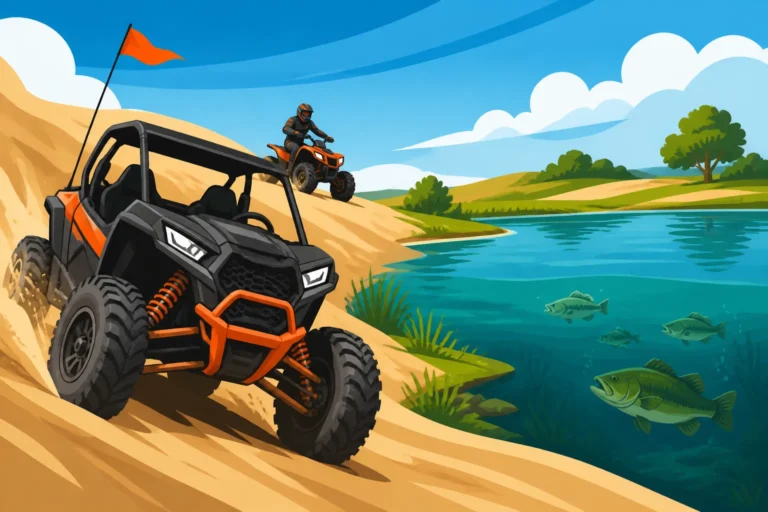
The park is noted for a stocked pond and hookup campsites. Those features may make an overnight visit appealing, but don’t assume that fishing access, hookups, or camping arrangements are automatically included with riding access. Confirm separate requirements and any rules that apply. [Syracuse Sand Dunes Has a 40-Acre Stocked Pond] and [Fourteen Hookup Sites at a Dune Park] provide more context for planning around those amenities.
Make camp comfortable without overpacking
A good campsite setup helps everyone recover between rides. Bring enough drinking water, food, shade, and basic supplies for the whole stay, along with extra items for delays. If you’re camping in a trailer, check that it is level and safely positioned, and keep the walking area clear of tow straps, tools, and other trip hazards.
Wind can make outdoor meals and camp organization difficult. Secure lightweight items before stepping away, and store food and rubbish properly. If you use a generator, confirm the park’s rules and be considerate of nearby campers. A site can feel peaceful during the day but become disruptive at night if equipment is placed or operated carelessly.
Think about a post-ride cleanup plan. Sand gets into boots, clothing, storage bins, and vehicle interiors. Bring bags for dirty gear, towels for cleaning up, and a brush or other practical supplies. Keep fine sand away from sensitive equipment and food. A little organization at camp can make the drive home much more pleasant.
Balance riding time with rest and other activities
An overnight visit doesn’t have to mean riding from morning until dark. Schedule time for meals, water breaks, and a change of pace. If your group includes children or newer riders, a shorter ride with a relaxed afternoon may be more enjoyable than a full-day push that leaves everyone tired and irritable.
If the pond or camping facilities are part of your plan, check the rules for each activity. Don’t assume that a fishing area has the same access conditions as the riding area, or that a machine can be driven anywhere on the property. Follow posted signs and instructions from park staff.
Plan your return with the same care as your arrival. Allow time to load, secure machines, check the trailer, and make sure nobody has left helmets, keys, or gear behind. If the day has been hot or physically demanding, consider whether the driver is rested enough for the drive. A safe ride ends when the whole group is home, not when the machines are parked at the trailer.
Permits, paperwork, and travel considerations
Separate park permission from state and local rules
A private park’s permission to ride applies to that property and does not automatically make an ATV or UTV legal on public roads. Road-use rules are a separate question, and they can depend on the type of machine and the specific road or local ordinance. Keep your ride plan focused on the park unless you have confirmed that any public-road travel is allowed.
Kansas does not issue a general state OHV trail sticker in the way some riders may expect, but public-land rules and private-park requirements are not interchangeable. A private park may have its own admission process, waiver, vehicle requirements, or operating conditions. Confirm the rules that apply to the place you’re actually visiting rather than relying on a permit from another state or a previous trip.
If you’re bringing a machine from out of state, bring ownership documents and any paperwork you normally keep with the vehicle. A title is not a trail permit, and a park wristband or admission receipt is not proof of ownership. Keep these documents safely stored in your tow vehicle or another secure place instead of leaving them loose on a machine.
Prepare your trailer and vehicle documents too
The ATV or UTV may not need a state trail tag for the private riding area, but the trailer you tow on public roads can have separate registration and equipment requirements. Check that your trailer is properly titled or registered where required, that its lights work, and that its load is secured. Don’t let the lack of an ATV tag lead you to overlook the trailer’s road obligations. See [Trailer Tags Are Required Even When ATV Tags Are Not].
If you’re borrowing a trailer or machine, confirm that you have permission to use it and that the insurance arrangements are understood. Make sure the tow vehicle is appropriate for the combined load and that the hitch and safety chains are correctly attached. A long rural trip is a poor time to discover that a trailer tire is underinflated or a light connector is unreliable.
Keep essential contact details available offline. Rural service can be inconsistent, and mobile coverage may not be dependable in every location. Save directions, the park’s phone number, and any reservation details before leaving. A map app such as onX Offroad can be useful for reviewing routes and saving navigation information in advance, but it does not replace the park’s own directions, boundary information, or instructions.
Don’t assume the park is a public trail network
A private riding area is managed differently from a public trail system. Access may depend on the operator’s schedule, admission process, or rules for a specific activity. Use the park’s designated entrance and follow its instructions for parking and unloading.
This distinction matters when people see open land and assume they can cross it. Do not ride onto neighboring property, along a public road, or through a gate simply because it appears to connect to the park. Private property boundaries can be difficult to judge from a seat, so follow signs and ask staff when you’re unsure.
You can use onX Offroad to help prepare a general route and orient yourself, but always treat official park guidance and posted boundaries as controlling. Apps can help with trip planning; they cannot grant access or confirm that an area is open to riders. If the map and a sign appear to conflict, stop and seek clarification rather than continuing.
Build a practical Syracuse Sand Dunes itinerary
Use a simple arrival-to-departure plan
A realistic itinerary gives you enough structure to avoid rushing without locking you into a rigid schedule. Start with a time buffer for the drive, check-in, unloading, and a safety talk. Give everyone a chance to inspect their machine and locate the meeting point before the first ride.
For a first visit, begin with a shorter outing. Choose terrain that suits the least experienced rider and pause to evaluate how the group is doing. If everyone is comfortable and conditions are good, you can extend the ride. If someone is tired, visibility is poor, or a machine is struggling, adjust the plan instead of pushing on to meet an arbitrary mileage goal.
Before leaving, allow time to clean up, refuel if needed, inspect the machines, and secure the load. Check for loose straps and confirm that the trailer is balanced. A tired group can make avoidable mistakes during loading, so give yourself enough time to work carefully.
Match the visit to your group
A group of experienced adults may want a different day than a family with young riders. Ask everyone what they hope to do before arriving and set expectations about pace and difficulty. If some riders want to explore more challenging areas, decide whether the group will stay together or split under a clear plan.
For a family visit, build the schedule around shade, water, and frequent rest stops. Choose a meeting location that is easy for children to recognize, and make sure every child knows what to do if separated. Keep young riders within the boundaries set by the adults responsible for them.
For a mixed-skill group, avoid making the newest rider feel responsible for slowing everyone down. Start together, discuss the route, and make stops where the group can regroup safely. Riders have a better time when nobody feels pressured to take a slope, speed, or route beyond their ability.
Check the practical details one final time
Before departure, run through a last-minute checklist:
| Trip detail | What to confirm |
|---|---|
| Park access | Open dates, check-in process, and entry requirements |
| Machine rules | Allowed vehicle types, passenger rules, and age requirements |
| Riding conditions | Open areas, closures, and any surface or weather concerns |
| Camping | Availability, reservations, hookups, and facility rules |
| Tow setup | Trailer condition, lights, tires, hitch, and secure load |
| Safety gear | Helmets, eye protection, gloves, water, and first aid |
| Navigation | Saved directions, meeting point, and offline contact details |
If even one major detail is unclear, contact the park before you leave. That small pause can save a long drive and a disappointing arrival. It also gives you a chance to adjust your equipment or itinerary while you still have options.
Common planning mistakes to avoid
Assuming past information still applies
A friend may have visited years ago and remember a particular gate, campsite, or operating arrangement. That can be useful background, but it should not replace confirming details for your own visit. Park schedules, access rules, and amenities can change.
The same is true of online maps and reviews. They can help you understand where the destination is and what other visitors have experienced, but they may not reflect today’s closures or current procedures. Use them as planning aids, then confirm the essentials with the park.
Underestimating the demands of sand
Riders sometimes arrive expecting a casual, low-effort day and are surprised by how much concentration loose terrain requires. Sand can fatigue a rider, make a machine work harder, and limit visibility when other vehicles are moving nearby. Plan breaks from the start, and don’t interpret fatigue as a reason to ride faster and “get it over with.”
A vehicle that is fine on a firm farm track may not feel the same in deep or uneven sand. If the machine struggles, stop and assess the cause. Avoid repeated hard acceleration or continued attempts that may worsen the situation. Ask an experienced rider or park staff for help when appropriate.
Treating admission as permission to ride anywhere
Access to the park does not mean every part of the property is open to every visitor. Follow the park’s boundaries and signs, and ask before riding into an area that is unclear. A map line or visible track is not proof that the route is open.
The safest habit is simple: stay where the park has directed you to ride, and turn around if you reach a closure or boundary. That protects you, other visitors, and the continued availability of the riding area.
Disclaimer
This article is for general informational purposes only and does not constitute professional advice. Laws, prices and regulations vary by location and change over time. Consult a qualified professional for guidance on your specific situation.