Rain Gear for a Thunderstorm That Blows In Fast
A Kansas ride can start under a bright sky and turn wet, windy, and muddy before you have time to reach the truck. The right rain gear helps you stay warm, keep your hands on the controls, and protect essentials—but lightning changes the plan completely. This guide covers what to pack, how to layer, and when to stop riding and seek shelter.
Build a Rain Gear Kit for Kansas ATV and UTV Rides
Choose protection that works on the machine
Rain gear for an ATV or UTV has to do more than keep you dry while standing still. A jacket that fits comfortably at camp may pull tight across your shoulders when you lean forward, while loose cuffs can catch on controls or let rain run down your gloves. Try your outer layer in a riding position before you leave: sit on the machine, reach for the handlebars, turn your head, and check that the hood, sleeves, and hem stay out of the way.
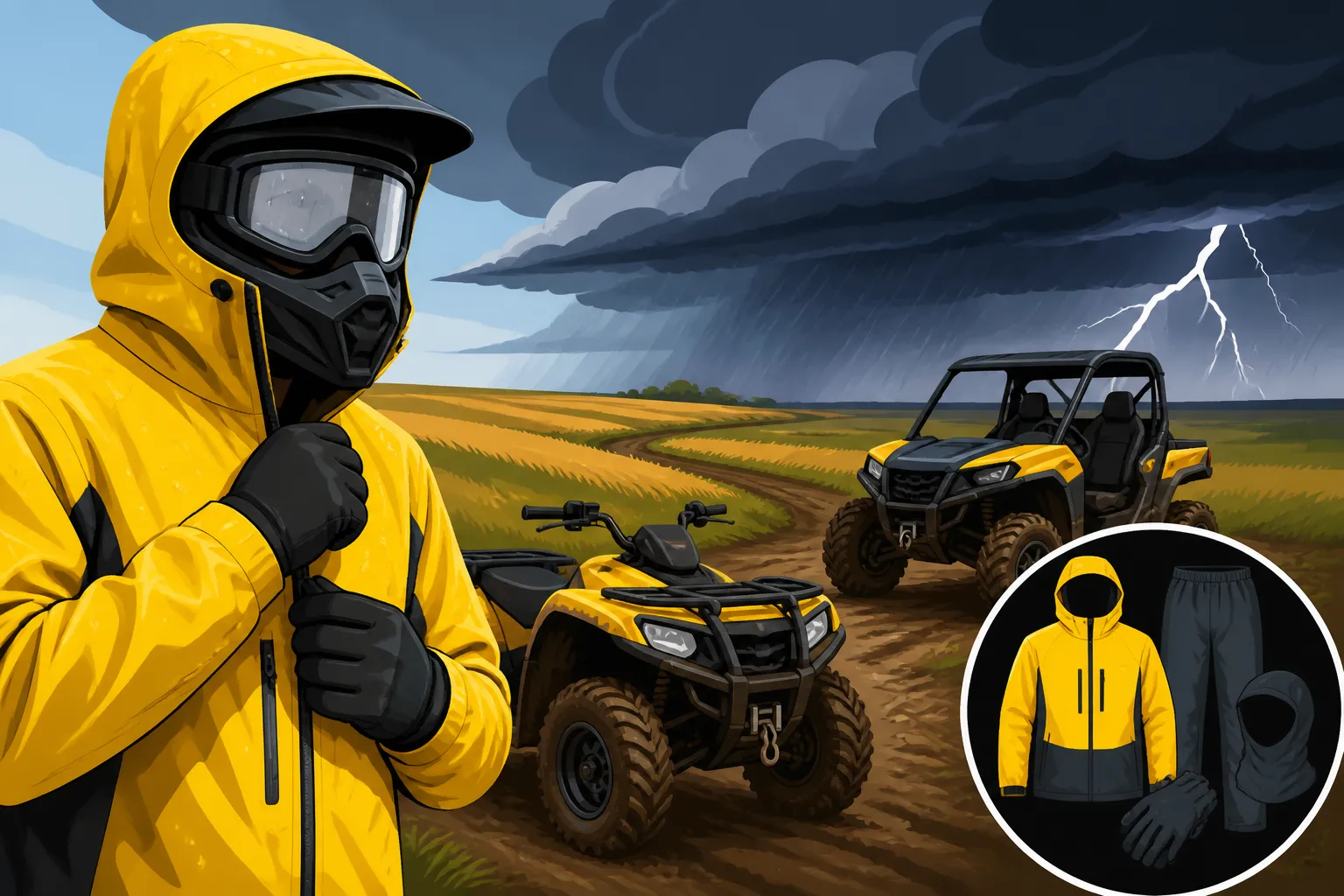
A waterproof shell is generally more useful than a thin, water-resistant windbreaker when you expect sustained rain. Look for a hood that can be secured or tucked away, adjustable cuffs, and a hem that covers your lower back when you sit. Waterproof pants can help on an open ATV, where your legs are directly exposed to rain and spray. On a side-by-side, a cab or windshield may reduce some exposure, but wind-driven rain can still find its way inside. Don’t assume the machine’s bodywork is a substitute for clothing.
Fit matters as much as the label. A shell that is too tight can limit movement or compress warm layers underneath; one that is too loose may flap in the wind. If you wear a helmet, test the jacket hood with it on. A hood that bunches under the helmet can make turning your head uncomfortable or restrict your view. If the hood doesn’t work with your helmet, use a helmet-compatible rain cover or a brimmed cap under the helmet only if it fits safely and doesn’t interfere with the helmet’s fit.
Your riding setup also affects what you need. An exposed ATV rider may want waterproof gloves and pants ready to pull on quickly. A UTV driver might prioritize a rain shell, a dry change of clothes, and a way to protect belongings from water coming through an open side. For more on choosing what to ride and where it can go, see Kansas Trails That Allow Side-by-Sides and Kansas ATV Trails: Where You Can Actually Ride.
Protect the small items that make a wet day miserable
Wet gloves are more than an annoyance. Cold, slippery hands can make it harder to use controls, operate a winch, or manage a trailer. Pack a dry spare pair in a sealed bag, along with a dry pair of socks. Consider glove liners if they fit comfortably beneath your riding gloves without making your grip awkward. If you use touchscreen devices, test whether you can operate them in your gloves before the ride rather than discovering the problem in the rain.
Keep your phone, keys, wallet, first-aid supplies, and any paper documents in waterproof bags or cases. A backpack’s rain cover can help, but water may still enter through zippers or seams, especially if the pack is set down in wet grass or mud. Double protection—a dry bag inside a pack, for example—is a practical choice for items that would be difficult to replace or need to work in an emergency. If you use onX Offroad to plan or follow a route, prepare your map before leaving home and protect your phone from rain. A phone that gets soaked or loses power is no help when visibility is poor.
Pack a light, dry insulating layer for after you stop. Rain shells keep water out, but they don’t create warmth by themselves. A fleece or other quick-drying layer can help under a shell when temperatures drop. Keep it in a sealed bag, separate from wet clothes. A spare base layer is especially useful on longer rides: getting out of damp clothing can make a rest stop much more comfortable.
| Item | Why it helps | Packing tip |
|---|---|---|
| Waterproof jacket | Blocks rain and wind while you ride | Test the fit with your helmet and riding posture |
| Waterproof pants | Reduces soaking and spray on an open ATV | Check that the knees bend comfortably |
| Spare gloves and socks | Gives you a dry option after exposure | Store them in a sealed bag |
| Dry insulating layer | Helps you warm up after stopping | Keep it separate from wet gear |
| Waterproof phone case or dry bag | Protects navigation and communication tools | Check that you can still use the device |
| Small towel or absorbent cloth | Helps dry hands, controls, or glasses | Pack it where you can reach it easily |
Layer for Wet, Windy, and Changing Conditions
Use layers instead of relying on one heavy coat
A useful riding setup usually has three jobs: move sweat away from your skin, provide warmth, and block wind and rain. The base layer sits next to your skin and should be comfortable when damp. A middle layer adds warmth. The outer shell helps block the weather. You may not need every layer at once, but carrying them gives you options as the ride changes.
Avoid cotton as your only warm layer when you expect prolonged rain. If it becomes soaked, it can stay clammy against your skin and feel cold when you stop. Choose a quick-drying base layer and a middle layer that can retain warmth without becoming bulky. The best combination depends on the temperature, wind, how exposed your machine is, and how long you expect to be out. A brief shower on a warm afternoon is different from a long ride in cool rain.
Don’t wait until you are shivering to add insulation. If the rain starts and the wind picks up, pull over somewhere safe and adjust early. Once you’re chilled, fumbling with layers is less pleasant, and wet gloves can make zippers and snaps frustrating. Keep the warm layer accessible rather than buried beneath tools and lunch. Riders planning for a longer outing can also review Packing for a Hot Dry Day and Kansas Trail Conditions Before You Tow when deciding what conditions their kit needs to handle.
Rain gear can also make you overheat. A fully waterproof shell may trap body heat during active riding, particularly when the air is warm or you’re working hard through mud. Use vents if the garment has them, adjust layers during breaks, and pay attention to how you feel. If you’re sweating heavily beneath your rainwear, damp clothing can become uncomfortable when you stop moving. Take a break in a safe place to regulate your layers rather than waiting until you feel drained.
Keep visibility and control in mind
Rain, road spray, mud, and fogged eyewear can all reduce visibility. Choose outerwear that doesn’t block your peripheral vision, and make sure the hood cannot blow over your eyes. Keep a clean cloth in a protected pocket for glasses or goggles. Wipe them gently; rubbing grit across a lens can scratch it. If you use a face covering or helmet shield, check that your breath isn’t making it harder to see.
Wet grips and gloves can feel slick, and mud can change how the machine responds. That’s a reason to slow down and leave extra room—not a reason to push harder to get back before the weather worsens. Avoid sudden steering, braking, or throttle inputs where the surface is slippery. If you’re in a group, make sure the rider behind you can see your signals, and agree on a simple way to communicate before the ride. A planned hand signal may be difficult to see in heavy rain, so voice communication or a safe stop may be better.
Keep your route and the return plan in mind as the weather changes. A path that was easy in dry conditions may become slick, rutted, or difficult to cross after heavy rain. Don’t treat a mapping route as proof that a trail or access road remains passable. Check local closures and land rules before riding, and be prepared to turn around. For additional planning help, see Kansas Trail Closures After Rain and Carrying a Paper Map Where Cell Service Drops. onX Offroad can be one part of route preparation, but a charged device, a dry map, and a clear turnaround plan matter too.
Respond Safely When a Thunderstorm Moves In
Treat lightning as a reason to stop riding
Rain gear is for getting wet safely; it is not lightning protection. If you hear thunder, see lightning, or notice a storm moving in, stop the ride and look for a safe shelter. Do not assume that the rain has to reach you before lightning is a concern. Thunder can be heard from a storm that is still some distance away, and conditions can change quickly across open Kansas terrain.
The safest option is a substantial enclosed building or a fully enclosed hard-topped vehicle. An open-sided shelter, a tent, a picnic canopy, or a spot beneath an isolated tree is not a reliable substitute. If you’re riding an open ATV and no substantial shelter is immediately available, move away from exposed high points, open fields, isolated trees, and water. Follow local emergency guidance and avoid attempting to outrun a storm across unfamiliar terrain.
A UTV’s roof or roll cage should not be treated as lightning shelter. If the vehicle has a fully enclosed hardtop cabin, get inside and close the doors and windows. If it is open-sided, seek a better shelter if you can do so safely. Don’t keep driving just because your rain suit is working. The right decision may mean ending the ride, waiting out the storm, or calling for help if your group cannot reach shelter safely.
Once you are in a suitable shelter, remain there until the storm has passed and it is safe to resume. Don’t rush back onto a trail because the rain has eased; lightning can continue around a storm’s edges, and the ground may now be more difficult to ride. Check your group, account for everyone, and make sure phones and other communication devices are dry and usable. For broader trip-preparation ideas, see Rain Gear for a Thunderstorm That Blows In Fast and What to Pack for First Aid on a Long Ride.
Make the decision before the first raindrop
A simple storm plan reduces confusion when the sky darkens. Before starting, identify where you could take shelter, how you’ll communicate with your group, and what conditions mean you’ll turn back. If the route is remote or cell service may be unreliable, tell someone where you’re going and when you expect to return. Make sure every rider knows the meeting point if the group becomes separated.
Check the forecast close to departure and keep watching the sky during the ride. Forecasts help with planning, but they don’t replace paying attention to the conditions around you. Dark clouds, increasing wind, distant thunder, or sudden changes in visibility are reasons to reassess. If you’re uncertain whether to continue, stopping early is usually less stressful than trying to make a rushed decision in heavy rain.
Use onX Offroad, a paper map, or another navigation option to understand where your route goes and what return paths may be available. Prepare the information before you lose signal, and don’t let a navigation app persuade you to press on through unsafe weather. A route line can’t tell you whether a low spot has flooded, a trail has become impassable, or a storm has created a dangerous situation where you are. Plan a conservative turnaround point and make sure the group agrees that anyone can call for a stop.
Dry Out and Reassess Before Continuing
Check people, gear, and the machine
After reaching shelter, check everyone for signs of cold stress or injury. Shivering, numbness, confusion, unusual fatigue, or difficulty using hands are reasons to take the situation seriously and get appropriate help. Change out of wet clothing if you can, add dry insulation, and use a warm, sheltered place to recover. Don’t rely on a hot drink or a rain jacket alone if someone is becoming unwell.
Inspect gear before heading back out. Replace soaked gloves and socks, dry or change layers, and make sure phones and other essential devices still work. If your rain shell has been damaged or water is getting through, don’t assume it will protect you for the rest of the day. Repack wet items in a separate bag so they don’t soak the dry clothes you still need.
Look over the machine, too. Rain can reduce visibility, and mud or debris may affect controls, lights, tires, or the radiator area. Check that your lights are working and that nothing is tangled or obstructing moving parts. If water is deep, flowing, or hiding the surface, don’t try to ride through it just to save time. A flooded crossing can conceal holes, debris, or a strong current. Turn around if you cannot judge the crossing safely.
Know when to end the ride
It’s reasonable to call the day early when lightning is nearby, a route has become difficult to navigate, the group is cold, or visibility has dropped. There’s no prize for finishing a planned loop. Let the group know the decision clearly, choose a route back that avoids unnecessary risks, and stay together if conditions allow. If someone is separated or injured, prioritize communication and safety rather than continuing the ride.
Before the next trip, note what worked and what didn’t. Maybe the jacket stayed dry but the gloves soaked through, or the rain pants made it hard to move. Replace or adjust the weak point while the experience is fresh. If you used onX Offroad to plan the outing, review the route afterward and make a note of safer turnaround options or places where you may need to change the plan in poor weather.
Rain gear can make an unexpected shower more manageable, but it cannot make every ride safe in a thunderstorm. Pack for wet conditions, layer so you can adapt, protect your essentials, and treat thunder as a cue to stop and find appropriate shelter. A dry change of clothes and an early return are far better than taking chances when the weather turns.
Disclaimer
This article is for general informational purposes only and does not constitute professional advice. Laws, prices and regulations vary by location and change over time. Consult a qualified professional for guidance on your specific situation.