Kansas Trails With Sand
Kansas has fewer places to ride an ATV or UTV on sand than its wide-open landscape might suggest. If you’re hoping for dunes rather than rocky ledges or ordinary dirt trails, the key is knowing where sand riding is actually available—and checking access, machine limits, and park rules before you tow.
Where to Find Sand Riding in Kansas
Syracuse Sand Dunes is the main destination
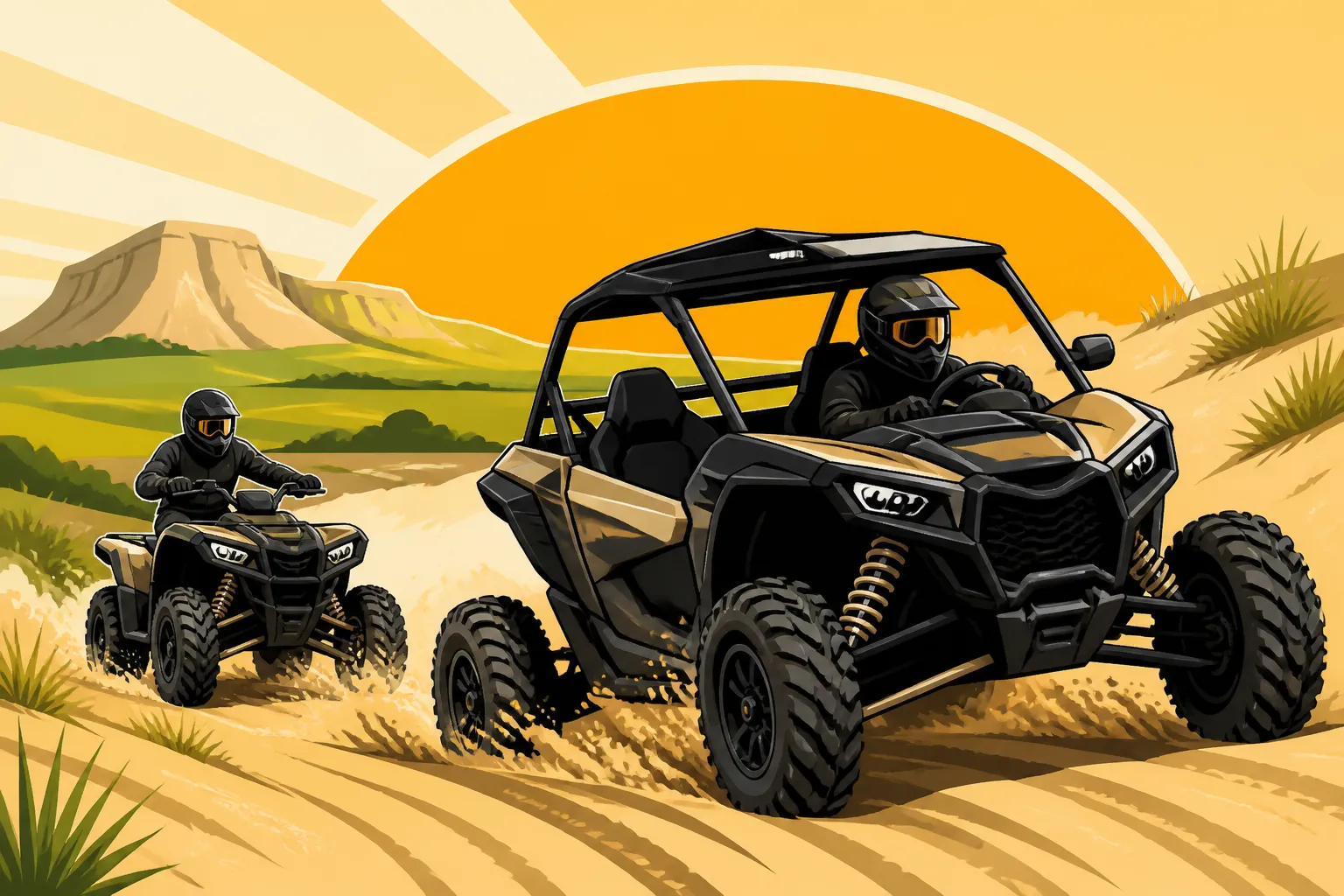
For a Kansas ride centered on sand, start with [Syracuse Sand Dunes Park in Kansas]. The park is in Hamilton County, near Syracuse in the southwestern part of the state, and is the best-known destination for riding dunes and sandy terrain. It’s a private riding area, so access and rules are set by the park rather than by a statewide trail system.
The scale of the area is one reason riders make the trip. [Syracuse Sand Dunes' 1,300 Acres in Kansas] describes a substantial riding property, but acreage alone doesn’t tell you exactly which routes are open, how terrain is laid out, or whether conditions have changed. Check the park’s current information before leaving home, especially if you’re planning a long drive across western Kansas.
Sand riding also feels different from following a marked gravel or wooded trail. Dune contours, loose surfaces, weather, and traffic can affect how a route feels from one visit to the next. Give yourself time to get familiar with the property, ride within your ability, and avoid assuming that a path you see from a distance is an appropriate route for your machine.
Know what you’ll find at other Kansas riding areas
Kansas has several places to ride, but not every off-road park is a sand destination. For example, Kansas Rocks Recreation Park is commonly associated with rocky terrain, while other areas may offer a mix of dirt, clay, and varied trail conditions. If your main goal is deep or dune-style sand, compare the riding surface—not just the facility name or total acreage—before choosing where to go.
That distinction matters when you’re packing tires, planning for recovery, and deciding whether your machine is suited to the terrain. A quad set up for hard-packed trails may need different preparation for loose sand. A heavier side-by-side may also handle steep or soft sections differently from a smaller ATV, particularly if the sand is churned up.
Kansas riding options are relatively spread out, so it’s worth building your trip around the terrain you want rather than hoping to find sand after arrival. The overview [Kansas ATV Trails: Where You Can Actually Ride] can help you compare the broader landscape of riding options. For a sand-focused visit, though, make sure your chosen destination specifically allows the kind of dune riding you have in mind.
Plan for the location, not just the trail
Syracuse is a long drive for many Kansas riders, particularly if you’re coming from the Kansas City area, Topeka, or Wichita. Before you load, confirm the park’s operating information, access arrangements, vehicle requirements, and any restrictions on passengers or equipment. Don’t rely on an old social media post or a map listing as proof that a gate will be open.
Download or save the directions and essential park information before you get into areas where cell service may be unreliable. A navigation app such as onX Offroad can be useful for organizing a trip and viewing your location, but it should not be treated as confirmation that a road is open or that a route is authorized. Follow the park’s directions and signs, and ask the operator if you’re uncertain.
Also plan for the return trip. Sand can work into belts, filters, brakes, and other exposed areas, so bring what you need to secure and inspect your machine after riding. If you’re hauling on a trailer, check tie-downs and tires before leaving the park; a dusty, tiring ride day is not the best time to discover a loose strap or a soft trailer tire.
What to Expect From Kansas Dune Riding
Sand is not just another kind of trail surface
Loose sand shifts beneath your tires, so a line that felt firm a few minutes earlier can become soft after several machines pass over it. Instead of gripping the ground like packed dirt, tires can sink, paddle, or push material aside. This can make acceleration, braking, and turning feel less predictable, especially for a rider who is used to gravel or hard-packed trails.
The terrain can also hide changes in slope. A dune may look gentle from below but feel steeper as you climb, and the far side can conceal another rider or a sudden drop. Avoid charging over a crest without checking what is beyond it. Keep enough distance from other machines to see their movements and to leave room if someone slows, turns, or gets stuck.
Sand requires steady judgment rather than simply more throttle. Spinning tires can dig a machine in quickly, while abrupt steering or braking may unsettle it. If you’re new to dunes, begin on easier, open ground and build confidence gradually. [Riding Sand Instead of Clay] is a useful topic to review before choosing your first lines.
Carry the right setup and recovery gear
Tire choice affects how your machine moves through sand. A tire designed for hard surfaces may not perform the way you expect on loose terrain, while specialized sand tires can behave differently on pavement or rocky ground. Check your manufacturer’s recommendations and the park’s rules before making changes. Avoid arriving with equipment that has not been tested or that creates a handling issue for your particular machine.
Riders sometimes adjust tire pressure for sand, but there is no single setting that works for every vehicle, tire, load, and riding style. If you’re considering airing down, understand the tire’s limits and how lower pressure changes handling and the chance of a tire coming off its bead. [Airing Down for Deep Sand] covers why this adjustment requires care rather than guesswork.
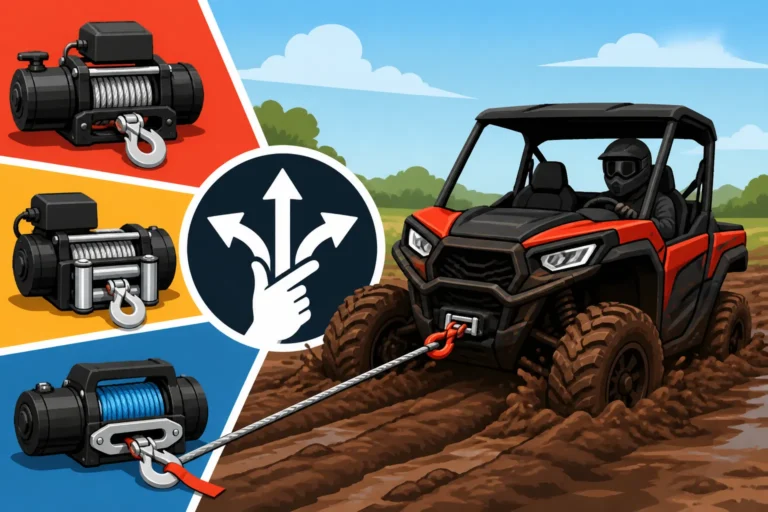
Bring basic recovery equipment and know how to use it. A shovel can help clear sand around a buried tire; a rated recovery point and appropriate strap may help with a controlled pull. Keep people clear of a tensioned strap, and never attach recovery gear to an unsuitable part of a vehicle. A winch is not a substitute for safe judgment, and a machine stuck on a slope should be approached cautiously.
Ride with visibility and space in mind
Dunes can limit sightlines. A rise in the terrain may hide approaching riders, and wind or flying sand can make it harder to see. Keep a safe gap, use designated routes where provided, and slow down when visibility drops. If you cannot see over a crest, assume another rider could be on the other side.
At a busy riding area, avoid stopping in the middle of a route or directly below a blind rise. If you need to regroup, move to a safe, visible place out of the way. Agree on a simple plan with your group before setting off: where to meet if separated, who has the first-aid kit, and what to do if a machine breaks down.
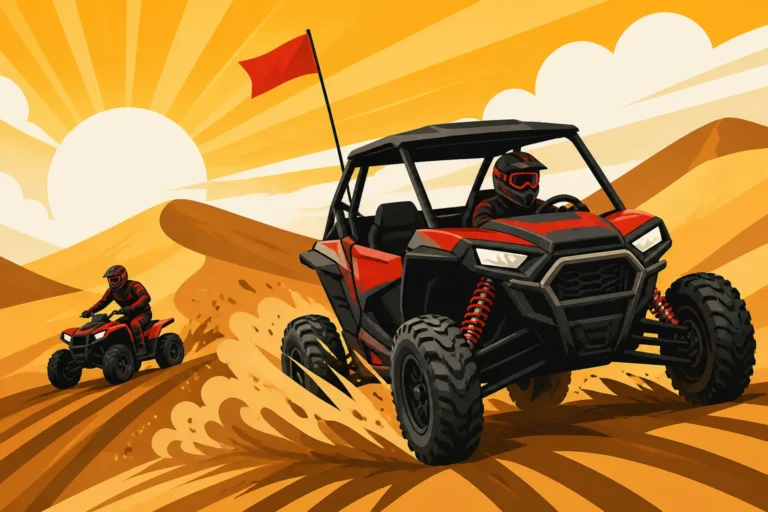
Some dune areas require a tall safety flag so other riders can see your machine over the terrain. [Flags Required on Dunes] is especially relevant to a sand trip. Confirm the park’s current flag specifications and mounting expectations before you go, and make sure the flag remains secure during the ride.
How to Prepare for a Sand-Riding Trip
Check access, rules, and conditions before loading
Make a short pre-trip checklist rather than relying on memory. Confirm the park is open to riders on your planned day, verify the current entry process, and check what machine types and equipment are allowed. Ask whether there are restrictions on passengers, children, pets, alcohol, noise, or riding hours. Rules can be specific to the property and may change, so an older trip report is not a substitute for checking directly.
Check weather and recent conditions as well. Rain can change access and surface conditions, while dry, windy weather can add dust and reduce visibility. If you’re traveling a long distance, it’s sensible to confirm the trip is still worthwhile before you hook up the trailer. [Kansas Trail Conditions Before You Tow] is a good reminder to check conditions before committing to the drive.
Use onX Offroad or another navigation tool as a planning aid, not as permission to ride. Verify that your route to the park uses public roads or roads you are allowed to travel, and follow the property’s own directions once you arrive. Save key details offline if possible, and carry a written address or directions in case your phone battery dies.
Pack for the ride and the drive home
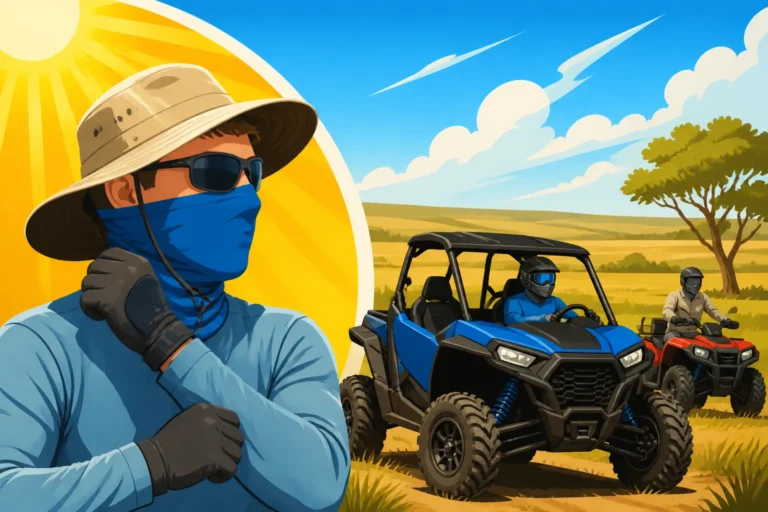
Bring water, food, sun protection, eye protection, and clothing suited to wind and flying sand. Dust can become uncomfortable quickly, especially when you’re riding behind other machines. A spare pair of goggles or a clean lens can make a long day more manageable. Keep a first-aid kit where someone in your group can reach it without unloading the trailer.
Pack basic machine supplies based on your vehicle and the length of your outing. That may include tools, a tire repair kit, a portable air source, spare fuses, and the fluids or parts your owner’s manual recommends. Secure loose items so they cannot fall off or become hazards, and keep recovery gear accessible rather than buried beneath camping equipment.
If you plan to camp, confirm the park’s arrangements before assuming you can stay overnight. [Kansas Trails With Camping] can help you think through the difference between a riding day and a full weekend trip. The park’s current information should answer what camping options are available, what facilities are open, and what you need to reserve or bring yourself.
Inspect the machine after riding
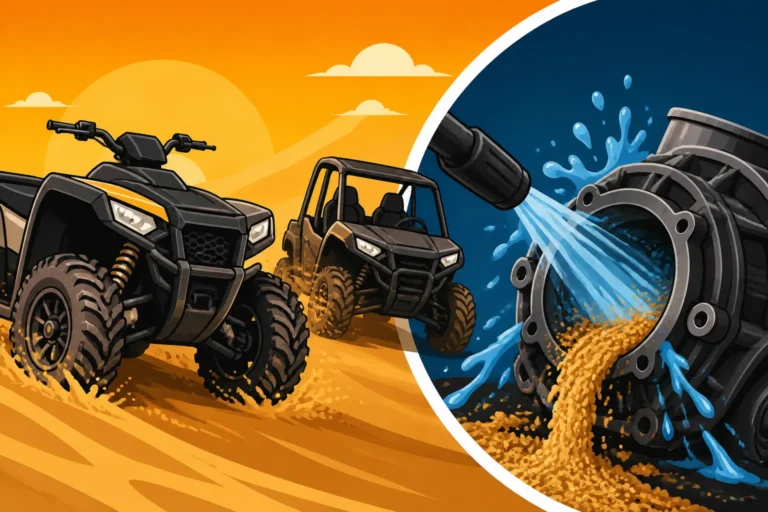
Sand can collect in places that are easy to overlook. After a ride, check the air filter according to the manufacturer’s instructions, inspect the tires and wheels, and look for loose fasteners or damage underneath the machine. If you rode in particularly dusty conditions, don’t wait until the next outing to clean or inspect components that need attention.
Pay special attention to belts and cooling areas on a side-by-side, following the maintenance guidance for your model. Avoid blasting delicate components with high-pressure water unless the manufacturer says it is safe. Sand and grit can be abrasive, so a careful cleaning is often better than simply spraying the entire machine as forcefully as possible.
Before towing home, inspect tie-downs, ramps, and trailer connections. Sand on footwear and equipment can make surfaces slippery, and fatigue can lead to skipped steps. A quick walk-around is a small price to pay for avoiding a preventable problem on the highway.
Choosing the Right Sand-Riding Plan
Match your destination to your group
A first-time dune rider may have a better day by setting a modest goal: learn the surface, practice smooth control, and explore at a comfortable pace. Experienced riders may want more challenging terrain, but should still account for blind crests, other park users, and changing conditions. A group ride works best when everyone agrees that no one has to attempt a feature just to keep up.
For a mixed group with children or new riders, check age, passenger, and supervision rules in advance. Make sure each person has a properly sized machine and appropriate protective gear. A child riding on an adult-sized vehicle is not automatically safe just because the child can reach the controls or hold on.
If you’re bringing both an ATV and a UTV, check that the park permits both and review any width, passenger, or route restrictions. Don’t assume that a route suitable for a small quad is equally suitable for a wider side-by-side. A map app may help you orient yourself, but the park’s posted rules determine where your machine may go.
Compare your options before choosing
| Trip priority | What to look for | Practical planning note |
|---|---|---|
| Dune and loose-sand riding | A property that specifically allows dune riding | Confirm current access, flags, and machine rules directly |
| A short first sand ride | Open terrain and room to practice | Start slowly and avoid blind crests |
| A mixed-surface trip | A park with terrain that matches your group’s experience | Ask what surfaces and routes are currently available |
| An overnight outing | Confirmed camping access and facilities | Check arrangements before loading camping gear |
| A long-distance visit | Reliable directions and current operating information | Verify access before towing across the state |
When comparing options, be honest about what your group wants. If everyone is excited about dunes, a rocky park may be a good ride but a disappointing substitute. If one rider is nervous about loose sand, a mixed-terrain destination may make for a more comfortable first outing. A little planning helps prevent the familiar frustration of driving for hours only to discover the location doesn’t match what you expected.
Make the trip enjoyable without overreaching
A good sand-riding day does not require conquering the tallest or steepest dune. Start with a warm-up, watch how your machine responds, and take breaks before fatigue affects your judgment. If the sand is deeper than expected or visibility worsens, change the plan. Turning back is a sound riding decision, not a failed trip.
For a first visit, keep navigation simple and stay oriented to the park’s posted information. onX Offroad can be one part of your planning routine, but use it alongside the operator’s directions and signs rather than in place of them. If a route or boundary is unclear, stop and ask instead of guessing.
Kansas sand riding is more specialized than general trail riding, but the right preparation makes the outing much less stressful. Start by confirming that Syracuse Sand Dunes or another chosen property is open and suitable for your machine, then prepare for loose terrain, visibility limits, and post-ride maintenance. That gives you a better chance of spending the day riding rather than troubleshooting avoidable surprises.
Disclaimer
This article is for general informational purposes only and does not constitute professional advice. Laws, prices and regulations vary by location and change over time. Consult a qualified professional for guidance on your specific situation.