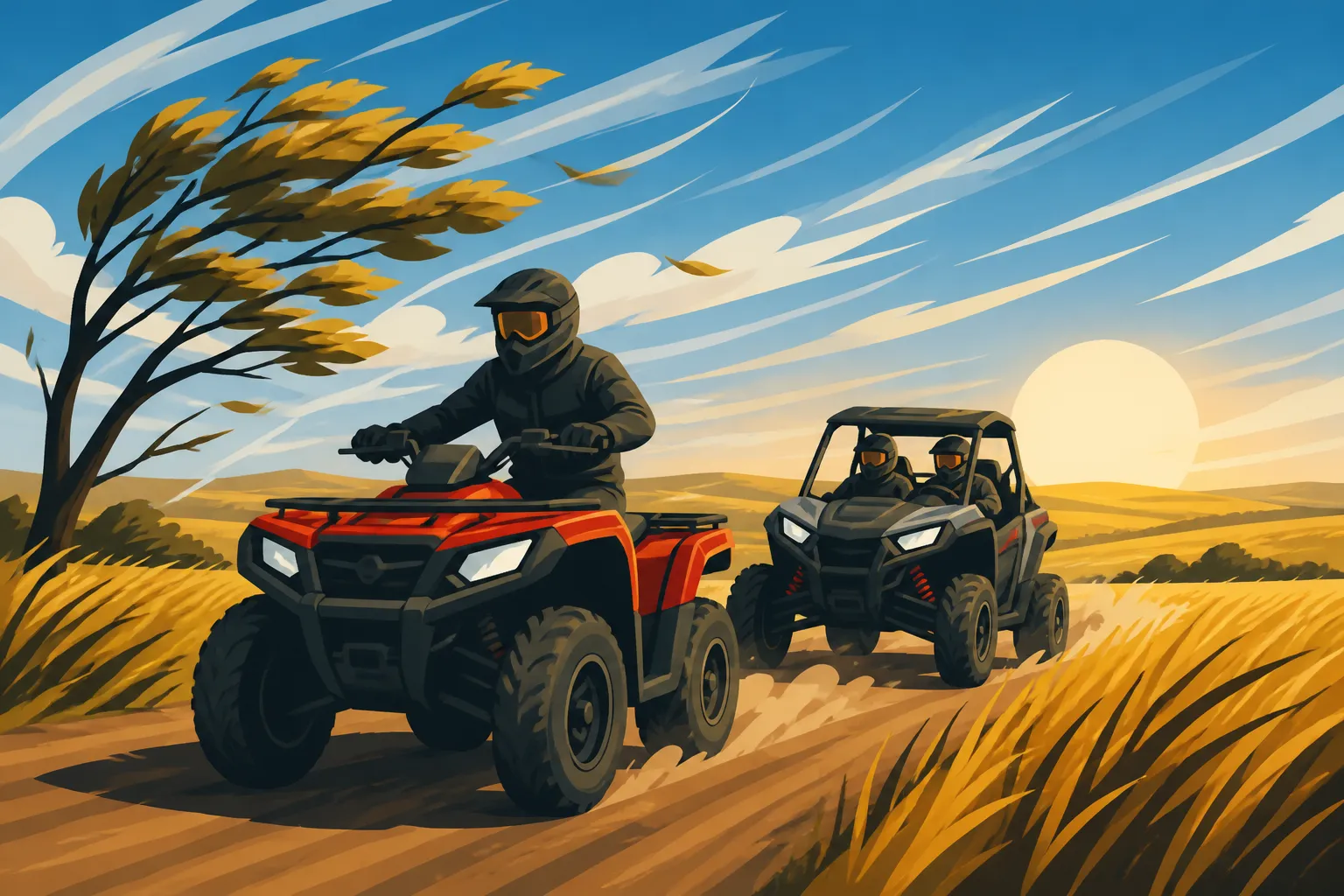
Kansas Wind and Long Riding Days
Kansas wind can turn a comfortable ride into a tiring one, especially when you’re crossing open ground for hours with dust in your eyes and little shelter from gusts. A good plan accounts for exposure, changing conditions, navigation, water, and fatigue—not just trail mileage. This guide explains how to prepare for long riding days and adjust your route when the wind picks up.
Plan a Kansas ride around wind and exposure
Check conditions before choosing a route
A forecast that looks manageable at home can feel very different once you’re riding across open fields, sandy stretches, or exposed ridgelines. Wind affects more than comfort: it can blow dust into your face, make it harder to hear other riders, and push loose debris across a trail. Before loading up, check the forecast for the area you plan to ride, including expected wind direction and changing conditions during the day.
Think about where you’ll be riding, not just the general forecast. A wooded section may offer some shelter, while a broad open area can leave you exposed for a long stretch. At a place like Syracuse Sand Dunes, for example, moving sand and an open riding environment can make wind especially noticeable. At a rockier or more sheltered area, the main challenge may be dust and visibility on exposed connectors rather than sand itself.
Check the riding area’s rules and status before leaving, too. Conditions, access, and operating hours can vary by property and can change after rain or other weather. Use the official information for the specific site rather than assuming that a park or trailhead is open because it was open on your last visit. For background on how public riding options differ across the state, see Kansas ATV Trails: Where You Can Actually Ride.
Match the destination to the day
Windy weather doesn’t automatically mean you have to cancel, but it may change which destination makes sense. A rider who planned a long open-area loop might have a more enjoyable day choosing a route with shorter sections, natural shelter, or a nearby place to stop. If you’re comparing destinations, Kansas Trails With Rock Sections and Kansas Trails With Sand can help you think through the kind of terrain you’d rather tackle in the conditions.
The same principle applies to riding with a group. A few experienced adults may be comfortable with a longer, exposed outing, while a family with young riders may be better off with a shorter day close to the staging area. If anyone in the group is already tired, anxious about dust, or unfamiliar with the machine, don’t plan the ride around the most confident rider.
Keep a backup option in mind before you unload. That might mean shortening the loop, staying near the trailhead, or switching to a different area if the destination’s open terrain feels unpleasant. For a broader look at places where machines are permitted, see Kansas Trails That Allow Side-by-Sides and Kansas Trails for Kids.
Prepare for a long day in the saddle
Protect your eyes, skin, and breathing comfort
Wind can make a long ride feel harder because it keeps irritating the same exposed areas. Dust may work around poorly fitting eye protection, while dry air and wind can leave your face and lips uncomfortable. Wear eye protection that fits securely with your helmet, and bring a clean cloth or spare lens if your gear allows. A neck covering can help with dust and sun, but it should fit safely and not interfere with your helmet or vision.
Dress for the whole day rather than the temperature at the parking area. Lightweight layers can help you adjust as the day warms or cools, and gloves reduce hand fatigue from gripping the controls against vibration and wind. Apply sun protection before you start and bring enough to reapply. Wind can make it easy to underestimate sun exposure because you may not feel as hot as you would on a still day.
Plan for water and food even if the route seems short on a map. A group that keeps stopping to clear dust from goggles or wait for slower riders can spend far longer outside than expected. Carry enough water for the conditions and the time you expect to be out, with a little extra for delays. For practical packing ideas, see [What to Pack for First Aid on a Long Ride] and [Packing for a Hot Dry Day].
Keep the machine and gear ready for dust
Dust and sand can work their way into places you don’t want them, particularly on a day with persistent wind. Before heading out, check your machine according to its owner’s manual, including tires, brakes, lights, and the condition of any protective equipment. A secure helmet, properly fastened cargo, and a machine that’s in good working order matter more when you’re far from the staging area.
Pack tools and basic supplies that match your machine and the ride. A small issue that’s manageable near the trailer can become a bigger problem after several hours on the trail. Bring a charged phone, a way to contact your group, and a plan for what to do if a machine becomes disabled. Don’t rely on a phone signal being available everywhere; western Kansas and remote trail areas may have gaps in service.
Dusty outings also call for a little extra care after the ride. Clean your gear and inspect the machine rather than putting it away dirty and assuming it can wait. If you ride sandy areas often, [Washing Sand Out of a Machine] offers related guidance on post-ride cleanup. For seasonal planning, Kansas Riding in Summer Heat and Kansas Riding in Fall cover other conditions that can shape a full day outdoors.
Ride more comfortably when the wind is up
Adjust your pace and spacing
Strong or gusty wind can make it harder to see, hear, and maintain a steady line, especially when you’re riding over loose surfaces. Slow down if dust reduces visibility or if you’re finding it difficult to judge the trail ahead. Leave more space between machines so the person behind you isn’t riding directly in the dust kicked up by the person in front.
Set clear expectations with the group before starting. Agree on where to stop, how to signal if someone needs a break, and what to do if the group gets separated. Riders should be able to stop safely without feeling pressured to keep pace. If you’re leading, look back regularly and choose meeting points that are easy to identify rather than assuming everyone can see your machine through blowing dust.
On a long ride, short breaks can prevent a minor discomfort from turning into a safety problem. Stop somewhere safe to drink water, clear your eye protection, check on everyone, and confirm the next section of the route. If conditions are getting worse or a rider is struggling to maintain attention, shorten the day. A planned ride is not a commitment to finish every mile.
Choose navigation tools that work offline
Route familiarity is helpful, but it isn’t a substitute for knowing where you are. Wind and dust can make landmarks less obvious, and a group may need to change plans partway through. Before leaving, review the route, identify the return path, and make sure everyone knows where the staging area is. A map app such as onX Offroad can help with route planning and keeping track of your position, but don’t assume that your phone will have service or battery for the entire day.
Download or save the information you’ll need before you get to a remote riding area, and carry a backup navigation option when appropriate. Keep your phone protected from dust and secured so it won’t fall out on rough terrain. If you use onX Offroad, learn how its saved maps and navigation features work before the ride rather than trying to figure them out at a trail junction with a group waiting.
A digital map does not grant permission to ride on land or trails that are closed, restricted, or outside the riding area. Confirm boundaries and rules with the land manager or park before you start. If you’re planning a trip beyond your usual area, Kansas Trail Conditions Before You Tow and [Carrying a Paper Map Where Cell Service Drops] are useful topics to review.
| Riding challenge | What to do before or during the ride | When to reconsider the plan |
|---|---|---|
| Dust reduces visibility | Increase spacing, slow down, and stop somewhere safe if needed | You can’t see far enough to ride with control |
| Open, exposed route feels tiring | Shorten the loop or choose a more sheltered option | Riders are becoming fatigued or uncomfortable |
| Phone signal is unreliable | Save route information in advance and carry a backup plan | The group cannot confidently navigate or return |
| Wind makes communication difficult | Agree on stops and signals before starting | Riders can’t reliably hear or see one another |
| A machine or rider needs attention | Stop in a safe place and assess the situation | Continuing would add risk or leave someone behind |
Know when to shorten or end the ride
Treat fatigue as a reason to change plans
Long rides can quietly wear people down. Wind, dust, vibration, sun, and the effort of keeping a steady line all add up, even when the terrain looks easy. Pay attention to signs such as slower reactions, missed turns, repeated mistakes, irritability, or a rider falling farther behind than usual. Don’t wait for someone to say they’re exhausted before offering a break.
A useful approach is to plan a turnaround point rather than making the return trip an afterthought. Decide in advance how much time you want to spend riding away from the trailer, then leave room for the ride back and for unexpected stops. This is especially helpful when the group includes children, new riders, or anyone operating an unfamiliar machine.
If conditions change, a shorter ride is still a successful outing. You might switch to a familiar loop, ride closer to the staging area, or call it a day. The point is to get home with everyone safe and still willing to ride again. For more ideas on choosing a trip length and preparing as a group, see Kansas Group Ride Planning.
Make the return trip part of the plan
Before you leave the trailhead, tell someone who isn’t riding where you’re going and when you expect to be back. Keep your group together, especially near intersections or areas where several routes meet. If you do become separated, follow the plan you agreed on rather than each person making a different guess about the route home.
Build in enough time to load up and secure machines without rushing. The drive home can be demanding after a full day outdoors, so give yourself time to rest, drink water, and check that trailers and tie-downs are secure. After a windy ride, take a moment to inspect helmets, eye protection, cargo, and the machines for dust or damage before putting everything away.
A comfortable long riding day usually comes down to flexible planning. Check the conditions, choose terrain that fits the group, carry what you need, and be willing to adjust your route. Kansas wind is part of the riding environment; it doesn’t have to dictate the day, but it deserves a place in the plan.
Disclaimer
This article is for general informational purposes only and does not constitute professional advice. Laws, prices and regulations vary by location and change over time. Consult a qualified professional for guidance on your specific situation.