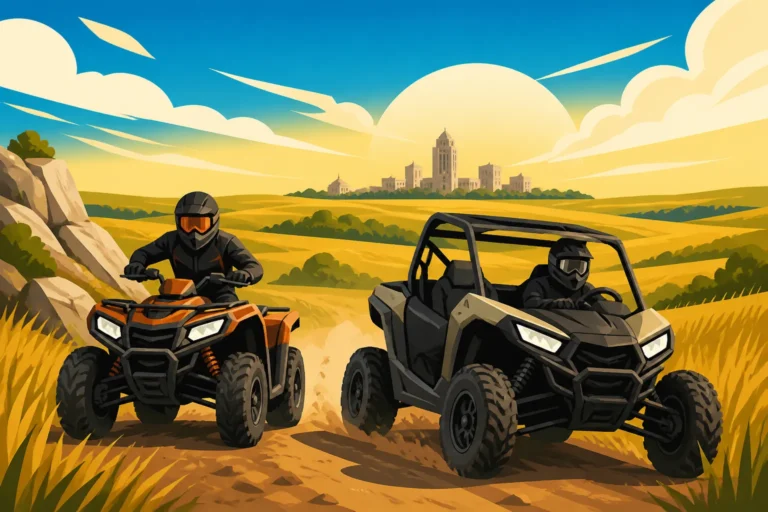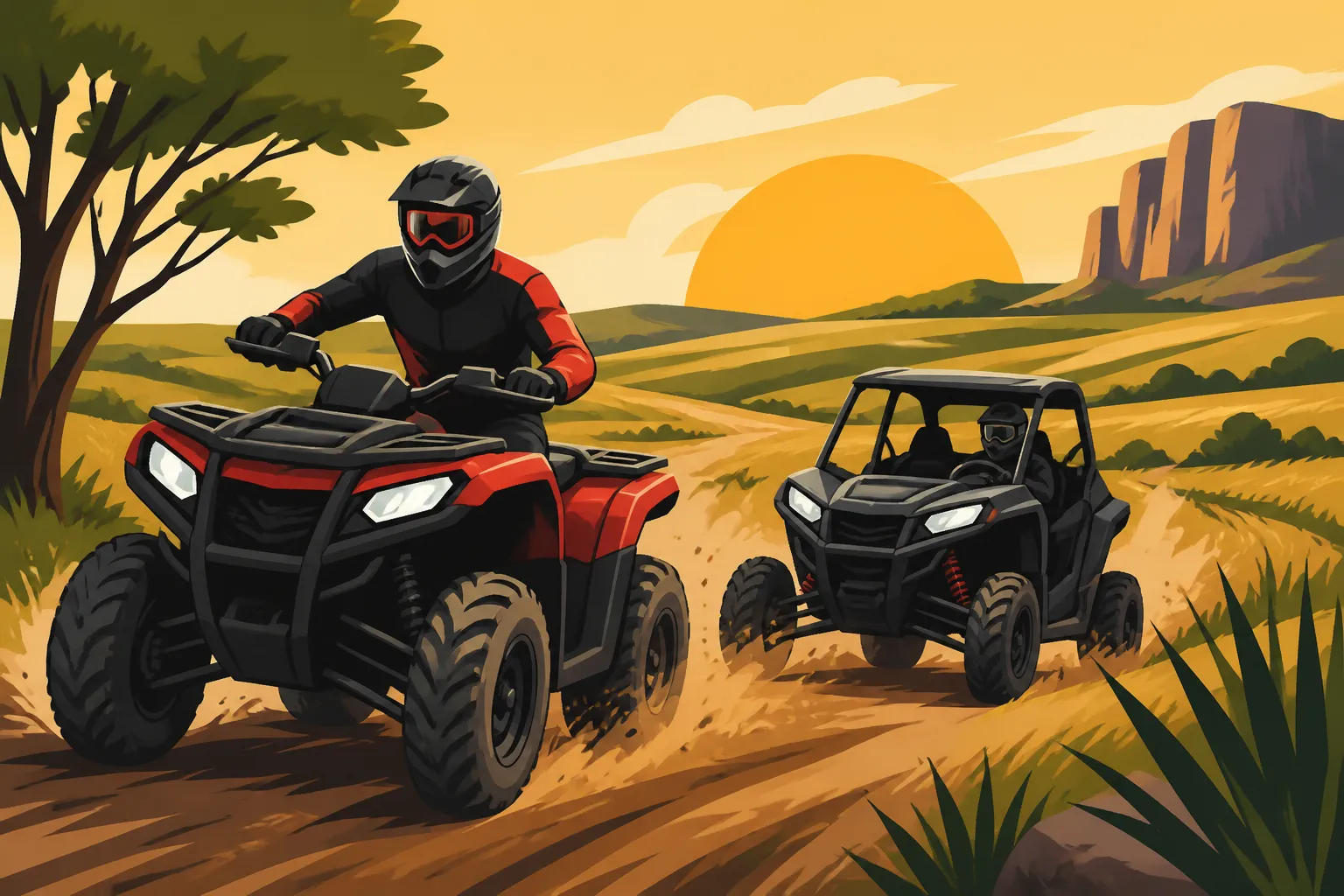
Kansas Riding in Bourbon County
Bourbon County’s rolling hills and wooded draws can look like an invitation to unload your ATV, but scenic ground is not automatically open to riders. This guide explains where to start, how to plan a ride near Mapleton and Fort Scott, what to confirm before you go, and how to avoid confusing private trails with public roads or land.
Where to ride in Bourbon County
Kansas Rocks Recreation Park near Mapleton
For many riders, Kansas Rocks Recreation Park is the clearest place to begin researching an off-road ride in Bourbon County. The private park near Mapleton is known for rocky terrain and dedicated riding areas, which makes it a different experience from simply exploring rural roads or looking for open ground. It is a destination to plan around, not a reason to assume nearby land is available for riding.
Private riding parks set their own access rules, hours, machine requirements, and procedures. Before towing from Fort Scott, Pittsburg, or farther away, check the park’s own information for current operating details, permitted vehicles, admission arrangements, and any restrictions that could affect your trip. Rules may differ by riding area, and a machine that is allowed at one private park is not automatically allowed at another. For a closer look at what this destination offers, see [Kansas Rocks Recreation Park].
The terrain can be a major part of the appeal, but it also calls for realistic preparation. Rock ledges, uneven surfaces, and steep sections can challenge a stock machine and an inexperienced driver. If you are new to off-road riding, ask about route difficulty before choosing a line, and do not follow a more experienced rider onto an obstacle just because they make it look easy. A spotter, appropriate protective gear, and a machine suited to the terrain can make the day safer and less stressful.
Public land, private land, and the gaps between them
Outside an established riding area, do not treat a map’s open-looking space as an invitation to ride. Much of the land in Bourbon County is privately owned or managed for farming, grazing, hunting, or other uses. A gravel road, field entrance, pasture track, or wooded lane may appear rideable, but its appearance does not establish that motorized access is allowed.
Get clear permission from the landowner before riding on private ground, and ask exactly where you may go. Permission to cross a field does not necessarily include permission to ride through a pasture, explore a creek bed, or bring friends along. If you are riding on property you lease for hunting or another purpose, confirm that your agreement includes motorized recreation. These details matter even when the machine is being used slowly and respectfully.
Be just as careful about public land. A place that allows fishing, camping, or hiking may not allow off-road riding. Kansas has limited public riding opportunities compared with states that maintain extensive trail networks, so riders often need to distinguish between a state-managed road, a designated off-road area, and a private park. The broader context is covered in [Kansas State Parks Have No OHV Trails] and [Why Public Riding Is So Thin in Kansas].
Choosing a ride that fits your machine and experience
Match the trail to the machine, not the other way around
Before you set out, confirm that your ATV, UTV, or dirt bike is permitted at the specific riding area. A compact sport quad, a wide side-by-side, and a dirt bike can handle different obstacles and may be subject to different park rules. Width restrictions, passenger limits, age requirements, and helmet rules can all affect whether a machine or rider is allowed.
Think about the people riding with you, too. A confident adult on a capable machine may be comfortable on a rocky route that feels intimidating to a young or inexperienced rider. Ask whether there are easier loops, beginner-friendly sections, or places to turn around. If a park cannot clearly explain what the route involves, treat that uncertainty as a reason to choose a more conservative option.
A useful pre-ride comparison looks like this:
| What to compare | Why it matters | What to confirm before leaving |
|---|---|---|
| Machine type and width | Some riding areas restrict which machines can enter or where they can go | Whether your ATV, UTV, or dirt bike is permitted |
| Rider experience | Rock, mud, and steep terrain can quickly exceed a beginner’s comfort level | Which trails are appropriate for your group |
| Passenger setup | A machine must be designed and equipped to carry its passengers | Seating, passenger rules, and age requirements |
| Park access | Private parks establish their own operating procedures | Open days, arrival process, and current rules |
| Trail conditions | Rain or maintenance can change what is safe to ride | Closures, muddy sections, and route changes |
| Recovery plan | A stuck or damaged machine can turn a short ride into a long day | Towing options, recovery gear, and who to call |
If you are uncertain about the terrain, start with an easier route and reassess once you have a sense of conditions. It is much better to finish the day wishing you had tried a harder section than to damage a machine or put a rider in a situation they cannot safely manage. For more route-planning guidance, see [Kansas Trail Difficulty Ratings] and [Best Kansas ATV Trails for Beginners].
Use maps as planning tools, not permission slips
Digital maps can help you understand roads, property boundaries, and the general layout of a ride area, but they cannot grant access or guarantee that a trail is open. An app such as onX Offroad may help you prepare a route and notice where access questions need answering. Treat the map as a planning aid, then verify access directly with the park or landowner.
Before leaving home, save the information you need for offline use if your phone or mapping app supports it. Cell service can be unreliable in rural areas, and a screen that loads perfectly in town may be less useful once you are away from a major road. Carry a charged phone, a portable power source, and a backup way to contact your group. For longer trips, keep a written note of the address or meeting point and the route back to a main road.
Avoid creating a route that crosses private parcels or follows unverified tracks just because a line appears on a map. Confirm the intended entrance, parking location, and return route. If a mapped trail seems to pass through a field, a closed gate, or an unfamiliar driveway, stop and check rather than assuming the route is open. For broader preparation advice, see [Kansas ATV Trail Map Downloads] and [Kansas Trail Conditions Before You Tow].
Preparing for a safe day on the trail
Check conditions, timing, and access before you tow
A trip can be disrupted before you reach the trailhead if the park is closed, a route is restricted, or conditions have changed after rain. Check directly with the riding area shortly before departure, especially if you are traveling a long distance or planning around a group. Ask what is open, whether the route suits your machine, and whether there are any special arrival or parking instructions.
Weather affects more than comfort. Rain can make a rocky or clay section slick, while hot, dry weather can increase dust and fatigue. Strong wind can make hauling a trailer uncomfortable and can make an open ride feel harsher than expected. Build flexibility into your plan: if the route is too muddy, visibility is poor, or the group is getting tired, choose a shorter ride or call it early.
A simple pre-trip routine helps catch small problems before they become expensive ones:
- Confirm the riding area is open and that your machine is allowed.
- Check weather and ask about recent trail conditions.
- Inspect tires, brakes, steering, lights, fluid levels, and visible fasteners.
- Secure your machine and equipment on the trailer.
- Tell someone who is not riding where you plan to go and when you expect to return.
- Set a meeting point and a plan for regrouping if riders become separated.
For a more detailed seasonal perspective, use [Kansas Trail Closures After Rain] and [Kansas Riding in Spring] as related reading. The exact conditions near Mapleton can differ from those in another part of the state, so use general guidance as a prompt to check locally rather than as a substitute for current park information.
Pack for a rural ride, not just the trail
The essentials are easy to overlook when the focus is on the machine. Bring water, snacks, weather-appropriate clothing, eye protection, gloves, and a first-aid kit. Dust and wind can be tiring, and a ride that feels short at the start may become a longer outing if the group stops for a repair or waits for a rider to catch up. Pack enough water and food for a delay, not only for the planned riding time.
Carry basic recovery and repair gear appropriate to your machine and experience. That may include a tire repair kit, tools that fit the machine, a tow strap, and a way to secure loose equipment. Do not carry recovery gear you do not know how to use; learn the basics before the trip, and keep people clear of tensioned straps or cables during a recovery. If your group is riding challenging rock sections, discuss how you will help a stuck machine before anyone needs help.
The trailer deserves its own check. Confirm the load is balanced and secured, tires are in good shape, and the towing vehicle is ready for the route. Once you arrive, park only where permitted and leave room for other visitors to maneuver. If you are visiting Kansas Rocks or another private area, follow the site’s instructions for unloading, staging, and keeping the entrance clear.
Understanding roads and access around Bourbon County
A title or tag does not make a machine street legal
One common planning mistake is assuming that a titled ATV or UTV can be ridden on any nearby public road. A title is evidence of ownership; it is not a general road-use permit. Kansas rules for off-road machines and road use depend on the type of machine, the road, and applicable state or local provisions. A county road near a trail area is not automatically an authorized connector route.
Before riding on a road, verify that the route is legally open to your particular machine. Do not rely on what a neighbor, another rider, or a map app suggests. Rules for ATVs and UTVs can differ, and local ordinances may matter in places where a city has adopted specific provisions. A machine that is allowed on one street or in one community may not be allowed on the next road.
For an overview of the distinction between title status and street access, read [Having a Title Does Not Make an ATV Street Legal]. For the broader state framework, see [Kansas ATV Road Rules Under 8-15,100] and [Kansas UTV Street Legal Rules by City]. If your plan depends on using a public road to get between riding locations, confirm the route before the day of the ride and be prepared to use a trailer instead.
Get landowner permission and respect working property
Bourbon County’s rural landscape includes active farms, livestock areas, hunting ground, and private drives. A trail-looking path may be used by a landowner, farm vehicle, or utility crew. Avoid blocking gates and entrances, and never assume an open gate means the property is open to recreational riders. Keep distance from livestock, equipment, crops, and buildings.
When you ask for permission, be specific. Explain what machine you will bring, how many riders are coming, where you want to ride, and when you expect to be there. Ask whether there are areas to avoid, whether a gate should be left as found, and whether the owner wants you to check in when you arrive or leave. A clear conversation prevents confusion and helps protect access for future riders.
If the owner says no, accept the answer without trying to negotiate your way through a field or along a fence line. A respectful response is part of responsible riding. More guidance is available in [Kansas Landowner Permission Rules] and [What Posted Signs Mean on Kansas Farm Ground]. The same principles apply when a property appears unused: an empty pasture or quiet farm lane still has an owner.
Making the most of a Bourbon County ride
Plan the day around the group, not just the mileage
A good ride is not measured only by how many miles you cover. On rocky terrain, even a shorter route can take time when riders stop to assess obstacles, help one another, or rest. Set a pace that leaves room for breaks and turns around before fatigue affects judgment. If riders have different experience levels, agree in advance on a regrouping point and a clear signal for stopping.
A simple ride plan might begin with an easy section, followed by a pause to check how the group is doing. If the terrain is more demanding than expected, keep the remaining route conservative. If a rider is uncomfortable, do not pressure them to continue. They may be managing a machine, passenger, or physical limitation that other people cannot see.
For a larger group, identify a lead rider and a sweep rider. The lead should know the route and expected stopping points; the sweep should make sure nobody is left behind. Keep the group size and riding arrangements within the park’s rules, and do not assume that every participant can follow closely in dust or around blind turns. Leave enough space for riders to react safely.
Leave the area ready for the next visit
Respecting the riding area helps keep access available. Follow posted routes, avoid riding around barriers, and do not create new tracks to bypass a wet or difficult section. Stay within the park or property boundaries, pack out trash, and secure any loose items that could fall from a machine or trailer.
When conditions are poor, turning around can be the best decision of the day. Riding through a closed section can damage the surface and create hazards for other users. If you see a problem such as a blocked route or damaged trail feature, let the park staff or landowner know rather than trying to fix it without permission.
Before heading home, do a final check of the group, machines, and trailer. Make sure everyone has returned, no gear has been left behind, and machines are secured for the drive. Afterward, note what worked and what you would change next time: whether you packed enough water, whether the route matched your group’s experience, and whether you need different tires or recovery equipment. That small review makes your next Bourbon County ride easier to plan and more enjoyable to share.
Disclaimer
This article is for general informational purposes only and does not constitute professional advice. Laws, prices and regulations vary by location and change over time. Consult a qualified professional for guidance on your specific situation.