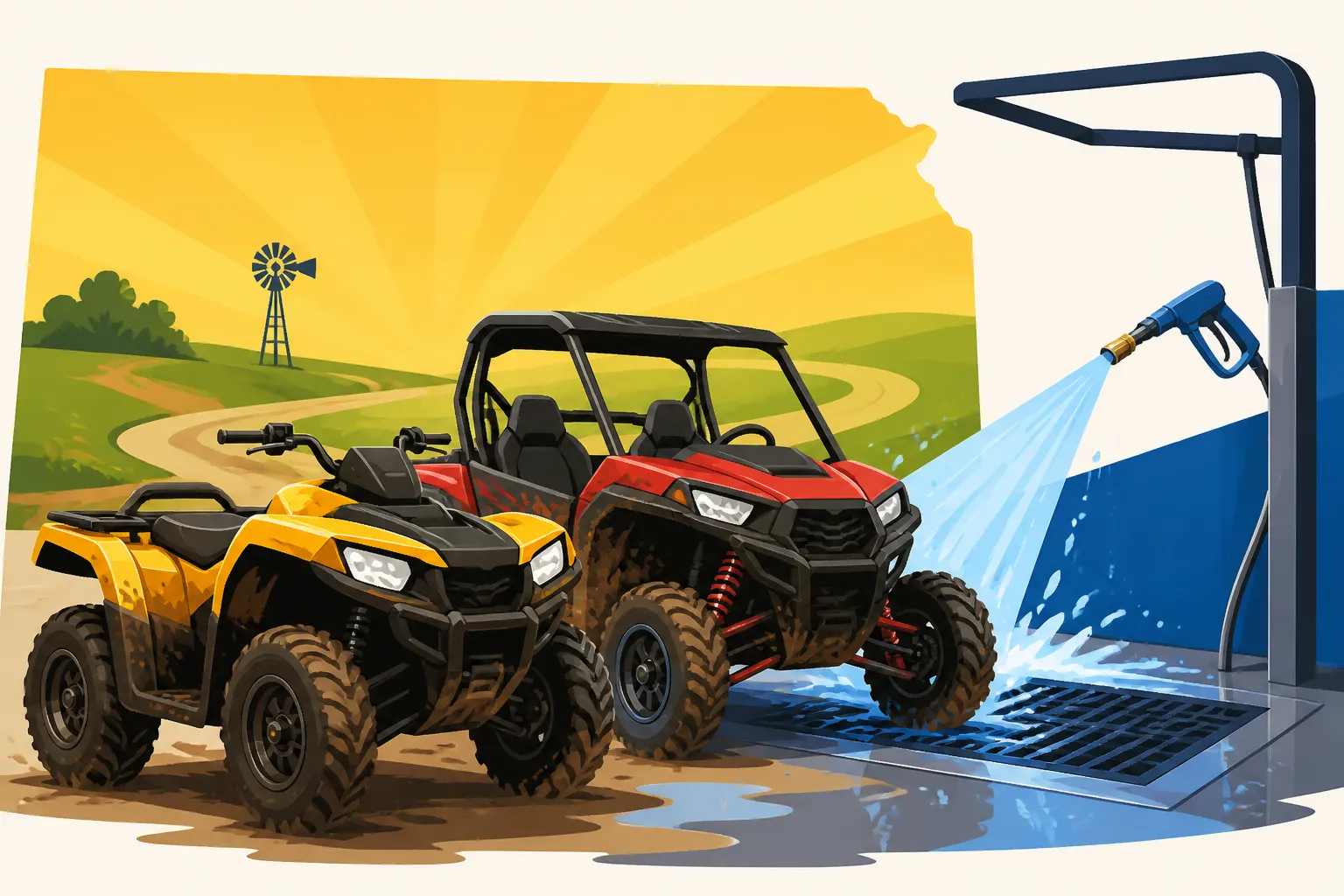
Kansas Riding Areas With Wash Stations
A muddy or sandy ATV can turn the drive home from a Kansas ride into a cleanup job, especially when grit gets packed around the tires, suspension, and underbody. This guide explains how to find riding areas with wash stations, what to ask before you haul out, and how to clean your machine responsibly when a dedicated wash area is unavailable.
How to Find Kansas Riding Areas With Wash Stations
A wash station can mean different things from one riding area to another. One place may have a marked wash pad with a hose, while another may offer only a shared water spigot—or no machine-washing facilities at all. Checking what is actually available matters, especially if you are planning a long drive to a trail near Mapleton, Randolph, or Syracuse.
Confirm what “wash station” means before you go
When you call a riding area, ask whether it has a designated place to wash ATVs and UTVs. Then ask what equipment is provided. A hose connection is not necessarily a pressure washer, and a wash area may require you to bring your own hose, nozzle, or wash mitt.
It is also worth asking where the water drains. A designated wash pad may direct runoff to a particular area, while an informal washing spot could send mud, oil, or detergent toward a ditch, creek, or lake. Follow the facility’s instructions, and do not assume that washing is allowed simply because a water spigot is nearby.
A few practical questions can save you a frustrating surprise at the end of a ride:
- Is machine washing allowed on the property?
- Is there a dedicated wash pad, or only a water hookup?
- Can riders use a pressure washer, or is a low-pressure hose required?
- Do I need to bring my own hose and cleaning supplies?
- Are there posted restrictions about detergent, runoff, or washing during busy periods?
- Is the wash area open whenever the riding area is open?
The answers can change how you pack. If there is only a hose connection, for example, bring a nozzle that can reach the tires and underbody without wasting water. If there is no washing area, plan to knock off loose debris at an approved spot and finish the detailed cleaning at home.
Check directly with the riding area, not just a map listing
Search results and trail apps can help you find places to ride, but facility details are easy to miss or become outdated. Use [Kansas Riding Areas With Wash Stations] as a starting point, then confirm the details with the property before leaving home. Ask whether the facility is currently operating and whether it is available to day riders, campers, or both.
A map can still help you plan the trip itself. For example, onX Offroad can help you review mapped riding routes and understand the general area around a trail system. But a mapped trail or point of interest does not confirm that a wash station is open, working, or permitted for machine cleanup. Treat those as separate questions.
If you are comparing several destinations, also check [Kansas Riding Areas That Take Reservations] and [Kansas Riding Areas With RV Hookups]. Those details can affect where you stay and how much time you have to clean up before packing the machine. Contact the park or land manager directly for current rules, access, and facility availability.
| What to verify | Why it matters | What to ask |
|---|---|---|
| Washing is permitted | A hose or water tap may not be intended for vehicle washing | “Is ATV or UTV washing allowed here?” |
| Type of facility | A wash pad, hose, and pressure washer are different setups | “What equipment is provided?” |
| Drainage rules | Runoff can carry mud, fuel residue, or cleaner off-site | “Where should wash water drain?” |
| Access and hours | A station may not be available to every visitor or at every hour | “Can day riders use it, and when is it open?” |
| Supplies to bring | The property may provide water but not hoses or cleaning tools | “What should I bring?” |
What to Expect at Kansas Riding Areas
Kansas riding conditions vary widely. A machine that comes back dusty from one trip may return with sticky clay, sand, or vegetation packed into hard-to-reach places on another. Knowing what kind of terrain you are heading into helps you decide whether a wash station is essential or simply convenient.
Sand, rock, and mud create different cleanup jobs
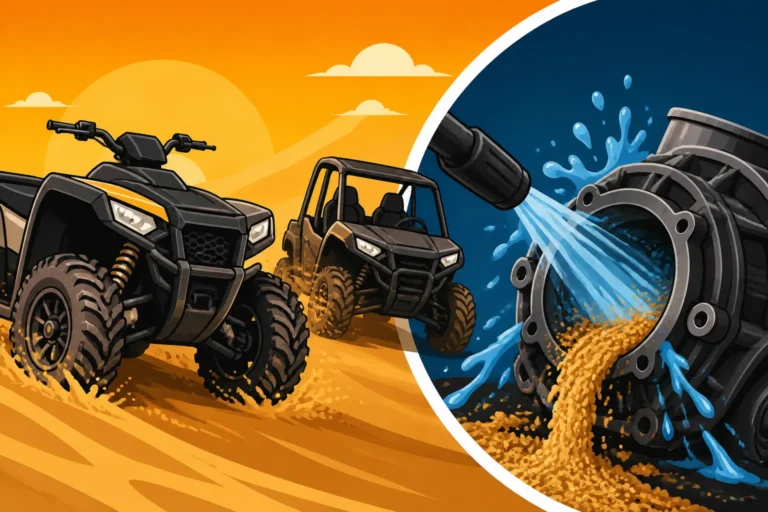
At a sandy riding area such as Syracuse Sand Dunes, fine grit can work its way into footwells, seat seams, air-filter areas, and moving parts. Sand is abrasive, so avoid grinding it into plastic or wiping it across the bodywork with a dry cloth. If washing is allowed, a gentle rinse can help loosen surface grit before you use a soft brush or mitt.
Rocky terrain near Mapleton can leave dust and small debris around skid plates, suspension components, and the lower frame. A quick rinse may improve visibility for inspection, but it will not replace checking for cracks, loose bolts, or a damaged guard. Riders heading to a rock park can prepare by reviewing [Kansas Trails With Rock Sections] and the facility’s own rules before loading up.
Mud presents a different challenge. Wet clay can cling to the underside, wheels, and suspension, then harden during the drive home. If the riding area has no permitted wash station, remove loose clumps only where the property allows it. Avoid scraping against hoses, brake lines, wiring, or rubber boots, and do not leave mud in a public parking area or on a trailer.
For a quick look at the types of destinations available, see [Kansas Private Off-Road Parks]. The word “park” does not guarantee that every property has the same services. Facilities, terrain, and cleanup rules can vary even between destinations that are only a few hours apart.
A wash station is helpful, but not a substitute for inspection
A clean machine is easier to inspect. Once mud and dust are gone, it is simpler to spot a loose fastener, a damaged tire, a leaking seal, or a cut in a CV boot. Still, washing can push grit into sensitive areas if you spray carelessly. Keep strong water pressure away from electrical connectors, bearings, seals, air intakes, and radiator fins.
Start with the parts most likely to collect debris: tires, wheel wells, skid plates, and the underside. Work patiently rather than aiming a high-pressure stream at one spot. If your machine has been through sand, check the air-filter area according to the manufacturer’s instructions. If it has crossed muddy ground, look for packed material around the cooling system and suspension before you head home.
A dedicated wash area may make this cleanup more convenient, but it does not mean every kind of washing is allowed there. Use the posted instructions, keep the area tidy, and do not leave mud or cleaning products for the next rider to deal with. For broader trip planning, [Kansas Trail Conditions Before You Tow] and [Kansas Trail Closures After Rain] can help you consider whether conditions may leave your machine especially dirty.
How to Plan a Ride When There Is No Wash Station
It is disappointing to discover after a ride that there is nowhere to rinse off a machine, particularly when you are towing it home through towns such as Emporia or Manhattan. A little preparation makes that less stressful. The goal is not to wash the machine anywhere you can find water; it is to prevent a mess while respecting the property and protecting the equipment.
Pack a simple cleanup kit
Keep a small kit with your riding gear so you are not relying on a park to supply everything. A few basics can handle loose dust and mud while you wait to do a full wash at home:
- A soft brush for dry dust and loose debris
- A plastic scraper for thick mud, used carefully
- A microfiber cloth for wiping accessible surfaces
- A small hand sprayer for spot-cleaning, if permitted
- A tarp or washable mat for keeping debris off the trailer
- Gloves and a bag for muddy rags or disposable waste
- A flashlight for checking the underbody before loading
Do not bring detergent or use a portable pressure washer unless the property allows it. Even biodegradable products can be inappropriate where runoff reaches a waterway or drainage area. If you are uncertain, ask the land manager and use the facility’s instructions instead of improvising.
Before loading, clear out loose grass, mud, and stones from places where they could fall onto the road. Secure the machine as usual, and consider using a trailer mat or a washable liner if your machine is still damp. A tarp can catch debris, but it should not interfere with tie-downs, lights, or safe trailer operation.
For destinations where you may be staying overnight, check [Kansas Riding Areas With Bathhouses] and [Kansas Riding Areas With RV Hookups] as part of the same call. Those amenities can make it easier to clean riding gear and manage a dusty or muddy weekend, but they do not necessarily mean vehicle washing is permitted.
Use a trail app for route planning, then confirm facilities separately
A trail-planning app can help you understand where you are going, but it should not be your only source for wash-station information. Use onX Offroad to review the general route and nearby roads, then contact the riding area about water access, washing rules, and the condition of its facilities. This is particularly useful if cell coverage may be limited after you leave a town or highway.
Before you tow, save the destination’s contact details and confirm the entrance location. Ask whether a low-clearance vehicle or trailer can reach the wash area, if one is available. A station that sits beyond a narrow or rough access lane may not be practical for every trailer combination.
Also check the riding area’s current terrain and access rules. A sand-focused destination and a rocky park can call for very different equipment and cleanup plans. [Kansas Trails With Sand] can help you think through the kind of terrain you may encounter, while [Kansas Rocks Recreation Park] and [Kansas Syracuse Dunes Park Rules] are useful starting points when researching those particular destinations. Confirm all rules with the property before you travel.
A Practical Checklist Before You Load Up
A wash station is only one part of a comfortable riding day. Confirming the basics ahead of time can help you avoid an unnecessary detour, a muddy trailer, or a disagreement over where you can clean your machine. Give the riding area a call before departure, especially if washing is a deciding factor in choosing the destination.
Ask these questions before you leave home
Use a short checklist when contacting the park or land manager:
- Is the riding area open to the machines in our group?
- Are there current trail closures or weather-related restrictions?
- Is there a wash station, and is it open to the public?
- Does it have a pressure washer, hose, or only a water connection?
- Are there restrictions on detergents, runoff, or washing hours?
- Is the wash area reachable with a trailer?
- Are reservations, day-use arrangements, or other access steps required?
- Where should we park and unload?
If the person you speak with is unsure, ask whether there is a posted rule page or another staff member who handles facilities. Getting a clear answer before driving is much easier than trying to interpret a sign after a long haul.
Remember that wash access can be affected by maintenance, weather, water availability, or seasonal operations. A facility listed online may not be usable on the day you arrive. onX Offroad can support your route planning, but verify park operations and washing permission with the property itself.
Choose a cleanup plan that fits the trip
For a short, dry ride, a soft brush and a tarp may be enough to keep the trailer clean until you get home. For a full day in deep sand or heavy mud, call ahead and make sure you know where washing is allowed. If there is no approved wash area, plan to secure the machine with loose debris removed and do the thorough cleaning at home.
Before you depart, take a few minutes to inspect the machine and the area around it. Check for obvious damage, remove debris that could fall during transport, and leave the parking or staging area as clean as you found it. That small courtesy helps keep Kansas riding areas pleasant for the next group—and makes the end of your own ride a lot less hectic.
Disclaimer
This article is for general informational purposes only and does not constitute professional advice. Laws, prices and regulations vary by location and change over time. Consult a qualified professional for guidance on your specific situation.