Kansas Riding in Summer Heat
A summer ride across Kansas can turn uncomfortable fast: heat radiates off gravel, shade may be scarce, and a machine’s engine adds warmth just when you want a break. This guide explains how to plan a safer ATV or UTV ride, choose a manageable route, recognize heat illness, and adjust your day when the forecast or trail conditions change.
Plan a Kansas summer ride around the heat
Choose your riding window carefully
In Kansas, the same trail can feel manageable in the morning and punishing a few hours later. Direct sun, humidity, wind, and the type of ground all affect how quickly you tire. A route across exposed prairie or open sand may offer little relief, while a wooded section can provide occasional shade without making the day cool.
When practical, ride during the cooler part of the day and schedule your longest or most demanding sections early. Plan a real break before you feel wiped out, not after. A stop in a shaded area lets everyone cool down, drink, and check on each other. If the forecast calls for extreme heat, changing the trip or staying home is a sensible decision—not a failure of planning.
Check the forecast for the riding area, not just your home town. Conditions around Manhattan can differ from those near Syracuse, especially when you add local wind, cloud cover, or recent rain. A weather app is useful, but it is not a substitute for noticing how you and your passengers are doing as the day unfolds. For a broader look at seasonal conditions, see [Kansas Riding Season Month by Month].
Match the route to the day and the group
Heat makes every extra demand count. Long stretches without shade, deep sand, steep or rocky terrain, and repeated stops to recover a stuck machine can turn a casual ride into an exhausting one. If children, newer riders, older adults, or anyone with a health condition is coming along, choose a route with easy turn-around points and places to rest. Agree ahead of time that anyone can ask to stop or head back without having to justify it.
Before hauling out, check the riding area’s current rules, hours, access, and trail notices with the park or land manager. Do not assume a trail you rode earlier in the season is open, dry, or suitable now. Local riding areas have different terrain and restrictions. For instance, compare the details for [Tuttle Creek ORV Area in Kansas] with those for [Syracuse Sand Dunes' 1,300 Acres in Kansas] before deciding which kind of ride better suits the day and your group.
Build flexibility into the plan. If the temperature climbs earlier than expected, a route is slower than expected, or someone starts feeling unwell, shorten the ride. A map app such as onX Offroad can help you keep track of the route you intended to take, but a planned line should never become a reason to push through unsafe conditions. Keep a backup plan and know where you can turn around.
Prepare people and machines for hot conditions
Wear protective gear without overheating unnecessarily
Protective equipment still matters in summer. A helmet, eye protection, gloves, sturdy footwear, and clothing that covers exposed skin can help protect riders from injuries, dust, sun, and brush. At the same time, heavy or poorly ventilated clothing can make heat harder to manage. Choose gear suited to the conditions, keep it in good repair, and avoid assuming that riding slowly or staying on a familiar trail removes the need for protection.
Take particular care with helmets and face coverings. Do not modify protective equipment in a way that could reduce its protection. If a rider feels overheated, stop in a safe place and get them out of direct sun. Loosening gear while parked is different from riding without essential protection. For children, check that gear fits correctly and that they can tell an adult when they feel hot, dizzy, sick, or unusually tired.
Sun protection is easy to overlook when you are focused on machines and trail access. Apply sunscreen before leaving, protect exposed skin, and bring extra for reapplication according to the product directions. Sunglasses or goggles with suitable eye protection can help with glare and blowing dust. A brimmed hat can be useful during breaks, when the helmet is off and the rider is stationary.
Bring water, cooling supplies, and a basic repair kit
Carry more drinking water than the group expects to use, and make it easy to reach without unpacking the whole machine. Encourage regular small drinks rather than waiting until someone is very thirsty. Sports drinks may be useful for some long, sweaty outings, but they are not a substitute for water, rest, or ending the ride when conditions become unsafe. Avoid relying on alcohol to celebrate after a ride until everyone is safely off the trail and rehydrated.
A practical hot-weather kit can include:
- Drinking water for every rider, plus extra for unexpected delays
- A phone and a way to keep it protected from dust and heat
- A basic first-aid kit and any personal medication
- Sunscreen, spare eye protection, and lightweight clothing for breaks
- A paper map or saved route information
- Basic tools and the supplies needed for likely minor problems
A mapping app such as onX Offroad may be one way to prepare route information before leaving home. Download or save what you need while you have a reliable connection, and do not count on mobile service being available across every riding area. Keep a paper backup if you are unfamiliar with the area. More planning tips are covered in [Kansas Riding Areas With Cell Service] and [Kansas Trail Conditions Before You Tow].
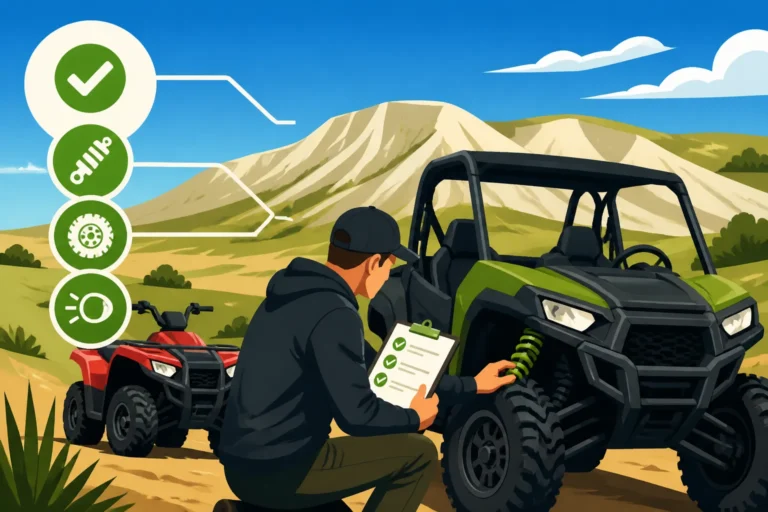
The machine deserves a summer check, too. Inspect tires, brakes, fluids, battery connections, and any cooling components specified in the owner’s manual. Clear dust, grass, or debris from areas where it could interfere with airflow or operation, following the manufacturer’s guidance. Do not open a hot radiator or cooling system; pressurized hot fluid can cause serious burns. If the machine shows a warning light, loses power, or behaves unusually, stop in a safe location and consult the manual rather than continuing because the trailhead is “only a little farther.”
| Before the ride | What to check | Why it matters in summer |
|---|---|---|
| People | Water, gear fit, health needs, and comfort level | Heat can affect a rider before the group notices |
| Route | Distance, terrain, shade, turn-around points, and current access | A difficult or exposed route can take longer than expected |
| Machine | Tires, brakes, fluids, and cooling-related checks in the manual | A breakdown can leave riders waiting in the sun |
| Communications | Charged phone, saved route, and backup navigation | Service may be limited, and delays are easier to manage with a plan |
| Conditions | Forecast, trail notices, and recent rain | Heat, storms, or muddy ground can change the ride |
Recognize heat illness and respond promptly
Know the signs that mean it is time to stop
Heat illness can develop gradually. A rider may become unusually tired, weak, dizzy, nauseated, headachy, or irritable. Heavy sweating, muscle cramps, or a clammy feeling can also be warning signs. A person who says they “just need to push through” may be embarrassed or reluctant to slow the group down, so agree in advance that everyone will treat symptoms seriously.
Stop the ride as soon as someone seems unwell. Move them to shade or a cooler place, loosen unnecessary outer layers, and help them cool down. Give small amounts of water if they are alert and able to swallow. Do not leave them alone while the rest of the group continues. If their condition is not improving promptly, or you are uncertain about the seriousness of the symptoms, get medical help.
Confusion, fainting, seizures, loss of consciousness, or very hot skin are emergency warning signs. Call 911, begin cooling the person while help is on the way, and follow the dispatcher’s instructions. Do not try to make an unconscious person drink. Heat stroke is life-threatening, and waiting to see whether someone “sleeps it off” can be dangerous.
Make group decisions easier before symptoms appear
The best time to agree on a heat plan is before anyone is tired. Pick a leader and a sweep rider if the group is large, set a turnaround time, and decide how you will regroup if machines get separated. Tell everyone that stopping early is acceptable. This is especially helpful for kids and first-time riders, who may not want to admit that they feel sick or frightened.
Use regular check-ins rather than asking only, “Everybody good?” That question often gets an automatic yes. Ask each person whether they feel dizzy, nauseated, unusually tired, or overheated. Pay attention to quiet riders and passengers, too. A passenger may have less control over pace and less opportunity to cool off than the person driving.
If you need to stop, find a safe place away from moving machines and traffic, then get people into shade if possible. Keep water and first-aid supplies accessible rather than buried under cargo. If the group cannot safely continue, call for assistance or use your backup plan. Route planning with onX Offroad or another navigation tool can help identify where you are, but it does not replace emergency judgment or a call for help.
Adjust your ride to Kansas trail and weather conditions
Recheck access and ground conditions before you leave
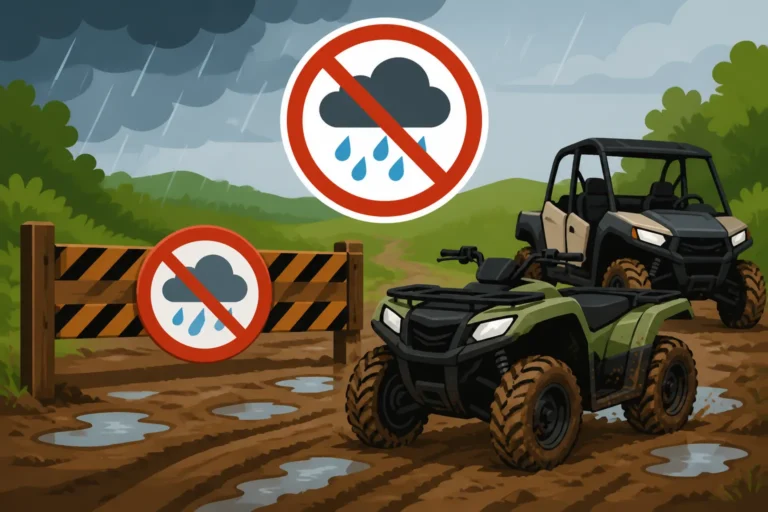
Summer does not mean every trail is reliably dry. A storm can leave sections muddy, wash out a track, or make a route more difficult than it appeared on a map. Conversely, prolonged dry weather can leave loose dust that reduces visibility and makes following too closely uncomfortable. Check notices from the riding area before you load the trailer, and ask about closures or conditions if the information is unclear.
Do not ride around a closure or create a new route through vegetation or private ground to avoid a problem. Stay on authorized trails, slow down when dust limits visibility, and leave enough space between machines. These habits protect other riders and help prevent a small trail issue from becoming a larger one. See [Kansas Trail Closures After Rain] and [Kansas Trail Etiquette Locals Expect] for related planning and riding considerations.
If your intended route is wet, unusually rough, or simply too exposed for the day, pick a shorter alternative or postpone the trip. Before you tow a long distance, confirm the riding area is open and that the vehicle class you plan to bring is allowed. Trail access can vary, including limits on machine width, so do not assume every ATV or UTV can use every route.
Build a slower, more comfortable day
A good summer ride does not have to be an all-day ride. Start with a shorter loop, take breaks in shaded places where stopping is permitted, and leave room for the group to cool down. Avoid turning a casual outing into a race or a challenge to cover as many miles as possible. In hot weather, pace is part of safety.
Dust and glare can also make riding more tiring. Increase following distance, reduce speed when visibility drops, and use eye protection appropriate for the conditions. If wind carries dust across the route, stop somewhere safe until visibility improves. On sand or rough ground, the effort required to steer, brace, and recover from small mistakes can add up; take breaks before fatigue affects judgment.
For a group ride near Manhattan, for example, decide in advance where everyone will regroup and how you will communicate if someone has to turn back. If you are unfamiliar with a trail system, use [Kansas Riding Near Manhattan] as a starting point for local-area planning, then confirm details with the land manager. Consider a mapping app such as onX Offroad for route preparation, but pair digital navigation with local rules, posted signs, and sound judgment. The safest plan is the one that can change when the day does.
Disclaimer
This article is for general informational purposes only and does not constitute professional advice. Laws, prices and regulations vary by location and change over time. Consult a qualified professional for guidance on your specific situation.