Kansas Rules for a Golf Cart on a Street
It's a beautiful day in Kansas, and you're probably dreaming of hopping in your golf cart to run a quick errand, visit a neighbor, or just cruise down the street. But the reality is, figuring out if you can actually drive your golf cart on public roads in the Sunflower State can feel like navigating a maze blindfolded. This guide is here to shed some much-needed light on the complex, often confusing, Kansas rules surrounding golf carts on city streets, helping you understand the state laws, local ordinances, and practical steps to take.
The General Ban on Golf Carts on Kansas Roads
Let's start with the big picture, because this is where a lot of the confusion begins. Many folks assume that because a golf cart is small and slow, it must be inherently street legal, at least for short distances. Unfortunately, that's not how Kansas law views it. The state takes a very specific stance on what can and cannot legally operate on public roads, and golf carts generally fall into the "cannot" category.
Why State Law Starts with a "No"
Kansas state law, specifically K.S.A. 8-15,100, broadly classifies golf carts as "nonhighway vehicles." This categorization immediately puts them in a different league than your standard car, truck, or motorcycle. From the state's perspective, golf carts simply aren't designed or equipped to safely share the road with traditional motor vehicles that travel at higher speeds. Think about it: they lack robust safety features like crumple zones, advanced airbags, and the powerful braking systems found in cars. They're built for the manicured greens of a golf course or the quiet paths of a retirement community, not for busy intersections or roads where speeds can quickly climb. The underlying concern from the state is public safety – preventing accidents and ensuring that all vehicles on the road meet a baseline standard of safety. It's frustrating, I know, especially when your golf cart feels perfectly capable for a quick trip to the corner store, but the law errs on the side of caution for everyone's well-being.
This initial "no" from the state can be a real buzzkill for anyone hoping to enjoy the convenience of their golf cart beyond private property. It often means that simply owning a golf cart, even a really nice one, doesn't automatically grant you permission to drive it on the street. This is a critical point that many new owners, or even long-time residents, often misunderstand, leading to potential fines or even accidents. The state's position is clear: unless explicitly stated otherwise by local authority, these machines are not for public roadways.
What "Nonhighway Vehicle" Really Means for Your Cart
So, what exactly does "nonhighway vehicle" truly entail for your golf cart in Kansas? Essentially, it means that the state considers it a type of vehicle that is not manufactured primarily for use on public streets, roads, or highways. This designation is crucial because it dictates how the law treats your golf cart in comparison to other machines. While we might colloquially refer to ATVs, UTVs, and golf carts all as "off-road vehicles," the legal definitions can vary slightly, and these distinctions have real-world consequences for where you can ride.
For a golf cart, this classification typically means it's exempt from the rigorous registration, licensing, and equipment requirements that apply to street-legal vehicles. The trade-off, of course, is that it’s generally prohibited from using public roadways. Unlike some UTVs which might, under specific circumstances, be titled as Work-Site Utility Vehicles (WSUVs) and allowed limited road use in certain areas, golf carts don't usually have such an avenue for broader street legality at the state level. It boils down to their primary design and intended use: a golf cart is, first and foremost, for golf courses or controlled environments, not for merging into traffic or navigating traffic lights. This is a key legal distinction, and it's why you can't just slap a license plate on it and go. For more insight into how different machines are classified, check out [What the Law Counts as a Golf Cart].
This distinction often catches people off guard because they see golf carts used on roads in other states or even certain communities within Kansas. The fundamental problem lies in the design—golf carts are usually slower, less stable at speed, and have minimal safety features compared to even the most basic street-legal car. This makes them a hazard in environments where traffic flows quickly and drivers might not expect a golf cart. Understanding this basic definition helps to clarify why the state has its default position and why local intervention is necessary to override it.
Local Control: When Cities and Counties Can Say "Yes"
Now, here's where things get a bit more interesting, and thankfully, offer some hope for golf cart enthusiasts. While the state takes a restrictive stance, it also grants local municipalities — cities and counties — the authority to create exceptions through their own ordinances. This means that the rules for driving a golf cart on a street can vary dramatically from one town square to the next.
The Power of Local Ordinances
Because the state broadly bans nonhighway vehicles from public roads, it had to build in a mechanism for local communities to address their unique needs. This is where local ordinances come into play. A city council, after considering the safety implications, traffic patterns, and community desires, can pass an ordinance that specifically allows golf carts on certain public streets within its corporate limits. This is why you might see golf carts freely cruising in one small Kansas town, but a few miles down the road in a different municipality, they are strictly prohibited. It creates a rather frustrating patchwork of rules across the state, requiring every golf cart owner to do their homework based on their specific location. It's not a "one size fits all" situation, and assuming that what's legal in your cousin's town is legal in yours can lead to an expensive ticket.
The process for a city to allow golf carts on its streets typically involves discussions, public hearings, and ultimately a vote by the city council. They weigh factors like road speed limits, local traffic volume, and the ability to enforce safety regulations. Some cities might allow golf carts on virtually all streets under a certain speed limit (e.g., 35 mph or less), while others might restrict them to only specific, designated routes. This local control means that the responsibility falls squarely on the individual rider to understand and comply with the specific ordinance of the city or county they are in. If you're wondering how your local government approaches this, a good starting point is often looking up [Kansas Cities That Opt In by Ordinance] or asking your city clerk directly. This can save you a lot of headache and potential legal trouble.
Typical Requirements in Cities That Allow Golf Carts
When a city decides to open its streets to golf carts, it doesn't just throw open the gates without any stipulations. Oh no, there are always conditions, and these are usually designed to bring golf carts up to a minimum safety standard for road use. While the exact list of requirements can vary from city to city, there are some common themes you'll encounter. First and foremost, a valid driver's license is almost always required for anyone operating a golf cart on public roads, regardless of whether a separate permit is also issued. This ensures the operator has at least basic knowledge of traffic laws.
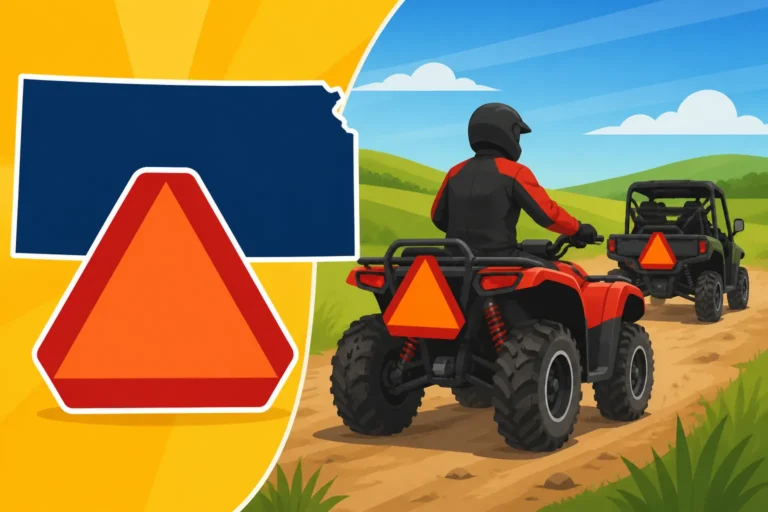
Next, you'll typically need to carry proof of liability insurance. Just like with a car, if you're involved in an accident, the city wants assurance that any damages or injuries can be covered. Beyond that, many ordinances mandate specific equipment upgrades to make your golf cart more visible and controllable. This often includes functional headlights and taillights for visibility, turn signals for signaling intentions, a horn to alert others, a rearview mirror (or multiple mirrors), and effective brakes. Perhaps one of the most common and critical requirements is a slow-moving vehicle emblem, that bright orange triangle, which is mandatory to warn faster-moving traffic. Some cities may even require a small annual permit or tag, often issued by the city hall or police department, with a small fee attached. For enhancing your golf cart with these essential safety features, many aftermarket providers, like SuperATV, offer comprehensive kits for lights, mirrors, and turn signals, making it easier to meet local requirements. Make sure to understand [Kansas Golf Carts and Slow-Moving Emblems] before you hit the road.
| Requirement | Description |
|---|---|
| Driver's License | Operator must possess a valid driver's license. |
| Insurance | Proof of liability insurance (minimum coverage often specified by ordinance). |
| Headlights | Functional headlights (typically required for dusk/night use or poor visibility). |
| Taillights | Functional taillights and brake lights. |
| Turn Signals | Front and rear turn signals to indicate direction. |
| Brakes | Fully functional braking system. |
| Horn | An audible warning device. |
| Rearview Mirror | At least one rearview mirror, often requiring side mirrors too. |
| SMV Emblem | A slow-moving vehicle emblem (orange triangle) mounted on the rear. |
| Speed Limit | Restricted to streets with posted speed limits of 25 mph or 30 mph, rarely higher. |
| City Permit/Tag | Many cities require a locally issued permit, decal, or tag, often renewable annually, after an inspection. |
| Age Restriction | Sometimes specific age restrictions for drivers, often 16 or 18 with a license. |
| Passenger Limits | Carrying only the number of passengers for which the golf cart was designed. |
| Crossing Highways | Some ordinances allow crossing state highways but prohibit sustained travel on them. |
It's also worth noting that cities often cap the maximum speed at which a golf cart can be operated on their streets, commonly 25 miles per hour or sometimes 30 mph on slightly larger thoroughfares. This is to ensure that even with added safety equipment, the golf cart isn't putting itself or other drivers at undue risk. When you bring your golf cart to the local city office for inspection, if required, they'll be looking for all of these items. Don't assume anything; always consult the specific city ordinance or speak directly with your local city clerk or police department to get the definitive list of requirements for your area. This due diligence is your best defense against unexpected fines or enforcement actions.
Practical Considerations and Safety on City Streets
So, you've done your homework, found a city ordinance that allows golf carts, and you're ready to get your machine street-legal. Great! But before you hit the road, there are some very important practical considerations and safety steps you absolutely need to take. It's not just about meeting the minimum requirements; it's about being a responsible and safe driver.
Equipping Your Golf Cart for Road Use
Making your golf cart ready for the road is often more than just bolting on a few accessories. It's about ensuring every component functions reliably. Let's talk about those essential safety items. Headlights aren't just for looking good; they are critical for visibility, especially if you plan on driving from [Kansas Sunset to Sunrise Lighting Rules]. Many cities will require them to be of a certain brightness and aim. Taillights and brake lights are equally important for signaling your presence and intentions to drivers behind you. If your cart doesn't have them, you'll likely need to install a kit. Turn signals, both front and rear, are non-negotiable for safe lane changes or turns. Without them, you're relying on hand signals, which can be hard to see and aren't always recognized by other drivers. Companies like SuperATV offer excellent universal turn signal kits and lighting solutions that can be adapted to many golf cart models, helping you meet these crucial requirements.
Beyond lighting, a robust horn that is easily accessible and loud enough to be heard by other vehicles is essential for alerting pedestrians or preventing potential collisions. Don't forget mirrors! A rearview mirror is usually a must, and often, cities will specify that you need side mirrors as well to eliminate blind spots. Good quality tires designed for road use, rather than just turf, will also improve handling and braking performance. And while it might seem obvious, thoroughly check your brakes. Are they responsive? Do they stop the cart quickly and smoothly? If there's any doubt, have them inspected or serviced. Remember, you're driving alongside much larger, faster vehicles, and your golf cart needs to be as visible and controllable as possible.
Navigating the Local Rules and Staying Safe
Once your golf cart is properly equipped and you have all your paperwork in order, the real challenge begins: navigating the local roads safely and responsibly. The first and most critical step is to obtain a copy of your specific city's ordinance. Don't rely on hearsay or what a neighbor "thinks" the rules are. Many city clerks' offices have these available online or can provide a physical copy. Pay close attention to designated routes, permitted hours of operation (some cities restrict night use), and any specific speed limits or street types where golf carts are prohibited. Understanding nuances like [Kansas Golf Carts Crossing a 30 mph Road] can save you from a traffic stop.
Always display your slow-moving vehicle emblem prominently on the rear of your golf cart. This is not just a suggestion; it's often a legal requirement and a vital safety measure. It signals to drivers behind you that your vehicle operates at 25 mph or less, giving them time to react and pass safely. When driving, practice defensive driving. Assume other drivers might not see you, especially if your golf cart is small or blends in with the surroundings. Use your turn signals well in advance, maintain a safe following distance, and be extra cautious at intersections. Remember, golf carts typically don't accelerate or brake as quickly as cars, so plan your maneuvers accordingly. Local law enforcement, like county deputies, can conduct [Kansas Equipment Checks by Deputies] to ensure compliance, so always be prepared. Being informed and driving cautiously is key to a positive and safe experience on Kansas streets.
Common Misconceptions and What to Avoid
It’s easy to get caught up in assumptions when it comes to golf cart use on streets, especially when you see conflicting practices. But relying on misinformation or wishful thinking can lead to fines, accidents, or even impoundment of your machine. Let's clear up some common misconceptions.
Just Because Your Neighbor Does It…
This is perhaps one of the most dangerous and frequently encountered misconceptions. "My neighbor drives his golf cart to the post office every day, so it must be legal!" While your neighbor might indeed be doing this, it absolutely does not automatically make it legal for you, or even for them. There are several reasons why this line of thinking can get you into trouble. First, that particular neighbor might live in a part of town that does have an ordinance allowing golf carts, while you live just across the city limit line where such an ordinance doesn't exist. Local rules, as we've discussed, can be that granular. Second, your neighbor might simply be breaking the law and has just been lucky enough not to be caught yet. Law enforcement resources vary, and while an officer might choose to give a verbal warning one day, they could issue a costly citation the next. Third, perhaps your neighbor's golf cart is actually a more robust Micro Utility Truck or a Work-Site Utility Vehicle, which may have different, though still specific, road-use rules under Kansas law. Don't use someone else's actions as your legal guide.
The consequence of this misconception can range from a minor inconvenience to a significant financial burden. Imagine getting pulled over and facing [Kansas Penalties for Illegal Road Riding] — fines, court costs, and potentially having your golf cart impounded. It's simply not worth the risk. Instead of observing what others are doing, empower yourself with actual knowledge. Call your city clerk, visit the city's website, or speak directly with your local police department. They are the definitive sources for information on whether and how golf carts can be legally operated on public streets in your specific community. Your due diligence is your best friend here, far more reliable than your neighbor's daily commute.
Crossing a Highway vs. Riding Down It
Another common area of confusion revolves around state highways. Many golf cart owners wonder if, even if their city allows street use, they can still traverse or ride along a state highway. This is a critical distinction that can have serious implications for your safety and legal standing. Generally speaking, even in cities where golf carts are permitted on local streets, there's a very strong prohibition against operating them on state or federal highways. These are typically higher-speed roads designed for intercity travel, and a golf cart, even one equipped with all the bells and whistles, is fundamentally incompatible with the speeds and traffic volumes found there.
However, some local ordinances might include a very limited exception: allowing golf carts to cross a state highway at an intersection, usually at designated crossings, to get from one permissible street to another. This is a far cry from riding along a state highway for any sustained distance. The emphasis is on crossing quickly and safely, not on becoming part of the highway traffic flow. Always confirm this with your local ordinance. If a city allows this, it will likely be under very specific conditions, such as yielding to all traffic and having clear visibility. Never assume you can cross a state highway unless your local ordinance explicitly permits it and outlines the exact conditions. Driving a golf cart where it's not permitted, especially on a high-speed road, puts you and everyone else at extreme risk. When in doubt, avoid state highways entirely and stick to the roads you know are explicitly legal for your golf cart.
Disclaimer
This article is for general informational purposes only and does not constitute professional advice. Laws, prices and regulations vary by location and change over time. Consult a qualified professional for guidance on your specific situation.