Kansas Slow-Moving Emblem Rules
It can be incredibly confusing to figure out all the nuances of driving your off-road machine on Kansas roads, especially when it comes to those little details that can land you a ticket. One of the most overlooked, yet crucial, safety requirements for certain machines in specific situations is the slow-moving vehicle (SMV) emblem. Many folks think it's just for tractors, but depending on what you're driving and where, your ATV or UTV might need one too. This guide will help clear up the mystery of Kansas's slow-moving emblem rules, so you can ride confidently and safely.
Understanding the Slow-Moving Vehicle Emblem
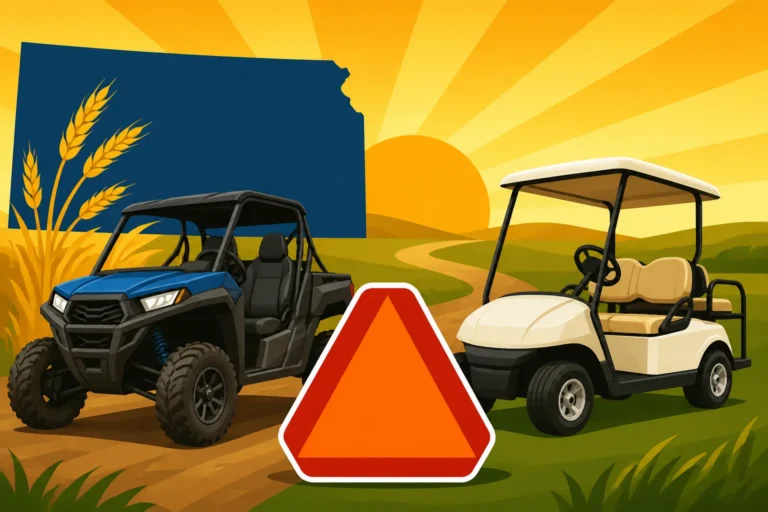
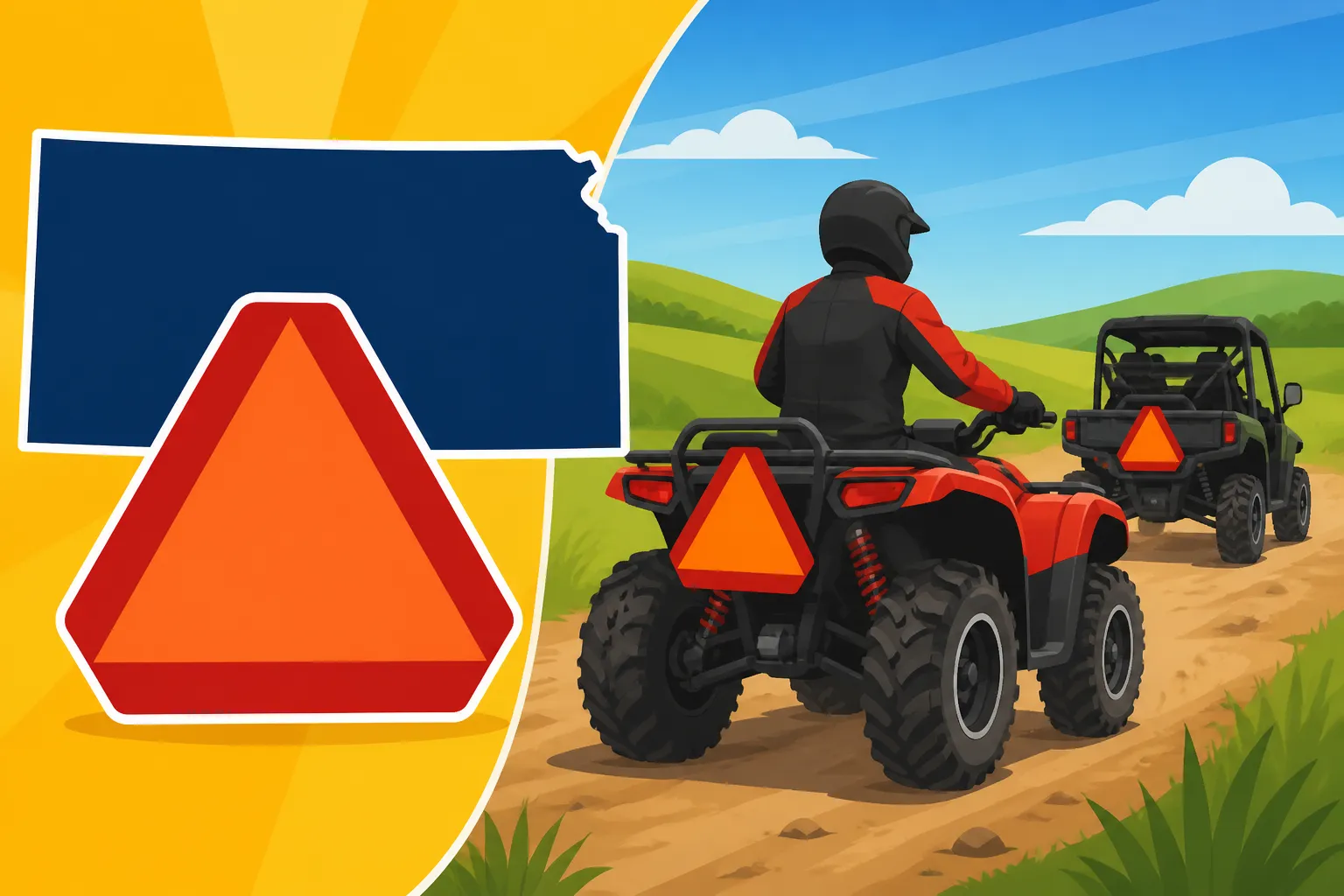
Let's start with the basics. What exactly is a slow-moving vehicle emblem? You've probably seen it a million times on the back of tractors or combines out in the fields, or perhaps on road construction equipment. It's that bright orange-red triangle with a reflective red border, designed to be highly visible both day and night. Its entire purpose is to warn other drivers that the vehicle ahead is traveling at a significantly slower speed than normal traffic. This distinction is absolutely critical for preventing rear-end collisions, especially on roads where speeds can vary widely.
Think about the contrast: you're driving down a county road at 55 miles per hour, and suddenly you come up on something only moving at 15 or 20 mph. Without that distinct, universally recognized symbol, your brain might not register the speed difference quickly enough, leading to a dangerous situation. The SMV emblem isn't just a suggestion; it's a vital piece of safety equipment designed to save lives and prevent accidents on our shared roadways. Kansas law, like that in many other states, recognizes the inherent risks of slow-moving vehicles on roads designed for faster traffic and mandates these emblems to enhance visibility and awareness.
What Makes a Vehicle "Slow-Moving" in Kansas?
In Kansas, a "slow-moving vehicle" is generally defined as any vehicle that, by design, cannot travel faster than 25 miles per hour. This is the key threshold. If your machine, whether it's an ATV, a utility vehicle (UTV), a golf cart, or a work-site utility vehicle (WSUV), is capable of speeds above that, it typically won't fall under the "slow-moving" classification for all road use scenarios. However, the nuance comes in when these machines are used in ways that force them to operate at slower speeds on faster roads, particularly for agricultural purposes. For instance, even a UTV capable of 45 mph might be moving much slower when towing a heavy trailer full of hay across a highway. This is where the rules can get a bit muddy for many owners. It’s not just about what your machine can do, but what it's doing at that moment on the road.
The state's statutes aim to protect everyone sharing the road. When you're driving a machine that might be slower than the flow of traffic, that SMV emblem becomes your primary way of communicating that fact to drivers behind you. This is especially true on Kansas's vast network of rural roads where agricultural traffic frequently mixes with faster-moving cars and trucks.
When Your Machine Needs an SMV Emblem in Kansas
Now for the million-dollar question: when does your specific ATV or UTV actually need one of these emblems? It's not a blanket rule for all off-road machines, and it often ties into the specific class of your machine and how you're using it on public roads. Generally speaking, ATVs are typically not designed for public road use at all, outside of very specific exceptions or city ordinances, and therefore the SMV emblem often applies more to certain types of UTVs or golf carts.
Let's break down the common scenarios and machine types where you might encounter this requirement.
Agricultural Use and Farm Machines
One of the most common applications for the SMV emblem, and where it frequently applies to UTVs, is during agricultural operations. Kansas law provides specific exceptions for farm machinery being driven on public roads for agricultural purposes. This includes UTVs used to haul feed, check fences, or move equipment from one field to another. Even if your UTV can go faster than 25 mph, if it's being used as farm machinery and operating at slower speeds on the road, an SMV emblem is often required or strongly recommended for safety. The law wants to ensure that a farmer moving a piece of equipment between properties, which might involve crossing a state highway or traveling a short distance on a county road, is clearly visible to other drivers. This is a critical safety measure given the varying speeds of farm vehicles. You can find more specific details on this by looking into [Kansas Rules for Farm Machines on Highways].
Consider a situation where you're using your side-by-side to move some cattle feed from the barn across a two-lane county road to a distant pasture. Even if that road has a 55 mph speed limit, your UTV, loaded down and moving slowly, becomes a hazard if not properly marked. The SMV emblem signals to the approaching traffic, "Hey, I'm moving slowly here, give me space."
Golf Carts and Micro Utility Trucks
Golf carts and micro utility trucks are another category of machines that frequently fall under slow-moving vehicle rules, especially if they are allowed on public roads by local ordinance. Many Kansas cities have specific ordinances that allow golf carts and micro utility trucks on certain city streets, often with speed restrictions and equipment requirements. If a golf cart is permitted on a street with a speed limit of 25 mph or less, it will almost certainly be required to display an SMV emblem, in addition to other equipment like headlights, tail lights, and turn signals. The intent here is clear: these vehicles are inherently slower than typical street traffic, and therefore need enhanced visibility. For more on this, check out [Kansas Golf Cart Road Rules] and [Kansas Micro Utility Truck Equipment Rules].
The logic is simple: a golf cart, by its very design, isn't meant for high speeds. When it's sharing a road with cars, even on a residential street, the speed differential is significant. That bright orange triangle serves as a vital heads-up for drivers, preventing potential collisions.
Work-Site Utility Vehicles (WSUVs)
Kansas has a specific classification for "Work-Site Utility Vehicles" or WSUVs. These are often UTVs that meet certain criteria (like a width of 48 inches and a weight over 800 pounds, plus specific seating arrangements and steering wheel) and are used for work purposes. While a WSUV may be capable of higher speeds, their use on certain roads is often restricted and their operation might necessitate an SMV emblem, particularly if they are engaged in tasks that keep their speed low on public roadways or if a local ordinance requires it. These vehicles are primarily intended for construction sites, industrial campuses, or large private properties, but sometimes need to cross or travel short distances on public roads to get between work areas. It's crucial to check local ordinances if you're operating a WSUV on public land, as rules can vary. Delve deeper into this with [Kansas Work-Site Utility Vehicle Road Rules].
For example, a construction crew might use a large WSUV, perhaps one beefed up with accessories from SuperATV for heavy hauling, to move tools from one side of a construction zone to another, crossing a low-speed city street in the process. Even with its powerful engine, if its operational speed is deliberately slow for safety within the work zone, that SMV emblem becomes a key visual indicator to motorists.
Proper Placement and Maintenance of Your SMV Emblem
Having an SMV emblem is one thing; ensuring it's properly placed and maintained for maximum effectiveness is another. An emblem that's dirty, faded, or incorrectly mounted offers little to no safety benefit.
Optimal Placement for Visibility
The law is pretty specific about where the emblem should go. It must be mounted on the rear of the vehicle, as close to the center as possible, and between two and six feet above the ground. The most crucial part is that it must be entirely visible from the rear, unobscured by cargo, trailers, or other equipment. You want drivers approaching from behind to see that bright triangle clearly and immediately. This means if you're towing a trailer, the SMV emblem might need to be on the rear of the trailer instead of the UTV itself, if the trailer obstructs the view of the one on the UTV. Always err on the side of maximum visibility. Some SuperATV rear cargo racks might offer ideal mounting points, but always ensure the emblem isn't blocked when loaded.
Key SMV Emblem Placement Requirements:
| Requirement | Description |
|---|---|
| Location | Rear of the vehicle, centered if possible. |
| Height | Between 2 and 6 feet above the ground. |
| Visibility | Must be fully visible from the rear, not obscured by cargo or attachments. |
| Orientation | Pointing upward (the triangle's point should be at the top). |
| Condition | Clean, reflective, and unfaded. |
Keeping Your Emblem in Good Condition
An SMV emblem that has lost its reflective properties or is caked in mud is practically useless. Just like your vehicle's lights, it needs to be kept clean. Over time, sunlight can also cause the orange-red color to fade, reducing its effectiveness. If you notice your emblem is looking dull, faded, or the reflective red border isn't doing its job anymore, it's time to replace it. These are relatively inexpensive items, and the safety they provide is priceless. Regularly wipe down your emblem, especially after dusty rides or messy farm work. It’s a small effort that makes a huge difference in your visibility to others on the road.
The "Why" Behind Kansas's SMV Rules: Safety and Awareness
Ultimately, every one of these regulations, including the Kansas slow-moving emblem rules, boils down to safety. The goal is to reduce accidents and ensure that everyone sharing our public roads, whether in a car, a truck, or an off-road machine, can do so as safely as possible.
Preventing Rear-End Collisions
Rear-end collisions are among the most common types of traffic accidents, and they can be particularly severe when there's a significant speed differential between the vehicles involved. Imagine a car traveling at highway speeds hitting a UTV or tractor moving at 15-20 mph. The forces involved can be catastrophic. The SMV emblem provides that crucial early warning, giving the driver behind ample time to recognize the slower speed, react, and adjust their driving accordingly. This is especially important on rural roads, where curves, hills, and dust can reduce visibility, and where you might encounter a farmer pulling out of a field unexpectedly.
The emblem is a passive safety device that works 24/7. While it doesn't prevent you from having to follow other rules like [Kansas Lighting Rules After Sunset] or [Kansas Rules for Riding a County Road], it augments your visibility during daylight hours when lights might not be as noticeable.
Enhancing Roadway Awareness
Beyond preventing specific accidents, the consistent use of SMV emblems helps to build a general awareness among drivers. When people see that familiar orange triangle, they automatically expect a slower vehicle and adjust their driving habits. This collective understanding is essential for the safe integration of agricultural and utility vehicles onto public roads. Without such clear visual cues, the roads would be much more dangerous for everyone. Whether you're pulling a sprayer across a state highway or just crossing a section line road, being easily identifiable as a slow-moving vehicle protects not only yourself but also those around you. Accessories from reputable brands like SuperATV, such as additional LED warning lights or brighter mirrors, can further enhance your machine's visibility, working in conjunction with your required SMV emblem to create a truly noticeable presence on the road.
Remember, following these rules isn't about avoiding a fine; it's about protecting lives. It's about being a responsible road user and doing your part to keep Kansas roads safe for everyone.
Disclaimer
This article is for general informational purposes only and does not constitute professional advice. Laws, prices and regulations vary by location and change over time. Consult a qualified professional for guidance on your specific situation.