How Loosely the Farm Trip Rule Is Written
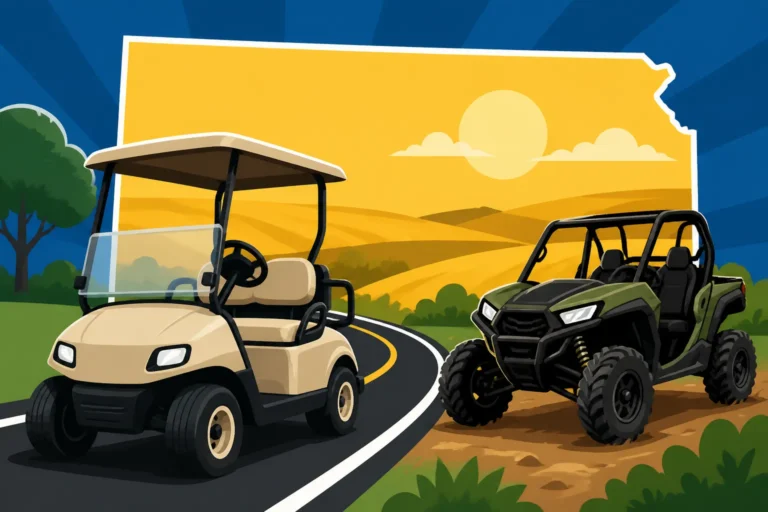
Navigating the rules for riding ATVs and UTVs on Kansas roads can feel like trying to untangle a knotted fishing line – especially when it comes to the "farm trip" exception. Many rural Kansans rely on their off-road machines for daily agricultural tasks, but the line between legitimate farm use and illegal joyriding isn't always clear-cut. This guide aims to demystify the agricultural exception, helping you understand its boundaries so you can use your machine confidently and legally for farm work.
Decoding Kansas's Agricultural Exception for Road Use
Kansas law generally restricts the use of ATVs and UTVs on public roads. It's a frustrating reality for many, especially those of us who live in rural areas and find our machines incredibly useful for everything from checking livestock to hauling tools. However, there's a specific, crucial exception carved out for agricultural purposes. Understanding this exception is key to avoiding an unexpected conversation with a deputy.
The Core of the Statute: What it Says (and Doesn't Say)
The Kansas statute, specifically K.S.A. 8-15,100, generally bans the operation of off-road vehicles on public streets, roads, and highways. But then it makes a pivotal allowance: "Except that such vehicles may be operated upon a public highway for the purpose of an agricultural pursuit or other legitimate use." This single phrase is where all the interpretation begins, and where many landowners and farm workers seek to understand their rights and responsibilities. It doesn't define "agricultural pursuit" with a long list of specific tasks, which can be both a blessing and a curse.
This broad phrasing allows for a degree of flexibility, acknowledging the diverse needs of modern farming. However, it also means that the interpretation largely rests on the context of your specific trip and the discretion of law enforcement. The legislature's intent was clearly to enable farmers to conduct necessary business without undue burden, recognizing that in many parts of Kansas, the shortest distance between two fields might involve a brief stretch of blacktop or a county gravel road. What it doesn't explicitly allow, though, is taking your side-by-side to the local diner for breakfast, even if you just came from the field.
The key takeaway here is that while the rule itself isn't a detailed checklist, it very much implies a direct connection to the agricultural operation. It's not a blanket pass to use the roads whenever you feel like it; it's an exemption for specific, job-related travel. For a more general overview of what's allowed, you might find [Kansas ATV Road Rules Under 8-15,100] helpful in understanding the broader context.
Defining "Agricultural Purpose" in Practice
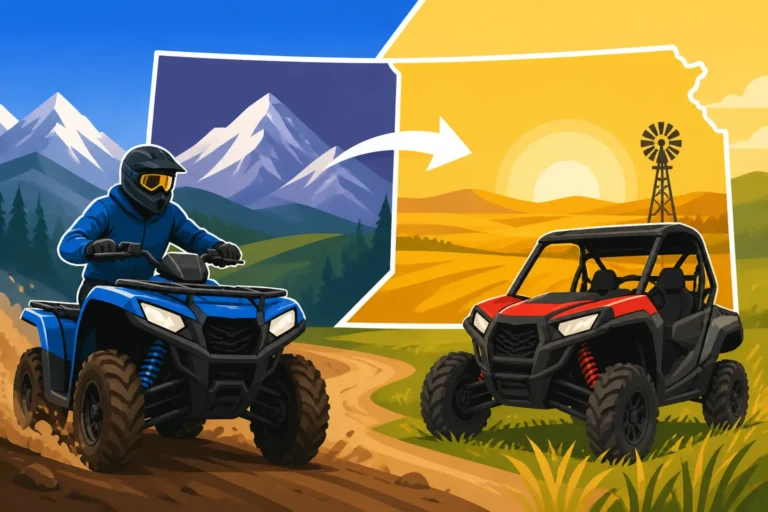
So, what exactly counts as an "agricultural pursuit"? This is where the "loosely written" aspect comes into play, creating both opportunity and potential confusion. Generally, anything directly related to the operation of your farm or ranch qualifies. This could mean transporting feed to animals in another pasture, moving equipment like a post-hole digger from one field to the next, checking fences along a property line that abuts a county road, or even quickly crossing a highway to access another part of your land. Think of it as an extension of your farm activities, not a departure from them. [What Counts as an Agricultural Trip on a Highway] goes into more detail about this specific scenario.
However, the "looseness" doesn't extend to personal errands or recreational use. For example, driving your UTV to the hardware store for a part for your tractor might seem agricultural, but if that store is miles away in town and you're not actively moving machinery between fields, it starts to look less like an agricultural pursuit and more like a general transportation choice. Similarly, simply driving down the road to visit a neighbor, even if both of you are farmers, typically won't fall under this exception unless there's a direct, work-related reason for the travel at that moment. It's about the purpose of the trip, not just the occupation of the driver.
The best way to approach this is to ask yourself: "Is this trip absolutely necessary for the functioning of my farm right now, and is there no practical alternative other than briefly using a public road?" If the answer is a clear "yes," you're likely on solid ground. If it's a "maybe, but it's more convenient," you might be pushing the boundaries.
Who Qualifies for the Exception?
It's not just the owner of the farm who can utilize this exception. The statute generally applies to anyone conducting an "agricultural pursuit." This means farmhands, family members actively working on the farm, or even contractors performing services directly related to the farm's operation (like a custom hay baler moving equipment) would likely fall under this umbrella. The crucial factor isn't who is driving, but what they are doing and why.
For instance, if you have a teenage son or daughter who helps with chores, they could drive the UTV down a county road to move cattle, provided they meet the basic requirements like having a valid driver's license. [The Farm Exception Still Requires a Driver's License] is an important reminder here – this agricultural exception does not waive the requirement for a licensed driver. A contractor hired to spray weeds in a ditch might also fall under the exception when moving their machine between jobs, as their work is directly supporting agricultural land management.
However, a distant relative visiting for the weekend who decides to take your side-by-side for a spin down the road, even if they claim they're "checking out the neighbor's crops," would not qualify. The activity must be a legitimate part of the farm's ongoing operation. This distinction helps ensure the exception isn't abused, while still providing necessary flexibility for those genuinely engaged in agriculture.
Navigating the "As Near the Right As Practicable" Clause
Beyond the purpose of the trip, Kansas law also includes directives on how you operate your off-road machine on public roads when the exception applies. One of the most critical, and often overlooked, aspects is the requirement to ride "as near the right as practicable." This isn't just a suggestion; it's a safety and legal mandate.
Understanding Safe Road Positioning
When you're operating an ATV or UTV on a public road under the agricultural exception, you're almost certainly going to be moving slower than the flow of typical traffic. This speed differential, combined with the smaller profile of your machine, creates a significant safety concern. The phrase "as near the right as practicable" acknowledges this reality. It means you should hug the right side of the road, giving faster traffic as much room as possible to safely pass you.
This isn't about driving in the ditch, but about staying clearly within the lane of travel while positioned to the far right. On narrow rural roads without shoulders, this might mean a little more caution and awareness of oncoming vehicles. On wider county roads, it means allowing plenty of space for other vehicles. It's about being predictable and visible, reducing the risk of a rear-end collision, which is a common hazard for slow-moving farm vehicles. For more on this, check out [Riding as Near the Right as Practicable].
It's also important to remember that this rule applies to all types of public roads where the exception is allowed, whether you're on a simple gravel section line or briefly crossing a state highway. The faster the road, the more critical it is to maintain this right-hand position and be extra vigilant for traffic approaching from both directions.
The Role of Visibility and Other Equipment
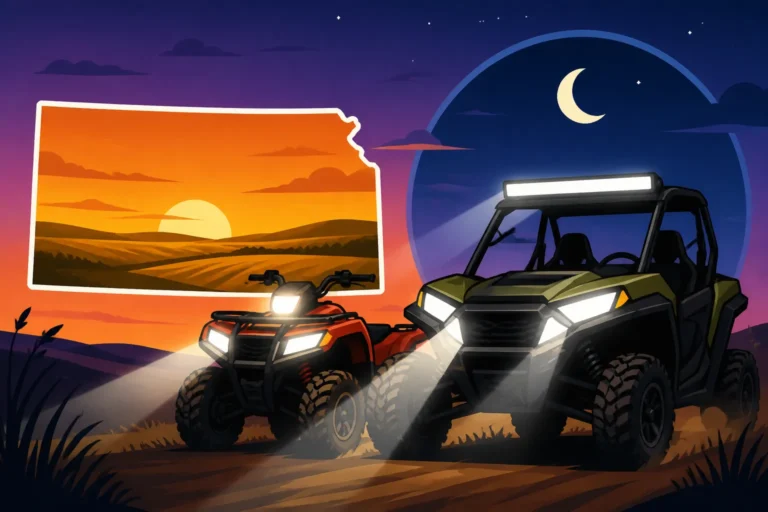
Given that ATVs and UTVs are often smaller and less visible than standard agricultural machinery like tractors, enhancing your machine's visibility is not just smart, it's often implicitly expected even if not always explicitly mandated for all farm use on roads. The "loose" nature of the farm trip rule doesn't excuse you from common sense safety. When operating on a public road, you absolutely should have appropriate lighting, especially during twilight hours or after dark. [Kansas Lighting Rules After Sunset] outlines the general requirements for operating any vehicle after dark.
This includes functional headlights, taillights, and ideally, brake lights. Many farm machines also benefit greatly from a slow-moving vehicle emblem, a bright orange triangle that signals to approaching drivers that you're traveling at 25 mph or less. [Kansas Slow-Moving Emblem Rules] clarifies when these are required. While your UTV might not always be legally classified as a "slow-moving vehicle" in the same way a tractor is, using the emblem is an excellent way to err on the side of caution and dramatically increase your visibility, potentially preventing an accident.
Aftermarket accessories can be a huge help here. Companies like SuperATV offer a range of products designed to improve safety and visibility for off-road machines. Think about adding a complete turn signal kit, which includes headlights, taillights, and mirrors, making your intentions clearer to other drivers. Or consider extra LED light bars for increased illumination in low-light conditions, especially important if your "agricultural pursuit" involves early morning or late evening work. These additions don't just help you comply with the spirit of the law; they genuinely protect you and others sharing the road.
Practical Scenarios and Potential Pitfalls
Even with a good understanding of the statute, applying it in real-world scenarios can still be tricky. The "loosely written" nature means there's often room for different interpretations, especially when local law enforcement gets involved.
Common Misinterpretations and Enforcement Realities
One of the biggest mistakes riders make is assuming the agricultural exception is a blanket permission to use county roads anytime they want. It's not. The core purpose must remain agricultural. For example, if you're driving your UTV to a friend's house a few miles down the road for a social visit, even if you both farm, that's not an agricultural pursuit. If you happen to stop to chat with that friend on your way to check a distant pasture, that might be okay, but the primary intent of the trip needs to be work-related.
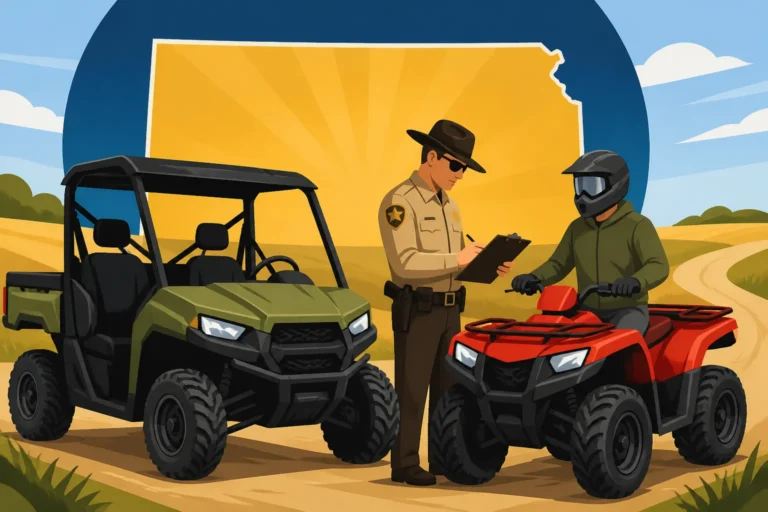
Law enforcement officers, particularly in rural areas, are generally familiar with the agricultural exception. However, their interpretation can vary, and they are trained to look for genuine agricultural activity. If you're seen joyriding, driving recklessly, or operating your machine in a way that clearly indicates non-farm use (e.g., loaded with coolers and fishing gear, speeding, or operating late at night without proper lighting), you're much more likely to face questions or a citation. [What a Deputy Asks at a Rural Traffic Stop] can give you an idea of the types of questions you might encounter.
It's important to remember that while the state law provides this exception, local ordinances can sometimes add complexity, particularly within city limits. While the state exception for agriculture generally takes precedence on county roads, some municipalities have their own UTV rules. [Kansas Rules for Riding a County Road] covers the general statewide rules, but always be aware of where you are.
Documenting Your Agricultural Trip
When the "loose" nature of the law meets the need for enforcement, having a clear explanation and possibly some documentation can be invaluable. While you don't need a special permit for agricultural road use under this exception, being prepared can make a big difference if you're stopped. For instance, if you're hauling a specific piece of farm equipment or moving between fields clearly visible from the road, the "agricultural pursuit" is self-evident.
However, if you're simply driving a UTV with no visible cargo, it might be harder to immediately prove your purpose. In such cases, being able to articulate your destination and the specific farm task you're performing can help. Carrying your driver's license (which, as we discussed, is mandatory) and perhaps proof of ownership, like your title paperwork, can further solidify your legitimate presence on the road. Remember, the machine itself will have a nonhighway vehicle title. [Kansas's Nonhighway Title Explained] delves into what this means.
While not legally required, some farmers might even carry a basic, written explanation of their farm boundaries or a map, especially if they operate land that requires crossing public roads frequently. This level of preparedness isn't about admitting guilt but about demonstrating your good faith and compliance with the law.
Comparing the Farm Rule to City Ordinances
It's critical to understand that the agricultural exception is a statewide rule that primarily applies to unincorporated areas and county roads. It is not the same as a city ordinance that allows UTVs or golf carts on city streets. [Kansas Cities That Authorize ATV Street Use] provides a good overview of how cities can opt-in to allowing UTVs. These city ordinances often come with specific requirements like city-issued tags, insurance minimums, and equipment standards (mirrors, turn signals, windshields, etc.) that go beyond what's typically expected for a machine simply making an agricultural trip on a county road.
The agricultural exception is an exemption from the general ban on a specific type of travel; it's not a carte blanche to make your machine street legal. If you want to ride your UTV on city streets, even in a rural town, you almost certainly need to check that city's specific ordinance and ensure your machine meets all their requirements and you've obtained any necessary local permits or tags. Attempting to use the agricultural exception to justify riding within city limits for non-farm purposes is a common mistake that can lead to a citation.
For example, if you're moving your UTV across a highway shoulder that borders town to access a field, that's one thing. If you're driving it down Main Street to get lunch, that's entirely another, unless that specific town has passed an ordinance allowing it and you've complied with all their rules.
Equipping Your Machine for Legal and Safe Farm Use
While the "loose" phrasing of the agricultural exception provides flexibility, it doesn't absolve you from ensuring your machine is safe and adequately equipped for brief stints on public roads. In fact, taking proactive steps to enhance safety can only benefit you, both legally and practically.
Essential Safety Upgrades
When your off-road machine is briefly sharing the road with cars, trucks, and even semi-trucks, visibility and control become paramount. Even if your specific agricultural trip doesn't legally require every single piece of street-legal equipment, adding certain safety upgrades is simply good practice. Functional headlights and taillights are a must, especially if there's any chance you'll be on the road near dawn, dusk, or in inclement weather. [Kansas Lighting Requirements on a Machine] details what you generally need.
Beyond basic lights, consider adding turn signals. These are standard on almost all road vehicles for a reason: they clearly communicate your intentions to other drivers, preventing confusion and potential accidents. A good set of mirrors is also invaluable, allowing you to monitor traffic behind you without constantly turning around. Many companies, including SuperATV, offer universal or model-specific kits that make adding these essential safety features straightforward. Installing a durable windshield can also protect you from road debris, enhancing comfort and safety.
Finally, ensuring your tires are in good condition and properly inflated for mixed-surface use (dirt, gravel, pavement) is crucial. Regular brake checks are non-negotiable. These elements might seem basic, but they are your first line of defense in preventing incidents when sharing public thoroughfares.
Maintenance for Reliability on the Road
A well-maintained machine is a safer machine, whether you're deep in the pasture or briefly on the blacktop. Before taking your ATV or UTV onto a public road for an agricultural pursuit, give it a quick once-over. Check your tire pressure, ensure your brakes are responsive, and confirm all your lights are working. Listen for any unusual noises that might indicate a mechanical issue that could leave you stranded or, worse, create a hazard on the road.
Regular service, including oil changes, air filter cleaning (especially if you're often in dusty farm environments), and checking fluid levels, contributes significantly to your machine's reliability. A breakdown on a secluded pasture is an inconvenience; a breakdown on a busy county road can be dangerous. Keeping your machine in top condition means it will perform reliably when you need it most, whether it's hauling feed or making that quick hop across the highway. These preventative measures minimize the risk of mechanical failures, which are amplified when you're interacting with faster-moving traffic.
| Aspect of Farm Trip Rule | Generally Allowed/Acceptable | Generally Not Allowed/Acceptable |
|---|---|---|
| Purpose of Trip | Transporting feed, checking fences, moving equipment between fields, crossing highway for farm access. | Running personal errands, recreational riding, visiting friends without specific farm business. |
| Driver Requirements | Valid driver's license, even for farm-related travel. | Unlicensed drivers, even if on family farm property, on public roads. |
| Road Positioning | "As near the right as practicable," giving faster traffic room. | Weaving, driving in the middle of the lane, impeding traffic flow. |
| Visibility | Functional headlights, taillights; slow-moving vehicle emblem highly recommended. | No lights after dark, no slow-moving emblem, poor visibility in adverse conditions. |
| Location | Unincorporated county roads, crossing state highways. | Riding on most city streets without a specific local ordinance and tags. |
| Machine Equipment | Basic safety features, good working order. Additional lighting/mirrors for enhanced safety. | Broken lights, non-functional brakes, bald tires, unsafe modifications. |
Disclaimer
This article is for general informational purposes only and does not constitute professional advice. Laws, prices and regulations vary by location and change over time. Consult a qualified professional for guidance on your specific situation.