Kansas Golf Cart Ordinances by City
It's incredibly frustrating when you've invested in a golf cart, dreaming of cruising around your neighborhood, only to discover that Kansas state law isn't exactly rolling out the red carpet for them on city streets. Many owners assume that because their golf cart isn't a full-blown ATV or UTV, it must be easier to get it street-legal, but the reality is often a confusing patchwork of local rules. This guide is here to untangle that web, helping you understand how Kansas cities decide if, and under what conditions, your golf cart can legally join traffic.
The Default Ban: Why You Can't Just Drive Anywhere in Kansas
Let's start with the hard truth: In Kansas, the default position of state law is that golf carts are not allowed on public roads. It's not because anyone hates golf carts; it's simply that they weren't designed as street-legal vehicles. They lack many of the safety features and performance capabilities of traditional cars, and for that reason, the state views them differently. This can be a huge disappointment for folks who just bought a new cart for quick trips to the local store or to visit neighbors a few blocks away. You might see people doing it in other states or even other parts of Kansas, but that doesn't mean it's universally permitted.
Understanding State Law vs. Local Control
Kansas state statutes generally classify golf carts as "micro utility trucks" or "work-site utility vehicles" under certain conditions, but largely they fall into their own category that is distinct from regular passenger cars. State law prohibits these types of vehicles from being operated on public streets, roads, or highways unless specifically authorized. This is where the power shifts to local municipalities. Cities and towns have the authority to "opt-in" and create their own ordinances that allow golf carts on certain roads within their corporate limits. Without such an ordinance, that default state-level prohibition stands firm. It means that what's legal in, say, Louisburg, might be strictly forbidden just a few miles down the road in another town. This is why you simply can't assume.
The frustration here is palpable: you want to use your golf cart for practical purposes, not just on the golf course or your private property, but the legal framework makes it a challenge. You might think, "It's just a small town, surely they'll be relaxed," but that's a dangerous assumption to make. Deputies and city police officers are bound by the laws and ordinances of their jurisdiction, and if no enabling ordinance exists, you could face a citation. It’s critical to understand that even if a golf cart looks innocent enough, the law treats it as a non-street-legal vehicle unless a specific local exception is made. You might also want to look into [What the Law Counts as a Golf Cart] to better understand these distinctions.
The Importance of City-Specific Ordinances
Because state law largely defers to local control for golf cart operation on public roads, you absolutely must check the specific ordinance for your city or the city where you intend to ride. There is no statewide blanket permission for golf carts on roads. Each city council has to proactively pass a local ordinance to allow it. This means that rules can vary wildly from one community to the next, even if they're close geographically. One town might allow golf carts everywhere except state highways that run through town, while another might only permit them in a specific retirement community, or perhaps not at all.
These city ordinances aren't just a simple "yes" or "no" either. They often come with a whole list of conditions, equipment requirements, speed limits, and even designated operating hours or areas. For example, one city might require annual permits and inspections, while another might just have a list of safety equipment you need to have. This variability can be incredibly confusing for golf cart owners, making it difficult to know if you're truly compliant. You can't rely on what your friend in another town tells you, nor can you assume that because one neighbor drives theirs, it's legal for everyone. It's a prime example of [Kansas Rules Riders Get Wrong] if you don't do your homework.
What to Look For in a City Ordinance Allowing Golf Carts
Once you've confirmed that your city does have an ordinance allowing golf carts on its streets, your next step is to dive deep into the details of that ordinance. This is where the rubber meets the road, so to speak, in understanding what's actually required of you as a golf cart owner. It's not enough to know it's allowed; you need to know how it's allowed.
Equipment Requirements for Street Legal Golf Carts
This is often the longest and most specific part of any golf cart ordinance. Because golf carts aren't built to automotive standards, cities will mandate certain modifications to bring them up to a safer level for road use. These requirements are put in place to protect you, your passengers, and other drivers on the road. Common items you'll see on these lists include:
- Headlights and Taillights: These are almost universally required for visibility, especially during dawn, dusk, or nighttime hours. Some ordinances might specify a certain candlepower or visibility distance.
- Turn Signals: Just like any other vehicle, you'll need a way to signal your intentions to turn. These usually need to be visible from both the front and rear.
- Brake Lights: These are crucial for letting drivers behind you know when you're slowing down or stopping.
- Rearview Mirrors: Typically, at least one rearview mirror is required, often mounted to give a clear view of the road behind you. Some ordinances might specify both a left and right side mirror, or a wide-angle interior mirror.
- Windshield: While not always mandatory, many cities require a functional windshield to protect occupants from debris.
- Horn: A working horn is essential for alerting pedestrians or other vehicles to your presence.
- Seat Belts: If the golf cart has seats, seat belts for all occupants might be required, especially if it's a modified cart with higher speeds.
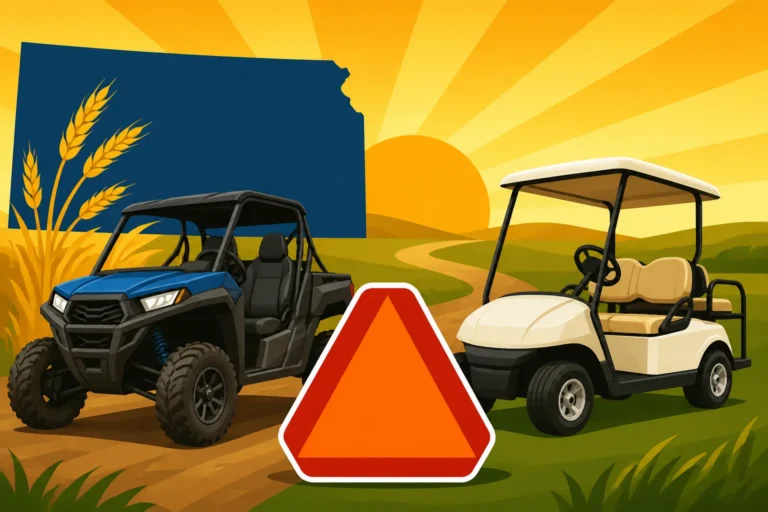
- Slow-Moving Vehicle Emblem: Because golf carts are inherently slow, a reflective orange triangle [Kansas Golf Carts and Slow-Moving Emblems] on the rear is a common requirement to warn faster-moving traffic.
- Tires: Some ordinances might even specify minimum tire tread depth or that the tires must be "street-legal" rather than turf tires.
You might find that your stock golf cart doesn't have many of these features. This is where aftermarket parts come into play. Companies like SuperATV offer a wide range of accessories and conversion kits that can help you meet these requirements, from lighting kits to turn signal assemblies and mirrors. It's much safer to upgrade your golf cart properly than to try and get by with makeshift solutions, not to mention avoiding potential citations during [Kansas Equipment Checks by Deputies].
Speed Limits, Road Restrictions, and Operating Hours
City ordinances don't just tell you what equipment you need; they also dictate where and when you can drive your golf cart, and how fast. These restrictions are often based on safety concerns related to traffic flow and the inherent limitations of golf carts.
- Speed Limits: Most golf cart ordinances will restrict operation to roads with a posted speed limit below a certain threshold, often 25 mph or 35 mph. This is because golf carts typically have a maximum speed of 15-25 mph, and mixing them with much faster traffic can be dangerous. You won't be taking your golf cart onto any major arteries or state highways.
- Road Restrictions: Cities often explicitly prohibit golf carts from being driven on state highways, federal roads, or even certain high-traffic city streets. They might also restrict them to residential areas or specific zones within the city. It's not uncommon for an ordinance to state, for instance, "golf carts are permitted on all city streets with a posted speed limit of 25 mph or less, except Main Street and Highway 75." Understanding these geographical limits is critical to avoid illegal operation.
- Operating Hours: While not universal, some ordinances might restrict golf cart use to daylight hours only, even if you have headlights. This could be due to concerns about visibility in very low light conditions, even with proper lighting. Always check if there are specific curfews or hours of operation.
- Crossing Major Roads: Even if prohibited from driving on a major road, an ordinance might allow golf carts to cross them at designated intersections, often requiring the safest and most direct path. This is a common allowance for [Kansas Rules for Riding a City Street] that are divided by a larger thoroughfare.
Permits, Fees, and Insurance Requirements
Getting your golf cart physically ready is only part of the battle; there's usually an administrative side to becoming street-legal as well. Cities want to ensure that golf cart operators are accountable and that the vehicles are safe.
- Permit Application Process: You will almost certainly need to apply for a permit through your city clerk's office or police department. This typically involves filling out a form, providing proof of ownership (like a bill of sale), and confirming you meet the equipment requirements. Some cities might even require an in-person inspection of your golf cart before issuing the permit.
- Permit Fees: There is usually an annual fee associated with these permits. This fee helps cover the administrative costs of processing applications and potentially funding enforcement or safety programs. The cost can vary, but it's generally a modest amount, like $25-$50 per year. It's an ongoing cost to factor into your golf cart ownership.
- Proof of Insurance: This is a big one. Many cities will require proof of liability insurance for your golf cart, similar to what you'd carry for a car. This protects you and others in case of an accident. [Kansas Insurance Comes From City Ordinances] because the state doesn't mandate it for non-highway vehicles, so it's entirely up to the local level. Your homeowner's policy might offer some coverage, but often dedicated golf cart or off-road vehicle insurance is needed for street use. Always check with your insurance provider to ensure you have adequate coverage for street-legal operation.
- Driver's License Requirement: Most ordinances will state that the operator of a street-legal golf cart must possess a valid driver's license. This ensures a basic level of road knowledge and responsibility.
Navigating Specific Kansas City Ordinances (Examples)
Understanding the general framework is one thing, but figuring out the specifics for your actual town is where the real work begins. The process by which cities adopt these rules is important, as is recognizing the common threads and unique quirks that emerge across different ordinances.
How Cities "Opt-In" to Allow Golf Carts
When a Kansas city decides to allow golf carts on its streets, it's not a casual decision. It requires a formal legislative process by the city council, much like how a city authorizes [How a City Council Opens Its Streets to UTVs]. This process typically involves several steps:
- Public Discussion and Research: The city council or a relevant committee might first discuss the idea, possibly in response to citizen requests. They'll research how other cities handle golf carts and consider the potential impacts on public safety and traffic.
- Drafting an Ordinance: City legal staff will then draft a proposed ordinance. This is where all those specific equipment requirements, speed limits, and permit rules are written down.
- Public Hearings: Before voting, the city council usually holds one or more public hearings. This is an opportunity for residents to voice their opinions, ask questions, and raise concerns. Your input as a golf cart owner or concerned citizen can be vital at this stage.
- Council Vote: After public input and any necessary revisions, the city council will vote on the proposed ordinance. If it passes, it becomes law within that city's limits.
- Publication and Enforcement: The new ordinance is then officially published, and the police department is tasked with enforcing it. Often, there will be a grace period or public awareness campaign before full enforcement begins.
This process ensures that such a significant change to traffic rules is carefully considered and reflects the community's needs and concerns. It also highlights why simply driving a golf cart on city streets without a specific ordinance is illegal; the city hasn't taken the formal steps to permit it. This is why [Kansas Cities That Opt In by Ordinance] are the exception, not the rule.
Common Themes and Unique Twists in Ordinances
While each city ordinance is unique, there are definitely common themes you'll find, along with some surprising local twists. The shared goals are usually safety and maintaining orderly traffic flow.
Common Themes:
- Emphasis on Safety Equipment: As discussed, lights, mirrors, and slow-moving vehicle emblems are almost universal. Cities prioritize making golf carts visible and allowing operators to respond to road conditions. Many cities will specify that these additions must be permanently mounted and functional. You'll want to check the quality of your aftermarket parts; for instance, a reliable turn signal kit from SuperATV could be the difference between passing and failing an inspection.
- Restriction to Lower Speed Roads: Limiting golf cart use to streets with speed limits of 25 mph or 35 mph is extremely common. This acknowledges the golf cart's limited speed capability and reduces collision risk.
- Daytime Operation Preference: Even with lights, some cities prefer or restrict golf cart operation to daylight hours due to their smaller profile and slower speed, which can make them harder to see at night.
- Driver's License and Insurance: These are standard requirements across most cities that permit street-legal golf carts, ensuring basic competency and financial responsibility.
Unique Twists:
- Specific Road Exclusions: Beyond state highways, some cities might specifically ban golf carts from certain local roads that have heavy traffic, sharp turns, or poor visibility, even if their speed limit is low.
- Designated Crossing Points: Instead of a blanket ban on major roads, some ordinances might only allow golf carts to cross them at specifically marked or signalized intersections.
- Age Restrictions for Passengers: While not common, a city might have specific rules regarding the age of child passengers, or whether children can operate the golf cart even with adult supervision, going beyond general [Kansas ATV Age Requirements].
- Inspection Protocols: Some cities might have a more rigorous annual inspection process, requiring you to bring your golf cart to the police station for a physical check, while others might rely on an affidavit from the owner.
- Temporary Permits: In rare cases, a city might offer temporary permits for special events or for visitors, but annual permits are the norm for residents.
It's these subtle differences that make it imperative to read your local ordinance carefully. A quick call to your city clerk's office can clarify many of these nuances, and they are usually the folks who handle [Kansas Title Questions Clerks Hear] related to local vehicle matters.
How to Research Your Local City's Rules
So, how do you actually find your city's specific golf cart ordinance? It's usually not as hard as it sounds, but it does require a bit of detective work. Don't rely on hearsay or what you think the rule should be.
- Check Your City's Official Website: Most modern cities maintain a website where they publish their municipal code or city ordinances. Look for sections related to "traffic," "vehicles," "ordinances," or specifically "golf carts" or "micro utility vehicles." A good search term on their site might be "golf cart ordinance."
- Contact the City Clerk's Office: The city clerk is the official keeper of all city records, including ordinances. This is often the best first point of contact. You can usually find their phone number and office hours on the city's website. They can tell you if an ordinance exists, point you to the correct section of the municipal code, and explain the permit application process.
- Inquire at the Local Police Department: The police department is responsible for enforcing these ordinances, so they will certainly know the rules. While the city clerk handles the paperwork, the police can often provide practical advice on what they look for during enforcement and where you can or cannot ride.
- Visit City Hall: If you prefer face-to-face interaction, a visit to City Hall can be helpful. You might be able to pick up permit applications, review physical copies of the municipal code, and ask questions directly.
Remember, if you find that your city has no ordinance specifically permitting golf carts on city streets, then your golf cart is not street legal in that city. [Riding in a Town That Never Passed an Ordinance] is just asking for a ticket, regardless of your good intentions or how carefully you drive.
Here's a general idea of what a city might look for in terms of common requirements:
| Requirement | Typical Golf Cart Ordinance Provision |
|---|---|
| Operator Age | Must possess a valid driver's license (usually 16+). |
| Permit | Annual permit required, obtained from City Clerk or Police Department. May require an inspection. |
| Fees | Annual permit fee (e.g., $25-$50). |
| Insurance | Proof of liability insurance required (e.g., minimum state auto liability limits). |
| Speed Limit | Restricted to streets with a posted speed limit of 25-35 mph or less. |
| Road Restrictions | Prohibited on state/federal highways; often on major city arterial roads. May be limited to residential areas. |
| Headlights | Required, visible from 500 feet, operational during specified hours (e.g., sunset to sunrise, or continuously). |
| Taillights/Brakes | Required, visible from 500 feet (taillights), illuminated when brakes applied (brake lights). |
| Turn Signals | Front and rear turn signals required. |
| Mirrors | At least one rearview mirror, providing a clear view of the rear. Some specify left exterior and/or interior. |
| Horn | Audible from 200 feet. |
| Windshield | Often required, made of safety glass or similar material. |
| Seatbelts | Required for each occupant if the cart has a factory-installed seating position. |
| SMV Emblem | Slow-Moving Vehicle (SMV) triangle emblem required on the rear. |
| Reflectors | Red reflectors on the rear. |
| Tires | May specify pneumatic, street-legal tires with adequate tread. Aftermarket options like SuperATV's street-rated tires can help meet this. |
| Compliance | Vehicle must be maintained in safe operating condition, and all equipment must be functional at all times. |
This table provides a general overview, but it's crucial to consult your local ordinance for precise details.
There you have it. The road to getting your golf cart street-legal in Kansas is paved with local ordinances, not a broad state highway. The key takeaway here is diligence: always check the specific rules for your city, understand the equipment and administrative requirements, and ensure your golf cart is compliant before you hit the pavement. It can feel like a lot of hoops to jump through, but knowing you're operating safely and legally will make those short trips around town much more enjoyable.
Disclaimer
This article is for general informational purposes only and does not constitute professional advice. Laws, prices and regulations vary by location and change over time. Consult a qualified professional for guidance on your specific situation.