Kansas Court Costs for a Citation
Receiving a citation for operating your ATV or UTV on a Kansas road can be a truly frustrating and confusing experience. Many riders, whether they're just crossing a highway or traversing a short stretch of gravel road, often believe they'll only face the fine listed on the ticket. However, the reality in Kansas is that a citation almost always comes with additional court costs that can quickly multiply your financial burden. This guide is here to demystify those unexpected fees, explaining what they are, why they accumulate, and how you can best navigate the system after receiving a summons.
The Initial Sticker Shock: Understanding Your ATV/UTV Citation in Kansas
When a sheriff's deputy or local police officer pulls you over on your quad or side-by-side for an alleged road violation in Kansas, that initial piece of paper they hand you – the citation – is just the beginning. It's easy to look at the fine amount printed on it and think, "Okay, I can handle that." But for almost every offense that goes through the municipal or district court system, there's a whole array of additional fees that pile up, often silently, behind the scenes. This is where the real sticker shock can happen, turning what seemed like a minor offense into a much larger bill.
Distinguishing Fines from Court Costs
It’s absolutely critical to understand that a fine and court costs are two separate animals. The fine is essentially the penalty for the offense itself – for example, driving on a prohibited road, lacking proper lighting, or operating an unregistered vehicle where one is required. This is the punitive part of the citation, designed to discourage future violations. It's often a fixed amount or falls within a specific range defined by statute or city ordinance.
Court costs, on the other hand, are the administrative fees charged by the court system for processing your case. Think of them as the operational expenses of the courthouse: the clerk's time, the judge's time, the paper, the postage, the technology, and various funds designated for specific programs. These aren't tied directly to the severity of your offense but rather to the fact that your case is moving through the judicial system. Even if a judge reduces your fine or gives you probation, the court costs often remain a steadfast part of the bill. It's a common point of frustration for riders who feel they've learned their lesson, only to be hit with a bill far exceeding their initial expectation.
Common Scenarios Leading to Citations
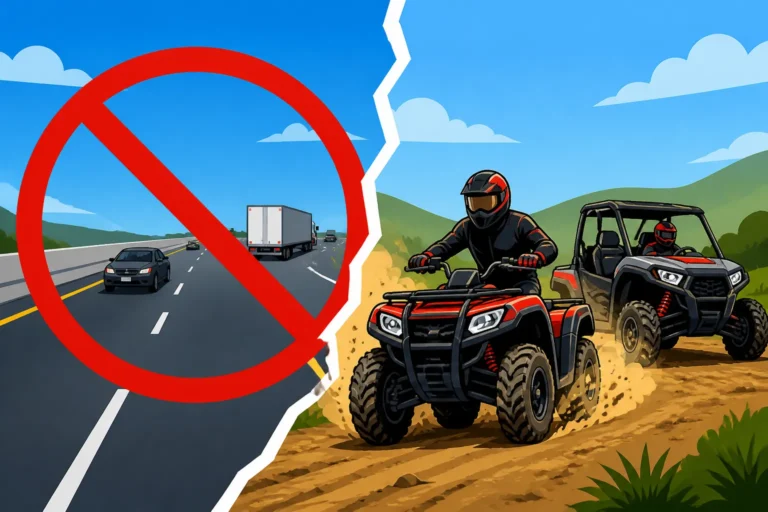
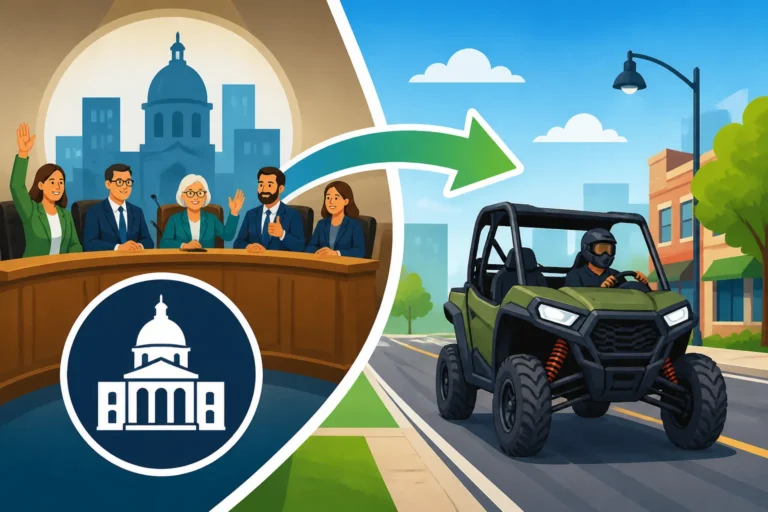
Kansas law generally restricts ATVs and UTVs from public roads, though there are specific exceptions, often varying by local ordinance. A common scenario for a citation might involve simply [Kansas Rules for Riding a County Road] without knowing the local rules. Many towns have enacted their own ordinances that permit UTVs on certain streets, but these often come with strict requirements for equipment, insurance, and sometimes even a city-issued tag. If you're riding in a city like Louisburg or Scott City that has an ordinance, but you fail to have a required city tag or proper insurance, you could easily receive a ticket.
Another frequent cause for citations is operating a machine that doesn't meet specific equipment standards for the road, even if an ordinance allows limited use. This could include missing turn signals, inadequate headlights, or not having a rearview mirror. For example, if you've added aftermarket parts, perhaps from a company like SuperATV, to enhance your machine's off-road capabilities, but these don't satisfy the requirements for street-legal use in a specific locality, you could still be cited. Sometimes, it’s simply being on the wrong type of road at the wrong time, such as riding on a state highway for anything other than crossing. Understanding these nuances is key to avoiding trouble in the first place, but if you've already received a citation, knowing what comes next is your immediate concern.
Beyond the Fine: Deconstructing Kansas Court Costs
The actual fine on your ticket is usually just a fraction of what you'll ultimately pay. Kansas court costs are a complex mosaic of statutory fees that fund various state and local programs, administrative services, and court operations. These aren't arbitrary; they're mandated by state law and local ordinances, and clerks have little discretion to waive them. This is often the most surprising part for individuals who have never been through the court system, as they expect a simple fine and instead receive a much higher total.
Mandatory State-Imposed Fees
Kansas law dictates a series of fees that are automatically tacked onto most criminal or traffic citations, including those for ATV and UTV violations. These aren't just for the local court; many are distributed to statewide funds. For instance, there are fees that contribute to the state judicial council, the law enforcement training center, or even victims' compensation funds. These charges exist regardless of the specific nature of your offense. Whether you got a ticket for riding in a prohibited area or for a minor equipment violation, these state-imposed fees are almost certainly part of your final bill. They are designed to ensure that the judicial system has the resources it needs across the state, and unfortunately, they become the responsibility of those who pass through the system.
Here's a simplified look at how some of these costs can accumulate:
| Type of Fee | Description | Applies To |
|---|---|---|
| Court Costs | Basic administrative fee for processing the case, covering clerical work, records, etc. | Almost all citations and court cases. |
| Judicial Council Fee | Supports the Judicial Council, which studies judicial administration and proposes improvements. | Added to various court actions, including traffic offenses. |
| Law Enforcement | Funds law enforcement training and education programs statewide. | Many criminal and traffic convictions. |
| Training Center Fee | ||
| Clerk's Fee | Specific fee for the services provided by the court clerk's office. | Cases requiring a clerk's interaction, such as filing documents or processing payments. |
| Electronic Filing Fee | Covers costs associated with maintaining electronic court records and filing systems. | If your case involves electronic filings (which most do now). |
| Victim's | Contributes to programs that assist victims of crime, even for non-violent offenses. | A portion of costs often goes to this fund, reflecting a broader public safety mandate. |
| Compensation Fund | ||
| Assessment Fee | General assessment used for various court operational needs not covered by other specific fees. | Common in many court systems as a catch-all for miscellaneous expenses. |
| Witness Fee | If a police officer or other witness has to appear in court and is paid for their time. | If you plead not guilty and your case goes to trial or a hearing where a witness is called. |
| Diversion Fee | If you qualify for and participate in a diversion program instead of a conviction. | Only applies if you enter into a diversion agreement, separate from fines and typical court costs, but still an additional expense. |
| Failure to Appear Fee | If you miss your scheduled court date without proper notification. | Automatically assessed if you fail to appear, often leading to a warrant for arrest. |
| Late Payment Penalty | If you don't pay your fine and costs by the due date. | Applied as a percentage or fixed amount on the outstanding balance, increasing your total significantly. |
Local Add-On Fees and Assessments
Beyond the state-mandated costs, cities and counties in Kansas often have their own local fees and assessments that they tack onto citations processed through their municipal courts. These might fund local drug abuse programs, city jail operations, or other community services. For instance, some cities might have a "technology fee" to upgrade their court's computer systems, or an "administrative fee" to cover local overhead. These local fees are in addition to the state fees, making the final tally even higher. This is one of the reasons why [Kansas City Tag Fees for a UTV] and associated court costs can vary significantly from one municipality to another, even for the same alleged offense. Always remember that when you're dealing with an ATV or UTV citation, you're not just facing the city's or county's displeasure; you're often contributing to their various operational budgets through these accumulated charges.
Penalties for Non-Payment or Failure to Appear
Ignoring a citation is perhaps the worst thing you can do for your wallet and your peace of mind. Failing to pay your fine and court costs by the due date can result in significant late payment penalties. These are typically assessed as an additional percentage of the outstanding balance, meaning your original bill only continues to grow. On top of that, if you fail to appear for your scheduled court date, the court can issue a warrant for your arrest, and you'll likely incur an additional "failure to appear" fee. [Kansas Title Late Filing Penalties] are one thing for paperwork, but court penalties for non-payment or missed appearances are far more serious, potentially leading to increased fines, suspension of your driver's license, or even jail time for certain offenses. These penalties are designed to compel compliance, and the court system takes them very seriously. It's always best to engage with the court promptly, even if you intend to dispute the citation.
Navigating the Aftermath: What to Expect When You Get a Summons
Receiving a citation can feel overwhelming, but understanding the process can help you feel more in control. The summons section of your ticket will tell you when and where you need to appear, or if you have the option to pay the fine without appearing in court. For ATV and UTV violations, this will typically be a municipal court for city ordinances or a district court for state statute violations. Don't just toss the ticket in your glove box and hope it goes away; that's a surefire way to escalate the problem and incur even more costs.
Your Options After Receiving a Citation
Once you have that piece of paper in hand, you generally have a few paths forward. The simplest, if you believe you are guilty and the fine is manageable, is to simply pay the fine and associated court costs by the due date. Many minor infractions offer this "pay-by-mail" or "pay online" option, which resolves the matter quickly and saves you a trip to the courthouse. However, this also means you're admitting guilt and those court costs will still apply. If you choose this route, make sure you know the exact amount owed, including all court costs, to avoid any late penalties. You can usually call the clerk's office to get the precise total.
If you believe you are not guilty, or if you want to request a lower fine or explore a diversion program, you will need to appear in court on the date specified on your citation. This is your opportunity to present your side of the story to the judge. Sometimes, with minor equipment violations, such as an issue with lighting that you've since fixed (perhaps with compliant upgrades from a reliable source like SuperATV), the prosecutor or judge might be willing to reduce the fine or even dismiss the charge upon proof of correction. It's always worth asking about [Kansas Court Costs for a Citation] and what options might be available to mitigate them.
The Importance of Court Appearance
If your citation requires a mandatory court appearance, or if you've decided to fight the charge or seek a reduced penalty, showing up on time and prepared is paramount. Failing to appear, as mentioned, can lead to severe consequences, including a bench warrant for your arrest and additional fees. When you appear, you'll typically have an opportunity to speak with the prosecutor (often a city attorney in municipal court) before seeing the judge. This informal negotiation can sometimes lead to a plea bargain, where you might plead guilty to a lesser charge or agree to specific conditions, often resulting in a lower fine, though court costs are still likely.
During your appearance, dress respectfully, be polite, and have any relevant documentation ready. This could include proof of insurance, photographs of your ATV/UTV modifications, or even specific city ordinance printouts if you're disputing a claim about permissible use. Even if your ultimate goal is just to understand the total costs better, the court is the place to do it. The clerk or judge can break down the full bill, clarifying exactly how much you owe for the fine versus how much for the administrative court costs. Knowing the breakdown can help you budget and understand the true impact of the citation.
Payment Plans and Options
For some individuals, especially if the fine and court costs are substantial, paying everything upfront simply isn't feasible. Many Kansas courts understand this and offer payment plans. These plans allow you to make scheduled installments over a period of time, often with an initial down payment. While this can provide much-needed financial relief, it's important to remember that entering into a payment plan doesn't waive the court costs; it just makes them more manageable. There might even be an additional administrative fee for setting up and managing a payment plan, so be sure to ask about all associated charges.
Additionally, some courts offer the option of community service in lieu of paying a portion of the fine or costs, though this is less common for simple ATV/UTV infractions. If you are struggling financially, it's always worth discussing your options with the court clerk or the judge. They are there to process cases, and while they can't simply erase legitimate charges, they can often guide you toward solutions that prevent further legal troubles like warrants or collection actions. The key is communication and not letting the problem fester.
Minimizing the Damage: Strategies for Handling Court Costs
Nobody wants to pay more than they have to, especially when it comes to unexpected court costs. While many of these fees are fixed by law, there are still strategies you can employ to minimize your overall financial hit and navigate the legal system more effectively. Being proactive and informed is your best defense against escalating expenses and complications.
Seeking Legal Counsel
For more serious violations, or if you're facing multiple citations, considering legal counsel might be a wise investment. An attorney specializing in traffic or municipal law can often negotiate with prosecutors to reduce charges, amend them to lesser offenses, or even get them dismissed. While hiring a lawyer comes with its own fees, these might be offset by the savings on fines, reduced court costs, or avoidance of points on your driver's license (if applicable to the offense). Lawyers are familiar with the intricacies of [Kansas Penalties for Illegal Road Riding] and other local statutes, understanding which arguments are likely to resonate with a judge or prosecutor.
Even for seemingly minor ATV/UTV infractions, an attorney can explain your rights, clarify the exact nature of the charges, and help you understand the full financial implications, including all those hidden court costs. They can also advise you on whether a diversion program is a good option for your specific case. Sometimes, the peace of mind and the potential for a better outcome are well worth the legal fees. Don't be afraid to at least consult with an attorney to weigh your options, especially if the citation involves significant fines or could impact your ability to drive.
Understanding Diversion Programs
For certain offenses, Kansas courts may offer diversion programs. Diversion is essentially an agreement between you and the prosecutor where you agree to certain conditions (e.g., pay a fee, attend a class, stay out of trouble for a period) in exchange for the charge being dismissed or never formally filed. If you successfully complete the diversion program, the offense often won't appear on your permanent record. While diversion typically involves a fee of its own, it can be a valuable option to avoid a conviction and potentially reduce the overall financial impact and long-term consequences.
It's important to ask the court or prosecutor if you qualify for a diversion program. These are not always available for every type of ATV/UTV violation, and eligibility can depend on your prior record. However, if offered, it's a path worth exploring. The diversion fee, while an added expense, is usually known upfront, giving you predictability, unlike the sometimes nebulous accumulation of court costs. It offers a clear path to resolution and a clean slate, which many riders find preferable to a formal conviction.
Preventing Future Citations
The absolute best way to avoid court costs is to avoid citations in the first place. This means being intimately familiar with Kansas's ATV/UTV laws and any local ordinances in areas where you ride. Always assume that public roads are off-limits unless you have explicit confirmation otherwise, usually through a city ordinance. For example, if you're considering riding in a specific town, take the time to conduct [Kansas Ordinance Lookups Before You Ride] to understand their specific rules for UTVs, golf carts, or ATVs. Pay close attention to equipment requirements – things like mirrors, brake lights, headlights, and turn signals – as these are common grounds for tickets.
Many riders modify their machines with parts from companies like SuperATV, which are fantastic for performance or utility off-road. However, if you're considering using your machine on any public roads where allowed by local ordinance, it's absolutely crucial that any modifications—especially those related to mirrors, turn signals, or lighting—comply with specific legal requirements. Non-compliant equipment can be a quick path to a citation, and then, you're looking at those unwelcome court costs. Always perform [Kansas Equipment Checks by Deputies] on your machine before heading out to ensure everything is up to snuff. Being informed, cautious, and compliant will save you a lot of headache and money in the long run.
Disclaimer
This article is for general informational purposes only and does not constitute professional advice. Laws, prices and regulations vary by location and change over time. Consult a qualified professional for guidance on your specific situation.