Kansas Riding Near Mapleton
If you’re searching for ATV or UTV riding near Mapleton, the key distinction is between a nearby riding destination and the surrounding countryside: private land, public roads, and trail areas all have different access rules. This guide explains how to plan a ride at Kansas Rocks Recreation Park, choose terrain that fits your machine and experience, and avoid a wasted trip.
What to Know About Riding Near Mapleton
Kansas Rocks is the main nearby off-road destination
Kansas Rocks Recreation Park is a private off-road riding area near Mapleton in Bourbon County. Its location makes it a natural place to start when looking for ATV and UTV riding in the area, especially if you want a managed destination rather than trying to piece together access across scattered rural roads or private property.
The surrounding landscape can look inviting from a map or roadside, but that does not mean it is open to riding. A gravel road, field entrance, creek crossing, or wooded track may be private, restricted, or intended for local traffic only. Do not assume that a path is a trail just because it appears on a digital map or has tire marks on it. Check the park’s current access information and stay within the area’s posted boundaries.
Because this is a private park, its rules and operating arrangements can differ from those for public riding areas. Confirm current opening information, check-in procedures, permitted machine types, rider requirements, and any trail closures before loading up. The page [Kansas Rocks Recreation Park](Kansas Rocks Recreation Park) provides a useful starting point for understanding the area, while [Kansas Rocks Park Rules for Riders](Kansas Rocks Park Rules for Riders) is a reminder to review the park’s own requirements before riding.
Private park access is different from riding on public land
A private riding park can offer a defined place to ride, but access depends on the owner’s rules. A state park road, Corps recreation area, county road, and private off-road park are not interchangeable. Each can have separate rules about where machines may travel, what equipment is allowed, and whether a permit or check-in is required.
That distinction matters even if you are familiar with the general area. A ride that begins at Kansas Rocks does not give you permission to continue along nearby roads or onto neighboring property. Stay within the park’s marked riding area, obey signs, and ask staff if a boundary, route, or closure is unclear. If you arrive and find that a gate or trail is closed, treat that as a real restriction rather than an invitation to find another way in.
For a broader look at what to expect from privately operated areas, review [Kansas Private Park Rules for Riders](Kansas Private Park Rules for Riders). If you are comparing destinations across the region, [Kansas Riding in Bourbon County](Kansas Riding in Bourbon County) can help put Mapleton in the wider local riding picture without confusing nearby geography with open access.
Choosing Routes and Terrain at Kansas Rocks
Match the route to your experience and machine
Rocky terrain can be fun, but it rewards patience more than speed. Before choosing a route, think about your experience, your vehicle’s clearance and tires, and whether everyone in your group is comfortable with uneven ground. A trail that feels manageable to an experienced rider may be stressful for someone on a first outing, especially if the route includes ledges, loose rock, ruts, or narrow turns.
Start with a conservative plan. If the park provides a trail map or difficulty descriptions, use them to identify a route that suits the least experienced rider in your group. Ask staff about conditions and route choices when you check in; they may be able to explain which sections are suitable for your machine and which areas require more skill. A lower-pressure first ride leaves room to learn how the terrain behaves before committing to more demanding sections.
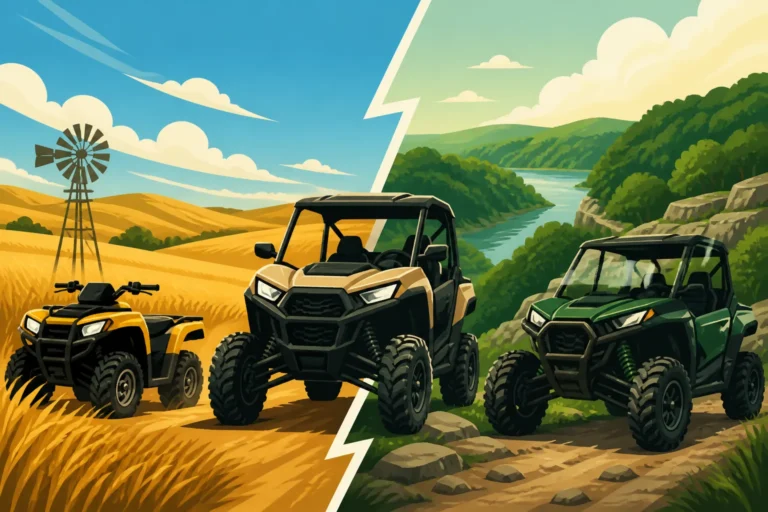
Machine type also matters. An ATV may be narrower and easier to position through tight turns, while a side-by-side can offer more seating and stability but may not fit every route. Do not assume that a route suitable for a quad will accommodate a wider UTV. Confirm fit and access directly with the park, then consult [Kansas Trails That Allow Side-by-Sides](Kansas Trails That Allow Side-by-Sides) if you are comparing other destinations.
Expect changing traction and ground clearance challenges
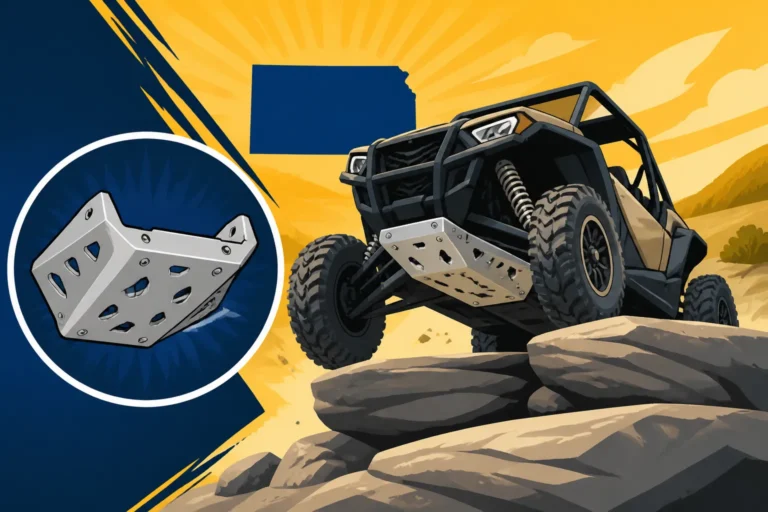
Rock does not always mean firm, predictable traction. Loose stones can shift under tires, and a dry-looking slope can become slick if there has been recent rain. Ruts and dips may hide rocks that can catch a skid plate or undercarriage. Take unfamiliar sections slowly, keep a safe following distance, and avoid trying to climb an obstacle at speed simply because another rider cleared it.
Your machine’s setup affects how comfortably it handles the terrain. Check tire condition and pressure according to the vehicle manufacturer’s guidance, and inspect the underbody before the trip if you expect rocky sections. A suitable skid plate can reduce the chance of damage from occasional contact, but it does not make every obstacle safe. If you are unsure whether a line is within your machine’s capability, stop somewhere safe and assess it rather than finding out halfway through.
Weather can change the feel of a route. Recent rainfall may create slick rock, muddy approaches, or sections that the park has closed to prevent damage. Dry conditions can mean more dust and reduced visibility behind other vehicles. Check park updates before leaving, and be ready to adjust your plan when you arrive. [Kansas Trail Conditions Before You Tow](Kansas Trail Conditions Before You Tow) is a useful related read for building the habit of checking conditions before you make the drive.
Planning the Trip From Mapleton
Check access, hours, and rules before you leave
The most frustrating trip problems often happen before a machine reaches the trail: a gate is closed, the rules have changed, or a rider arrives without something required for check-in. Reduce that risk by confirming the park’s current operating information directly before departure. Ask about hours, registration or waiver procedures, age and passenger rules, machine restrictions, trail closures, and whether reservations are needed for your intended visit.
Do not rely on an old social media post, a third-party map listing, or a friend’s memory as your only source. Park schedules and access arrangements can change, and a weekend that worked last season may not be available now. If you are traveling from outside the immediate area, contact the park before you load the trailer. It is much easier to adjust plans at home than to discover a closure after driving to Mapleton.
Pack paperwork and essentials in a way that is easy to find at check-in. Depending on the park’s requirements, that may include identification, vehicle information, proof of ownership, or completed waivers. If your vehicle has a title or registration question, remember that Kansas titling and permission to ride are separate matters. [Kansas ATV Trails: Where You Can Actually Ride](Kansas ATV Trails: Where You Can Actually Ride) offers useful context on the difference between owning a machine and having a place where it is allowed.
Use maps as planning tools, not permission slips
A route line on a phone does not prove that a trail is open or that you have permission to ride it. Mapping tools can help with orientation, trip planning, and understanding the general area, but posted signs and the park’s current instructions take priority. Before riding, make sure you understand the official route system and can identify where your group is allowed to go.
Some riders use onX Offroad to organize route information and keep track of where they are during a ride. It can be useful for planning, especially when you want to orient yourself before arriving or keep a route available on your phone. Still, treat any map layer as a reference rather than authorization: confirm access with Kansas Rocks and follow its boundaries and closures.
If cell service is weak or you are riding somewhere unfamiliar, prepare before leaving home. Download any map information you intend to use, bring a power bank, and agree on a simple regrouping point in case riders become separated. With onX Offroad or any other mapping app, check that the map is available offline before you arrive rather than assuming your phone will have a signal at the trailhead.
| Planning question | What to confirm before riding | Why it matters |
|---|---|---|
| Is the park open? | Current operating information and any closures | Prevents a wasted drive |
| Is your machine allowed? | ATV or UTV access, width limits, and route restrictions | Avoids arriving with a vehicle that cannot use the intended trails |
| Which routes fit your group? | Trail difficulty, current conditions, and staff recommendations | Helps match terrain to rider experience |
| What does check-in require? | Waivers, identification, vehicle details, and other park instructions | Makes arrival smoother |
| Can you navigate without service? | Offline map availability, battery, and a meeting point | Helps your group stay oriented |
| Are you staying inside the riding area? | Official boundaries, signs, and route markers | Prevents accidental trespass |
Preparing Your ATV or UTV for a Mapleton Ride
Make a basic pre-ride inspection
A few minutes of inspection can prevent a small problem from ending the day early. Check tires for cuts, embedded debris, and low pressure; look over the wheels and visible suspension components; and confirm that brakes, throttle, steering, and lights work as expected. For a UTV, check seat belts and doors or nets. For an ATV, check that the controls are functioning smoothly and that the machine is appropriate for the rider.
Pay attention to anything that could be loosened by vibration or rough terrain. Look for fluid leaks, loose fasteners, damaged guards, or a winch connection that needs attention. Bring the basic tools and repair items recommended for your machine, but do not use a trail-side fix to justify riding a vehicle that is unsafe. If a brake, steering, or tire issue appears during the day, stop and deal with it before continuing.
Dust, mud, and grit can also affect equipment. Carry eye protection that suits the conditions, and clean or inspect air intake areas as recommended in your owner’s manual after a dusty outing. If you have just serviced the machine, take a short test ride close to home before heading to the park. Finding a loose fitting or unfamiliar noise near your garage is far less stressful than discovering it halfway through a ride.
Pack for the people as well as the machine
A comfortable ride depends on more than vehicle preparation. Bring water, weather-appropriate layers, snacks, basic first aid supplies, and any required protective gear. The weather can feel different on an exposed trail than it did while packing at home, and a long ride can be tiring even when the route is not especially difficult. Keep essentials secured so they cannot shift or fall off over rough ground.
Groups should agree on a pace and a communication plan before starting. Decide who leads, who rides last, and where everyone will stop if the group becomes separated. For a family outing, choose routes and ride lengths that fit the youngest or least experienced rider rather than asking them to keep up with the fastest person. If a rider feels uncomfortable, stopping to reassess is a sensible decision, not a failure.
A basic recovery plan is useful even at a managed park. Know how your group will respond to a disabled machine, a minor injury, or a rider who needs to return early. Keep phones charged, but do not make cell service your only plan. For a wider checklist on supplies and riding preparation, see [Kansas OHV Camping With Trail Access](Kansas OHV Camping With Trail Access), particularly if your trip includes an overnight stay or a longer drive.
Making the Most of a Ride Near Mapleton
Keep the group safe and the trails in good shape
Ride at a speed that allows you to stop within the space you can see. Blind rises, tight bends, dust clouds, and uneven surfaces all limit reaction time. Leave room between vehicles so the rider in front does not throw rocks directly at the next machine or force the group to brake abruptly. When you encounter another group, slow down and follow the park’s passing rules.
Stay on the designated route. Cutting around a muddy patch or creating a new line around an obstacle can widen a trail and damage vegetation, especially when several riders repeat the same maneuver. If a section looks impassable, stop and ask staff or use the route they recommend. Do not ride through a closed area simply to avoid turning around.
Be considerate at the trailhead and in shared spaces. Keep machines from blocking access, follow posted noise guidance, and make sure everyone in your group knows where to wait. If you are taking a break, choose a place that does not obstruct a trail or create a hazard for other riders. Respectful behavior helps keep a private park enjoyable for visitors and workable for the people who maintain it.
Build a flexible day rather than racing through a checklist
It is tempting to plan a full day around a list of trails, especially if you have traveled a long way. But a better outing often leaves room for changing conditions, breaks, and a route adjustment. Start with a manageable section, see how the group handles it, and then decide whether to continue into more challenging terrain. That approach is particularly helpful when riders have different experience levels or when the weather has recently changed.
Set an agreed turnaround time before the group gets spread out. A rider who is tired or uncomfortable may not say so if everyone else seems eager to keep going. Regular stops give people a chance to drink water, check equipment, and speak up about a concern before it becomes a bigger problem. If the park’s rules or staff guidance limit where or when you can ride, plan around those restrictions rather than trying to squeeze in one last loop.
Use onX Offroad or another navigation tool to support orientation, but keep the official park map and signs at the center of your decisions. If your phone’s displayed position seems inconsistent with a trail marker, stop safely and resolve the mismatch before moving on. Navigation should make the day less stressful, not encourage riders to follow an uncertain line into a closed or unauthorized area.
Know what to verify for your next visit
After the ride, note what worked and what you would change: the route difficulty, the machine’s setup, the gear you used, and how long your group wanted to ride before taking a break. Those details make it easier to plan a return visit that fits your group. They can also help you decide whether you want a more challenging route, a shorter family outing, or a different riding destination in the region.
Before each visit, check the park’s current information again rather than assuming last time’s conditions still apply. Operating details, trail status, and rules can change. If you are considering other terrain nearby, compare the destination’s access rules and vehicle limits instead of relying only on distance from Mapleton. A close location is not necessarily a suitable or legal place to ride.
For broader comparisons, [Kansas Trails With Rock Sections](Kansas Trails With Rock Sections) can help you think about the kind of terrain you enjoy, while [The Rock Park at Mapleton Opens Only on Weekends](The Rock Park at Mapleton Opens Only on Weekends) is a reminder to verify operating days directly before making plans. The best trip starts with confirmed access, a machine suited to the route, and a group willing to ride within its comfort level.
Disclaimer
This article is for general informational purposes only and does not constitute professional advice. Laws, prices and regulations vary by location and change over time. Consult a qualified professional for guidance on your specific situation.