Kansas OHV Camping With Trail Access
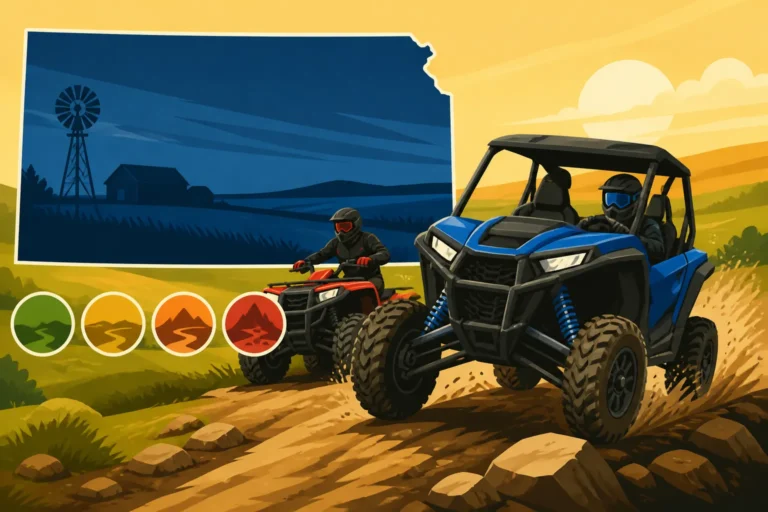
Finding a Kansas campground that lets you ride straight from your campsite sounds simple—until you discover that a nearby lake, public campground, or dirt road does not automatically connect to legal OHV trails. This guide explains where camping and riding can work together, how to check access before towing, and what to confirm with each land manager or private park.
What camping with trail access means in Kansas
Nearby camping is not always ride-from-camp access
In Kansas, “camping with trail access” can describe several different arrangements. A private off-road park may have campsites on the property, so you can unload and ride within the park under its rules. At a lake or reservoir, a campground may be a short drive from a designated riding area, but that does not mean you can ride your ATV or UTV between the two.
That distinction matters after a long drive. It is easy to see a campground and an OHV area on the same map and assume there is a legal route connecting them. The route might cross a public road where off-road machines are not allowed, pass through land managed for a different purpose, or include a stretch where riding is limited to authorized vehicles.
Before you book, ask the campground or riding-area operator a precise question: “Can I ride my machine from my campsite to the designated riding area, or do I need to trailer it?” That answer is more useful than simply asking whether the campground is “near trails.”
Kansas has a mix of riding settings
Kansas riding opportunities include Corps of Engineers areas, private parks, and designated OHV areas. Each has a different relationship between camping and trail access. A private riding park may combine riding and camping on one property, while a public riding area may be near a separate campground but require you to haul the machine between them.
The state’s public riding options are not arranged like a large, connected trail network. Kansas state parks generally are not OHV trail systems, and a permit that allows certain vehicle use on park roads does not automatically authorize riding cross-country or on hiking trails. Check [Kansas ATV Trails: Where You Can Actually Ride] for a broader look at riding locations and the differences between them.
For a practical overview, start with this comparison. Treat each entry as a planning lead, not a guarantee of current access, campsite availability, or a legal ride route from camp.
| Area or setting | Camping relationship | What to verify before you go |
|---|---|---|
| Syracuse Sand Dunes | Riding and camping are available at the same private park | Current campsite arrangements, machine rules, reservation needs, and conditions |
| Kansas Rocks Recreation Park | Private riding park with camping options associated with visits | Whether camping is open for your dates, site type, and park-specific rules |
| Tuttle Creek ORV area | Riding area near reservoir recreation and camping options | Whether your chosen campground connects legally to the riding area or requires trailering |
| School Creek ORV area | Designated riding area near Milford Lake recreation options | Machine-width limits, access route, operating conditions, and separate campground rules |
| Other Corps recreation areas | Campgrounds may be near roads, water, or riding opportunities | Whether OHV use is allowed in the specific area and on the route you intend to use |
The land manager sets the rules
A campsite and a riding area may be managed by different organizations, even when they sit near one another. A campground host can answer questions about campsite access, quiet hours, fire restrictions, pets, and sanitation. The riding-area operator or land manager determines where machines may travel, which vehicles are allowed, and whether trails are open.
Ask each party about its own part of the trip. The campground may not know whether a machine can use a nearby road, and a riding park may not control the campground next door. If you are visiting a Corps area, check the rules for that specific recreation site rather than assuming every Corps property allows the same kind of riding. [Kansas Corps of Engineers Riding Areas] is a useful starting point for understanding that distinction.
A quick map check can help you identify possible campgrounds and route questions, but it cannot replace permission from the land manager. Tools such as onX Offroad can help you review mapped riding areas and plan a route, yet the operator’s current rules and posted signs should settle whether that route is open to you.
Kansas places to consider for a camping and riding weekend
Syracuse Sand Dunes
Syracuse Sand Dunes is a private off-road destination in Hamilton County, in western Kansas. It is a natural option to investigate if you want camping and riding at one location rather than finding a separate campground and hauling your machine back and forth. The park is known for sandy riding, which makes it a different experience from the rock, clay, and mixed terrain found elsewhere in the state.
The sand itself changes how a weekend feels. Machines work harder in soft stretches, dust can build quickly when the weather is dry, and riders may need to adjust their pace and tire setup to the conditions. A group that is comfortable on hard-packed paths may find deep sand more demanding, especially if machines are heavily loaded with passengers or camping gear.
Before heading out, confirm which camping arrangements are available for your dates, whether you need to reserve, and what the park requires for machines and riders. Ask about riding-area boundaries, entry procedures, quiet hours, fire rules, and any weather-related closures. For park-specific details and preparation, see [Syracuse Sand Dunes Park in Kansas] and [Kansas Syracuse Dunes Park Rules].
Kansas Rocks Recreation Park
Kansas Rocks Recreation Park, near Mapleton in Bourbon County, offers a very different kind of ride. Its terrain is associated with rocky routes and ledges, so it can be a good fit for riders looking for technical challenges rather than a long, easy cruise. A campsite at or near a private riding park can make the weekend easier: you can keep the trailer parked and spend more time riding, provided the park’s current arrangements allow it.
Rock riding makes preparation especially important. A tire or underside problem can turn a fun day into a slow recovery, and a route that looks manageable from the parking area may feel quite different when you meet uneven ledges. Bring basic recovery equipment, inspect your machine before unloading, and ride within the limits of your experience and your vehicle.
Check the park’s current camping options, seasonal access, reservations, passenger rules, and machine requirements directly before making plans. Private parks set their own rules, and the details can affect everything from which trails your machine can use to where you may park a trailer. The park overview at [Kansas Rocks Recreation Park] and the general guidance in [Kansas Private Park Waivers and Rules] can help you prepare questions.
Tuttle Creek and School Creek
Tuttle Creek ORV Area and School Creek ORV Area are designated riding locations associated with reservoir recreation. They are worth investigating if you want to combine a ride with a broader lake-area trip, but do not assume that a nearby public campground has a direct machine route to the riding area. The campground’s proximity may be convenient for towing without making it legal to ride there.
School Creek has machine restrictions that are particularly important for side-by-side owners. Some riding areas limit vehicle width, and a wide UTV may not fit even if a smaller quad can use the trails. Check your machine’s actual width against the operator’s current requirements instead of relying on a model name or a rough estimate.
For both areas, verify operating hours, entry points, permitted machine types, trail conditions, and campground access separately. The details can change with maintenance, weather, or land-management decisions. Begin with [Tuttle Creek ORV Area in Kansas] and [School Creek ORV Area in Kansas], then contact the relevant manager to confirm how your chosen campsite fits into the plan.
How to choose the right campground for your machine
Decide whether you want a ride-from-camp weekend
If your priority is to park the truck and trailer once, choose a destination where the campground and riding area are clearly part of the same operation or where the operator explicitly confirms a legal connection. This can reduce setup time and make it easier to return to camp for lunch, gear, or a rest.
Ride-from-camp access is especially convenient for families and groups with different stamina levels. One rider can head back early while others continue, and you do not have to organize a second tow vehicle or shuttle. Still, “same property” does not necessarily mean every path is open to every machine. Stay on routes that the park identifies as approved for your vehicle.
If a park does not offer confirmed ride-from-camp access, treat it as a campground-plus-riding trip. That can still work well: camp nearby, trailer to the designated area, and avoid the temptation to use an unapproved road as a shortcut. A planned ten-minute trailer move is much less stressful than discovering a closure or receiving a citation after setting up.
Match the campsite to your setup
A small tent site may not be suitable for a truck, long trailer, and side-by-side. Ask whether the site can accommodate the full rig, whether the trailer can remain attached, and whether there is a separate staging or overflow parking area. A site that fits the camper but not the trailer can complicate the entire weekend.
Think through the basics of your own setup: do you need electrical hookups, a water source, a dump station, a level parking pad, or enough room to unload safely? Private parks and public campgrounds vary widely. A more rustic site may be perfectly comfortable if you arrive prepared, but it can be frustrating if you expected services that are not there.
Also consider the route from the entrance to your site. A long trailer may have trouble on a tight turn, soft ground, or a narrow lane. If you are towing a heavy rig, ask whether recent rain has affected access roads and whether there is a safe place to turn around if your chosen site is unsuitable.
Plan for your group, not just the lead rider
A destination that suits an experienced rock crawler may be a poor match for a family with young riders. Look at the riding style, difficulty, machine limits, and supervision rules before choosing a campground. If your group includes both beginners and experienced riders, ask whether there are different route options or whether the park allows riders to split into smaller groups.
Consider how much time everyone actually wants to spend on a machine. A family may prefer a campground with room to relax and a riding area that can be visited in a few-hour block. A group of adults may be comfortable spending most of the day on technical terrain and returning to camp dusty and tired. Planning around the least experienced rider often makes the weekend safer and more enjoyable.
For a new destination, onX Offroad can be one part of your route-planning process: use it to get oriented before you tow, then compare what you see with the park’s own map and instructions. Do not treat a mapped line as permission to ride, and do not assume a route shown on a screen is open, maintained, or suitable for your vehicle.
How to verify access before you tow
Contact the campground and riding-area operator
Start with the people responsible for the exact place you plan to visit. Ask the campground about reservations, site dimensions, trailer parking, water, power, restrooms, fires, pets, and arrival procedures. Ask the riding-area operator about machine eligibility, open areas, trail conditions, riding hours, access points, sound requirements, and whether the campground connects to the riding area.
Be direct about your machine. “I have a UTV” may not provide enough information if the park has width or vehicle-type limits. Share the approximate width, number of seats, and whether you will be towing a trailer. If you ride a youth quad or a modified machine, mention that too.
Write down the name of the person or office you contacted and the date of the conversation. If the answer is unclear, ask for the rule in writing or request the official page that explains it. This is useful when a rule involves a narrow access route, temporary closure, or separate permit.
Check maps, signs, and boundaries carefully
Use maps to understand the layout, not to make the final legal decision. onX Offroad may help you see the general location of a riding area and nearby land boundaries, which is useful when you are comparing campgrounds or planning a tow route. However, private land boundaries, closed areas, seasonal restrictions, and trail status still need to be confirmed with the responsible operator.
At the site, follow posted signs even if a downloaded map suggests a different route. Signs may reflect a closure, a change in access, a private boundary, or a vehicle restriction that is not apparent from a phone map. If signs conflict with what you were told, stop and ask before continuing.
Download or carry essential information before leaving home. Cell service can be limited in rural areas, and a map that depends on a live connection may not be available when you need it. Keep the campground address, riding-area directions, contact details, and a backup route accessible offline or on paper. [Kansas Trail Conditions Before You Tow] offers a helpful reminder that trail status deserves a fresh check, not just a glance at an old map.
Confirm what “open” means
A riding area can be open while some routes are closed. A campground can accept guests while a nearby trail system is temporarily unavailable. A private park may allow camping but limit riding due to weather or maintenance. Confirm the status of the specific area and activity you plan to use.
Ask whether the open area accommodates your machine. A trail may be open to quads but not a wide side-by-side; another may allow UTVs but be unsuitable for a novice driver. If the operator uses trail ratings, ask how they define them and whether the route has recently changed.
Weather can also reshape access. Rain may leave clay or rocky sections unsafe, while dry conditions can increase dust and reduce visibility. Sand may remain rideable when other terrain is not, but that does not mean every route is safe for every group. Check [Kansas Trail Closures After Rain] and follow the operator’s instructions rather than trying to judge a closed route from the parking area.
What to pack for camping and riding
Prepare the machine for the terrain
The best preparation depends on where you are riding. A sandy weekend at Syracuse Sand Dunes calls for different considerations than rocky routes near Mapleton. Inspect tires, brakes, steering, battery connections, belts or chains, fluids, and lights before leaving. A minor issue is easier to handle in your driveway than at a remote trailhead.
Carry the recovery equipment that fits your machine and the terrain. Depending on your setup and park rules, that may include a winch, tow strap, tire repair supplies, basic tools, and a way to communicate with your group. For rocky terrain, protect vulnerable underbody components and be conservative around ledges. For sand, keep an eye on heat and machine strain, and avoid burying a vehicle by charging into soft sections without a plan.
Do not add accessories that make your machine wider than the park’s limit without checking first. Tires, spacers, and other modifications can affect actual width. Measure the machine in its riding configuration, including any added equipment that changes its outer dimensions.
Pack for weather and rural conditions
Kansas weather can change quickly, and open riding areas offer little shade or shelter. Pack drinking water, sun protection, weather-appropriate layers, and rain gear. A windy day can make a long ride tiring even when the temperature seems comfortable, while summer heat can make an afternoon ride feel much longer than expected.
Bring a first-aid kit and agree on what the group will do if someone is injured or a machine breaks down. Keep a charged phone, portable power source, and any emergency communication device you rely on. Let someone outside the group know where you are going and when you expect to return.
For camping, pack according to the site’s services rather than assuming every facility will be available. Confirm whether you need to bring drinking water, firewood, cooking fuel, or waste bags. Follow posted fire restrictions, especially during dry or windy conditions, and never assume a fire ring means fires are allowed during every period.
Keep camp and riding gear separate
Dust, mud, sand, and fuel smells have a way of getting into everything. Use separate containers or bags for clean clothes, riding layers, tools, food, and recovery gear. Keep food sealed and away from the area where you refuel or maintain machines.
Bring a small cleanup kit for hands, boots, and helmets. A simple plan for dirty gear helps keep the sleeping area comfortable, especially when the campground has limited wash facilities. If you are camping with children, set aside a clean place for helmets and eye protection so essential gear does not get misplaced under blankets or food bags.
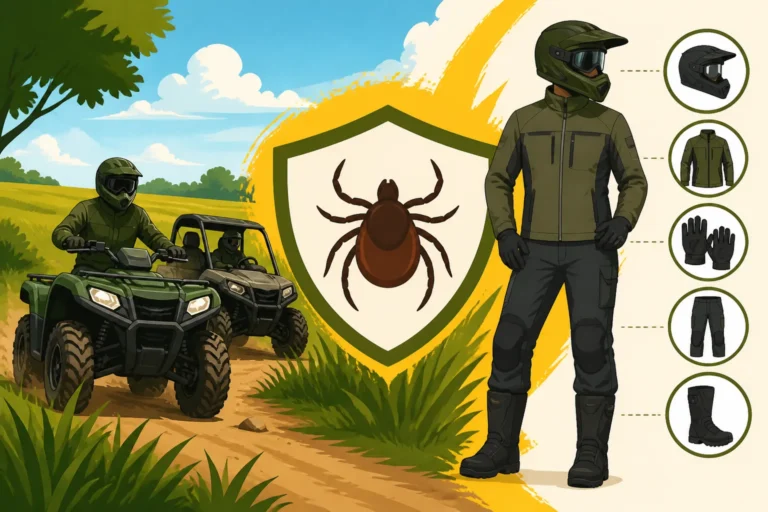
Make a final check before unloading. Confirm that you have helmets, eye protection, keys, water, and any required park documents. If a rider needs a prescription medication, spare glasses, or a specific piece of safety equipment, keep it with that person rather than buried in the trailer.
Rules and safety that can affect your weekend
Public campground rules do not authorize trail riding
A campground road, access lane, or nearby gravel road is not automatically an OHV route. The machine might be allowed only on designated roads, only during specific hours, or not at all. A state park permit or campground reservation does not grant blanket permission to ride off-road or onto trails that are not designated for that use.
Do not ride through a campground to reach an area unless the campground or land manager specifically says that route is allowed. This is a common source of confusion because a route may look like a convenient connector on a map. If the only legal way to reach the riding area is to load the machine onto a trailer, do that.
The same caution applies to public land near a campground. A patch of open ground, field edge, or utility road is not an invitation to ride. Stay on the authorized route and respect property boundaries. For more on the difference between designated areas and general public access, see [Kansas KDWP Land Rules for Machines].
Private parks have their own operating rules
Private riding parks establish rules for admission, vehicle types, rider conduct, passengers, helmets, noise, alcohol, camping, and closures. Read them before you arrive, and ask about anything that could affect your group. A park may require a waiver or have separate rules for children and passengers.
Do not assume that rules at one Kansas park apply at another. A passenger who is permitted on one machine at one location might not be allowed at another, and a vehicle that fits one park’s trails may exceed another park’s width limit. Follow the rules posted at the entrance and any instructions from staff.
If a park closes a route or asks riders to stop, comply promptly. A closure may be tied to safety, trail damage, wildlife, weather, or maintenance. Trying to continue because a route appeared open earlier can put your group, the park, and other visitors at risk.
Ride with a plan and a realistic pace
Agree on a lead rider and a sweep rider before leaving camp or the staging area. Keep the group together at junctions, set a turnaround time, and identify a meeting point in case riders become separated. If one machine has a mechanical issue, decide in advance whether the group stays together or sends two people for help.
Ride to the least experienced person’s comfort level. A route that seems manageable to a seasoned rider can become intimidating when a novice is fatigued, worried about damaging a machine, or carrying a passenger. Take breaks, reassess conditions, and turn around when the group is no longer enjoying the ride.
Give other trail users room and control your speed around campgrounds, trailheads, and blind corners. Dust can obscure visibility, and a quiet morning at a campsite is not the time for unnecessary engine revving. Respecting neighbors and park staff helps keep riding areas welcoming for future visits.
Planning the weekend from departure to checkout
Build the trip around the access point
Choose your campground only after you know how you will reach the riding area. If the machine can legally travel from camp to the trail system, confirm the route and any time or vehicle restrictions. If not, identify where you will park the trailer, unload, and stage the machines.
Plan your arrival in daylight when possible. That gives you time to find the site, check the ground, park the trailer, unload safely, and review the riding-area layout before setting out. Arriving late can turn a simple setup into a frustrating search for an open entrance or a safe place to maneuver.
Keep a backup plan. If weather closes the trails or the campsite is unsuitable, know whether you can move to another campground, shorten the ride, or switch to a different activity. Checking maps with onX Offroad before departure can help you understand the general area and compare possible routes, but confirm any alternatives with the relevant land manager before using them.
Make reservations and arrival details part of the plan
A campground listing may not answer the questions that matter to a machine owner. Confirm whether the site allows trailers, whether unloading is permitted at the campsite, and whether you need to arrive during office hours. Ask about late arrivals, gate access, check-in procedures, and where to park if you reach the campground before your site is ready.
For private parks, make sure you understand how admission and camping are coordinated. Some destinations handle those arrangements together, while others may require separate steps. Clarify whether riding access is included with the campsite or handled independently, and ask what documents or waivers each rider must complete.
Keep the confirmation information handy, along with the address and phone number for the campground and riding area. Rural directions can be confusing, and a phone map may reroute you onto roads that are unsuitable for a long trailer. A written backup helps if service drops or you need to ask for directions.
Leave the campsite and trails in good condition
Before leaving, check the site for trash, food scraps, loose hardware, and forgotten riding gear. Use the campground’s waste and recycling facilities as directed. If a machine leaked fluid or shed a broken part, tell the operator rather than leaving it behind.
At the riding area, stay on designated trails and avoid cutting corners around muddy or damaged sections. A shortcut can widen a trail, disturb vegetation, or create a new route that the land manager never approved. If you encounter damage or a safety concern, report it to the operator.
A good weekend is one you can repeat without creating problems for the next visitor. Keep noise reasonable, follow fire rules, respect private property, and leave gates and signs as you found them. Those habits matter in a state where access is spread across different landowners and park operators.
A practical pre-trip checklist
Questions to answer before booking
Before committing to a campground, make sure you can answer the following:
- Is the riding area open for the dates of your trip?
- Does it allow your specific machine, including its actual width and seating setup?
- Is camping on the same property, nearby, or in a separate recreation area?
- Can you legally ride from camp to the trails, or must you trailer?
- Are reservations needed for the campsite, riding access, or both?
- What are the operator’s rules for children, passengers, helmets, noise, and fires?
- What facilities are available, and what must you bring?
- Are there temporary weather, maintenance, or seasonal restrictions?
- Where will you park the truck and trailer while riding?
- Is there a safe backup plan if the trails close?
A quick phone call can resolve several of these questions at once. Mention your group size, machine type, trailer length, and camping needs so the answer applies to your actual setup.
A simple decision guide
| If your priority is… | Look for… | Do not assume… |
|---|---|---|
| Riding without moving the trailer | A private park or site that confirms ride-from-camp access | That nearby means directly connected |
| Sand riding and camping together | A destination such as Syracuse Sand Dunes | That conditions and facilities are unchanged from a previous visit |
| Rocky, technical terrain | A private park such as Kansas Rocks | That every trail suits every driver or vehicle |
| A lake-area weekend | A designated riding area near reservoir recreation | That a campground road is an approved OHV connector |
| Taking a wide UTV | Written confirmation of vehicle-width eligibility | That a machine fits because another UTV has used the area |
| Flexible route planning | Current operator information plus an offline map | That a mapped route is open or legal |
Use the list as a way to narrow options, then verify the details directly. If you rely on a mapping app, use it to orient yourself and plan questions—not as a substitute for permission. onX Offroad can be helpful for reviewing the area before departure, but the campground, park operator, and posted rules remain the authorities for access.
The most useful final check
The evening before departure, confirm that the campground and riding area are still open, check the forecast, and review any posted closures. Make sure you have directions that work without cell service, enough fuel to reach your destination, and a plan for storing the machine securely overnight.
For an unfamiliar area, avoid building the whole weekend around an unverified trail connection. If the operator cannot confirm ride-from-camp access, plan to trailer between the campground and the riding area. That small adjustment can prevent a much bigger headache once you arrive.
Kansas has worthwhile options for combining camping and OHV riding, but the best trip depends on matching the campground, machine, and access rules before you load the trailer. Start with a destination that fits your riding style, confirm the details with the people who manage it, and leave room in the plan for weather or trail changes.
Disclaimer
This article is for general informational purposes only and does not constitute professional advice. Laws, prices and regulations vary by location and change over time. Consult a qualified professional for guidance on your specific situation.