Dirt Bikes and Quads Only
A side-by-side can look like it belongs on any ATV trail, but some Kansas riding areas are limited to dirt bikes and quads. That distinction matters before you hitch up and drive to a trailhead. This guide explains what “dirt bikes and quads only” means, where to check the restrictions, how to prepare, and what to confirm before you ride.
What “Dirt Bikes and Quads Only” Means in Kansas
The machine type matters as much as the trail
A trail marked for dirt bikes and quads is not automatically open to every off-road vehicle. Dirt bikes are motorcycles designed for off-road use, while quads are four-wheeled ATVs. A side-by-side, golf cart, or utility vehicle may be excluded even if it can physically fit on the path.
That difference can surprise riders who have used their side-by-side on wider trails elsewhere. A trail may look roomy at the parking area and still have a rule that limits which machines can enter. Follow the posted vehicle restrictions rather than judging access by appearance.
School Creek ORV Area near Milford Lake is one Kansas riding location associated with a dirt-bike-and-quad-only restriction. The area is also described as having a 50-inch limit, so check both the permitted machine types and any width requirement before setting out. The restriction is not a general rule for every Kansas riding area; different parks and public recreation sites set their own conditions. For broader context, see [Kansas ATV Trails: Where You Can Actually Ride] and [Kansas Corps of Engineers Riding Areas].
How a 50-inch restriction affects your choice
A width limit can rule out a machine even when it is technically an ATV or can travel along narrow trails. For an owner of a wide utility quad or a side-by-side, this is an important distinction: “off-road vehicle” is a broad everyday phrase, not a guarantee that a particular vehicle is allowed.
Measure the machine as the riding area defines width, and check whether accessories such as tires, wheel spacers, or other add-ons affect that measurement. Do not rely only on a sales brochure or the vehicle’s model name. If the rule is unclear, ask the land manager how the measurement is taken. The specific School Creek restriction is discussed in [Kansas's 50-Inch Limit at School Creek].
The table below is a starting point for understanding the terms. The posted rules at the riding area take precedence.
| Machine type | Typically included in a dirt-bike-and-quad-only rule | What to confirm before riding |
|---|---|---|
| Off-road dirt bike | Yes, when the area permits dirt bikes | Any equipment, sound, or safety requirements |
| ATV or quad | Yes, when the area permits quads | Width limit and any machine-specific restrictions |
| Side-by-side or UTV | Not necessarily; often excluded by a dirt-bike-and-quad-only rule | Whether UTVs are explicitly allowed |
| Golf cart or utility vehicle | Do not assume it is permitted | The area’s approved vehicle list and access rules |
If you own more than one machine, check each one individually. A two-person ATV and a side-by-side may look similar in a driveway, but the riding area may treat them differently. [Kansas Trails That Allow Dirt Bikes] and [Kansas Trails That Allow Side-by-Sides] can help you compare areas before planning a trip.
“Only” does not answer every access question
The phrase tells you something important about eligible vehicles, but it does not settle every practical detail. You still need to confirm whether the riding area is open, which routes are available, whether there are seasonal restrictions, and what rules apply to helmets, passengers, sound, or trail use.
It is also worth separating a riding-area rule from a Kansas-wide rule. An area’s posted restrictions apply to that property or trail network. Another site may have different vehicle limits, permit requirements, or hours. Never assume that permission to ride one machine at one location transfers to another.
Planning a Ride at a Dirt-Bike-and-Quad Area
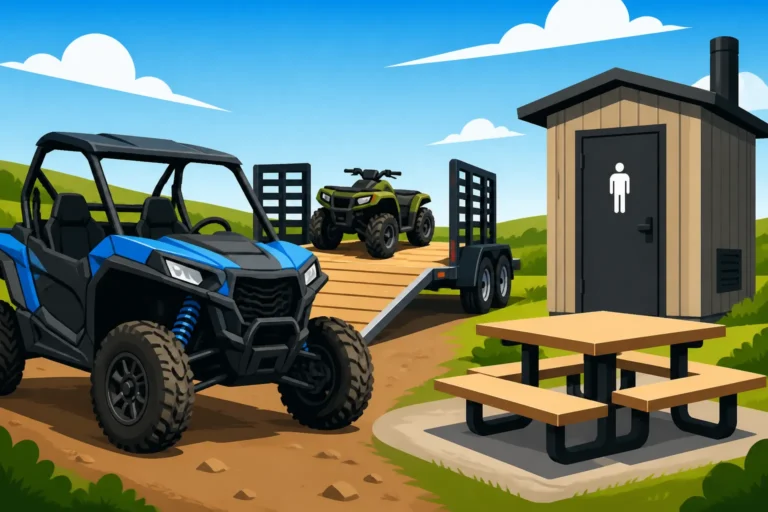
Confirm access before loading the trailer
A trip can unravel before the first trail if you arrive to find a gate closed, a route restricted, or the machine in your trailer outside the allowed vehicle class. Before leaving, check with the land manager or the official recreation information for the specific site. Look for current notices about closures, construction, weather impacts, and permitted vehicles.
For School Creek, verify the location and the conditions for the particular access point you plan to use. Public recreation areas can have multiple roads and entrances, and a map pin alone does not confirm that a trailhead is open to riding. If you are unsure whether your ATV qualifies as a quad under the posted rule, ask directly and describe the machine rather than relying on a broad label.
A mapping app can make trip planning easier, especially when you are unfamiliar with rural roads around Milford Lake. Some riders use onX Offroad to review route context and save information for areas where cell service may be limited. Treat app details as a planning aid, not as permission to ride: confirm access and restrictions with the land manager. A saved line on a screen does not override a gate, sign, or closure notice.
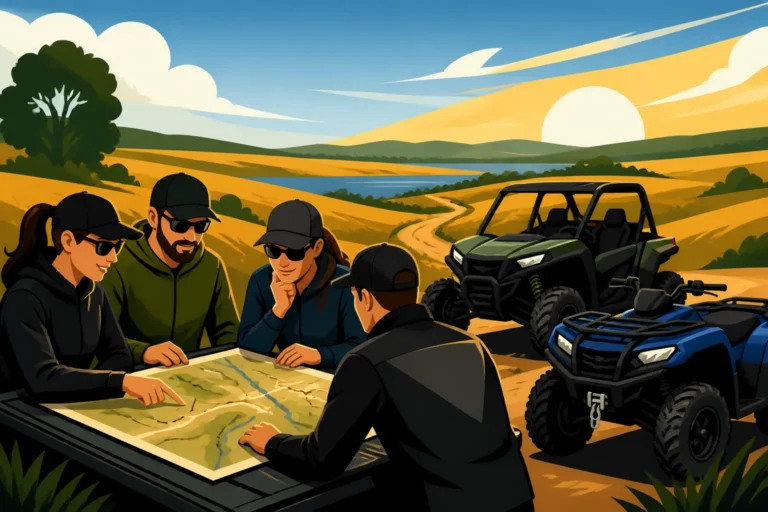
Check maps, signs, and route boundaries
Review the area map before your ride and keep an eye out for signs once you arrive. A route shown on a general map may not be an approved riding trail. Boundaries can be easy to miss in wooded or uneven terrain, particularly when several dirt tracks seem to branch from one another.
You can use onX Offroad to help orient yourself and mark a parking location, but compare what you see with official information and signs on site. Download or save relevant maps before leaving reliable service. That small step can help if the trail network is unfamiliar or your phone loses signal.
If you are researching routes in advance, [Kansas ATV Trail Map Downloads] may help you find mapping resources. Check the date and source of any map you use, and do not assume that an old route depiction reflects current access. For a more complete planning checklist, see [Kansas Trail Conditions Before You Tow].
Match the ride to the group and the terrain
Dirt-bike and quad areas can suit mixed groups, but the machines handle differently. A dirt bike rider may move through narrow turns and uneven sections differently from a quad rider. Agree on a pace and regrouping plan before starting, especially if someone in the group is new to the area.
A parent riding with a young person should also think about the child’s experience, machine size, and ability to stop or turn safely. “The trail allows quads” does not mean every quad or rider is suitable for every route. If the group has different skill levels, ride at the pace of the least experienced person and choose a route that leaves room to stop without blocking others.
A simple plan helps prevent confusion: identify the meeting point, agree on what to do if someone gets separated, and make sure each rider knows which routes are off-limits. Carry water, basic tools, and a charged phone, but do not count on cell service in every part of a recreation area.
Preparing Your Dirt Bike or Quad
Inspect the machine before the drive
A quick check at home is easier than discovering a problem at the trailhead. Look over the tires, brakes, throttle, lights, controls, chain or belt, and fluid levels. Confirm that the machine starts reliably and that the trailer tie-downs are secure. For a dirt bike, check the chain tension and controls; for a quad, pay attention to tires, steering, and brake response.
If your machine has been sitting through winter, take it for a short test ride before loading it. A weak battery, stale fuel, or low tire pressure can turn a planned ride into a roadside repair. Bring the tools and spare items you reasonably need for the machine, but avoid treating an improvised repair as a reason to continue if a safety-critical part is damaged.
Also consider how your machine’s accessories affect compliance. If there is a width limit, accessories can change the machine’s overall dimensions. If the rule is expressed in a way you do not understand, ask before arriving. It is much less frustrating to confirm eligibility while you are at home than after a long drive.
Pack for Kansas trail conditions
Kansas weather can shift quickly, and trail conditions can differ between a dry, open stretch and a shaded section that has held moisture. Pack clothing for wind and temperature changes, water, eye protection, and a first-aid kit. Dust can be uncomfortable on an otherwise pleasant day, while rain can change the footing and make ruts or slick ground harder to manage.
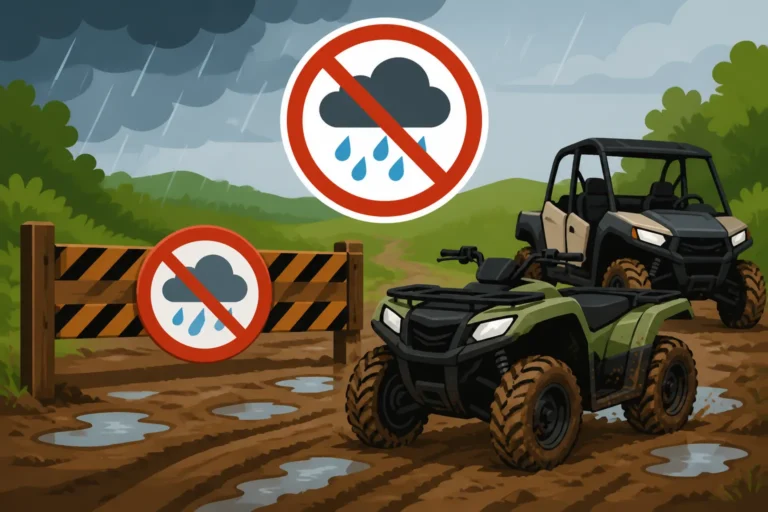
Do not assume a route will be rideable simply because it was open the last time you visited. After heavy rain, low areas and exposed soil may be muddy or vulnerable to damage. If the land manager has posted a closure, respect it. Riding around a closed section can damage the trail and create problems for everyone who uses the area.
Bring a way to communicate your plan to someone who is not on the ride. Share the location, who is going, and when you expect to return. If the riding area has weak coverage, save directions and maps ahead of time. onX Offroad may help with offline planning where its map features are available, but it should not be your only source of information about closures or permission.
Ride with courtesy and leave the area in good shape
Dirt bikes and quads share narrow routes with other riders, so a little trail courtesy goes a long way. Slow down around blind corners, give other users room, and avoid crowding someone who is stopped. If a group is traveling together, leave enough space to see and react rather than bunching up in dust.
Stay on designated routes. Creating a new path around a muddy spot or riding through vegetation can widen damage and make the area harder to maintain. Pack out anything you brought in, including food wrappers and broken parts. Before leaving, check the parking area and trailer for gear so nothing is left behind.
For more practical guidance on sharing trails, read [Kansas Trail Etiquette Locals Expect]. Courteous riding helps protect access, keeps trail encounters calmer, and makes a return visit more enjoyable for the next group.
Choosing the Right Kansas Riding Area
Compare the restriction with the machine you own
If your machine is a dirt bike or a conventional quad that meets the area’s restrictions, a dirt-bike-and-quad-only location may be a good fit. If you ride a side-by-side, do not assume the same area will accommodate it. Search for a location that explicitly permits side-by-sides and verify any width limits, route rules, or other conditions before making plans.
Here is a practical decision process:
- Identify the exact machine you plan to bring.
- Check the riding area’s permitted vehicle types.
- Confirm any width or equipment restrictions.
- Check access, closures, and route information with the land manager.
- Save the directions and map details before leaving home.
- Recheck signs and boundaries when you arrive.
This may feel like extra homework when all you want is a day on the trails, but it prevents a costly and disappointing mismatch between the machine in your trailer and the rules at the gate.
Use maps as tools, not as final permission
Apps and online maps are useful for comparing locations, estimating driving routes, and organizing a ride. onX Offroad can be one tool in that process, particularly for reviewing terrain and preparing map information before heading into an area with patchy service. Still, map layers can differ in how they present access, and a trail line on a screen does not prove that a route is open or that your vehicle is allowed.
Pair any digital planning with official site information and posted signs. If you see conflicting information, pause and ask the land manager before riding. This is especially important when the restriction hinges on a detail such as vehicle type or width.
A little verification is worthwhile whether you are a Kansas resident planning a short trip or a visitor towing from Missouri, Nebraska, or elsewhere. The right trail choice is not only the one that looks fun on a map; it is one that is open and permits your machine.
Keep a short pre-trip checklist
Before you leave, make sure you can answer these questions:
- Is the riding area open to the public for the day you plan to visit?
- Are dirt bikes and quads permitted, and are other machine types excluded?
- Does your machine meet the posted width restriction?
- Are there current trail, weather, or access notices?
- Do you have directions, maps, water, safety gear, and a plan if cell service drops?
If any answer is uncertain, confirm it before loading up. That final check can spare you from discovering at the entrance that your vehicle is not allowed or that the route you planned to ride is closed. Rules differ from one place to another, so use the specific site’s information for the decision that matters: whether your machine can ride there today.
Disclaimer
This article is for general informational purposes only and does not constitute professional advice. Laws, prices and regulations vary by location and change over time. Consult a qualified professional for guidance on your specific situation.