Kansas Riding Compared to Missouri
Kansas and Missouri can feel surprisingly different for ATV and UTV trips: Kansas offers fewer established places to ride, while Missouri has a broader mix of riding areas and terrain. That difference affects everything from where you unload to how much route research you need. This guide compares the riding experience and helps you plan a trip that fits your machine and expectations.
What Kansas and Missouri riding have in common
Riding access depends on the specific property
A state’s reputation for off-road riding can be misleading. In both Kansas and Missouri, you need to check the rules for the particular park, trail system, or private property you plan to visit. A road that looks promising on a map may not be open to recreational riding, and permission to ride one part of a property does not automatically extend to nearby land.
Kansas has a relatively small selection of established public and private riding areas compared with Missouri. The practical result is that riders often plan around a destination rather than expecting to find a long network of trails along the way. Start with [Kansas ATV Trails: Where You Can Actually Ride] and confirm access directly with the land manager or park before loading up.
Missouri offers more variety, but that does not mean every forest road, public parcel, or trail is open to ATVs. Rules can differ between managed riding areas, state facilities, federal land, and private parks. Treat each destination as its own trip-planning problem rather than assuming that a general state map settles the question.
The two states reward different kinds of planning
In Kansas, planning often starts with a simple question: where can the group ride legally? Once you have an answer, look at the area’s permitted machine types, access conditions, hours, parking, and any park-specific requirements. The short list of destinations makes it especially worthwhile to verify details before driving several hours.
Missouri’s broader selection may give riders more options for choosing terrain or trip length, but it also creates more decisions. A destination that suits a dirt bike may not suit a wide side-by-side. A place that allows recreational riding may have separate rules for passengers, helmets, vehicle equipment, or trail access.
A map app such as onX Offroad can help you review your route and orient yourself around a riding area, but it should not replace checking posted signs and property rules. Use it to organize your research, then confirm that the route and access points are actually open to your vehicle.
Do not confuse road use with trail access
A machine may be allowed on certain roads under a specific rule without being allowed on trails or across open ground. This distinction matters in both states. A legal road crossing, a route to a launch point, or a permitted trip between locations is not the same thing as authorization to ride wherever the terrain looks inviting.
Kansas riders may also encounter state park roads where an applicable permit or rule allows limited vehicle use, even though the park is not an OHV trail system. See [Kansas State Parks Have No OHV Trails] for the difference between park-road access and dedicated trail riding. Missouri has its own location-specific distinctions, so check the relevant managing agency’s rules rather than borrowing assumptions from another park.
How the riding experience differs
Kansas offers a smaller set of destination-style rides
Kansas riding areas tend to be distinct destinations, not pieces of one continuous statewide trail network. For example, Tuttle Creek ORV Area near Randolph is a designated riding area, while School Creek near Milford Lake has its own access details and machine restrictions. Their terrain and rules are not interchangeable. Review [Tuttle Creek ORV Area in Kansas] and [School Creek ORV Area in Kansas] before choosing between them.
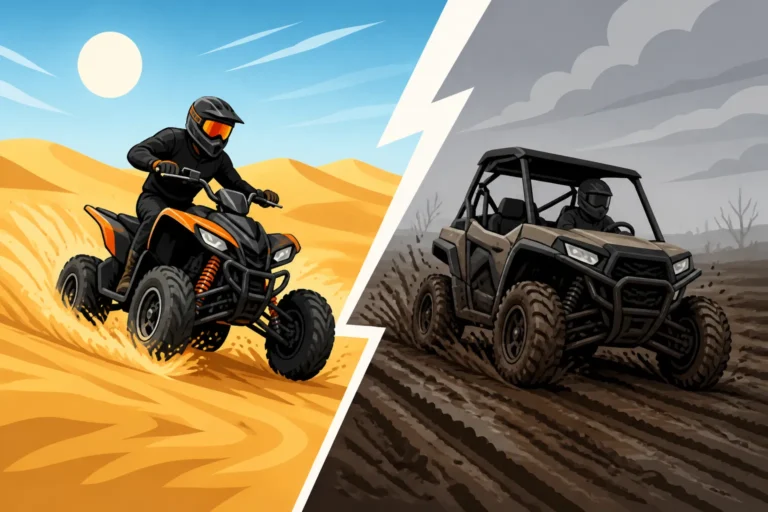
Private parks add another kind of option. Kansas Rocks Recreation Park near Mapleton is known for rock-oriented riding, while Syracuse Sand Dunes in Hamilton County offers a very different sand-riding experience. Those differences can affect what tires, protection, and recovery gear make sense to bring. The park’s own rules and conditions should guide the final decision; start with [Kansas Rocks Recreation Park] or [Syracuse Sand Dunes Park in Kansas] if either fits the group’s plans.
This destination-based pattern can be a plus if your group likes to choose a park and spend the day there. It can be frustrating if you expect to stitch together a long route between public riding areas. Build your itinerary around the place you are visiting, rather than counting on spontaneous trail connections.
Missouri gives riders more variety to compare
Missouri is often appealing to riders who want a wider choice of terrain and riding-area styles. Depending on the destination, a trip may involve wooded routes, hills, rocks, mud, or managed OHV facilities. That variety gives riders more ways to match a ride to their machine and experience level, but it also means checking restrictions carefully.
Do not assume that a Missouri destination is automatically better for your particular group. A novice rider may prefer a clearly marked area with suitable beginner routes. A family with children may prioritize supervision rules, facilities, and an easy return to the parking area. A side-by-side owner may need to confirm that the width of the machine is allowed.
The best comparison is practical: list the features your group needs, then compare actual destinations. Consider terrain, trail difficulty, vehicle limits, camping, services, and travel time. A longer menu of places is valuable only if one of those places fits the ride you want.
Machine type can change which state feels like the better fit
A narrow ATV, a dirt bike, and a wide side-by-side do not always have the same access. Width restrictions, trail design, and vehicle-specific rules can determine whether a destination works. Before setting out, confirm the exact machine category and any maximum dimensions or passenger limits. [Kansas Trails That Allow Side-by-Sides] is a useful starting point when a UTV is part of the plan.
This is also where groups can run into avoidable disappointment. Imagine a family towing a four-seat UTV to a riding area only to learn that the available routes are too narrow or that the vehicle is not permitted. The group may have technically reached a riding destination, but it has not found a usable ride.
When comparing a Kansas and Missouri option, write down the machine’s width, seating arrangement, and intended use. Then ask the park or land manager a direct question: “Is this specific vehicle allowed on the riding routes?” That is more reliable than asking only whether “UTVs” or “ATVs” are allowed.
| Planning factor | Kansas | Missouri |
|---|---|---|
| Choice of riding destinations | A smaller selection; trips often center on one specific area | More options to compare, with rules varying by destination |
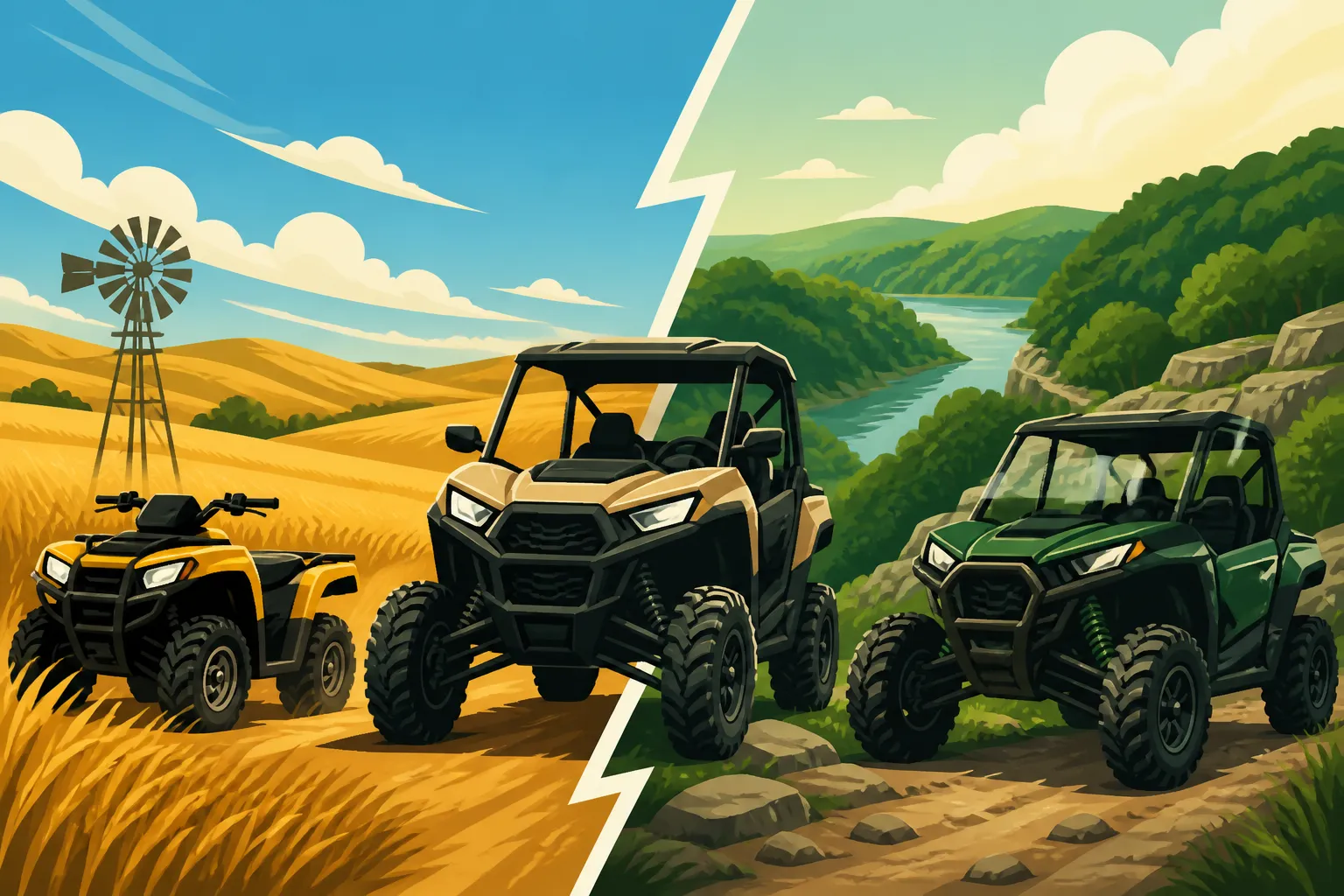
| Terrain and riding style | Distinct destinations include rock-oriented and sand-riding areas | A broader mix of terrain and riding-area styles |
| Route planning | Confirm access and conditions before traveling; avoid assuming areas connect | Compare multiple destinations, then verify each site’s rules |
| Vehicle fit | Check specific restrictions, especially for wider machines | Check the same details; permissions can differ by facility |
| Best planning habit | Choose a confirmed destination first | Narrow the choices by terrain, vehicle, and access rules |
How to choose a destination and prepare
Match the ride to your group, not just the map
Start by agreeing on what a good day looks like. A group looking for technical rocks may not enjoy a sandy area, while riders hoping to cover miles may feel cramped at a small destination. If children or first-time riders are coming, ask about easier routes, supervision requirements, and the distance between trail sections and the staging area.
Then consider comfort and logistics. Is there a place to park a truck and trailer? Can the group take breaks out of the sun or wind? Is camping available nearby, or will everyone need to drive back after riding? These details can matter as much as the terrain, especially when you are organizing a family weekend or coordinating several vehicles.
Use onX Offroad to help visualize the general area and keep trip notes together, but confirm the actual route and property access through the riding area’s official information or staff. Mapping tools are most useful when they help you ask better questions—not when they substitute for permission.
Confirm conditions before you tow
Weather can change the experience quickly. Rain may make some routes difficult or lead to temporary closures; dry conditions can bring dust, heat, or loose surfaces. Kansas wind can also make a long trailer haul tiring, particularly across open stretches of highway. Missouri’s wooded or uneven routes may bring different concerns, including mud or rougher ground, depending on the site.
Check the destination’s latest notices before leaving home. Ask whether the area is open, whether recent weather has affected access, and whether any routes are closed. The guidance in [Kansas Trail Conditions Before You Tow] can help you build a sensible pre-trip check for Kansas destinations.
It is also worth checking practical items that are easy to overlook: fuel range, tire condition, protective gear, tie-downs, recovery equipment, and the trailer’s lights and tires. If the riding area has specific equipment or safety rules, confirm those in advance. Discovering a missing requirement at the entrance is a frustrating way to lose a riding day.
Use maps as a planning tool, not proof of permission
Digital maps can help you identify nearby roads, trailheads, and possible staging areas. onX Offroad may be useful for reviewing the general layout and saving information for a trip, particularly when cell service is unreliable. Before riding, download or save what you need and make sure everyone in the group knows how to find the designated entrance and parking area.
Still, a line on a map is not permission to ride. Property boundaries can be easy to misunderstand, and a route that appears connected may cross land with different rules. On the ground, follow signs, barriers, and directions from staff. If a boundary or route is unclear, stop and ask rather than guessing.
A good planning routine is to use a map to prepare, contact the destination to verify access, and then follow local instructions when you arrive. That approach works whether you are heading to a Kansas park or comparing a Missouri alternative.
Which state should you choose for your next ride
Choose Kansas when a specific destination fits your plans
Kansas can be a strong choice when you already have a particular riding area in mind and its terrain suits your machine. It may also work well for a focused day trip or weekend centered on one park, rather than a multi-day journey through a connected trail system.
The state’s limited selection makes matching expectations important. If your group wants sand, research the sand destination. If you want rock obstacles, investigate the rock park. If you are planning around a public ORV area, verify its current access rules and machine restrictions before you commit.
For a straightforward comparison, identify two or three concrete destinations—not “Kansas” versus “Missouri” in the abstract. Then compare travel time, machine fit, terrain, overnight options, and confirmed access. That keeps a state’s reputation from overshadowing the actual ride available to your group.
Choose Missouri when variety is the priority
Missouri may be a better fit if your group wants a larger set of destinations to compare or hopes to choose among different terrain styles. The broader choice can help when one area is unsuitable for your vehicle or preferred riding style, provided you verify the rules at each location.
More options also mean more homework. Check the individual site’s vehicle limits, trail conditions, hours, fees, camping arrangements, and safety requirements. Avoid assuming that information for one Missouri park applies to another, just as you would not carry one Kansas park’s rules over to a different Kansas riding area.
If you are traveling from Kansas, account for the full trip rather than just the ride. A farther destination may be worthwhile if it offers the terrain and facilities your group wants, but not if the extra drive leaves you rushing through the day.
Make the final call with a short checklist
Before deciding, answer these questions:
- What terrain does the group actually want to ride?
- Is every machine in the group allowed at the destination?
- Are there width, passenger, age, or equipment rules to meet?
- Is the area open, and have weather or maintenance affected access?
- Where will you park, fuel, camp, or stay overnight?
- Have you confirmed the route and entrance with the land manager?
For a broader Kansas overview, [Kansas Riding Areas That Rent Machines] can help you think through options if someone in your group does not own a vehicle. If you are still weighing the states, use [Kansas Riding Compared to Missouri] as a starting point, then verify the details for the exact riding area you plan to visit.
The most satisfying trip is not necessarily in the state with more choices. It is the one where the machine fits the trails, the access is confirmed, and everyone arrives knowing what kind of ride to expect.
Disclaimer
This article is for general informational purposes only and does not constitute professional advice. Laws, prices and regulations vary by location and change over time. Consult a qualified professional for guidance on your specific situation.