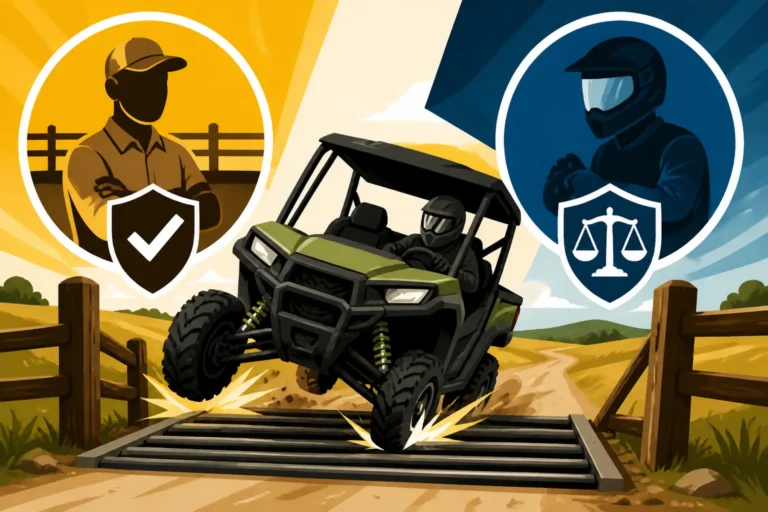
Kansas Ticket Costs for Road Riding
Let's be real, nobody enjoys getting pulled over, especially when you're just trying to enjoy your ATV or UTV. The confusion around what's legal and what's not on Kansas roads can be frustrating, and a ticket can turn a fun day into a costly headache. This guide is here to break down the potential financial hit of getting a ticket for illegal road riding in Kansas, helping you understand not just the immediate fines but also the often-overlooked extra costs and how to steer clear of them entirely.
What Constitutes Illegal Road Riding in Kansas?
Before we dive into what a ticket might cost, it’s crucial to understand why you might get one in the first place. Kansas law, by default, is pretty clear: most off-road machines are not meant for public roads. This isn't just about high-speed interstates; it extends to most city streets and county roads. Many riders, especially those new to the state or new to the off-road lifestyle, assume that if it has wheels, it can go on the road, at least for a short hop. That assumption can be a costly one.
Kansas's General Ban on ATVs and UTVs on Public Roads
For the vast majority of ATVs and UTVs in Kansas, using public roads is a no-go. The state legislature has created classifications for these machines, and an ATV, for example, is specifically defined as a "nonhighway vehicle." This means it's built for off-road use and is generally prohibited from operating on highways, roads, and streets. You'll find that [Kansas Bans ATVs on Interstates] and [Kansas Bans ATVs on Federal Highways] are absolute. Even within city limits, the default rule is often that [Kansas Bans ATVs Inside City Limits by Default]. It’s a blanket ban that can catch many riders off guard. You might think a quick trip down the street to a neighbor's house is harmless, but legally, it could put you in hot water. This isn't about the power of your machine or how good a driver you are; it's about its legal classification.
Exceptions and Local Ordinances for Certain Machines
Now, before you lose all hope of ever touching pavement, there are some important exceptions to understand. Kansas law does make provisions for certain types of machines, like Work-Site Utility Vehicles (WSUVs), golf carts, and micro utility trucks, to operate on public roads under specific conditions. For example, a WSUV might be allowed on certain roads if it meets criteria like being under 48 inches wide and over 800 pounds, and adheres to specific road rules, as detailed in [Kansas Work-Site Utility Vehicle Road Rules]. Similarly, [Kansas Golf Cart Road Rules] and [Kansas Micro Utility Truck Road Rules] outline what's permissible for those vehicles.
Crucially, some cities have taken the initiative to pass their own ordinances allowing UTVs (and sometimes ATVs) on city streets. This is where the landscape gets a bit complicated because what's legal in one town might be strictly prohibited in the next. You'll find articles like [Kansas Cities That Opt In by Ordinance] and [Kansas UTV Street Legal Rules by City] explain how this works. These local ordinances often come with specific requirements for equipment, speed limits, and even insurance, so it's never a simple "yes" or "no" answer. Many riders who want to utilize their UTVs on city streets often turn to aftermarket parts from companies like SuperATV to ensure their machines are equipped with proper mirrors, turn signals, and other safety features required by these ordinances.
The Agricultural Exception: When a Farm Machine Can Touch the Road
One of the most common reasons you might see an off-road machine on a public road in Kansas is due to the agricultural exception. This rule allows certain machines to be operated on highways for agricultural purposes, such as moving between fields, hauling equipment, or checking livestock. However, this isn't a free pass for joyriding. The trip must be genuinely for agricultural purposes, and the machine still needs to display proper lighting and slow-moving vehicle emblems, especially when traveling from [Kansas Sunset to Sunrise Lighting Rules]. Understanding [What Counts as an Agricultural Trip on a Highway] is vital, because misinterpreting this exception is a common reason for tickets. It's a narrow allowance designed to support farming operations, not recreational riding.
The Financial Sting of a Kansas ATV/UTV Road Riding Ticket
So, you've been ticketed for riding your ATV or UTV on a road where you shouldn't have been. What's the immediate financial impact? It's rarely a flat, statewide fee, and it's almost never as cheap as you might hope. The costs can vary significantly depending on the jurisdiction, the specific violation, and even the officer's discretion.
Typical Fine Ranges for Road Riding Violations
The immediate consequence of a road riding ticket is, of course, the fine itself. In Kansas, these fines are typically set by individual counties or municipalities. This means a ticket in Johnson County might have a different price tag than one issued in rural Smith County. Generally, you can expect these fines to be in the hundreds of dollars. We're not talking about a parking ticket here; these are often treated more seriously because they involve operating a vehicle improperly on a public right-of-way.
For example, a municipal court might have a standard fine for "operating a non-registered vehicle on city streets" or "operating an off-road vehicle in a prohibited area." While I can't give you exact figures, it's not uncommon for these base fines to start around $100-$300, and they can go much higher, especially if there were aggravating factors or if it's a repeat offense. It's a stark reminder that even a short trip on an unauthorized road can be a very expensive lesson.
Court Costs and Administrative Fees
The listed fine on your ticket is almost never the total amount you'll actually pay. Most jurisdictions add what are known as "court costs" or "administrative fees" on top of the base fine. These fees cover the cost of processing your ticket, maintaining court records, and other operational expenses of the justice system. It's an additional layer of expense that can significantly increase your total bill. [Kansas Court Costs for a Citation] can easily add another $50 to $150 (or more) to your total.
Imagine receiving a ticket with a $200 fine. By the time you factor in court costs, that $200 ticket can quickly become $300 or $350. This is a common point of frustration for many people who just want to pay the ticket and move on, only to find the total is much higher than they anticipated. Always inquire about the total amount due, including all fees, when you contact the court or county treasurer's office.
Penalties for Related Offenses
A single traffic stop for illegal road riding can sometimes snowball into multiple violations, each with its own fine and penalties. Law enforcement officers are trained to look for other potential infractions once they've stopped you. Here are a few common scenarios:
- No Driver's License: If you're operating an ATV or UTV on a public road where a driver's license is required (as it would be in an authorized city that issues tags), and you don't have one, that's another ticket. [Do You Need a License for an ATV in Kansas?] explains the nuances.
- No Insurance: Some city ordinances that allow UTVs on streets also mandate insurance. If you're caught in one of these areas without the required coverage, that's yet another fine. [Kansas Insurance Comes From City Ordinances] can shed more light on this.
- Safety Equipment Violations: If you're riding in a city that permits UTVs but requires specific safety equipment (like mirrors, turn signals, or a windshield), and your machine isn't properly equipped, you could face fines for those deficiencies. Companies like SuperATV offer a range of accessories to help ensure compliance.
- Helmet Law Violations: While Kansas generally doesn't have a universal ATV helmet law, if you're under a certain age or in a specific context (like a private park that mandates helmets), you could face a penalty. [Who Has to Wear a Helmet on a Kansas ATV?] discusses these scenarios.
These stacked penalties can quickly turn a single incident into a very expensive day, potentially costing hundreds, if not thousands, of dollars. The article [Kansas Penalties for Illegal Road Riding] delves into these further, showing just how complex the situation can get.
Beyond the Initial Fine: Hidden Costs and Consequences
The sticker shock of the initial fine and court costs is just the beginning. There are several other, often overlooked, financial and personal consequences that can arise from a road riding ticket. These "hidden costs" can significantly increase the overall impact on your wallet and your peace of mind.
Impoundment and Towing Fees
One of the most significant and unexpected costs can come if your machine is impounded. If law enforcement deems your ATV or UTV to be illegally operated on a public road, they have the authority to have it towed and impounded. This immediately triggers a cascade of fees:
- Towing Fee: The cost to tow your heavy machine from the roadside to an impound lot can be substantial, often ranging from $100 to $300 or more, depending on the distance and the towing company.
- Storage Fees: Impound lots charge daily storage fees. These can add up quickly, especially if the incident happens on a Friday afternoon before a long weekend, or if there's a delay in getting your machine released. Daily fees can range from $25 to $75 or more.
- Release Fees: The impound lot itself might charge an administrative fee just to release your vehicle.
When you combine these, you could easily be looking at several hundred dollars, or even over a thousand, just to get your machine back. This doesn't even count the fine or court costs. It's a major incentive to ensure you're always riding legally.
Insurance Implications
While ATVs and UTVs aren't always legally required to have insurance in Kansas (unless a local ordinance mandates it, as discussed in [Kansas City Insurance Requirements]), many responsible owners carry policies for theft, damage, or liability. A citation for illegal road riding, especially if it leads to an accident or property damage, could significantly impact your insurance situation.
- Increased Premiums: If you have an insurance policy and a claim arises from an incident where you were operating illegally, your rates could go up dramatically. Even if no claim is filed, a citation could be noted on your record and lead to higher premiums when you renew.
- Policy Cancellation or Non-renewal: In severe cases, or if you have a history of citations, your insurance provider might decide not to renew your policy, or even cancel it outright. This can make finding affordable coverage in the future very difficult.
- Lack of Coverage: If you were operating your machine illegally and don't have insurance, any damage to your machine or to other property, or any medical bills from injuries, will come directly out of your pocket. This is a risk that many riders underestimate.
Legal Fees if You Choose to Fight the Ticket
If you believe you were wrongly ticketed or want to challenge the citation, you have the right to do so in court. However, this often comes with its own set of costs. Hiring an attorney to represent you can be expensive, with hourly rates that can quickly add up. While an attorney might be able to get the charges reduced or dismissed, the legal fees themselves could outweigh the cost of simply paying the initial fine, especially for a minor infraction. It's a calculation you need to make carefully.
Time Lost and Personal Impact
Beyond the monetary costs, there's the intangible but very real cost of your time and peace of mind. Dealing with a ticket means:
- Court Appearances: You might have to take time off work or other obligations to appear in court.
- Dealing with Impound Lots: Retrieving an impounded machine involves coordinating with tow companies and impound facilities, which can be time-consuming and frustrating.
- Stress and Anxiety: Nobody wants to deal with legal issues. The stress of a ticket, potential fines, and the uncertainty of the outcome can take a toll.
These factors might not have a direct dollar amount attached, but they certainly impact your life and your wallet in indirect ways.
How to Avoid a Ticket: Staying Legal on Kansas Roads
The best way to save money on tickets, fees, and headaches is to simply avoid getting a ticket in the first place. This requires a bit of homework and a lot of common sense, but the effort is well worth it.
Know Your Local Laws and Ordinances
This is the golden rule. Kansas state law provides a general framework, but local city and county ordinances can significantly alter what's permissible. If you plan to ride your ATV or UTV on any public road, even for a short distance, you must verify the local rules.
- Check City Websites: Most cities that allow UTVs on their streets will have their ordinances posted online. Look for sections related to "unconventional vehicles," "utility vehicles," or "golf carts."
- Call City Hall or the Police Department (Non-Emergency Line): If you can't find clear information, a quick call to the city clerk's office or the local police department's non-emergency line can clarify things. Ask specific questions about what type of machine is allowed, where, and what equipment is required. An article like [How to Tell If Your Kansas Town Allows UTVs] offers practical advice on this research.
- Don't Assume: Just because your friend in a neighboring town can ride their UTV on the street doesn't mean you can in yours. Every town can be different.
Ensure Your Machine Meets All Legal Requirements
If you're in an area that does permit road use for your specific type of machine (like a WSUV or a UTV under a city ordinance), it's imperative that your machine meets all the required equipment standards. These usually mimic basic street-legal vehicle requirements to ensure safety.
- Lighting: This often includes headlights, taillights, brake lights, and turn signals. [Kansas Lighting Requirements on a Machine] provides an overview. Many aftermarket companies, including SuperATV, offer comprehensive lighting kits to help ensure your machine is visible and compliant.
- Mirrors: Side mirrors and sometimes a rearview mirror are common requirements.
- Windshield and Wipers: Depending on the classification, some machines might need a windshield and functioning wipers. [Kansas Micro Utility Truck Equipment Rules] is a good example of specific requirements.
- Slow-Moving Vehicle Emblems: For agricultural use or certain slow-moving vehicles, a slow-moving vehicle triangle is often required, as mentioned in [Kansas Slow-Moving Emblem Rules].
- Brakes and Horn: Reliable brakes and an audible horn are almost always mandatory.
Always double-check the specific ordinance for the city you intend to ride in. A quick installation of a SuperATV horn kit or a set of their universal mirrors could save you a hefty ticket.
Driver Licensing, Safety Gear, and Proper Registration
Even if your machine is allowed on the road, you still have responsibilities as an operator.
- Driver's License: If you're riding on a road where a city ordinance permits it, you will almost certainly need a valid driver's license. Don't assume you can operate it without one, as this is a common reason for additional tickets. [Do You Need a License for an ATV in Kansas?] provides details.
- Safety Gear: While Kansas state law doesn't have a universal helmet requirement for ATV/UTV riders, some local ordinances or private parks might. Even when not legally required, wearing appropriate safety gear, including a helmet and eye protection, is always a smart choice for your own well-being.
- Registration and Titling: While Kansas [Kansas Has No OHV Registration] at the state level, your machine does need to be properly titled as a "nonhighway vehicle" through the county treasurer's office. If your city requires a local tag, ensure you've acquired and properly displayed it.
Consider Riding Parks and Designated Off-Road Areas
If you want to ride your ATV or UTV and not worry about road legality, the safest and most fun option is to stick to designated off-road riding areas. Kansas may not be known for its mountains, but it does have some fantastic places where you can legally and safely enjoy your machine.
- Dedicated ORV Parks: Places like Tuttle Creek ORV Area, School Creek ORV Area, and Kansas Rocks Recreation Park offer miles of trails, diverse terrain, and a community of fellow riders. An article like [Kansas ATV Trails: Where You Can Actually Ride] lists many options.
- Private Land with Permission: Riding on private land with the landowner's explicit permission is always a great option, as long as you're respecting their property and local noise ordinances.
- Corps of Engineers Land: Some U.S. Army Corps of Engineers lakes have specific areas designated for off-road vehicle use.
By utilizing these legal riding spots, you can avoid the stress and expense of road riding tickets and fully enjoy your machine in its intended environment.
| Ticket Component | Typical Cost Range (Estimate) | Notes |
|---|---|---|
| Base Fine | $100 – $500 | Varies by city/county and specific violation. |
| Court/Admin Fees | $50 – $150+ | Added to the base fine, covers processing. |
| Towing Fee | $100 – $300+ | If machine is impounded. |
| Daily Storage Fee | $25 – $75+ per day | If machine is impounded, adds up quickly. |
| Release Fee (Impound) | $50 – $100+ | Fee charged by impound lot to get your machine back. |
| Related Offenses | $50 – $500+ (each) | No license, no insurance, equipment violations, etc. |
| Legal Fees | $500 – $2,000+ | If hiring an attorney to fight the ticket. |
| Increased Insurance | Varies | Potential for higher premiums or cancellation if a claim or incident occurs. |
| Total Potential Cost | $200 – $3,000+ | Can quickly escalate beyond the initial fine. |
Disclaimer
This article is for general informational purposes only and does not constitute professional advice. Laws, prices and regulations vary by location and change over time. Consult a qualified professional for guidance on your specific situation.