What Posted Signs Mean on Kansas Farm Ground
Navigating the beautiful, sprawling farmlands of Kansas on your ATV or UTV can be an incredible experience, but it comes with a critical responsibility: understanding and respecting private property. It’s easy to feel lost or unsure when you encounter various signs on rural ground, wondering what’s okay and what’s absolutely off-limits. This guide will help you decipher those crucial posted signs on Kansas farm ground so you can enjoy your ride responsibly and avoid costly legal trouble or strained relationships with landowners.
Understanding "No Trespassing" and "Private Property" Signs on Kansas Farm Ground
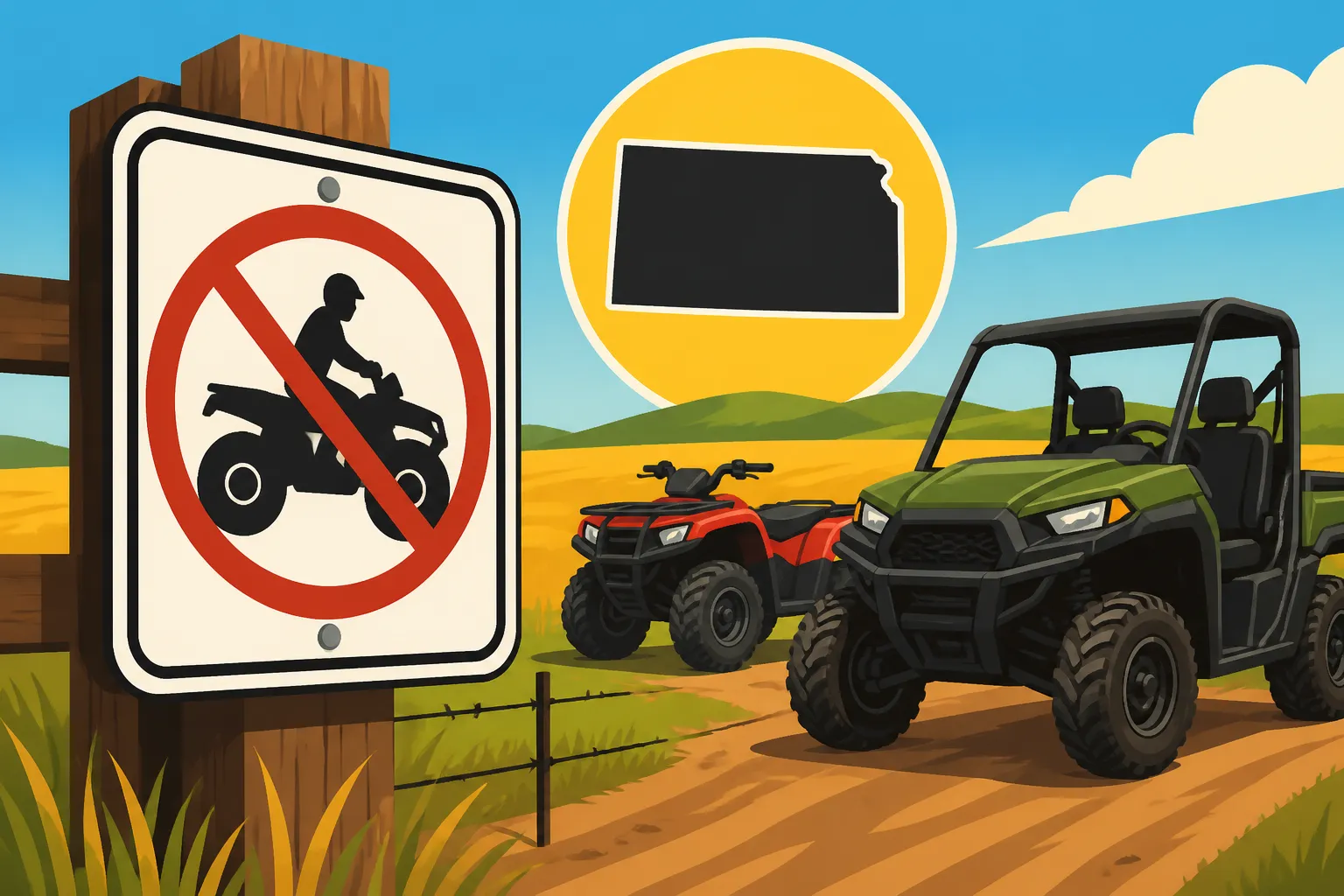
Let's face it, the vastness of Kansas can sometimes make you feel like every wide-open space is fair game for a ride. But out here, especially on agricultural land, that couldn't be further from the truth. Those signs, small or large, that declare "No Trespassing" or "Private Property" are not just suggestions; they are explicit legal warnings that you absolutely must heed.
The Absolute Rule of No Entry Without Permission
When you see a "No Trespassing" or "Private Property" sign, it means exactly what it says: do not enter. Period. There's no gray area here. A landowner has the fundamental right to control who accesses their property, and these signs are their clear communication that they do not grant permission for entry. Ignoring these signs, even for a quick spin or a shortcut, is a direct violation of their rights and can lead to serious legal consequences. We're talking about fines, potential impoundment of your machine, and even criminal charges for trespassing. It’s a situation no one wants to find themselves in, especially when a simple look could have prevented it.
Imagine you're out riding, enjoying the scenery, and you see what looks like an inviting, well-worn path leading into a field. You think, "Perfect, a new route!" Only, a few hundred yards in, you spot a weathered "No Trespassing" sign tucked behind some brush. At that point, you're already in violation. Even if you turn around immediately, you've still trespassed. The frustration of having to backtrack or the anxiety of wondering if someone saw you isn't worth it. The rule is simple: if you see these signs, you stay out unless you have explicit, documented permission.
The Importance of Expressed Permission
So, if "No Trespassing" means stay out, how do you get in when you want to explore? The answer is "expressed permission." This isn't just a polite request; it's a legal necessity. For ATV and UTV riders, this means directly contacting the landowner, the tenant farmer, or the designated land manager and obtaining their clear consent to be on their property. This permission should ideally be in writing, detailing exactly where and when you're allowed to ride. Verbal permission, while sometimes given, can be easily misunderstood or disputed. A simple text message, email, or a signed permission slip can be your best friend.
Think about it this way: a friend tells you, "Oh, my uncle owns that land, it's fine to ride there." You take their word for it, only to be confronted by the uncle himself, who has no idea who you are and certainly didn't give you permission. That "it's fine" suddenly isn't fine at all. This is why a clear, direct conversation with the property owner is paramount. You want to avoid any ambiguity, for their peace of mind and yours. Having a physical note or a digital record of permission can save you a lot of grief. It also shows respect for the landowner and their property, building good relationships in rural communities. For more detailed advice, check out [Getting Written Permission From a Landowner Before You Ride].
Interpreting "Posted" and "Hunting/Fishing By Permission Only" Signs
Beyond the clear-cut "No Trespassing" signs, you’ll often see other markers on Kansas farm ground. "Posted" signs, and those specifically mentioning "Hunting/Fishing by Permission Only," might seem less relevant if your primary goal is just to ride your ATV or UTV. However, it’s crucial to understand that these signs generally apply to all forms of recreational access, including off-road vehicle use.
More Than Just Hunters – It Applies to Riders Too
The term "Posted" on private land, especially in hunting states like Kansas, is often associated with preventing unauthorized hunting or fishing. However, in legal terms, a "Posted" sign typically serves the same purpose as a "No Trespassing" sign: it communicates that the landowner is asserting control over who enters their property for any recreational purpose, not just hunting or fishing. This means that if a piece of land is posted, you should assume that riding your ATV or UTV on it without explicit permission is just as illegal as if it had a "No Trespassing" sign. Landowners have the right to control all activities on their land.
It’s a common misconception for riders to see a "Hunting By Permission Only" sign and think, "Well, I'm not hunting, so I'm good to go!" This line of thinking can quickly land you in trouble. The intent behind such a sign is to limit all unauthorized access and activity. If a landowner wants to allow riding, they will typically grant specific permission. Without that, you're effectively trespassing, regardless of your activity. These signs are a blanket statement that you need to seek permission for any non-owner activity. This helps protect the landowner from liability and preserves their peace and quiet. If you're ever unsure about the implications of these signs, it's always best to err on the side of caution and find another route or, better yet, seek explicit permission from the landowner. You can learn more about the legal aspects in [Kansas Trespass Law for Riders].
The Nuance of Implied vs. Expressed Permission on Farm Land
In some situations, particularly in rural areas with long-standing community practices, there might seem to be an "implied" permission for certain activities. Perhaps locals have always ridden a specific track to the creek, or a field road has been used for generations by various people. However, when it comes to riding your ATV or UTV on private farm ground in Kansas, relying on implied permission is an extremely risky gamble. A landowner’s tolerance of past activity does not automatically grant future permission, and they can revoke or clarify their restrictions at any time.
For riding ATVs and UTVs, it is paramount to always secure expressed permission. This means direct, unambiguous consent from the landowner. A handwritten note, a verbal agreement confirmed with a text, or even just a quick chat at the fence line is far superior to assuming you have the right to ride. Many landowners might not mind occasional, respectful use of their property, but they absolutely want to know who is on their land and why. Don't risk a confrontation or a legal issue based on what you think might be okay. Be proactive, be respectful, and get that explicit "yes" before you unload your machine. Whether you’re [Riding a Quad on Ground You Lease for Hunting] or just exploring, clarity is key.
Navigating Access Roads and Section Lines on Private Property
Kansas landscapes are crisscrossed with countless paths, dirt roads, and section lines. For the uninitiated, it can be incredibly difficult to tell what’s a public thoroughfare and what’s strictly private. This confusion is a leading cause of accidental trespassing for ATV and UTV riders. It’s vital to distinguish between genuinely public access and the many private paths that exist to serve farm operations.
The Difference Between Public and Private Access
Many "roads" you see winding through farm ground are actually private access roads, built and maintained by the landowner for their own use, or for tenants and agricultural purposes. These are not public roads, even if they appear well-maintained or extend for miles. They might lead to a remote field, a pump jack, a cattle pen, or a hunting blind. The fact that a road exists does not automatically make it public property accessible to everyone. The same goes for section lines. While historical section lines delineate property boundaries, they do not inherently grant public access for recreational riding across private land. Kansas law is pretty clear on this: if it's not a county road, a state highway, or a city street, it's very likely private.
A common scenario is a rider seeing a long, straight dirt track that follows a property line, often called a section line. It looks just like a gravel county road, but without the gravel. Many assume this must be a public right-of-way. However, unless that section line has been officially dedicated and maintained as a public road by the county, it remains private property. Riding on such a path without permission is trespassing. Always verify the status of a road or path before you ride, especially if you’re off the main paved or clearly marked county roads. When in doubt, assume it’s private. For specifics on these boundaries, review [Kansas Rules for Riding a Section Line].
Gates, Fences, and Other Physical Barriers
Physical barriers like gates and fences are universal indicators of private property and boundaries. Even if a gate is unlocked, partially open, or appears to be just for access to a field, it is a clear signal that you are entering private land. The presence of a gate or fence means you need permission to pass. It doesn’t matter if there isn't a "No Trespassing" sign right on the gate itself; the barrier acts as a clear demarcation of private control.
Consider this: you're riding along, and you come across a gate. It's not locked, and you can easily open it. You might think, "Well, if it's not locked, they must not mind if I pass through." This is a dangerous assumption. Gates are there to control access, manage livestock, or protect crops. Passing through an unlocked gate without permission is still trespassing. If you do have permission to be on the land and pass through a gate, always, always close it securely behind you. Leaving a gate open, even accidentally, can have devastating consequences for a farmer, like letting cattle wander onto a highway. That kind of mistake can instantly erode any goodwill you might have built. Be respectful of these boundaries; they are crucial to farm operations. [Gates on a Pasture Road] are there for a reason, and understanding that reason will make you a much more welcome visitor.
Understanding Specific Warnings and Hazard Signs on Kansas Farms
Beyond the basic "No Trespassing" warnings, farm ground can feature signs related to specific operations or hazards. These signs are not just suggestions; they are critical for your safety and to ensure you do not interfere with active agricultural practices.
Warning Signs About Livestock, Equipment, or Chemicals
Farmers use various signs to communicate ongoing operations or potential dangers on their land. You might see signs like "Caution: Cattle Crossing," "Spraying in Progress," "Slow: Farm Equipment Ahead," or even specific warnings about feedlot operations. These signs are there for your safety and to protect the farmer's livelihood. Ignoring a "Caution: Cattle" sign and roaring through a pasture can spook animals, leading to injury to the livestock or yourself. Similarly, riding through an area where chemicals are being sprayed is not only dangerous for you due to exposure but also interferes with the farmer's ability to protect their crops.
Respecting these operational warnings is a sign of good judgment and respect for the agricultural community. Your SuperATV windshield or protective gear might keep you safe from a bit of dust, but it won’t protect you from exposure to agricultural chemicals or an angry bull. If you see signs indicating active farm work or hazards, consider it a clear request to avoid the area. If you have permission to be on the land, you should still exercise extreme caution and yield to all farm equipment and livestock. Understanding [Cattle on an Open Pasture] requires more than just knowing they exist; it means understanding how to behave around them.
Signs Indicating Conservation Areas or Restricted Access
Many Kansas landowners participate in conservation programs or have designated specific areas on their property for wildlife habitat, wetlands restoration, or other ecological purposes. You might encounter signs indicating "Conservation Reserve Program (CRP) Land," "Wetland Restoration Area," or "Wildlife Habitat – Restricted Access." Even if you have general permission to ride on a farm, these specific signs often mean that certain areas are off-limits to motorized vehicles, or at least require even more specific permission for access.
These restrictions are put in place to protect sensitive ecosystems, nesting wildlife, or specific land management practices. Riding an ATV or UTV through a delicate wetland area, for instance, can cause significant damage, disrupt wildlife, and potentially put the landowner in violation of their conservation agreements. Always pay close attention to such signs. If a sign says "No Motorized Vehicles" within a conservation area on private land, even if you generally have permission, assume that specific area is off-limits to your quad or side-by-side. Showing this level of awareness and respect helps maintain good relationships and ensures that responsible riding opportunities continue to exist.
Summary of Common Farm Signs and Their Implications for Riders
To help clarify, here's a quick rundown of what those signs typically mean for you and your machine:
| Sign Type | Common Appearance | Meaning for ATV/UTV Riders | Action Required |
|---|---|---|---|
| No Trespassing / Private Property | Red, white, or yellow signs, often with property owner's name. | Absolute prohibition from entering the property. No exceptions without explicit permission. | DO NOT ENTER. Turn around immediately. |
| Posted / Hunting By Permission | Various colors, often with "No Hunting" or "No Entry" wording. | Generally prohibits all recreational access, including riding, without explicit permission. | DO NOT ENTER. Unless you have written permission specifically for riding. |
| Gates / Fences | Physical barriers, wood, wire, or metal. | Clear demarcation of private property. Access controlled by the landowner. | DO NOT ENTER without permission. If permitted, close securely behind you. |
| Caution: Livestock / Farm Equip. | Yellow or orange warning signs. | Indicates active agricultural operations, animals present, or equipment moving. | Exercise extreme caution. Avoid area if possible. Yield to all farm operations. |
| Conservation Area / Wetland | Often green or brown, indicating protected lands. | Specific areas may be off-limits to motorized vehicles or require special permission. | Respect restrictions. Seek specific permission if riding is unclear. |
Remember, your best bet is always to obtain explicit, written permission from a landowner before riding on their property. This not only keeps you on the right side of the law but also fosters positive relationships in the Kansas rural community. Being respectful and informed about these signs is key to enjoying your off-road adventures safely and responsibly.
Disclaimer
This article is for general informational purposes only and does not constitute professional advice. Laws, prices and regulations vary by location and change over time. Consult a qualified professional for guidance on your specific situation.