Who Pays When a Rider Hits a Cattle Guard
It's a gut-wrenching moment no ATV or UTV rider wants to experience: that sudden jolt, the sickening crunch, and the immediate understanding that you've just hit a cattle guard. Whether it's on a well-known county road or deep on private farm ground, the aftermath can be confusing, stressful, and expensive. This guide will walk you through the thorny question of who pays when a rider hits a cattle guard in Kansas, exploring liability, insurance, and preventative measures to help you understand your rights and responsibilities.
Understanding the Risks: What Happens When You Hit a Cattle Guard?
Cattle guards are an integral part of the Kansas landscape, a simple yet effective barrier designed to keep livestock contained without the need for gates. They're everywhere, from dirt county roads bordering pastures to private access drives on expansive ranches. But for off-road enthusiasts, they present a unique hazard that can lead to significant damage and injury.
The Physical Impact on Rider and Machine
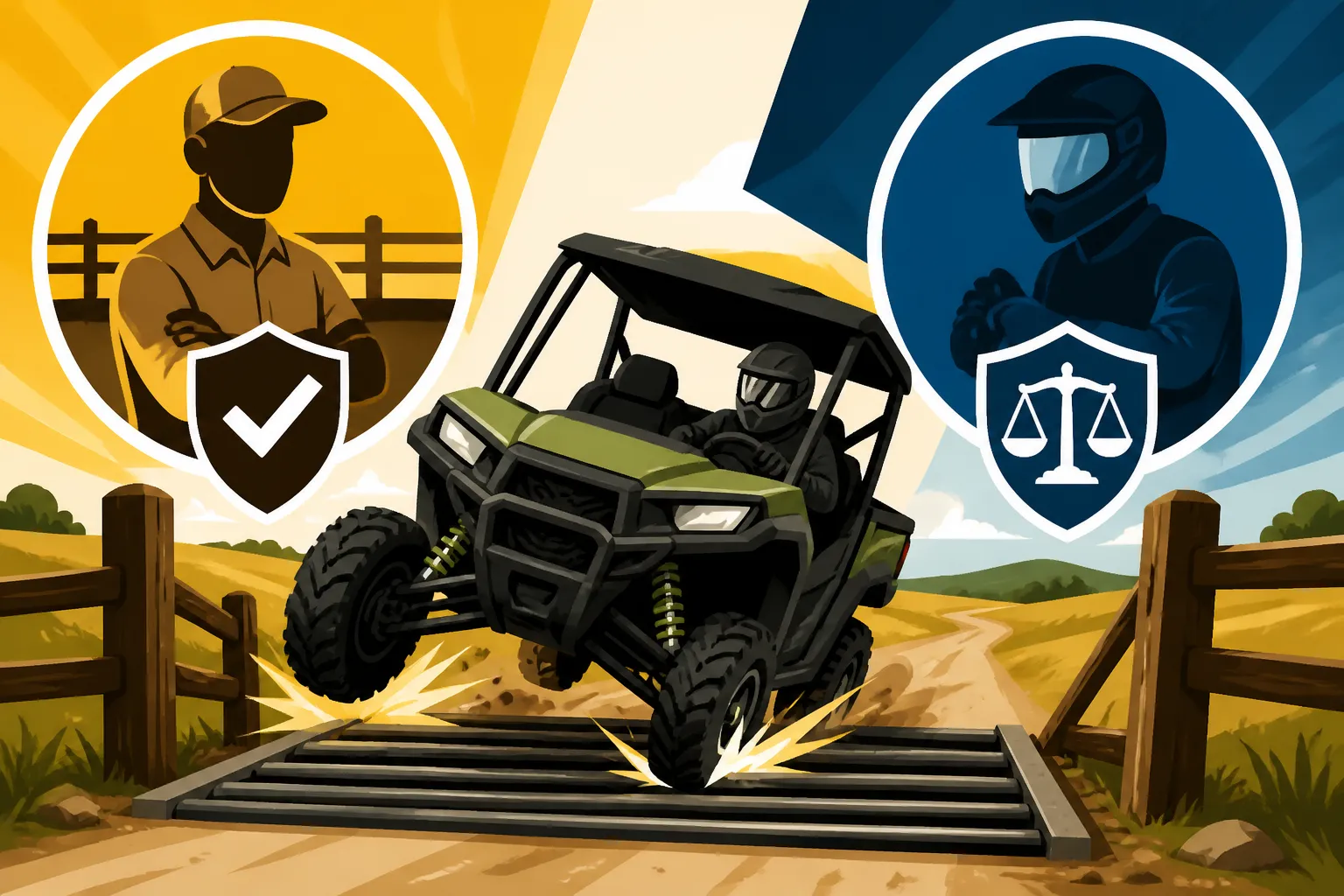
When an ATV or UTV hits a cattle guard incorrectly, the impact can be severe. For the rider, you might experience whiplash, sprains, fractures, or even more serious injuries depending on your speed and the machine's reaction. Helmets and proper riding gear are crucial, but they don't eliminate all risks. The machine itself can suffer extensive damage: bent A-arms, broken tie rods, shattered suspension components, cracked frames, and punctured tires are all too common. Your pride and joy can quickly become an expensive repair bill or even a total loss, leaving you wondering how this could have been avoided.
Immediate Aftermath and What to Document
The moments immediately following an incident are critical. First and foremost, check yourself and any passengers for injuries. If anyone is hurt, seek medical attention immediately. Once safety is secured, if you're able, thoroughly document the scene. Take photos and videos from multiple angles:
- The cattle guard itself: Show its condition, any missing grates, its placement relative to the road or trail.
- Your machine: Capture all damage, including undercarriage, tires, and suspension.
- The surrounding area: Note road conditions, visibility, signage (or lack thereof), and any other relevant environmental factors.
- Skid marks or debris: Anything that helps tell the story of what happened.
Gathering contact information from any witnesses is also invaluable. This documentation will be crucial when you start asking the uncomfortable question of [Who Pays When a Rider Hits a Cattle Guard]. You'll want to be able to tell your story clearly and with evidence to any insurance adjusters or legal professionals involved.
The Different Types of Cattle Guards in Kansas
Not all cattle guards are created equal, and their design can sometimes play a role in an incident. You'll primarily encounter two types in Kansas:
- Pipe or Rail Guards: These are the most common, featuring a series of parallel pipes or rails set over a pit. They're effective but can be particularly jarring for ATVs or UTVs if approached at an angle or too fast. The gaps can also snag tires if not properly crossed.
- Pre-cast Concrete Guards: Less common but gaining traction, these guards are solid concrete units with built-in channels. They often offer a smoother crossing but can still be treacherous if damaged or if the channels are wider than expected.
Regardless of the type, factors like age, maintenance, and visibility (especially after [Kansas Lighting Rules After Sunset]) contribute to the risk. A well-maintained, clearly marked cattle guard is far less likely to cause an accident than one that's rusted, has missing elements, or is obscured by tall grass or shadows.
Determining Liability: Who's Responsible for the Cattle Guard?
This is where things get complicated, as the question of liability hinges on several key factors: primarily, where the cattle guard is located and who owns or is responsible for maintaining it.
Public Roads vs. Private Property
The biggest determinant in who is potentially liable is whether you were riding on a public county road or private land.
- Public Roads: If the cattle guard is on a county road, the county government typically holds responsibility for its maintenance and safety. This doesn't mean they're automatically liable for every accident. They have a duty to maintain their roads in a reasonably safe condition for public travel. If the cattle guard was poorly maintained, damaged, or lacked adequate warning signs, and this condition directly led to your accident, the county could be held responsible. However, you, the rider, also have a duty to operate your machine safely and be aware of potential hazards on the road. Navigating [Kansas Rules for Riding a County Road] is key here.
- Private Property: If you were riding on private land, such as a ranch, farm, or lease property, the landowner generally bears the responsibility for the condition of their property and any hazards they permit to exist. This includes cattle guards. However, your right to be on that property also comes into play. Were you an invited guest, a licensee (someone with permission but no direct invitation), or a trespasser? The landowner's duty of care varies greatly depending on your status. For example, a landowner generally owes a higher duty of care to an invited guest than to a trespasser, for whom they typically only need to avoid willful or wanton injury. Understanding [Kansas Trespass Law for Riders] can be crucial.
Here's a quick comparison of potential liability scenarios:
| Factor | Public Road (e.g., County) | Private Property (e.g., Farm) |
|---|---|---|
| Owner/Entity | County Government | Landowner (Farmer, Rancher, Individual) |
| Duty of Care | Maintain reasonably safe conditions; provide warning signs | Varies by rider's status (guest, licensee, trespasser) |
| Potential Claim | Against county if negligence proven (poor maintenance, lack of warning) | Against landowner if negligence/duty breached and rider was lawfully present |
| Rider's Duty | Operate safely; observe road conditions and signs | Operate safely; respect property rules and conditions |
| Evidence Needed | Proof of county's negligence and direct causation | Proof of landowner's negligence/breach of duty and rider's lawful presence |
The Role of Negligence and Maintenance
At the heart of any liability claim is the concept of negligence. Negligence generally means that someone failed to act with the reasonable care that a prudent person would have exercised in a similar situation.
For a county, this might mean failing to repair a known damaged cattle guard within a reasonable timeframe, or not placing appropriate warning signs leading up to a cattle guard that is particularly hazardous. Imagine a scenario where a cattle guard on a well-traveled county dirt road has several missing pipes, creating dangerous gaps, and the county had received multiple complaints but taken no action. This could be a strong case for county negligence.
For a private landowner, negligence could involve knowingly having a dangerous, broken cattle guard on a path they've explicitly invited riders to use, without any warning. If you were riding on their property with permission, and they failed to warn you about a hidden or unusually dangerous condition they knew about, they might be found negligent. This is why clear communication and understanding of [Kansas Rules for Riding Farm Ground] are so important before you ever hit the trail.
However, the rider's own negligence is almost always considered. Were you speeding? Were you distracted? Were you riding under the influence? Was your machine properly maintained? Kansas operates under a modified comparative negligence rule, meaning that if your own negligence contributed more than 50% to the accident, you generally cannot recover damages. If your negligence was 50% or less, your recovery would be reduced proportionally.
Landowner Responsibilities on Private Land
Landowners in Kansas have specific responsibilities for those entering their property. As mentioned, this duty of care shifts based on whether the person is a trespasser, a licensee, or an invitee.
- Trespasser: Someone on the property without permission. The landowner's duty is minimal – primarily not to willfully or wantonly injure them. If a cattle guard on private land harms a trespasser, it's very difficult to hold the landowner liable unless they set a deliberate trap.
- Licensee: Someone with permission to be on the land for their own purposes (e.g., a hunter, a friend riding their ATV). The landowner must warn the licensee of known dangerous conditions that the licensee is unlikely to discover on their own. This would include a hidden or unusually hazardous cattle guard.
- Invitee: Someone on the land for the landowner's benefit or mutual benefit (e.g., a customer, a contractor, or a guest at a public event on private land). The landowner owes the highest duty of care to invitees, including actively inspecting the property for hazards and either fixing them or warning invitees about them.
If you are a [Kansas Machines Used Only on a Farm] rider, or you're operating your machine on land you lease for hunting, you're likely a licensee or an invitee. It's always best practice to discuss potential hazards, including cattle guards, with the landowner before riding.
Navigating Insurance and Claims After a Cattle Guard Incident
Once an incident occurs, your thoughts will quickly turn to financial recovery. This usually involves your own insurance, and potentially a claim against a third party.
Your ATV/UTV Insurance Coverage
Unlike street-legal vehicles, [Does You Need ATV Insurance in Kansas?] is not universally mandated by the state, though some cities require it for tagged UTVs. However, having your own dedicated ATV or UTV insurance policy is a smart move for exactly these kinds of situations.
- Collision Coverage: This is the part of your policy that pays for damage to your own ATV or UTV if it hits an object, regardless of who was at fault. This is your first line of defense if you hit a cattle guard.
- Comprehensive Coverage: This covers damage to your machine from non-collision incidents like theft, fire, vandalism, or hitting an animal (though typically not a fixed object like a cattle guard).
- Medical Payments (MedPay): This coverage can help pay for medical expenses for you and your passengers, regardless of fault. This is invaluable if you or a passenger were injured.
- Liability Coverage: While helpful if you damage someone else's property or injure someone, it won't pay for your own machine damage or injuries if you hit a cattle guard. However, if the incident somehow led to property damage to the cattle guard itself (unlikely, but possible), your liability coverage could kick in to repair the cattle guard.
The cost of your deductible will play a role, as will your policy limits. When considering [Kansas ATV Insurance Costs], remember that adequate coverage for collision and medical payments can save you a fortune after an unexpected accident. Even if you only ride on private land, having personal coverage is a responsible choice.
Filing a Claim and What to Expect
If you decide to file a claim, whether it's against your own insurance or a third party (like a county or landowner), prepare for a process that can take time.
- Notify Your Insurer: If you have collision or medical payments coverage, notify your insurance company as soon as possible. Provide them with all the documentation you collected (photos, witness statements, police report if one was made).
- Adjuster Review: An insurance adjuster will review your claim, examine the damage to your machine, and potentially visit the scene. They will assess the circumstances and determine the payout based on your policy.
- Third-Party Claim (If Applicable): If you believe the county or landowner was negligent, you'll need to formally notify them of your intent to seek damages. This often involves sending a certified letter. Their insurance company (or the county's self-insurance department) will then investigate. This can be a much longer and more contentious process than filing with your own insurer.
- Negotiation and Settlement: For your own policy, you'll negotiate with your insurer over the repair costs or total loss value. For a third-party claim, you'll negotiate with their insurer, providing evidence of their negligence and detailing your damages (medical bills, lost wages, property damage). This is where having strong documentation and perhaps legal representation becomes critical. [Kansas Accident Reporting for an ATV Crash] may involve both local law enforcement and your insurance carrier.
When to Seek Legal Advice
While you can navigate initial insurance claims yourself, there are definite times when you should consult with a personal injury attorney experienced in Kansas ATV and UTV accidents:
- Serious Injuries: If you or a passenger sustained significant injuries requiring extensive medical treatment, rehabilitation, or resulting in lost wages, a lawyer can help ensure you receive fair compensation for all your damages.
- Disputed Liability: If your insurance company denies your claim, or if the county or landowner refuses to accept responsibility, an attorney can help investigate and build a case to prove negligence.
- Complex Cases: If the circumstances are unusual, multiple parties are involved, or there's significant property damage, a lawyer can provide guidance and represent your interests.
- Unfair Settlement Offers: If you feel the settlement offer from an insurance company is too low, a lawyer can help you understand the true value of your claim and negotiate for a better outcome.
Preventing Future Incidents: Safe Riding Around Cattle Guards
While understanding liability is important after the fact, prevention is always the best strategy. A little caution and preparation can go a long way in avoiding the expense and pain of a cattle guard incident.
Pre-Ride Scouting and Awareness
Knowing your route and being constantly aware of your surroundings are your best defenses.
- Scout New Trails: If you're exploring new areas, especially [Kansas ATV Trails: Where You Can Actually Ride] or unfamiliar county roads, consider scouting ahead in a vehicle or taking it slow on your first pass. Pay attention to maps and any local knowledge about cattle guards.
- Slow Down and Look Ahead: This seems obvious, but it's easily forgotten when you're enjoying the ride. Reduce your speed significantly when approaching areas where cattle guards are common, such as fence lines, property transitions, or rural intersections. Always scan the terrain far ahead, not just what's directly in front of your wheels.
- Watch for Warning Signs: Although not always present, look for any cattle guard signs. These are particularly helpful on county roads. If riding on private land, ask the landowner if there are any unmarked cattle guards you should be aware of.
- Consider Time of Day: Visibility can be severely impacted during [Kansas Sunset to Sunrise Lighting Rules], or in adverse weather conditions like fog or heavy rain. These are times when cattle guards become even more dangerous.
Equipment and Upgrades for Better Protection
Your machine's setup can also play a role in how it handles impacts and protects you. While no equipment makes you invincible, certain upgrades can mitigate damage.
- Skid Plates: Investing in robust skid plates, especially for the undercarriage, A-arms, and differential, can protect vital components from direct impacts with the cattle guard's grates or the ground below. Companies like SuperATV offer heavy-duty skid plate kits designed to absorb abuse.
- Suspension Upgrades: A well-tuned suspension system can better absorb sudden impacts, reducing the jarring effect on the rider and the stress on the machine's frame. This isn't just for extreme riding; it can provide a buffer for unexpected obstacles.
- Tire Choice: While not directly for cattle guard protection, appropriate tires for the terrain you're on (e.g., [Choosing Tires for the Rock at Mapleton] versus [Paddle Tires on Dunes]) offer better traction and control, which can help you maintain steering and avoid hitting a cattle guard at an awkward angle.
- Lighting: Upgrading your headlights and adding auxiliary lighting can dramatically improve visibility, especially when riding after dark or in dusty conditions. Being able to see that cattle guard sooner gives you more time to react.
Communication with Landowners and Authorities
Open lines of communication can prevent many issues before they start.
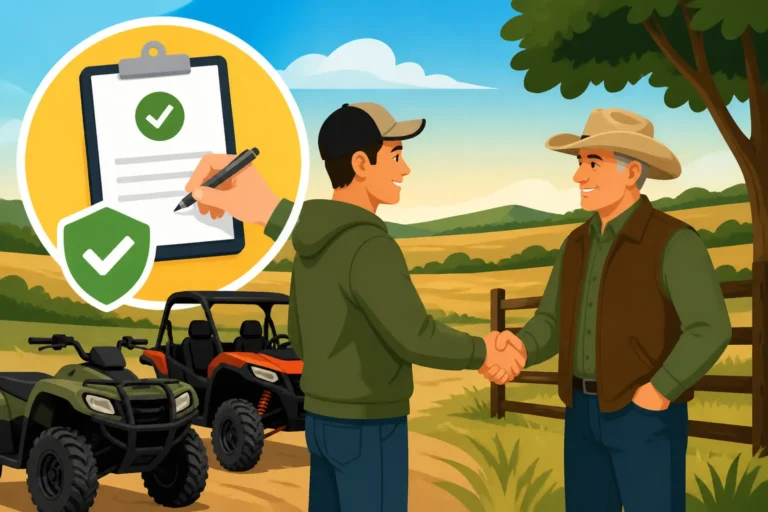
- Talk to Landowners: If you frequently ride on private property, establish clear communication with the landowner. Ask about known hazards, especially cattle guards, and offer to report any damage or issues you notice. This fosters a cooperative relationship.
- Report Damaged Cattle Guards: If you encounter a significantly damaged cattle guard on a public county road, report it to the county road and bridge department. This helps them fulfill their duty to maintain safe conditions and could prevent future accidents for others. If you see damage on private land you have permission to ride, inform the landowner immediately.
- Understand Local Rules: Always be familiar with [Kansas Rules for Riding a County Road] and any specific city ordinances if you're riding a UTV that has been granted street-legal status. Ignorance of the law is rarely an excuse when an incident occurs.
Riding ATVs and UTVs in Kansas is a fantastic way to enjoy the outdoors, but it comes with responsibilities. By understanding the risks, knowing the nuances of liability, preparing for potential incidents with insurance, and proactively preventing accidents, you can enjoy your machine for years to come.
Disclaimer
This article is for general informational purposes only and does not constitute professional advice. Laws, prices and regulations vary by location and change over time. Consult a qualified professional for guidance on your specific situation.