Why a Restricted License Will Not Get a City Tag
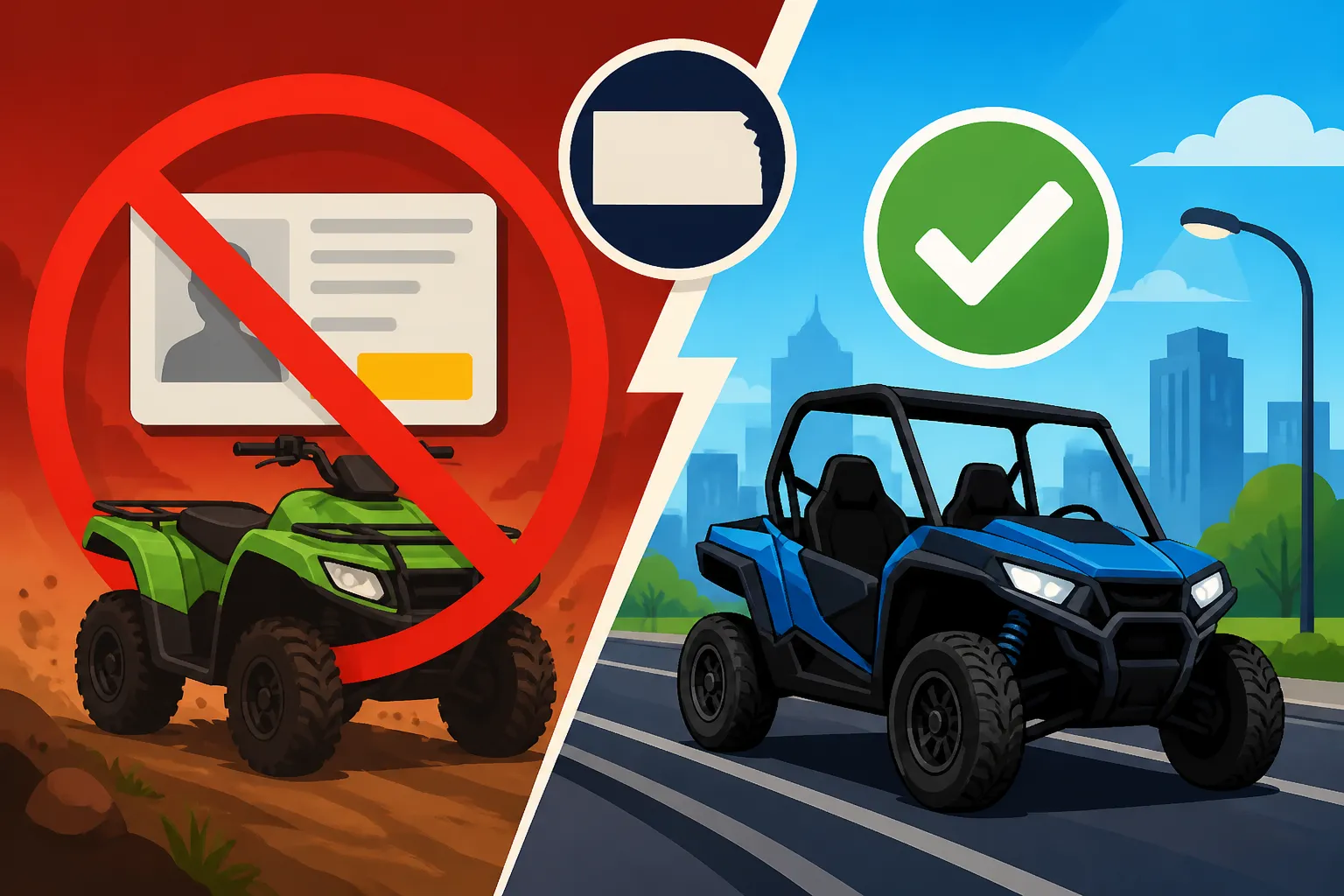
It’s a common scenario that can lead to a lot of head-scratching and frustration: you’ve got your trusty UTV, you know some Kansas towns are allowing them on city streets, and you’ve even got a driver’s license – albeit one with some restrictions. You might assume that if you can drive a car, even with certain limitations, surely you can get a city tag for your side-by-side. Unfortunately, for most riders in Kansas, that assumption hits a roadblock, because a restricted license typically won't cut it when applying for a city UTV tag. This guide will help clarify why these restrictions don't translate to street-legal UTV operation and what Kansas cities generally require.
The Basics of Restricted Licenses in Kansas
Many folks get a restricted license at some point in their lives, and it’s easy to think it covers all bases for driving. But when it comes to tagging your UTV for city street use, the specific nature of these restrictions becomes a real sticking point.
What a Restricted License Is and Isn't For
In Kansas, a restricted driver’s license is issued with specific conditions or limitations on when, where, or how a person can operate a motor vehicle. These restrictions are usually put in place for a few key reasons. Perhaps it’s a young driver with a provisional license, meaning they can only drive during certain hours or with an adult in the car. It could be someone with a medical condition that requires them to wear corrective lenses or to drive only during daylight hours. Sometimes, a hardship license allows someone to drive only for work or essential errands after a suspension.
The crucial point here is that these restrictions are typically tied to the ability to safely operate a standard motor vehicle under specific circumstances, acknowledging a limitation in driving ability or experience. They are designed to allow limited, supervised, or conditioned driving for cars and trucks that are already fully street-legal and designed for public roads. They aren't generally intended to expand a driver's privileges to new vehicle classes or to circumvent the basic requirements for vehicles like UTVs, which are primarily off-road machines only conditionally allowed on streets by local ordinances.
Why Restrictions Exist for On-Road Vehicles
Think about why the Department of Motor Vehicles imposes these restrictions in the first place. It’s all about public safety and ensuring that drivers meet a baseline level of competence and responsibility on shared public roadways. A provisional license for a teenager, for example, is about gradually building experience under safer conditions. A restriction for driving only with corrective lenses ensures a driver can see adequately. These are all about managing the risk associated with operating a traditional, registered, and insured vehicle like a car or truck on state highways and local streets.
However, the laws that govern how UTVs are brought onto city streets are often specific, and they usually demand the full, unrestricted driving privilege of a licensed adult. When cities pass ordinances to allow UTVs, they are essentially creating a carve-out from the general state law that typically prohibits them. To mitigate the perceived risks of these vehicles on city roads, they often lean on the most straightforward and universally understood standard of driver qualification: a full, unrestricted driver's license. This ensures the operator has demonstrated complete competency and understanding of traffic laws without any special conditions. You can read more about [Kansas ATV Road Rules Under 8-15,100].
How Kansas City Ordinances Define Street-Legal UTV Requirements
While state law largely defines off-road vehicles like ATVs and UTVs as non-highway vehicles, a growing number of Kansas cities are taking matters into their own hands. They are passing local ordinances to allow residents to drive UTVs on specific city streets, but this comes with a strict set of rules that often include a non-negotiable driver's license requirement.
The Local Decision to Allow UTVs on Streets
It's vital to understand that the authority for UTVs on city streets comes from individual city councils, not blanket state law. [Kansas Cities That Authorize ATV Street Use] do so by creating specific ordinances that outline the conditions under which a UTV can operate within their municipal boundaries. This isn't a right granted by the state for your non-highway vehicle; it's a privilege extended by the local governing body. Each city’s ordinance can be slightly different, but they almost always include a common set of requirements covering equipment, insurance, and driver licensing.
For instance, a city might require your UTV to have headlights, taillights, brake lights, turn signals, a horn, a rearview mirror, and a windshield. Many riders find themselves needing to add accessories from companies like SuperATV to bring their machine up to snuff before it can even pass an inspection for a city tag. But beyond the machine's modifications, the city also wants to ensure the operator is qualified. They are extending a special allowance, and in return, they expect drivers to meet the highest standard of road readiness.
Standard Licensing as a Foundation of City Rules
When a Kansas city passes an ordinance to allow UTVs, they are essentially taking a step to integrate these off-road machines into the existing framework of traffic laws. Because state law generally defines an ATV or UTV as a "nonhighway vehicle," when a city decides to permit them on roads, they treat them much like any other motor vehicle operating on public ways. And what's the fundamental requirement for operating any motor vehicle on a public road? A valid, unrestricted driver's license.
Cities aren't trying to create a loophole for less-qualified drivers; quite the opposite. They are trying to ensure that if these machines are going to share the road with cars, trucks, and motorcycles, their operators must possess the same basic driving credentials. This minimizes liability for the city and maximizes safety for everyone on the road. The ordinance often explicitly states that "operators must possess a valid, unrestricted Class C (or higher) driver's license." This directly rules out provisional licenses, hardship licenses, or licenses with other significant restrictions because those restrictions signify a limitation in the full privilege of operating a motor vehicle on public roads. You can learn more about [Louisburg's Insurance Requirement in Kansas] as an example of city-specific rules.
Why a Full, Unrestricted Driver's License is Essential
The distinction between off-road recreational use and operating a vehicle on public streets is vast, and nowhere is this more apparent than in the licensing requirements. If you want to get a city tag for your UTV, you need to be prepared to meet the standard set for all other vehicles on the road.
State Law's View on Operating a Motor Vehicle on Public Roads
Kansas state law is pretty clear: if you're driving a motor vehicle on a public highway or street, you generally need a valid driver's license. While ATVs and UTVs are classified as nonhighway vehicles for titling purposes, once a city ordinance grants them permission to be on city streets, they fall under the general umbrella of "motor vehicle operation" in that specific context. The state defines what constitutes a driver's license and what privileges it grants. A restricted license, by its very nature, indicates that certain privileges are not granted or are conditional.
The city ordinances allowing UTVs are essentially aligning with the spirit of state law regarding general road safety. They aren't inventing new license types; they are requiring operators to meet the existing standard for operating a vehicle on roads. This means demonstrating the full competency that an unrestricted license implies, without any special conditions or carve-outs. It's about ensuring that anyone operating a street-legal UTV has passed all the tests and met all the criteria to drive safely and legally on any public road, without limitation. If you're wondering [Do You Need a License for an ATV in Kansas?] for off-road use, the answer is often different than for street use.
The Difference Between Off-Road and On-Road Licensing
This is where a lot of the confusion stems from. For purely off-road riding on private property, designated trails, or Corps of Engineers land, Kansas generally does not require you to have a driver's license for an ATV or UTV. If you're on your own farm, navigating a pasture, or enjoying the trails at Tuttle Creek ORV Area, the need for a license is usually absent for adults. This is because these environments are not public roadways with traffic laws, speed limits, and other vehicles to contend with. [Kansas Has No Safety Course Requirement] for off-road machines, for example.
However, the moment you decide to take your UTV onto a public city street – even if a local ordinance permits it – you transition from off-road recreation to on-road vehicle operation. This transition brings with it all the responsibilities and legal requirements of a traditional motor vehicle driver. The city's primary concern becomes public safety, and a full, unrestricted driver's license is their way of ensuring that the operator has demonstrated a complete understanding of traffic laws, road signs, and safe driving practices. A restricted license, by definition, indicates a departure from this "full" understanding or capability under all normal driving conditions.
Navigating the City UTV Tag Application Process
So, you've understood the why, but how does this play out when you actually go to apply for a city tag? The application process for a UTV street-legal tag in Kansas cities is quite specific, and the driver's license check is a critical, early hurdle.
Typical Documentation and Inspection Steps
When you head to your local city hall or designated department to get that coveted UTV tag, expect to bring a robust packet of information and often your machine for an inspection. While the exact list can vary slightly from city to city, here's a general rundown of what you'll typically need:
| Requirement | Description |
|---|---|
| Proof of Ownership | This usually means your certificate of title. Remember, [Kansas Titles ATVs as Nonhighway Vehicles], so you’ll have a nonhighway title in Kansas. You'll need to show you are the legal owner of the machine. |
| Proof of Insurance | Most cities mandate liability insurance for your UTV to operate on public streets. This is usually separate from any homeowner's policy you might have and will need to specifically cover your UTV for road use. [Louisburg's Insurance Requirement in Kansas] is a good example. |
| Safety Inspection | Your UTV will need to pass an inspection to ensure it has all the necessary street-legal equipment: headlights, taillights, brake lights, turn signals, a horn, mirrors, and often a windshield. This is where those SuperATV accessories might come in handy to get your machine compliant. |
| Valid Driver's License | This is the big one. You will be asked to present a current, valid, and unrestricted driver's license. This is often checked first. |
| Application Fee | There will be a fee for the initial tag and usually a renewal fee each year. |
| Proof of Residency | Some cities may require proof that you live within their municipal limits to qualify for their local UTV ordinance. |
It’s always a good idea to call your specific city clerk's office beforehand to get their precise list and avoid a wasted trip. They can confirm the hours for inspections, what forms to fill out, and what payment methods they accept.
The Driver's License Check: A Critical Hurdle
From the city's perspective, the driver's license check is often the very first, and most non-negotiable, step in the application process. Before they even look at your title, inspect your lights, or take your money, they want to see that you are legally qualified to operate a motor vehicle on their streets.
If you present a restricted license, the conversation will likely stop there. The clerk isn't typically authorized to interpret the nuances of your restrictions or make exceptions. Their directive from the city ordinance is generally to verify a "valid, unrestricted driver's license." Any limitation on that license, whether it's for age, medical conditions, or a past driving infraction, will usually result in your application being denied. The logic is simple: if your license indicates any condition or limitation on your driving privilege for a standard car, the city isn't going to extend that privilege to a UTV on city streets, which they've already granted as a special exception to state law.
This can feel disheartening, especially if you've gone through the effort of equipping your UTV with all the necessary gear. However, it underscores the importance of understanding that city UTV ordinances are about integrating these vehicles into the existing fabric of road safety, which relies heavily on fully licensed operators. For more about this, look into [Police Inspect a UTV Before a City Tag Issues] and [Proof of Insurance at a City Hall], as these are often tied together with the license check.
So, if you're hoping to get a city tag for your UTV in Kansas, your best bet is to ensure you hold a full, unrestricted driver's license first. It's the key that unlocks the possibility of legal street use for your off-road machine within city limits.
Disclaimer
This article is for general informational purposes only and does not constitute professional advice. Laws, prices and regulations vary by location and change over time. Consult a qualified professional for guidance on your specific situation.