Kansas Rules for Riding Farm Ground
Riding your ATV or UTV on farm ground in Kansas can feel like navigating a legal and ethical maze. Many riders, especially those new to the state or to owning an off-road machine, struggle with understanding exactly where they can ride, whose permission they need, and what state and local laws apply when they leave the paved roads behind. This guide will walk you through the essential rules, common pitfalls, and best practices for riding your quad or side-by-side responsibly and legally on Kansas farm and ranch land.
Understanding What "Farm Ground" Means in Kansas for Riders
When we talk about "farm ground" in Kansas, it’s not just one uniform type of land. From sprawling wheat fields to cattle pastures, active crop ground, and even wind farms, each type of agricultural land presents unique considerations for ATV and UTV riders. The rules often hinge on whether the land is privately owned, leased, or falls under some form of public access, like a section line. It's easy to assume that if it looks like open land, it's fair game, but that's a dangerous misconception that can lead to serious legal trouble.
Defining Agricultural Use vs. Recreational Use
For many Kansas landowners, an ATV or UTV is a crucial piece of equipment, used daily for chores like checking fences, herding cattle, spraying weeds, or carrying tools. When a machine is used for these tasks, it generally falls under "agricultural use." This distinction is important because certain statutes might have exceptions or different rules for machines primarily used in farming operations. For instance, [Kansas Machines Used Only on a Farm] often operate under different road-use allowances than machines used purely for recreation.
However, when you’re out on the same land just for fun – joyriding, trail riding, or even hunting for leisure – that’s generally considered "recreational use." Even if you own the land, being mindful of this distinction can help you understand why certain rules are in place or how a law might be interpreted. The intent behind your ride can sometimes change how your activities are viewed, especially if there's an incident or a question of liability. It’s not just about what you’re riding, but why you’re riding it.
The Legal Implications of Crossing Different Types of Farm Land
Kansas farm land isn't always neatly sectioned off. You might encounter a vast open pasture, then suddenly come upon a cultivated field, followed by a stretch of land containing an oil well site or a wind turbine. Each of these can have different access rules. A pasture might seem benign, but it could be actively grazed, with livestock or even hidden hazards. An active field could be home to irrigation equipment or freshly planted crops, both of which are extremely vulnerable to damage from off-road vehicles.
The critical takeaway here is that you can’t treat all "farm ground" as the same. Riding an ATV or UTV requires an awareness of your surroundings and an understanding of the specific type of land you're on. For example, [Kansas Rules for Riding an Oil Lease Road] might differ significantly from riding through a neighbor's hayfield. Always assume specific rules apply and err on the side of caution. Ignorance of the different land types and their associated regulations is not a valid defense if you accidentally stray where you shouldn't.
Navigating Trespass Laws and Landowner Permissions
One of the biggest headaches and sources of conflict for off-road riders in Kansas is navigating property lines and understanding trespass laws. It’s a sad reality that a few irresponsible riders can spoil the experience for everyone by ignoring property rights, leading landowners to close off areas that might otherwise be accessible. If you want to continue enjoying Kansas’s rural landscapes from the seat of your ATV or UTV, respecting private property is paramount. The consequences of not doing so can range from a polite request to leave, to fines, or even having your machine impounded.
The Importance of Written Permission
When it comes to riding on private farm or ranch land, verbal permission is better than nothing, but written permission is always best. A casual "Yeah, go ahead and ride the back forty" from a landowner might be forgotten, misconstrued, or even denied if there's an issue later. A simple, signed document outlining where you can ride, when, and for what purpose can save you a world of trouble. This is especially true if you're riding land you don't own or lease. Think of it as your rider’s passport for that specific piece of property.
Having written permission protects both you and the landowner. It clarifies expectations, defines boundaries, and provides proof if you're ever stopped by law enforcement or confronted by another individual about your presence. If you're using aftermarket parts from companies like SuperATV on your machine, you'll want to ensure you're using them legally and responsibly. A good practice is to carry this permission with you, perhaps laminated or in a waterproof pouch, along with any other necessary documents like proof of ownership. For more detailed advice, check out [Getting Written Permission From a Landowner Before You Ride].
What to Do When Boundaries Aren't Clear
Kansas farm land, particularly in older areas or where property has changed hands over generations, often has fences that are falling apart, missing, or simply non-existent. Sometimes, what looks like a natural boundary is actually just a section line that happens to cross private property. This can make it incredibly difficult to tell where one property ends and another begins. This ambiguity is a common source of accidental trespass. You might think you're on your buddy's land, only to find you've crossed onto a neighbor's property without permission.
In situations where boundaries are unclear, the best advice is to stop and verify. If you have a GPS unit or a mapping app on your phone with property line overlays, use it. If not, backtrack to a known point or seek clarification from the landowner. Never assume that an open gate or an absence of "No Trespassing" signs means you have free reign. When in doubt, it’s always safer to assume the land is private and inaccessible without explicit permission. Familiarize yourself with [What Posted Signs Mean on Kansas Farm Ground] to help you interpret various property markers.
Equipment and Safe Practices for Farm Ground Riding
Riding on farm ground isn’t the same as tearing up an ORV park. The terrain can be unpredictable, often featuring hidden obstacles, farm equipment, and even livestock. The machines themselves, whether an ATV or UTV, are often purchased and outfitted for specific tasks on the farm, which might influence how you should ride them. Ensuring your machine is properly equipped and that you're riding safely is key to preventing accidents and respecting the working nature of the land.
Machine Considerations for Agricultural Work
Many ATVs and UTVs used on Kansas farm ground are workhorses, built for utility rather than pure sport. This means they might be equipped with features like heavy-duty tires, winches, or cargo beds designed to haul tools, feed, or even small game. Aftermarket accessories from companies like SuperATV can enhance these capabilities, but remember that the modifications should align with safe, responsible use on working land.
For example, a machine set up for hauling fence posts across a muddy field might not be ideal for high-speed recreational riding across dry pastureland, and vice-versa. Consider the weight distribution, tire type, and suspension setup of your machine. Regular maintenance is also crucial, as farm conditions can be tough on machinery. Keeping up with oil changes, tire pressure, and brake inspections will ensure your machine is reliable and safe for whatever tasks or recreational rides you undertake.
Rider Safety and Awareness on Active Farm Land
Safety is paramount when riding on any farm ground. Unlike a dedicated trail system, farm land is not designed with recreational riders in mind. You might encounter:
- Farm equipment: Tractors, combines, planters, and other large machinery often move slowly and have significant blind spots. Always give them a wide berth.
- Livestock: Cattle, horses, and other animals can be unpredictable. Avoid disturbing them, and remember that spooking livestock can lead to serious injury for both the animals and riders.
- Hidden obstacles: Ruts, rocks, stumps, irrigation hoses, and even old discarded farm implements can be hidden by tall grass or brush.
- Dust and mud: Depending on weather and season, dust can obscure vision, and mud can make terrain treacherous.
- Chemicals: Be aware of freshly sprayed fields or areas where chemicals are stored.
Always wear appropriate safety gear, including a helmet, eye protection, long sleeves, and sturdy boots. Ride at a speed appropriate for the terrain and your visibility. If you're riding with a group, maintain safe distances and communicate clearly. Being aware of your surroundings isn't just a suggestion; it’s a necessity for your safety and the safety of others working on the land.
Special Considerations for Public Rights-of-Way on Farm Ground
While most farm ground is private, Kansas has public rights-of-way that often run through or alongside agricultural properties. These include section lines and ditch rights-of-way, which can sometimes be confused with private farm roads. Understanding the legal status of these areas is crucial, as they have different rules regarding public access and ATV/UTV use compared to purely private land.
Riding Section Lines and Ditch Rights-of-Way
Kansas is laid out in a grid system, with many roads and property lines following "section lines" – imaginary lines established during land surveys. Many county roads run along these section lines, but sometimes a section line might be an unimproved track or simply an easement across private property. Generally, ATVs and UTVs are not permitted on public roads unless specifically authorized by local ordinance, or if they fall under a specific agricultural exception, such as for transporting crops or livestock on a designated [Kansas Farm Machines on Highways] route.
Ditch rights-of-way, usually alongside roads or fields, are also complex. While a farmer might drive a tractor through a ditch to maintain it, this doesn't automatically grant public access for recreational ATV or UTV riding. [Kansas Rules for Riding a Section Line] and [Kansas Rules for Riding a Ditch] are very specific and generally restrict recreational use. The temptation to "cut across" a section line or drive down a ditch to avoid a paved road is strong, but it can lead to trespass charges or traffic citations if you're caught. Always verify local ordinances before assuming any public access for recreational riding on these routes.
When Does a Farm Road Become a County Road?
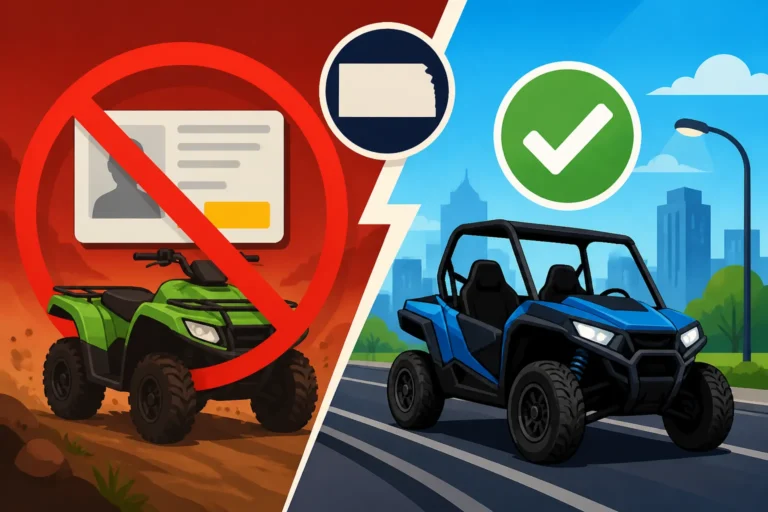
It's common to see dirt roads winding through Kansas farm ground. Some of these are purely private access roads, used only by the landowner or those with permission. Others, however, might be officially designated county roads, even if they're unpaved and rarely maintained. The distinction is incredibly important because county roads fall under different regulations than private roads. Riding a properly tagged UTV on a county road that allows it (with the appropriate city ordinance and insurance) is one thing; riding an ATV on a private farm road without permission is another entirely.
The legal status of a road can be determined by checking with the local county clerk or treasurer's office. They can often provide maps showing designated public roads. Never assume that a well-used dirt path is a public thoroughfare. If you're on a ranch, always remember that [Carrying Papers on a Ranch Road] – including permission slips – is a smart practice. Whether you're riding a utility UTV or a sport ATV with SuperATV upgrades, knowing exactly where you are and the legal status of the path beneath your tires is your responsibility as a rider.
Here's a quick reference table for common farm ground riding scenarios:
| Scenario Type | Land Type | Required Permission | Typical Machine Use | General Road Legality (Recreational) | Key Consideration |
|---|---|---|---|---|---|
| Private Field/Pasture | Private | Written (Strongly Recommended) | Work, Recreation | No | Risk of crop/livestock damage; high trespass risk |
| Section Line (Unimproved) | Public Easement | Often None (but restricted) | Limited, Utility | Generally No | Primarily for access, not recreational riding; check local laws |
| Ditch Right-of-Way | Public Easement | Often None (but restricted) | Limited, Utility | Generally No | Safety hazards, environmental impact, very limited recreational use |
| Farm Road (Private) | Private | Written | Work, Recreation | No | Easy to mistake for public; confirm ownership |
| Farm Road (Designated County) | Public | None (if legal for machine/area) | Work, Commute | Varies by local ordinance | Must adhere to county/city UTV rules (license, insurance, etc.) |
| [Kansas Rules for Riding a Pasture] | Private | Written (Strongly Recommended) | Work, Recreation | No | Livestock safety, gates, fencing. |
| [Kansas Rules for Riding a Wind Farm Road] | Private/Leased | Written (Mandatory) | Work, Inspections, Limited Recreation | No | Restricted access, industrial environment, permit often required |
Ultimately, respecting the land and the landowners is the bedrock of responsible off-road riding in Kansas. A little homework and proactive communication can ensure you have a safe and legal ride every time you venture onto farm ground.
Disclaimer
This article is for general informational purposes only and does not constitute professional advice. Laws, prices and regulations vary by location and change over time. Consult a qualified professional for guidance on your specific situation.