Who Has to Wear a Helmet on a Kansas ATV?
Navigating the rules and regulations for ATV and UTV riding in Kansas can feel like trying to untangle a bowl of spaghetti – especially when it comes to something as critical as helmet laws. Many riders assume that because motorcycles have strict helmet requirements, their ATV or side-by-side must too, but the truth is a bit more nuanced. This comprehensive guide is here to cut through the confusion and clarify exactly who has to wear a helmet on a Kansas ATV, where those rules apply, and why prioritizing safety, law or no law, is always your best bet.
The Kansas Motorcycle Helmet Law and Why It Confuses ATV Riders
It’s completely understandable why so many ATV and UTV enthusiasts in Kansas are unsure about helmet laws. The state does have a helmet law, but it’s specifically written for motorcycles. This distinction is crucial, yet it’s often overlooked, leading to a lot of misinformation swirling around local riding groups and online forums. When you see news reports or hear discussions about Kansas helmet laws, they are almost always referring to the statute that applies to two-wheeled motorized vehicles designed for highway use.
What the Statute Actually Says About Helmets
The Kansas statute concerning helmets primarily focuses on operators and passengers of motorcycles. It generally states that anyone operating or riding on a motorcycle on public roads must wear a protective helmet, especially if they are under a certain age. The language is quite specific about the vehicle type: "motorcycle." This makes perfect sense when you consider the inherent risks of riding a motorcycle on pavement, where speeds are higher and impacts can be particularly severe. The law is designed to protect riders in an environment where they share the road with much larger, heavier vehicles at significant speeds.
However, the problem arises when ATV riders, trying to be responsible and informed, look up "Kansas helmet laws" and find this statute. They see the requirement for "motorcycles" and, in their mind, lump all motorized recreational vehicles together. They might think, "Well, my ATV has an engine and handlebars, it must be covered," or "My UTV goes on roads sometimes, so it's probably the same." But from a legal standpoint, this couldn't be further from the truth. The legislature intentionally crafted different definitions and rules for different types of vehicles, and that difference is key to understanding your obligations.
Why an ATV Is Not Legally a Motorcycle in Kansas
Here's the critical difference: In Kansas, an All-Terrain Vehicle (ATV) is not legally classified as a motorcycle. The state has distinct definitions for each. A motorcycle is typically defined as a motor vehicle having a seat or saddle for the use of the rider and designed to travel on not more than three wheels in contact with the ground, but excluding a tractor. An ATV, on the other hand, falls under the umbrella of "nonhighway vehicles." This separate classification is pivotal.
Kansas law defines an ATV as a motorized vehicle manufactured and used exclusively for off-highway use, traveling on three or more wheels, with an engine displacement of 900 cubic centimeters or less, and weighing 1,000 pounds or less. Side-by-sides often fall into the "work-site utility vehicle" or "micro utility truck" categories, which also have their own specific definitions but are similarly not motorcycles. Because these vehicles are designed for off-highway use, even when they are titled by the state, they receive a [Kansas Nonhighway Title Explained], which explicitly states they are not for highway operation.
This legal distinction means that the helmet law written specifically for motorcycles does not automatically apply to ATVs or UTVs. The legislature recognized that these machines operate in different environments, often at lower speeds, and present different types of risks. While safety is always paramount, the legal mandate for a helmet on an ATV or UTV in Kansas does not originate from the state's motorcycle helmet statute. Understanding [How Kansas Law Defines a Nonhighway Vehicle] is the first step in clarifying this common misconception.
The Absence of a State-Mandated ATV Helmet Law in Kansas
Now that we’ve cleared up the motorcycle confusion, let’s get straight to the point: Kansas does not have a statewide helmet law specifically for ATVs or UTVs. This often comes as a surprise to many riders, especially those who’ve moved from states with more comprehensive off-road vehicle regulations. You won't find a general statute that says, "All ATV riders in Kansas must wear a helmet." This doesn't mean safety isn't important, but it does mean the state government has largely left that decision to individual riders or to local jurisdictions.
Where the Kansas Law Doesn't Apply to ATVs
You can ride your ATV on your own private property, on designated trails, or on county roads where local ordinances allow, and as long as you are an adult, the state of Kansas itself does not require you to wear a helmet. This is a significant difference from many other states that have enacted universal helmet laws for all off-road vehicle operators, or at least for those under a certain age. In Kansas, the legislative approach has been to define ATVs as off-highway vehicles and, as such, to place less emphasis on regulating their use with personal protective equipment through a statewide mandate.
This lack of a blanket law can be both a blessing and a curse. On one hand, it offers riders a degree of personal freedom to make their own choices about safety gear. On the other hand, it might lead some less experienced riders to believe that helmets are unnecessary, simply because they aren't legally required. It's crucial to distinguish between what is legally mandated and what is simply good, common-sense safety practice. Just because a law doesn't exist doesn't mean the risk doesn't.
The Implications of No Statewide Requirement
For adult riders operating their ATVs or UTVs on land where state law is the primary authority – such as private property or permissible county roads without specific local ordinances – the decision to wear a helmet rests entirely with them. This freedom places a significant amount of personal responsibility on the rider. It means you are responsible for assessing the risks of your riding environment, your skill level, and the potential consequences of an accident.
Without a state law, there's no state-level penalty for not wearing a helmet on an ATV. However, it's worth noting that insurance companies may still look at helmet use when investigating claims. While [Do You Need ATV Insurance in Kansas?] is often driven by city ordinances for street-legal UTVs, comprehensive policies for off-road use might take safety precautions into account. For instance, if you are involved in an accident and sustain a head injury while not wearing a helmet, your insurance provider might scrutinize the claim more closely, or it could even impact liability in civil cases, even if no law was broken. This is a subtle but important implication that riders should consider, even in the absence of a direct legal mandate.
Local Ordinances: The Unexpected Helmet Rules in Kansas Cities
While the state of Kansas largely takes a hands-off approach to ATV helmet laws, many individual cities and counties do not. This is where the spaghetti bowl really gets tangled. What's legal in one town might get you a ticket in another just a few miles down the road. This patchwork of local ordinances is the most common reason why an ATV or UTV rider in Kansas might find themselves legally obligated to wear a helmet.
When Cities Step In to Mandate Helmets
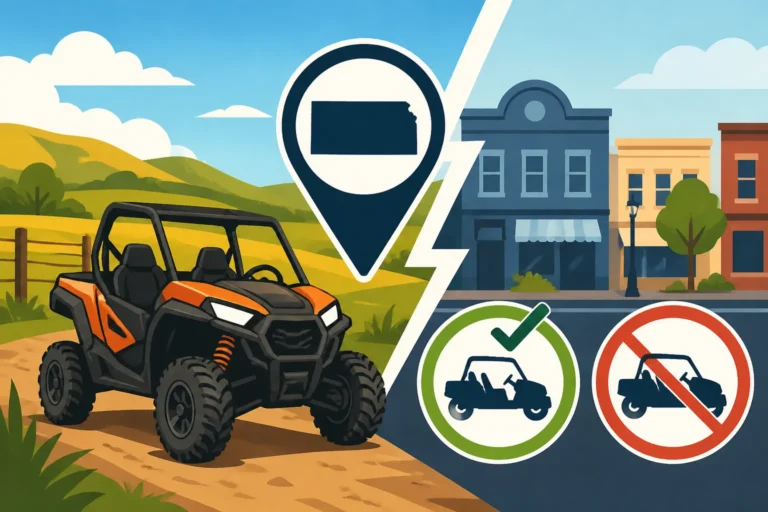
Many Kansas cities have enacted ordinances to allow for the limited use of UTVs (and sometimes ATVs) on their public streets. These ordinances are often a response to local demand, particularly in smaller towns where these machines are used for transportation, work, or recreation. However, when a city decides to open its streets to these vehicles, it also assumes the responsibility of ensuring public safety. This often leads to the inclusion of specific safety requirements within those local laws.
For example, a city might pass an ordinance that allows UTVs on streets with a speed limit of 35 mph or less, but as a condition of street-legal operation, it might mandate that all operators and passengers wear DOT-approved helmets. This is particularly common for UTVs that receive a city-issued tag, making them subject to municipal traffic laws. You might see similar rules in towns that allow golf carts on certain roads. These rules are put in place because riding on public streets, even at lower speeds, introduces new hazards that don't typically exist on private off-road trails, like interaction with cars, trucks, and other road users. [Kansas UTV Street Legal Rules by City] reveals just how varied these regulations can be.
How to Check Your Local City's Rules
Given the variety of local ordinances, it is absolutely essential for any ATV or UTV rider to check the specific rules of the city or county where they plan to ride on public roads. Relying on what you heard from a buddy or assuming your neighboring town has the same rules is a recipe for a ticket.
Here's how you can get the definitive word:
- Contact the City Clerk's Office: This is often the best first step. City clerks are the keepers of municipal codes and ordinances. They can direct you to the specific section of their city's laws regarding ATV/UTV use and helmet requirements. Be prepared to specify the type of machine you have (ATV, side-by-side, golf cart, micro utility truck) as the rules might differ.
- Check the City's Official Website: Many cities now publish their municipal code online. A quick search for "ATV ordinance," "UTV ordinance," or "off-road vehicle rules" on the city's website might yield the information you need. Look for sections related to traffic, vehicles, or parks and recreation.
- Consult Local Law Enforcement: While city clerks can provide the written law, local police departments or sheriff's offices are the ones who enforce it. They can offer practical advice and confirm the rules they patrol. This can be especially helpful if the wording of an ordinance is unclear.
- Visit Your County Treasurer's Office: While they primarily handle titling and registration, they often have a good understanding of local regulations that affect vehicle use, as they deal with the public constantly. They might be able to point you in the right direction or confirm general county-level rules.
Remember, rules can change. An ordinance passed last year might have been amended this year. Always seek the most current information. [Kansas Ordinance Lookups Before You Ride] is a critical step before you hit the pavement in any Kansas town. Ignoring these local laws, even if you’re unaware of them, will not exempt you from potential fines or penalties.
Age-Specific Rules and Recommendations for Young Riders
While adult ATV riders in Kansas generally don't face a statewide helmet mandate, the conversation shifts significantly when it comes to younger operators. Even without explicit laws, the emphasis on safety for children and teenagers is much higher, often driven by a combination of strong recommendations and the specific rules of private riding areas.
State Recommendations for Youth ATV Operators
Kansas law does have some general provisions concerning youth and ATVs, primarily focusing on age and supervision. For instance, [Kansas ATV Age Requirements] dictate certain age minimums for operating ATVs, but these don't necessarily include helmet mandates. However, the spirit of safety often translates into strong recommendations from state agencies, safety organizations, and even ATV manufacturers themselves, all urging helmet use for youth riders.
These recommendations are rooted in the undeniable fact that children and teenagers are more vulnerable to serious injury in an ATV accident. Their developing bodies are less resilient, their judgment skills are still maturing, and their reaction times may not be as sharp as an experienced adult's. Therefore, even in the absence of a strict statewide law, any responsible adult supervising a youth ATV rider should insist on a helmet. This isn't just about legal compliance; it's about safeguarding a young life. Many parents implement a "no helmet, no ride" rule, regardless of what the law states, and for good reason. It’s a simple, effective way to prevent catastrophic injury.
Private Park Rules for Minors and Helmets
Where state law is silent, private off-road riding parks in Kansas often step in with their own comprehensive safety rules, and helmet requirements for all riders, especially minors, are almost universally enforced. Places like Kansas Rocks Recreation Park or Syracuse Sand Dunes Park operate on private land and, as such, can set their own terms and conditions for entry and riding. These rules are typically designed to minimize risk, protect riders, and limit the park's liability.
When you bring a minor to a private park, you will almost certainly be required to sign a waiver acknowledging the risks and agreeing to abide by their rules. These rules frequently include:
- Mandatory Helmet Use: For all riders, regardless of age, and often specifying DOT-approved helmets.
- Appropriate Gear: Beyond helmets, they may require long pants, long-sleeved shirts, eye protection, and sturdy over-the-ankle boots.
- Age and Supervision Restrictions: Specific age limits for operating certain machines, and often a requirement for adult supervision for minors.
Failure to comply with these rules will result in you or your child being denied access to the trails, or even being asked to leave the park. For these venues, it's not a recommendation; it's a condition of participation. So, while the state might not demand it, the place where your kids actually can ride will almost certainly do so. Always check the specific rules of any private riding area before you go. [Kansas Private Park Helmet Rules] are non-negotiable for entry.
Why Wearing a Helmet is Always a Good Idea (Beyond the Law)
Let's be brutally honest: whether a law requires it or not, wearing a helmet when riding an ATV or UTV is just plain smart. Think of it as a small investment in preventing a life-altering injury. The statistics on head injuries from ATV accidents are sobering, and many could have been prevented or significantly mitigated by a properly worn helmet. The off-road environment, by its very nature, is unpredictable and unforgiving.
The Unseen Dangers of Off-Road Riding
Off-road riding exposes you to a unique set of hazards that aren't typically found on paved roads. These dangers are often hidden, develop rapidly, and can turn a fun ride into a critical emergency in a split second.
- Rollovers: ATVs and UTVs, especially when driven aggressively or on uneven terrain, are prone to rollovers. A machine can flip quickly if you hit an unexpected rut, take a corner too fast, or misjudge a slope. During a rollover, your head can strike the ground, a rock, or even parts of the machine itself with tremendous force.
- Collisions with Obstacles: Trees, rocks, fences, and other natural or man-made obstacles are ever-present on trails. A sudden swerve, a loss of control, or simply misjudging a gap can lead to a direct collision. Even a low-speed impact can cause significant head trauma if your head strikes an immovable object.
- Falls from the Machine: Riders can be thrown from their ATV due to sudden acceleration, hitting a bump, or losing balance. A helmet provides vital protection when you hit the ground, preventing concussions, skull fractures, and even more severe traumatic brain injuries.
- Flying Debris: On dusty trails or when riding behind others, rocks, branches, and other debris can be kicked up. A helmet, especially a full-face one, offers a barrier against these projectiles, protecting your head and face.
These aren't hypothetical scenarios; they are common occurrences in the world of off-road riding. A helmet acts as your skull's bodyguard, absorbing impact energy and distributing force away from vulnerable areas, dramatically reducing the risk of severe injury.
Choosing the Right Helmet for ATV Riding
Not all helmets are created equal, and choosing the right one for ATV or UTV riding is crucial. You wouldn't wear a bicycle helmet for a motorcycle ride, and similarly, you shouldn't skimp on protection for off-road adventures.
Here's what to look for:
- Type of Helmet:
- Full-Face/Dirt Bike Helmet: This is generally considered the safest option for ATVs. It provides complete head and face protection, including a chin bar. The extended visor helps block sun and roost, and many are designed for excellent airflow to keep you cool.
- Open-Face Helmet (with goggles): Offers good head protection but leaves the face exposed. If you choose this, mandatory [Eye Protection on a Dusty Section Road] is a must.
- Modular Helmet: These have a flip-up chin bar, offering versatility. While popular with some street riders, ensure it's rated for the impacts you might face off-road.
- Safety Certifications: Always choose a helmet with appropriate safety certifications.
- DOT (Department of Transportation): This is the minimum standard required for helmets used on public roads in the U.S. It signifies the helmet meets basic safety requirements.
- Snell M2020 (or newer): Snell is a more rigorous, voluntary standard that tests for higher impact protection. Many serious off-road riders prefer Snell-certified helmets for their enhanced safety features.
- ECE (Economic Commission for Europe): Another excellent international standard, often found on helmets sold worldwide.
- Proper Fit: A helmet is only effective if it fits correctly. It should be snug but not uncomfortably tight, with no pressure points. It shouldn't move side-to-side or front-to-back when you shake your head. The chin strap should be securely fastened. Many online retailers and specialty shops, like SuperATV, offer sizing guides, but trying a helmet on in person is always best to ensure the perfect fit. A poorly fitting helmet can shift during an impact, compromising its protective ability.
- Comfort and Ventilation: Long rides mean you need a helmet that's comfortable and provides good ventilation to prevent overheating and fogging. Look for helmets with multiple vents and moisture-wicking liners.
Investing in a quality helmet is not just buying a piece of gear; it's buying peace of mind.
Other Safety Gear: Beyond the Helmet
While a helmet is undeniably the most critical piece of safety equipment, it’s only one part of a comprehensive safety strategy for ATV and UTV riding. The off-road environment presents challenges to your entire body, and protecting yourself from head to toe can make a huge difference in preventing injuries or minimizing their severity. Many riders overlook these essential items until they have their first close call.
Essential Protective Clothing
Think of your riding gear as your second skin, designed to shield you from impacts, abrasions, and the elements. Every piece plays a role:
- Long-Sleeved Shirt or Jacket: Forget the t-shirt. Even on a hot day, long sleeves provide crucial protection against scrapes, cuts from branches, and sun exposure. Dedicated riding jerseys are often made of breathable, moisture-wicking material. For colder weather or more aggressive riding, a durable, abrasion-resistant jacket is vital.
- Long Pants: Jeans are a step up from shorts, but purpose-built riding pants offer far superior protection. They are typically reinforced in high-impact areas, articulated for riding comfort, and designed to resist tears and abrasions. They protect your legs from impacts with obstacles, engine heat, and flying debris.
- Gloves: Your hands are constantly exposed to impacts, vibrations, and debris. Riding gloves protect your knuckles and palms from abrasions, blisters, and impacts. They also improve your grip on the handlebars, which is essential for control, especially when wet or muddy. SuperATV offers a wide range of gloves designed for various riding conditions, from lightweight summer gloves to more protective, insulated options.
- Over-the-Ankle Boots: Sneakers or sandals are an absolute no-go. You need sturdy boots that protect your ankles from twisting, crushing injuries, and impacts. Look for boots with good grip on the soles and ankle support. Motocross-style boots offer the highest level of protection, extending up the shin, which is invaluable in a rollover or if your foot slips off the pegs.
Wearing the right gear isn't just about looking the part; it's about minimizing the risk of preventable injuries. A simple fall or brush with a tree branch can result in painful scrapes and bruises if you're not properly covered.
Riding Safely on Kansas Terrain
Beyond your gear, responsible riding practices are your first line of defense against accidents. Kansas offers diverse riding environments, from the rocky trails of eastern Kansas to the sand dunes out west. Each terrain presents its own challenges, and adjusting your riding style accordingly is paramount.
- Stay on Marked Trails: Venturing off designated trails can lead you into unexpected hazards, sensitive ecosystems, or private property. [Kansas Trail Difficulty Ratings] exist for a reason—understand them and ride within your skill set.
- Ride Within Your Skill Limits: Don't attempt jumps, climbs, or obstacles that are beyond your current abilities. Progressive skill development is key to safe riding.
- Never Ride Under the Influence: Alcohol and drugs impair judgment, reaction time, and coordination—all of which are critical for safe ATV operation.
- Inspect Your Machine: Before every ride, do a quick check of your tires, brakes, lights, and fluid levels. A mechanical failure can lead to a serious accident.
- Be Aware of Your Surroundings: Scan ahead for obstacles, other riders, and wildlife. Pay attention to changes in terrain, such as mud, sand, or loose rocks.
- Match Gear to Terrain: For example, when tackling rocky areas, skid plates and heavy-duty tires from SuperATV are beneficial, and full-face helmets are even more critical. In dusty sand dunes, goggles or a full-face helmet with good sealing are essential to protect your eyes.
- Respect the Land: Pack out what you pack in, and leave no trace. This helps keep riding areas open and enjoyable for everyone.
Combining appropriate gear with sound riding judgment creates the safest possible experience on your Kansas adventures. Don't let the absence of a law lull you into a false sense of security; accidents happen to experienced riders and beginners alike, often when least expected.
Public Land Rules and Permits
While private parks set their own rules, many riders enjoy the natural beauty of public lands in Kansas. However, navigating the rules for public land use, especially concerning off-road vehicles, can be tricky. Federal and state agencies often have specific regulations that riders must adhere to, which may or may not include helmet requirements for ATVs and UTVs. It’s crucial to distinguish between different types of public land and the agencies that manage them.
Corps of Engineers Lands and Helmet Policies
Several popular riding areas in Kansas are managed by the U.S. Army Corps of Engineers, primarily adjacent to major reservoirs. These areas, like Tuttle Creek ORV Area near Manhattan or School Creek ORV Area at Milford Lake, provide designated trails and open riding zones for off-road enthusiasts.
Generally, Corps of Engineers regulations for off-road vehicles tend to focus on vehicle registration, sound limits, and staying within marked areas, rather than mandating helmet use for all ATV and UTV riders. They often align with state laws in areas where federal regulations don't override them. For example, [Kansas Corps of Engineers Riding Areas] usually require vehicles to have spark arresters and meet certain noise limits.
However, it's always wise to check the specific rules posted at the entrance of any Corps-managed riding area or on their official website. While a helmet might not be explicitly required by federal regulation for adult ATV riders, it is almost always strongly recommended as a best safety practice. Moreover, if a state or local law (like a city ordinance for an adjacent town) applies to a section of road or access area within or leading to Corps land, those local laws would still be enforceable.
State Park Roads and Unconventional Vehicle Permits
Kansas State Parks are primarily managed by the Kansas Department of Wildlife, Parks and Tourism (KDWP). Their regulations for off-road vehicles are distinct from those of the Corps of Engineers. For the most part, Kansas State Parks do not have dedicated ATV or UTV trails where machines can be ridden for recreation. Instead, they typically have policies for "unconventional vehicles" (which include ATVs, UTVs, golf carts, etc.) that permit their use on park roads for specific purposes, like accessing campgrounds or boat ramps.
If you plan to use your ATV or UTV within a Kansas State Park, you might need to purchase a specific permit, such as the [Kansas Unconventional Vehicle Permit]. This permit allows you to operate your machine on designated park roads and parking areas during daylight hours. However, the KDWP regulations for this permit generally do not include a statewide helmet mandate for adult ATV or UTV operators on park roads. The focus is more on ensuring these vehicles stay off natural areas and trails, and adhere to traffic rules.
Again, the critical distinction here is "roads" versus "trails." While you might be able to drive your UTV on the paved or gravel roads within a state park with the correct permit, this is not trail riding. And while the KDWP doesn't mandate helmets for adults in this scenario, if a specific city ordinance applies to the park's location or an adjacent area, those rules would take precedence for any road use. Always check with the specific state park office you plan to visit to confirm their current rules regarding unconventional vehicles and any associated safety gear requirements.
Helmet Rules at a Glance: State, Local, and Private
To help you quickly grasp the different layers of helmet requirements in Kansas for ATV and UTV riders, here's a table summarizing the general landscape. Remember, this is a general overview, and local rules can always add additional requirements.
| Authority Level | Scope of Rules | Helmet Requirement (ATV/UTV) | Key Considerations |
|---|---|---|---|
| State of Kansas | General statutes (e.g., K.S.A. Chapter 8) | None (for ATVs/UTVs) | Motorcycle helmet law does NOT apply to ATVs/UTVs. Focus is on defining ATVs as nonhighway vehicles. |
| Local (Cities/Counties) | Ordinances for street-legal use | Varies Widely | Many cities require helmets for UTVs/ATVs used on public streets. Always check local ordinances. |
| Private Riding Parks | Park-specific rules & waivers | Almost Always Required | Most private parks (e.g., Kansas Rocks, Syracuse Dunes) mandate helmets for all riders as a condition of entry. |
| Federal (Corps of Engineers) | Rules for designated ORV areas | Generally None | Helmet use is strongly recommended, but typically not a federal mandate for adult ATV/UTV riders on Corps land. |
| State Parks (KDWP) | Rules for unconventional vehicles on roads | Generally None | Permits allow road use, but no statewide helmet mandate for ATVs/UTVs on park roads. Local rules may still apply. |
| Personal Choice | Your own safety standards | Always Recommended | Regardless of law, a helmet is the single best protection against severe head injury in an ATV/UTV accident. |
Conclusion: Prioritizing Safety in the Sunflower State
Navigating the nuances of Kansas ATV and UTV helmet laws requires understanding a patchwork of regulations. While the state of Kansas does not have a universal helmet law for ATVs and UTVs, specific local city ordinances and the rules of private riding parks very often do. It's not uncommon for a rider to be perfectly legal riding helmet-free on private land, only to face a fine for the same action a few miles away on a city street or at a private park.
Ultimately, the most important takeaway is this: regardless of what the law dictates, wearing a DOT-approved helmet every time you ride your ATV or UTV is the smartest decision you can make. The risks of head injury in an off-road accident are real and severe. A helmet provides invaluable protection that can mean the difference between walking away with a story and suffering a life-altering injury. Combine a quality helmet with other protective gear, ride responsibly within your limits, and always check the local rules for your intended riding area. Your safety, and the safety of your passengers, is always worth the extra effort. For more information on safely operating your machine, consider looking into [Kansas Safety Course Options].
Disclaimer
This article is for general informational purposes only and does not constitute professional advice. Laws, prices and regulations vary by location and change over time. Consult a qualified professional for guidance on your specific situation.