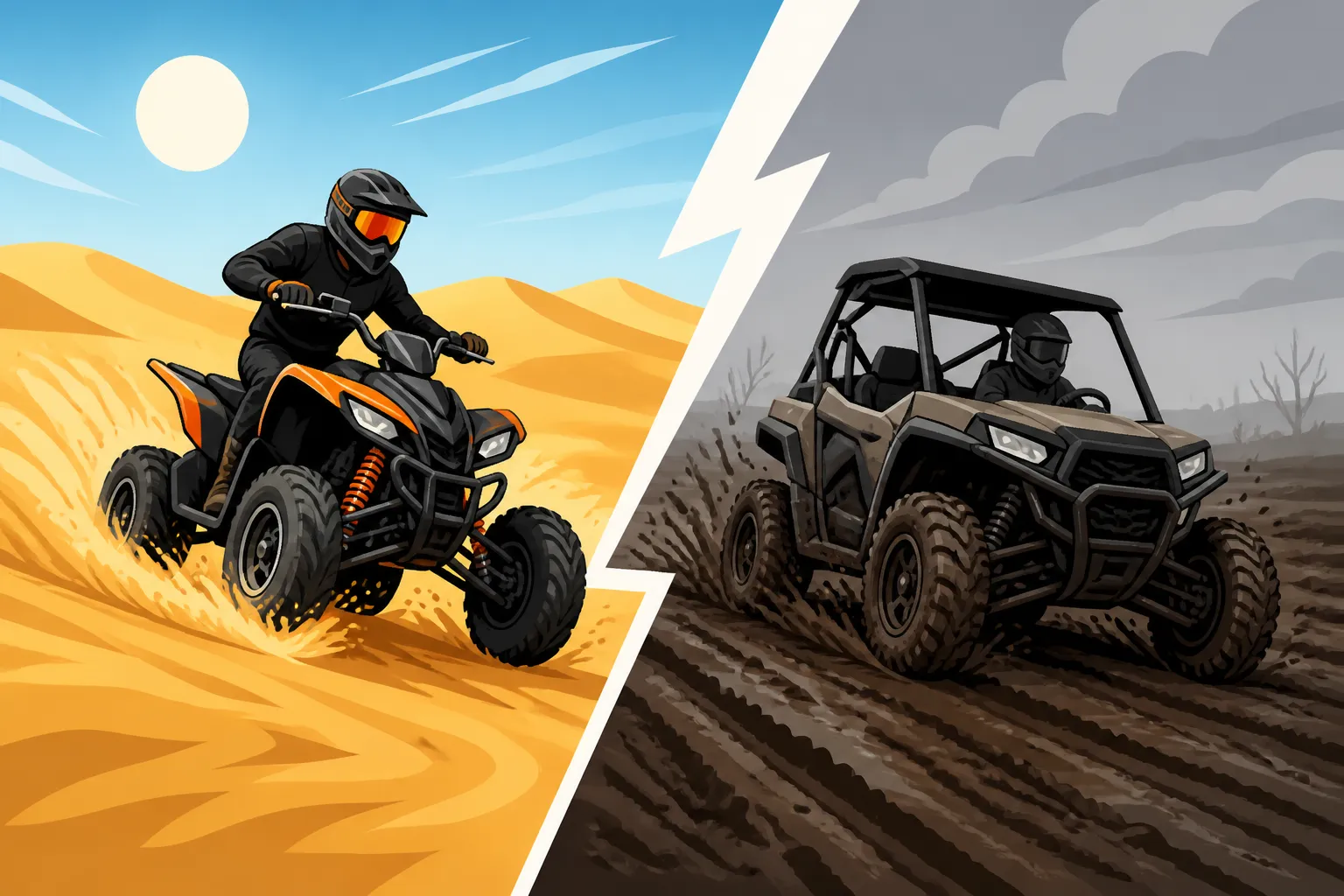
Riding Sand Instead of Clay
Soft sand can turn an ordinary Kansas ride into a workout: tires dig in, steering feels loose, and a machine that handled hard-packed clay with ease may suddenly bog down. Sand riding rewards steady momentum and a lighter touch, but it also asks more of your tires, cooling system, and preparation. This guide explains what changes and how to plan for a safer day.
How sand riding differs from riding clay
Traction, steering, and momentum
On firm clay, your tires usually have a solid surface to grip. In loose sand, they sink and push material aside, so the machine may feel slower and less responsive even when the engine is working hard. It’s common for the front end to wander or feel light, especially when you turn sharply or climb a soft incline.
Momentum helps, but it doesn’t mean riding flat out. The goal is to keep a smooth, consistent pace so your tires continue moving over the surface instead of digging down. Abrupt stops, sharp turns, and sudden bursts of throttle can make a machine lose traction or get stuck. If the sand gets deeper, ease into your inputs and look farther ahead for a firmer line.
A rider used to clay may instinctively steer as if the tires will bite immediately. In sand, a gradual turn is often easier to manage. Keep your body relaxed, avoid fighting every small movement of the handlebars, and give yourself room to adjust. If the machine begins to bog down, spinning the tires harder may dig it in further. Back off, assess the surface, and choose a careful recovery rather than turning a small slowdown into a buried machine.
Heat, effort, and changing conditions
Sand takes more out of both the machine and the rider. Engines may work harder as tires push through loose ground, and repeated low-speed efforts can leave you feeling worn out sooner than expected. Dust and fine sand can also make a group harder to see, while wind can blow grit into eyes, gear, and open equipment.
Conditions change across a riding area. One stretch may be packed down by previous traffic, while the next is soft and churned. A route that feels easy in the morning may become more demanding after other riders have loosened the surface or after wind has reshaped it. Slow down when visibility drops, maintain space between machines, and take breaks before fatigue makes your decisions sloppy.
If you’re comparing terrain before a trip, Kansas Trails With Sand can help you think about the kinds of riding you may encounter. And if you usually ride hard-packed trails, Kansas Trail Conditions Before You Tow is a useful reminder to check the surface and access details before loading up. For a different kind of Kansas terrain, Kansas Riding in Bourbon County offers a contrast to a day focused on sand.
Prepare your ATV or UTV for loose sand
Tires, pressure, and recovery gear
Tire choice affects how a machine floats over sand and how it steers. A tire suited to hard ground may dig in more readily, while a tread designed for loose terrain can help the machine move across the surface. There’s no single setup that works for every ATV or UTV: tire size, tread, machine weight, passenger load, and manufacturer guidance all matter.
Some riders adjust tire pressure to improve flotation, but that decision should be made carefully. Don’t guess at a pressure based on someone else’s machine or a number that worked on a different tire. Check the vehicle and tire manufacturers’ recommendations, and understand that lowering pressure too far can increase the chance of a tire coming off the bead or being damaged. If you’re new to the practice, ask an experienced shop or rider familiar with your specific setup. The guide Airing Down for Deep Sand covers why riders consider this adjustment and what to think through first.
Recovery gear is worth bringing even for a short ride. A compact shovel can help clear sand around a tire, while a suitable tow strap or recovery point can make a careful assist possible. Carry water, basic tools, and a way to contact your group if someone gets separated. A winch can be useful, but it is not a substitute for checking that the machine has an appropriate recovery point and that everyone knows how to use the equipment safely.
| Preparation item | Why it matters in sand | Practical check |
|---|---|---|
| Tires and tread | Loose surfaces can reduce traction and make steering less predictable | Confirm the tires suit the terrain and are in good condition |
| Tire pressure | Pressure affects flotation, handling, and tire retention | Follow manufacturer guidance; avoid improvised adjustments |
| Cooling system | Sustained effort and slow travel can add strain | Check coolant, airflow, and any warning indicators |
| Air filter | Fine dust and sand can load a filter | Inspect it before and after the ride |
| Recovery gear | A machine can bog down even on a familiar route | Bring suitable gear and know how to use it |
| Eye protection | Windblown grit can make riding uncomfortable and unsafe | Use secure eye protection and carry a backup pair |
Keep sand out of vulnerable parts
Fine sand can find its way into places where it causes trouble. An air filter is especially important because the engine needs clean air, and a loaded or poorly seated filter can reduce performance or allow contaminants past the seal. Inspect it before riding, then check it again after a dusty or sandy outing. Follow your owner’s manual for cleaning and replacement rather than shaking out a filter and assuming it is ready for another long ride.
Sand can also collect around cooling components, suspension parts, bearings, and the cab or body. After the ride, clean the machine methodically. Use the approach recommended for your model, and avoid blasting water directly into electrical connectors, seals, or bearings. Washing Sand Out of a Machine is a helpful companion topic if you’re planning regular rides on loose terrain.
If you run paddle-style tires, remember that they are a specialized choice, not an automatic upgrade for every machine or every trail. Their behavior can differ on firm ground, and the right fit depends on where you ride and how your machine is used. Read Paddle Tires on Dunes before changing tire setups, and make sure your choice fits the riding area’s rules and your own experience level.
Plan a Kansas sand ride
Choose the riding area and confirm access
Syracuse Sand Dunes, near Syracuse in Hamilton County, is a named destination for sand riding in Kansas. Before you haul a machine there, confirm the riding area’s current access requirements, operating details, permitted vehicle types, and safety rules directly with the park. Private riding areas can set their own conditions, and details can change. The overview Syracuse Sand Dunes Park in Kansas is a useful starting point for planning, but verify trip-critical information before leaving home.
A map can help you understand the approach, nearby roads, and the general layout of an area. onX Offroad may be useful for reviewing routes and saving map information before you leave, particularly if your phone signal is unreliable. Treat any map as a planning aid, not as permission to ride: posted signs, landowner access, park rules, and closed areas take priority. Download or save what you need before the trip, and tell someone where you’ll be riding if your group is heading into an area with limited service.
Plan your day around the ride, not just the drive. Check the forecast for wind, heat, and rain, and think about how those conditions might affect visibility and the surface. A wet or recently changed trail may ride differently from what you expect. Kansas Trail Closures After Rain is a good reminder to check conditions and restrictions before setting off, rather than assuming a route is open because it was open on your last visit.
Respect other riders and posted rules
Sand riding can involve quick changes in speed and visibility. Keep a generous distance from the machine ahead so you aren’t riding through its dust or forced into a sudden maneuver. Signal your intentions clearly to your group, agree on a regrouping point, and avoid stopping where another rider may crest a rise or round a bend without seeing you.
Follow marked routes and posted boundaries, even if an unmarked stretch looks tempting. Don’t assume that open-looking land is available for riding, and don’t use a shortcut around a closure. Be considerate of other visitors, park staff, and nearby landowners. Kansas Trail Etiquette Locals Expect offers a broader look at the habits that help keep riding areas enjoyable for everyone.
If your route includes water or a place to stop, check whether those areas are designated for public use and whether machines may travel there. For example, Syracuse Sand Dunes Has a 40-Acre Stocked Pond points to a feature associated with the area, but a nearby pond doesn’t automatically mean vehicles can ride to its edge or enter the water. Follow posted instructions and use designated access points.
Build a safer and more comfortable ride
Ride within your experience
For a first sand outing, start with a manageable route and ride with someone who knows the terrain. Give yourself time to learn how your machine responds before trying steep faces, deep ruts, or crowded sections. If you’re on a side-by-side, remember that added passengers, cargo, and accessories affect how the vehicle handles. Keep within the machine’s limits and use seat belts and other factory safety equipment as intended.
A simple group plan can prevent a minor problem from becoming stressful. Choose a leader and a sweep rider, agree on how often you’ll regroup, and decide what to do if someone stops or gets separated. Carry drinking water and take breaks in a safe, visible location. If the wind picks up or dust makes it hard to see, slow down, increase spacing, or pause until conditions improve.
Check your machine during the day, especially if you’ve been riding hard or notice a change in handling or performance. Pay attention to warning lights, unusual smells, overheating, loose components, and tires that appear damaged or low. If something seems wrong, stop in a safe place and deal with it before continuing. Pushing on because the trailhead is “just a little farther” can turn a manageable repair into a longer walk.
Finish with a careful clean-up and review
After the ride, give the machine time to cool before inspecting it. Check the air filter, cooling areas, tires, and visible suspension components, and clean away sand according to the owner’s manual. Note anything that needs attention before the next trip. It’s much easier to deal with a filter, loose fastener, or worn tire at home than to discover the issue at the start of another ride.
If you went with a group, compare notes about what worked: which routes felt manageable, where the sand became softer, and what gear you were glad to have. Use those observations to plan the next outing. Sand riding can feel unfamiliar at first, especially if you’re used to clay, but patience and preparation make the learning curve less frustrating—and help keep the day fun for everyone.
Disclaimer
This article is for general informational purposes only and does not constitute professional advice. Laws, prices and regulations vary by location and change over time. Consult a qualified professional for guidance on your specific situation.