An ATV Defined in Chapter 8
It can be incredibly frustrating to navigate the maze of regulations surrounding off-road vehicles in Kansas, especially when you're just trying to figure out what kind of machine you actually own in the eyes of the law. You see terms like "ATV," "UTV," "work-site utility vehicle," and it often feels like the state is speaking a completely different language than what you hear at the dealership or out on the trails. This guide is here to untangle the specific legal definition of an All-Terrain Vehicle (ATV) as it's laid out in Chapter 8 of the Kansas Statutes, helping you understand how this classification impacts everything from titling to where you can legally ride your machine.
The Basics of Kansas Chapter 8 and Your ATV
When you pull your shiny new (or new-to-you) quad off the trailer, you might think "it's an ATV, plain and simple." But in Kansas, the law takes a very specific view, and that view is codified in Chapter 8 of the state statutes. This isn't just bureaucratic jargon; it's the foundation for how your machine is handled legally, and understanding it can save you a lot of headaches down the road, or more accurately, off the road.
Why Kansas Law Needs a Specific ATV Definition
Imagine a world where every machine with four wheels and an engine was treated the same. A golf cart, a monster truck, and your sport quad would all fall under one umbrella. That's clearly not practical, nor would it make sense for public safety or taxation. Kansas lawmakers, like those in every other state, had to draw lines in the sand to differentiate between various types of vehicles, especially those intended primarily for off-highway use.
The specific definition in Chapter 8 isn't arbitrary. It's designed to clarify what type of machine is subject to certain titling rules, registration exemptions, and most importantly, where it can and cannot be operated. Without this clear definition, every interaction with a county treasurer's office, every question about [Kansas Has No OHV Registration], and every local law enforcement officer's decision about road use would be a chaotic mess. It's the blueprint that guides how your machine is identified, making sure everyone is on the same page when it comes to the legalities. This definition is the very first step in understanding [How Kansas Law Defines a Nonhighway Vehicle] in its entirety.
Unpacking the Language: What "All-Terrain Vehicle" Means
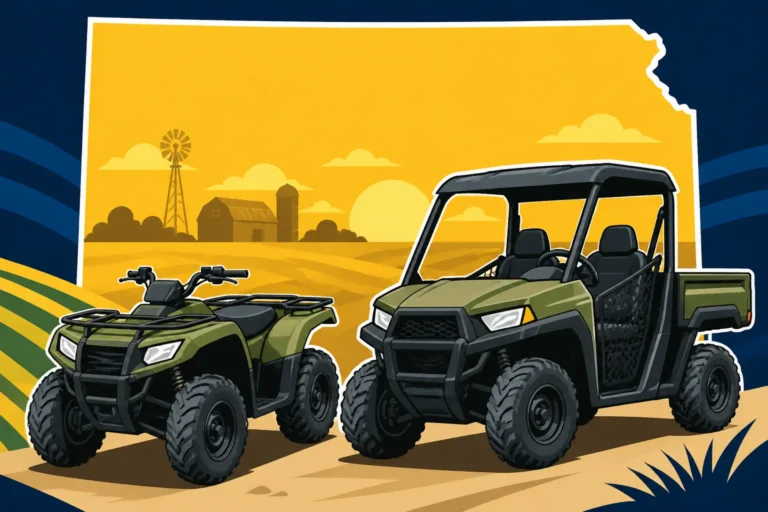
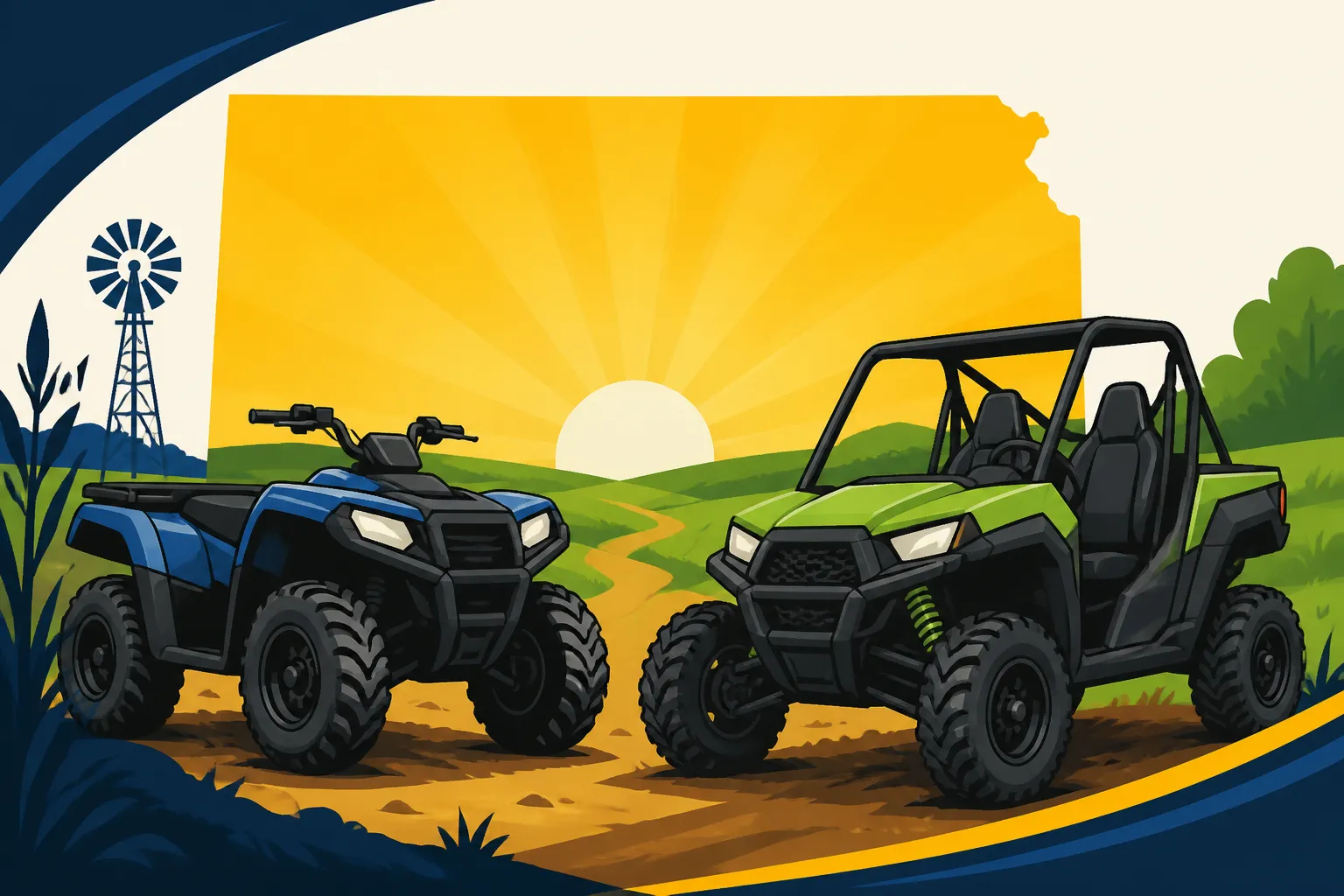
Kansas Chapter 8 is pretty clear about what an "all-terrain vehicle" is. It's generally defined as any motorized vehicle manufactured and designed exclusively for off-highway use, traveling on four or more low-pressure tires, with a seat designed to be straddled by the operator, and handlebars for steering control. It's typically designed for a single operator, or sometimes for an operator and one passenger behind the operator, not side-by-side.
Let's break that down a bit. First, "manufactured and designed exclusively for off-highway use." This immediately sets it apart from vehicles like cars or trucks, which are designed for pavement. Second, "four or more low-pressure tires." This is a critical detail. These aren't your car tires; they're built for grip and flotation on various terrains, which is why they often look so chunky. The "four or more" part is important too; it distinguishes it from dirt bikes (two wheels) or even some less common six-wheeled off-road vehicles, although those still generally fall under the broader "nonhighway vehicle" umbrella. Third, "a seat designed to be straddled by the operator." This is perhaps the most defining characteristic visually, and legally, of an ATV. You sit on it, like a horse or a motorcycle, rather than in it. Finally, "handlebars for steering control" seals the deal, further distancing it from vehicles with steering wheels. This combination of features is exactly [Why an ATV Is Titled as a Nonhighway Vehicle].
Key Characteristics of a Chapter 8 Defined ATV
So, while the term "ATV" is often used loosely in casual conversation, the legal definition in Kansas focuses on specific design elements. These elements aren't just for show; they're the litmus test for how your machine is classified and regulated. It’s crucial to know these specifics, especially if you ever need to fill out paperwork or explain your machine to an official.
Engine Displacement and Design
While the core Chapter 8 definition of an ATV focuses on physical characteristics like seating and steering, engine displacement often plays a role in the types of machines that fall into the ATV category. Historically, ATVs have tended to have engine sizes that, while powerful for off-road use, are generally less than what you'd find in many full-sized UTVs or micro utility trucks. You'll commonly see ATVs in the 250cc to 1000cc range, though smaller youth models exist. The design of the engine is also typically integrated into a chassis that supports the straddle-seat, handlebar-steered format.
The law isn't always concerned with the exact cubic centimeters as much as it is with the overall design intent: is it a machine built for a single rider (or rider plus one behind) to traverse rugged terrain, often at speed, with a highly maneuverable, motorcycle-like feel? Yes? Then it likely fits the ATV definition. If it's a larger, more enclosed machine with a bench seat and a steering wheel, then you’re probably looking at something else entirely, which we'll touch on later. Knowing this helps you when you're dealing with the [Kansas Title Paperwork Explained] at the county treasurer's office.
Wheel and Tire Configuration
Another non-negotiable aspect of the Chapter 8 ATV definition is the wheel and tire setup. The law specifies "four or more low-pressure tires." Let's talk about those tires. "Low-pressure" doesn't mean your tires are flat; it means they are designed to operate effectively at much lower air pressures compared to conventional road tires. This allows for a larger contact patch with the ground, providing better traction over uneven terrain like mud, sand, or rocks, and also helps absorb shocks, making for a smoother ride off-road.
The "four or more" part is critical. Most people think of ATVs as having four wheels (quads), and that's the most common configuration. However, if a manufacturer made a special six-wheel vehicle with straddle seating and handlebars, it would still technically fall under this definition as long as it met the other criteria. The key here is the specific tire type and the minimum number, setting it apart from two-wheeled dirt bikes or machines that might use conventional, high-pressure tires. This specific characteristic helps to define why [Kansas Titles ATVs as Nonhighway Vehicles] in the first place.
Seating and Steering Mechanisms
Now for the two features that, perhaps more than any others, visually and functionally distinguish an ATV under Chapter 8: the straddle seat and handlebar steering. When you get on an ATV, you literally straddle the machine, much like you would a motorcycle or a horse. Your legs are on either side of the engine or chassis, and you’re seated on the machine, not in it. This riding position is fundamental to the ATV experience, allowing for dynamic body English to help navigate terrain.
Coupled with this is the handlebar steering. Just like a motorcycle, you grip handlebars and steer by turning them, leaning into turns. This combination of straddle seating and handlebar steering provides a very direct, engaging, and often physically demanding riding experience. It’s a stark contrast to a steering wheel and bucket or bench seating, which immediately tells you that you're likely looking at a different class of vehicle, such as a side-by-side or a [What Counts as a Micro Utility Truck]. Understanding [Why a Steering Wheel Changes Your Title Class] is crucial for proper classification.
The Practical Impact of This Definition on Owners
Knowing the legal definition of an ATV isn't just an academic exercise; it has very real, everyday consequences for owners in Kansas. From the moment you buy your machine to every time you decide where to ride it, the Chapter 8 definition quietly (or not so quietly) guides your actions.
Titling and Registration Requirements
Because ATVs, as defined in Chapter 8, are "manufactured and designed exclusively for off-highway use," they fall into a special category when it comes to official state paperwork. In Kansas, these machines are titled as nonhighway vehicles. This is a crucial distinction. It means you will get a title for your ATV, but it will clearly state its nonhighway status. When you head to the county treasurer's office to get your paperwork sorted, this definition is what clerks refer to.
You'll need proof of ownership, whether it's a manufacturer's certificate of origin (MCO) for a new machine or a properly assigned title and perhaps a bill of sale for a used one. Services like LawDepot can be incredibly useful for drafting a robust bill of sale if you're buying from a private seller, ensuring all the necessary details for titling are captured. Remember, the goal is to get that [Kansas's Nonhighway Title Explained] correctly. What you won't get for an ATV, however, is an annual registration tag. Because they are nonhighway vehicles, [Kansas Has No OHV Registration] that requires an annual tag or plate, unlike a car or even some street-legal UTVs in certain cities. The title is purely for establishing ownership.
Road Use and Operational Restrictions
Here's where the Chapter 8 definition truly hits home for many riders: road use. The legal classification of an ATV as an "all-terrain vehicle" manufactured exclusively for off-highway use typically means it is generally prohibited from operating on public roads and highways in Kansas. This isn't just a suggestion; it's the law that many riders accidentally break.
Now, there are exceptions, and these are often what cause confusion. Farmers, for example, have certain allowances for agricultural purposes on public roads, and some cities have passed local ordinances to allow limited ATV or UTV use on their streets (though this is far more common for UTVs, which fit other classifications). However, the baseline rule stemming from the Chapter 8 definition is that your ATV does not belong on a state highway or most county roads. Understanding [Kansas ATV Road Rules Under 8-15,100] is essential to avoid fines and ensure safety. You cannot just hop on the highway and cruise to the next town over on your quad, no matter how tempting that might be. These restrictions are a direct consequence of your machine's nonhighway definition.
Distinguishing ATVs from Other Off-Road Vehicles
The world of off-road vehicles can be a tangled web of acronyms and appearances. Knowing the Chapter 8 definition for an ATV is vital because it helps you distinguish your machine from others that might look similar but fall into entirely different legal categories. For instance, a side-by-side, also known as a UTV (Utility Terrain Vehicle), often has a steering wheel and side-by-side seating, placing it outside the ATV definition. Many UTVs, especially those specifically designed for work, might even qualify as [What Makes a Side-by-Side a Work-Site Utility Vehicle] if they meet specific width, weight, and equipment criteria.
These other categories, like Work-Site Utility Vehicles (WSUVs), golf carts, and micro utility trucks, have their own distinct definitions in Kansas law, and these definitions dictate their titling, registration (or lack thereof), and permissible road use. For example, a WSUV might be allowed on certain roads that an ATV never would be, or a golf cart might be permitted on specific low-speed city streets. This is precisely [Why the Definitions Matter for Roads]. If you're looking to acquire or sell one of these machines, confirming its legal classification is step one, and having clear documentation for it, perhaps even using a template from a service like LawDepot for a bill of sale, is always a good idea.
To help clarify the distinctions, here's a brief comparison of how Kansas law generally categorizes these machines:
| Feature/Category | All-Terrain Vehicle (ATV) | Utility Terrain Vehicle (UTV) / Side-by-Side | Work-Site Utility Vehicle (WSUV) (Specific UTV subset) | Golf Cart | Micro Utility Truck (MUT) |
|---|---|---|---|---|---|
| Seating | Straddle seat (operator, sometimes one passenger behind) | Side-by-side bucket/bench seats (2+ passengers) | Side-by-side bucket/bench seats | Bench seat (2+ passengers) | Enclosed cab, truck-like seats (2+ passengers) |
| Steering | Handlebars | Steering wheel | Steering wheel | Steering wheel | Steering wheel |
| Tires | 4+ low-pressure tires | 4+ low-pressure or conventional tires | 4+ low-pressure or conventional tires | 4 low-pressure or conventional tires | 4 conventional tires |
| Primary Design Use | Off-highway recreation, utility | Off-highway recreation, utility, work | Work-site utility, specific dimensions (e.g., [48 Inches and 800 Pounds]) | Short-distance transport on specific grounds | Light utility, low-speed work |
| Kansas Title | Nonhighway Vehicle Title ([Kansas Titles ATVs as Nonhighway Vehicles]) | Nonhighway Vehicle Title (or WSUV title if applicable) ([Titling a Side-by-Side in Kansas]) | WSUV Title (specialized) | Nonhighway Vehicle Title (often exempt from title if below value) | Nonhighway Vehicle Title or conventional title if road-legal |
| Kansas Registration | None ([Kansas Has No OHV Registration]) | None (unless city-specific ordinance allows for city plate) | None (unless city-specific ordinance allows for city plate) | None (unless city-specific ordinance allows for city plate) | None (unless city-specific ordinance allows for city plate) |
| Road Use | Generally prohibited (exceptions for farm, specific ordinances) | Generally prohibited (exceptions for farm, specific ordinances) | Limited public road use allowed under specific conditions | Limited public road use on specific low-speed streets | Limited public road use under specific conditions |
Understanding these differences, particularly the core definition of an ATV in Chapter 8, equips you with the knowledge to correctly classify your machine and navigate the sometimes-confusing world of Kansas off-road vehicle law. It helps you ensure your paperwork is in order and that you're riding legally and responsibly, wherever your adventures take you.
Disclaimer
This article is for general informational purposes only and does not constitute professional advice. Laws, prices and regulations vary by location and change over time. Consult a qualified professional for guidance on your specific situation.